

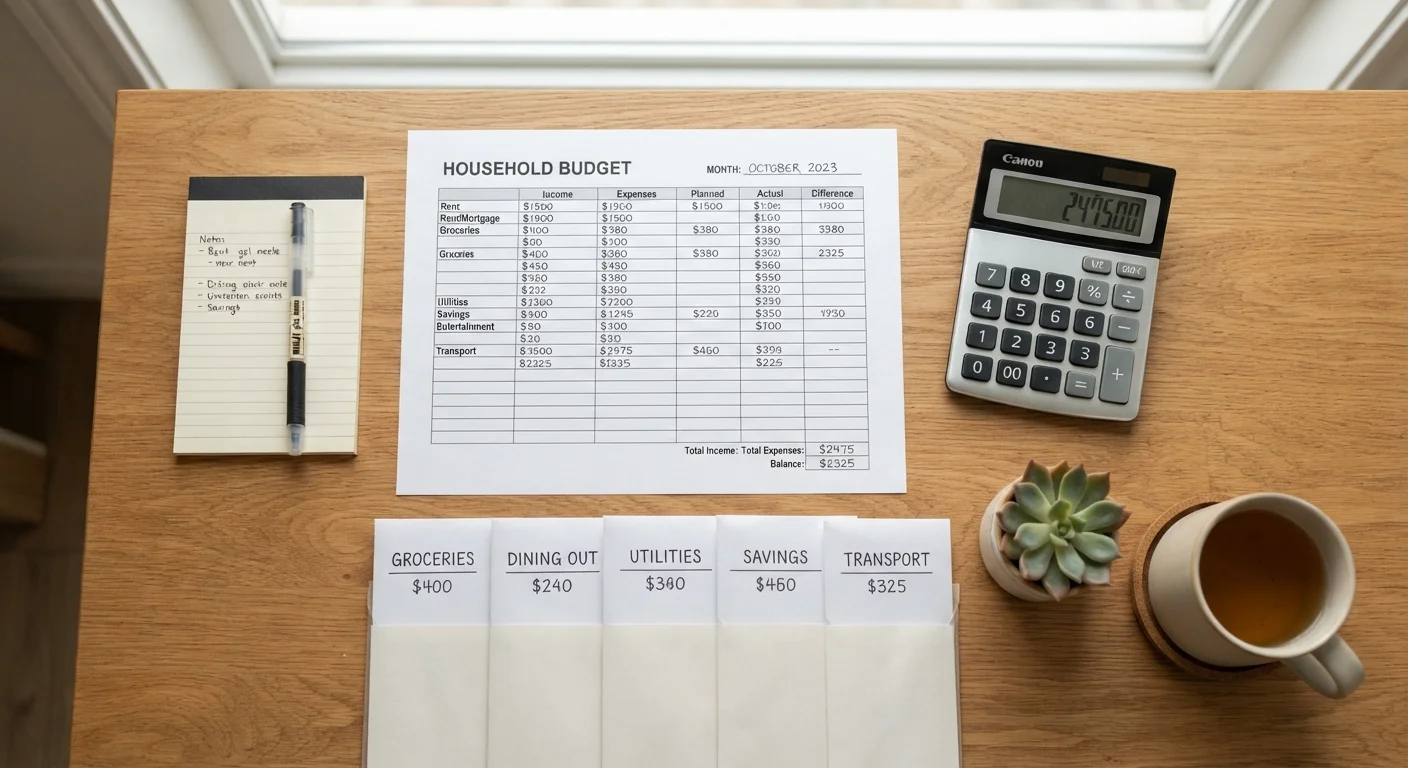
What Fixed Expenses Actually Are
A fixed expense is any cost that remains constant regardless of your behavior or consumption in a given month. You owe the same amount whether you use the service heavily or barely at all. Because of this predictability, fixed expenses are the easiest to account for when you sit down to build a monthly spending plan.
Common examples include:
- Rent or mortgage payments
- Car loan or lease payments
- Health, auto, and life insurance premiums
- Student loan installments
- Fixed-rate internet or streaming subscriptions
The key characteristic is contractual obligation. You've agreed to pay a set amount on a defined schedule, and that figure doesn't move until the contract changes. This makes fixed expenses the non-negotiable foundation of your budget — the costs you must cover before anything else.
List Your Fixed Expenses First
When starting a budget, write down every fixed expense before anything else. Total them and subtract from your monthly take-home pay. What remains is the only income available for variable expenses, savings, and discretionary spending — a simple exercise that immediately clarifies how much flexibility you actually have.
What Variable Expenses Actually Are
Variable expenses are costs that shift in amount from one month to the next. They're influenced by your choices, habits, and external factors like seasonal demand or price changes. Because they're not locked in, they require active attention — and they're often where budgets quietly fall apart.
Common examples include:
- Groceries and household supplies
- Gas and transportation costs
- Dining out and entertainment
- Clothing and personal care
- Electric and gas utility bills
Variable expenses aren't inherently bad — in fact, their flexibility is an advantage. When money is tight, these are the costs you can reduce relatively quickly without breaking a contract or taking a credit hit. Understanding which of your expenses belong in this bucket gives you real levers to pull when you need to cut back.
33%
Average share of income spent on housing
The U.S. Bureau of Labor Statistics Consumer Expenditure Survey consistently shows housing — a largely fixed expense — consumes roughly one-third of average American household spending.
~15%
Average share spent on food (all sources)
Food spending, a key variable expense category, accounts for approximately 12–15% of average household budgets according to BLS Consumer Expenditure data, with significant variation by income level.
60%+
Americans living paycheck to paycheck
Multiple surveys in recent years suggest a majority of U.S. adults have limited financial buffer, underscoring why understanding and controlling variable expenses is critical to financial resilience.
The Semi-Variable Category Worth Knowing
Not every expense fits neatly into one column. Semi-variable expenses — sometimes called mixed costs — have a predictable baseline plus a fluctuating component based on usage. A cell phone plan with a flat monthly fee plus per-gigabyte overage charges is a classic example. So is a tiered electricity plan, where the first block of usage is billed at a fixed rate and additional consumption costs more.
Budget Billing Can Smooth Variable Costs
Many utility providers offer 'budget billing' or 'average payment' programs that spread your estimated annual usage cost across 12 equal monthly payments. This makes a variable expense behave like a fixed one for planning purposes. The provider reconciles the actual usage at year end, so you may receive a small credit or owe a small balance — but month-to-month predictability improves significantly.
Recognizing semi-variable expenses helps you build a more honest budget. Instead of treating your utility bill as fixed at last month's amount, you can estimate a realistic range — say, $80 to $130 — and plan for the midpoint while keeping a small buffer for high-use months.
How This Distinction Shapes Your Budget Strategy
When building any spending plan, the fixed/variable distinction changes how you handle each line item. Fixed expenses are entered as firm commitments. Variable expenses need estimated caps — and those estimates should be based on your actual recent spending history, not wishful thinking.
If you're looking to free up cash, the path to cutting fixed costs usually involves a meaningful decision: moving to a less expensive home, refinancing a loan, or dropping an insurance tier. These changes can yield large savings but require planning. Cutting variable costs, by contrast, can happen immediately — eating out less, adjusting the thermostat, shopping with a list rather than on impulse.
For anyone with a paycheck that changes month to month, the ratio of fixed to variable expenses matters even more. A high proportion of fixed obligations leaves little room to maneuver when income dips. See our guide to budgeting on an irregular income for strategies tailored to that situation.
Once you're clear on both categories, the next practical step is organizing them into a structured plan. Our monthly budget setup checklist walks through exactly what to gather and calculate before locking in your numbers. And to make sure nothing gets missed, review the spending categories most budgets forget — irregular and annual costs that frequently derail well-intentioned plans.
For a broader grounding in the terms that show up throughout budgeting conversations, the key budgeting terms every American should know is a useful reference to bookmark.
“A budget is telling your money where to go instead of wondering where it went.”
— Dave Ramsey, Personal finance author and radio host
This article is for general informational and educational purposes only and does not constitute personalized financial advice. For guidance tailored to your specific circumstances, consider consulting a qualified financial professional.