

What 5G Actually Is
5G is a wireless communication standard — a set of technical rules that defines how phones, towers, and networks talk to each other. Each generation (3G, 4G, 5G) brought higher capacity and faster data transfer. 5G's primary goals are speed, lower latency, and the ability to handle many more connected devices simultaneously.
But here's what marketing rarely explains: not all 5G is equal. The 5G label on your phone's status bar can represent three completely different types of signals, each with different characteristics. Understanding which type you're on matters more than knowing whether you have 5G at all.
5G and smart home devices
Most smart home devices — thermostats, locks, doorbells — connect over Wi-Fi or low-power protocols like Zigbee or Z-Wave, not cellular. 5G is relevant to your phone, not your home network. For common smart home misconceptions, our fact-check of smart home myths is a useful read.
For a broader look at how your phone connects to networks — including mobile data and Wi-Fi — see our guide to mobile data, Wi-Fi, and hotspots.
The Three Flavors of 5G
Carriers in the U.S. deploy 5G across three frequency bands, and the experience varies dramatically between them.
- Low-band 5G operates below 2 GHz. It travels long distances and passes through walls and buildings well — which is why it covers most of the country. The tradeoff: speeds are typically only 20–30% faster than 4G LTE. If your phone shows 5G in a suburban or rural area, this is almost certainly what you're on.
- Mid-band 5G (roughly 2.5–6 GHz) is the sweet spot. It offers meaningfully faster speeds — often several times faster than 4G — while still covering a reasonable geographic area. This is the primary band driving faster 5G rollouts in mid-sized and larger cities.
- mmWave (millimeter wave) operates above 24 GHz and can deliver peak speeds that sound extraordinary on spec sheets. The catch: it has an extremely short range (often less than a city block), struggles with walls and even rain, and is only realistically available near dedicated antennas in dense locations like airports, stadiums, or convention centers.
~30%
Typical low-band 5G speed improvement over 4G LTE
Industry testing consistently shows low-band 5G offers modest speed gains, while mid-band delivers far larger improvements in covered areas.
5 Mbps
Data speed needed to stream HD video
Standard 4G LTE averages well above this threshold in most areas, making network generation less critical for streaming than coverage strength.
~1 ms
Target latency for mmWave 5G
Ultra-low latency is the primary technical advantage for real-time applications like remote surgery or industrial automation — not typical consumer use cases.
A phone on low-band 5G in a rural area may actually load pages more slowly than a phone on a strong 4G LTE signal in the same spot — signal strength matters as much as generation.
What 5G Means for Everyday Use
For most Americans, day-to-day smartphone tasks — streaming music, browsing news, checking social media, video calling — don't require the speeds 5G promises. 4G LTE, at typical download speeds of 20–50 Mbps, handles all of these comfortably. Streaming HD video, for reference, requires roughly 5 Mbps.
Where 5G does make a real difference:
- Downloading large files (apps, software updates, video) in seconds rather than minutes
- Crowded public environments where 4G towers get congested — a mid-band or mmWave signal at a busy stadium can feel dramatically faster
- Emerging use cases like cloud gaming or augmented reality apps that are sensitive to latency
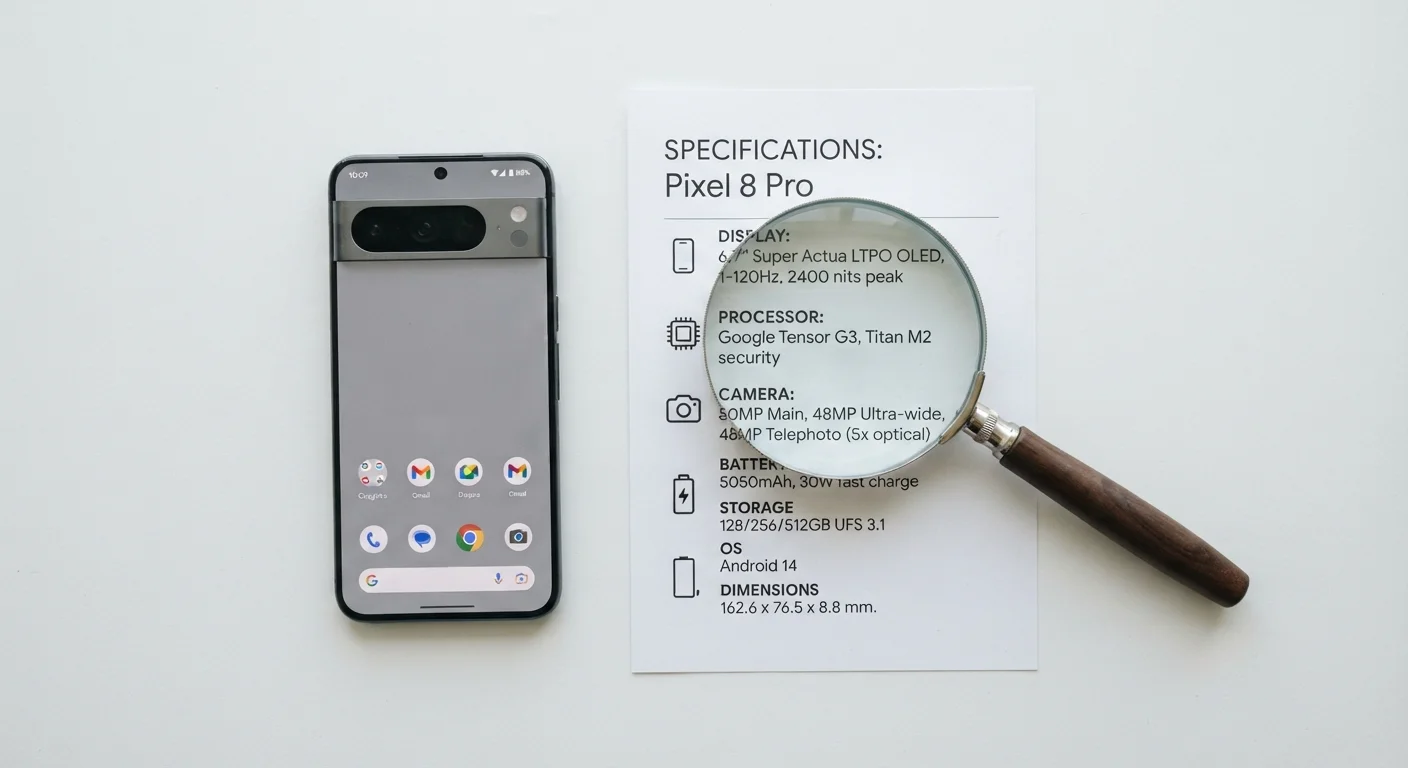
For specs context, it's worth understanding how your phone's modem and chip work together — our explainer on smartphone specs covers that clearly.
Check your carrier's coverage map by band type
Before assuming your area has fast 5G, look for band-specific coverage maps — some carriers now label low-band and mid-band separately. Knowing which type covers your home, workplace, and commute gives you a far more realistic picture of what to expect from a 5G device.
Common Misconceptions Worth Clearing Up
A few persistent myths make 5G harder to evaluate than it needs to be.
- "5G is available everywhere."
- Low-band 5G has wide geographic coverage, but mid-band — the tier that delivers genuinely faster speeds — is still concentrated in urban and suburban markets. Coverage maps from carriers often blend all three bands into one, which can be misleading.
- "A 5G phone is automatically better."
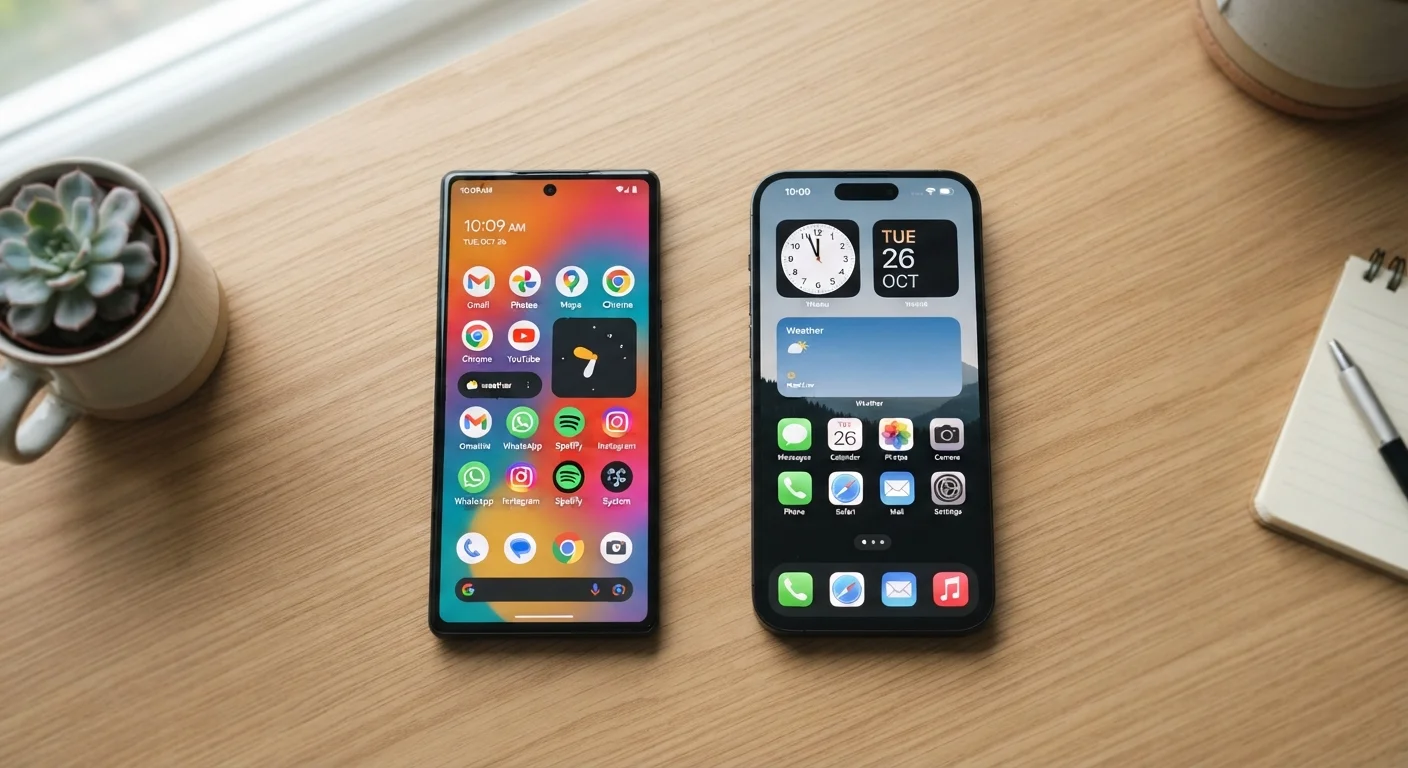
- 5G capability is one hardware feature among many. A phone's camera, display, battery, and processor all affect real-world experience far more than the network band in most daily scenarios. See our comparison of Android and iOS for a broader view of what actually shapes the user experience.
- "5G is the same across all carriers."
- Carriers have licensed different portions of the spectrum, meaning coverage quality and speed vary significantly by provider and location. Phone and plan compatibility is worth understanding before switching networks.