
The Four Core Cabin Categories
Every cruise ship organizes its accommodations into a recognizable hierarchy, and understanding that structure is one of the most practical things a traveler can do before booking. Whether you're planning your first voyage or refining your approach, a solid grasp of how ships are organized makes the cabin decision far less overwhelming.
| Interior cabin typical size | 150–200 sq ft (General industry range; varies by ship and line) |
| Balcony cabin typical size | 185–250 sq ft (cabin) + balcony (General industry range; varies by ship and line) |
| Number of standard cabin tiers | 4 (interior, oceanview, balcony, suite) (Standard framework used by most mainstream cruise lines) |
| Suite services often included | Butler, priority boarding, private lounge (Varies significantly by cruise line and ship) |
| Best category for sea-day-heavy itineraries | Balcony or suite (General traveler guidance based on onboard time) |
| Most budget-conscious category | Interior cabin (Consistently lowest fare tier across cruise lines) |
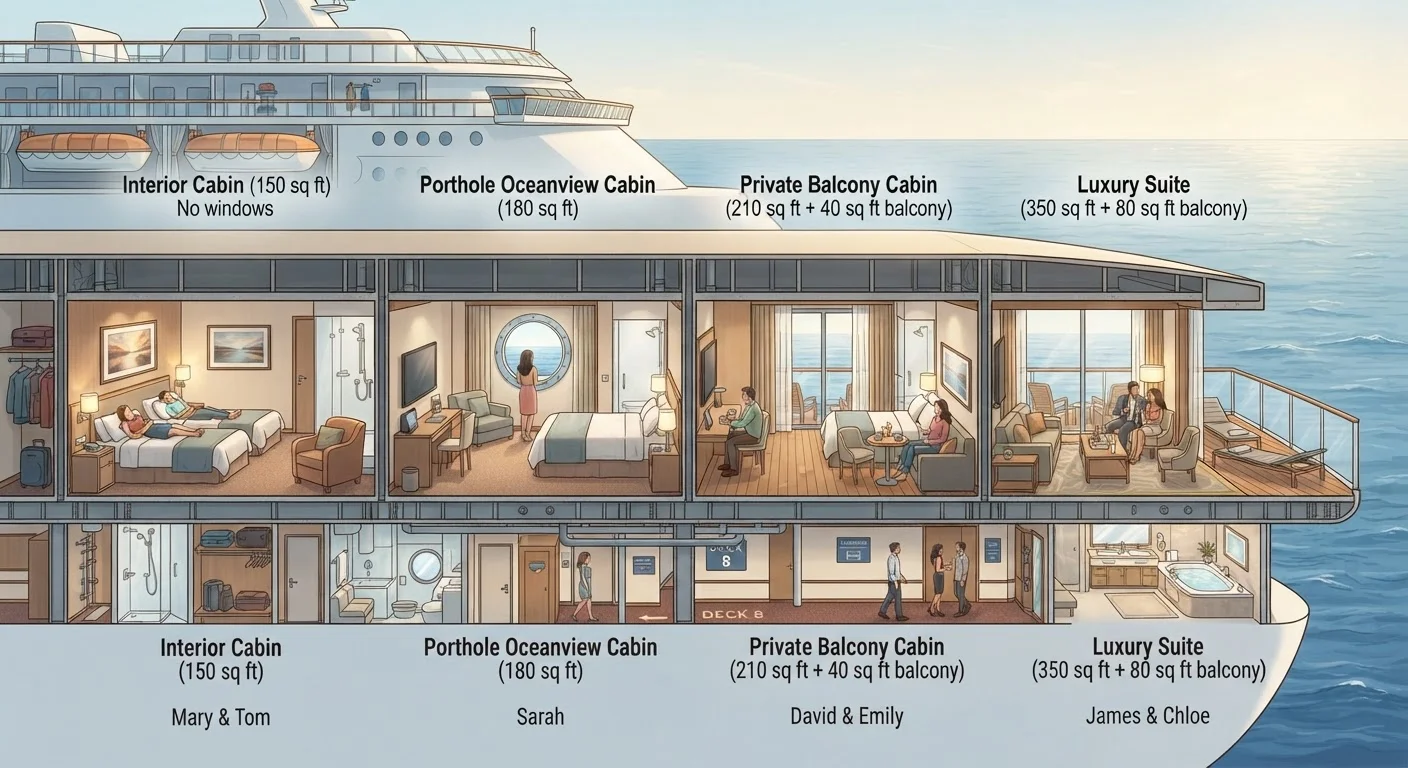
The four standard tiers are interior, oceanview, balcony, and suite. Nearly every mainstream cruise line uses this framework, though the naming and the amenities within each tier vary. What you pay for as you move up is essentially a combination of natural light, private outdoor space, square footage, and dedicated service.
Interior Cabins: The No-Window Option
Interior cabins have no windows or portholes. They sit in the center of the ship, often on mid-deck levels, insulated from outside light and sound. What they lack in atmosphere they compensate for in price — they are consistently the most affordable way onto a ship — and in some practical respects, the darkness can produce genuinely restful sleep, particularly on overnight sea crossings.
Interior cabin
A cruise ship room with no windows or external light source, typically the smallest and most affordable cabin category. Located in the interior of the ship, away from outer hull walls.
Oceanview cabin
A cabin featuring a fixed window or porthole that provides natural light and a sea view. The window does not open, distinguishing it from a balcony cabin.
Balcony cabin
A stateroom with a private outdoor space accessed through a sliding glass door. Also called a veranda cabin, it allows guests to be outside in the open air directly from their room.
Suite
The highest cabin tier on most ships, offering significantly more square footage and often dedicated services such as butler assistance, priority embarkation, and exclusive lounge access.
Deck plan
A ship's floor-plan diagram showing the location of every cabin, public area, and amenity by deck level. Used by travelers to assess cabin position, proximity to elevators, and potential view obstructions.
Mini-suite
An entry-level suite category offering a larger-than-standard floor plan and sometimes a sitting area, positioned between balcony cabins and full suites in both price and amenity level.
Sizes vary by ship, but interiors typically run between 150 and 200 square feet. Storage is generally efficient, and the bathroom is compact but functional. If your travel style prioritizes spending time in ports and public spaces over the cabin itself, an interior room can be a sensible allocation of budget.
Oceanview and Balcony Cabins: Light and Air
An oceanview cabin adds a fixed window or porthole — you gain natural light and a view of the sea, but the window does not open. These rooms occupy a middle position in price and are well suited to travelers who want visual connection to the ocean without the cost of a private outdoor space.
Balcony cabins (sometimes called veranda cabins) include a sliding glass door leading to a private outdoor area, typically furnished with two chairs and a small table. The ability to step outside at any hour — to watch a port arrival at dawn or a sunset at sea — is what most cruisers say they value most about the balcony tier. Sea days especially reward a private balcony, since you have somewhere personal to read, eat breakfast, or simply sit with the water moving past.
One practical note: balconies on lower decks may have obstructed views from lifeboats or structural overhangs. Checking the deck plan before booking is always worthwhile.
~30%
Of cruise cabins on new ships are balcony category
Modern ship design has shifted heavily toward balcony accommodations as traveler preference has grown for private outdoor space.
2–3×
Suite cost premium over interior cabins
Suite fares on mainstream lines commonly run two to three times the price of interior cabins on the same sailing, though inclusions vary.
Suites: Space, Service, and Added Perks
Suites occupy the top of the cabin hierarchy and vary more dramatically than any other category. Entry-level mini-suites offer a larger footprint and sometimes a small sitting area. Full suites, penthouses, and owner's suites on premium and luxury ships can include separate bedrooms, butler service, priority boarding, private dining access, and exclusive lounge privileges.
The service layer is often what distinguishes a suite experience most meaningfully. Dedicated concierge staff, pre-stocked bars, and reserved sun decks create a ship-within-a-ship environment on many vessels. Travelers considering this tier should compare what is actually bundled — some lines include specialty dining and beverage packages; others do not.
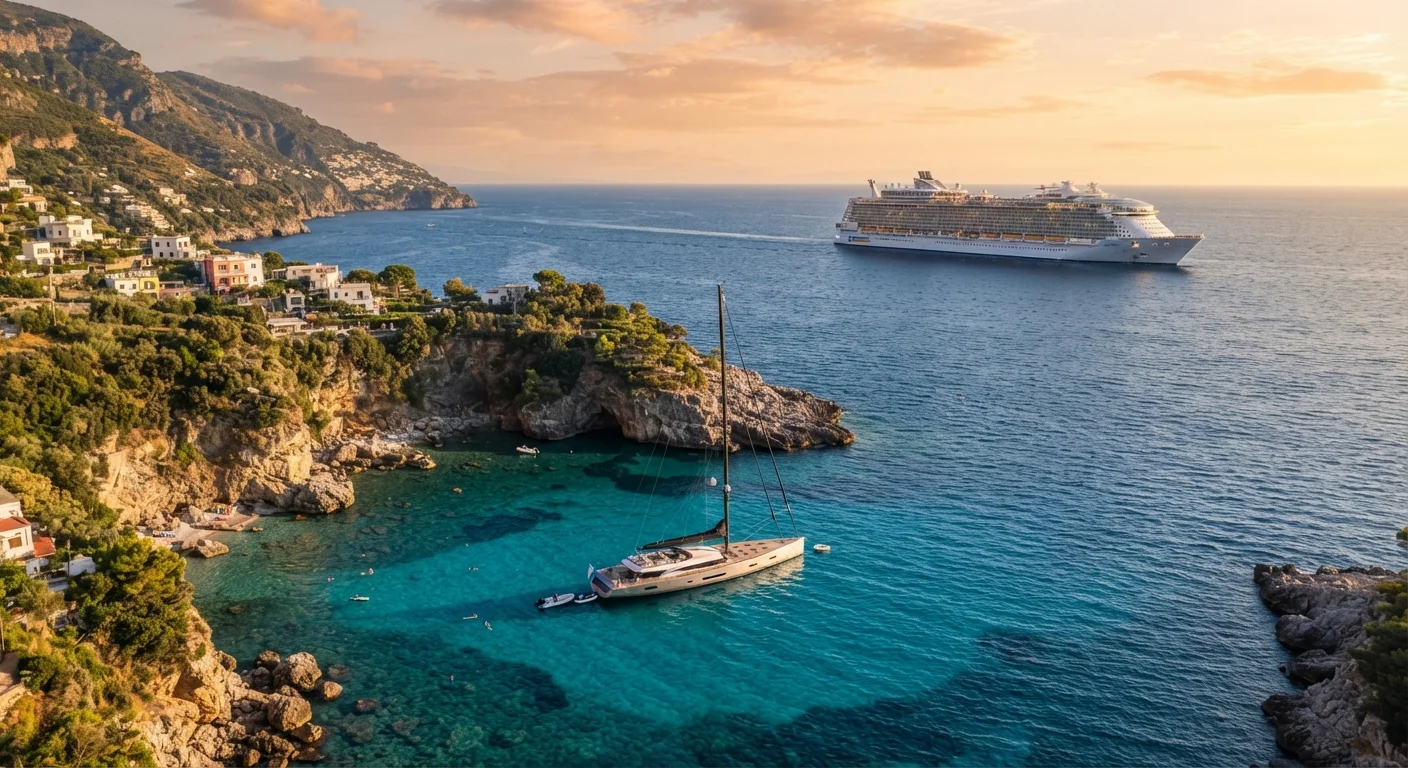
For an honest look at how the cruise ship experience compares to entirely private alternatives, the differences between a chartered yacht and a cruise ship are worth understanding before committing to any category.
Cabin Location Matters Beyond Category
Within any cabin tier, the position on the ship affects the experience significantly. Midship cabins on lower decks tend to feel the least motion in rough seas — relevant for travelers prone to seasickness. Aft cabins often have expansive wake views but may experience more engine vibration. Checking the deck plan carefully before booking can be as important as choosing the category itself.
Choosing the Right Category for Your Trip
The right cabin category depends on how you actually plan to use it. Travelers who pack their days with shore excursions and return to the ship mainly to sleep rarely miss the light they give up in an interior cabin. Families often find that two interior cabins cost less than one balcony and give everyone more space. Longer itineraries — especially those with multiple sea days — tend to make the balcony investment feel worthwhile, since you spend more time aboard overall.
Whatever tier you choose, protecting the trip is a separate but related decision. Cruise-specific travel insurance works differently from general policies and is worth reviewing before any booking is finalized. And if you're still weighing ocean cruising against other formats, river and ocean cruises differ substantially in how cabin categories are structured and what each tier delivers.