
Two Philosophies of Ocean Travel
Booking time on the water sounds simple until you realize how fundamentally different your options are. A chartered yacht and a large cruise ship aren't just different in size — they represent entirely different relationships between traveler and ocean. One puts you in charge of nearly everything; the other handles nearly everything for you.
If you're new to cruising in general, the foundational concepts of ocean cruising are worth understanding before weighing these two formats. But if you already have a sense of what draws you to sea travel, the question becomes more specific: how much control do you want, how many people are you traveling with, and what does your budget realistically look like?
| Chartered Yacht | Cruise Ship | |
|---|---|---|
| Typical group size | 2–12 passengers | Hundreds to thousands |
| Cost per person (approx.) | Higher; varies greatly by vessel and crew | Lower; economies of scale apply |
| Itinerary flexibility | Fully customizable day-to-day | Fixed ports and departure times |
| Privacy | Exclusive use of vessel | Shared with many other travelers |
| Onboard amenities | Modest; depends on vessel size | Extensive; dining, entertainment, spas |
| Destination access | Shallow anchorages, remote coves | Major ports with cruise infrastructure |
| Planning complexity | High; provisioning and routing required | Low; largely turnkey experience |
| Best suited for | Groups wanting control and intimacy | Those valuing variety and convenience |
The Charter Experience: Freedom and Intimacy at a Price
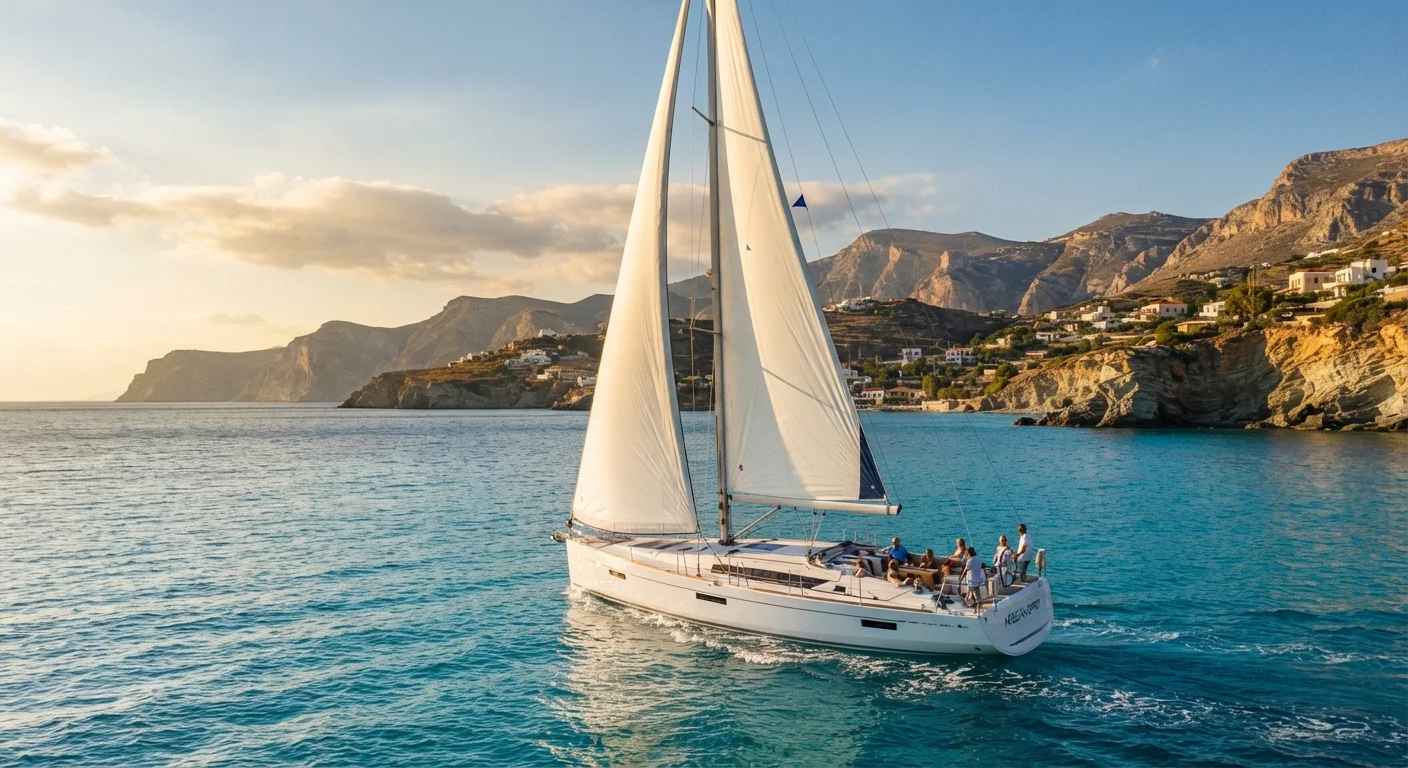
A private yacht charter — whether a bareboat rental you captain yourself or a fully crewed vessel — places your group in an entirely self-contained world. You choose which anchorages to visit, how long to stay, when to eat, and whether to spend the afternoon snorkeling or sailing. There are no scheduled dinner seatings, no mandatory muster drills shared with thousands of strangers, and no negotiating what to do next with anyone outside your party.
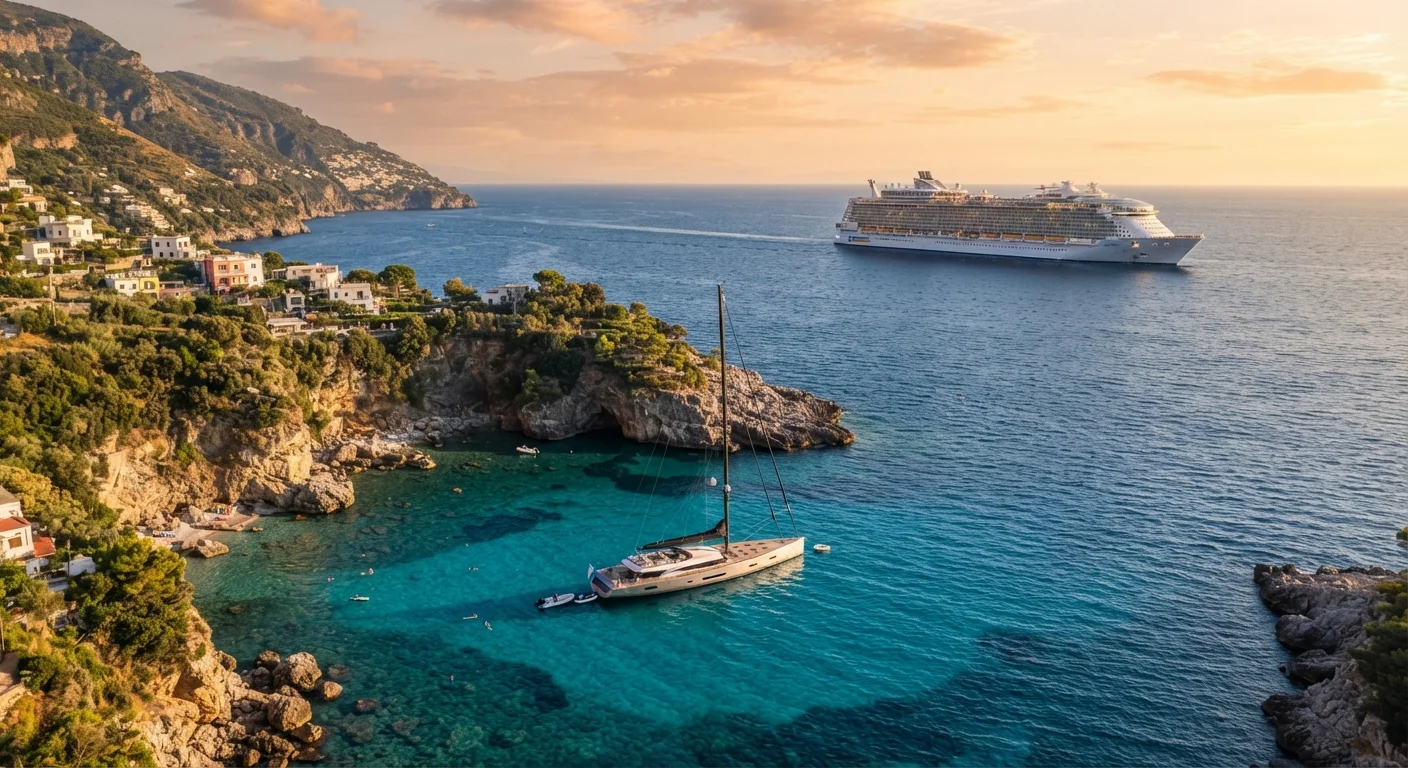
That intimacy is the central value proposition. For a family reunion, a milestone celebration, or a trip designed around a very specific stretch of coastline — the Greek islands, the British Virgin Islands, coastal Croatia — a charter delivers an experience no cruise ship can replicate. You anchor in coves that large vessels can't reach, and your days are genuinely your own.
The tradeoff is cost and complexity. Chartering a crewed yacht for a week in a popular sailing region can run from roughly $5,000 to well over $30,000 depending on vessel size, crew, and destination — before provisions, fuel, and port fees. For a large group, that cost divides more reasonably; for two people, it's a significant outlay. Those considering this route will find a practical overview of charter logistics useful before committing.
Splitting Charter Costs With a Group
Charter pricing becomes far more approachable when divided among a larger party. A crewed yacht accommodating eight to ten guests can deliver a per-person cost that rivals premium cruise cabin categories — while offering a fundamentally more private experience. If you're considering a charter, pricing it out for your full group before dismissing it as out of reach is worthwhile.
The Cruise Ship Experience: Scale, Convenience, and Variety
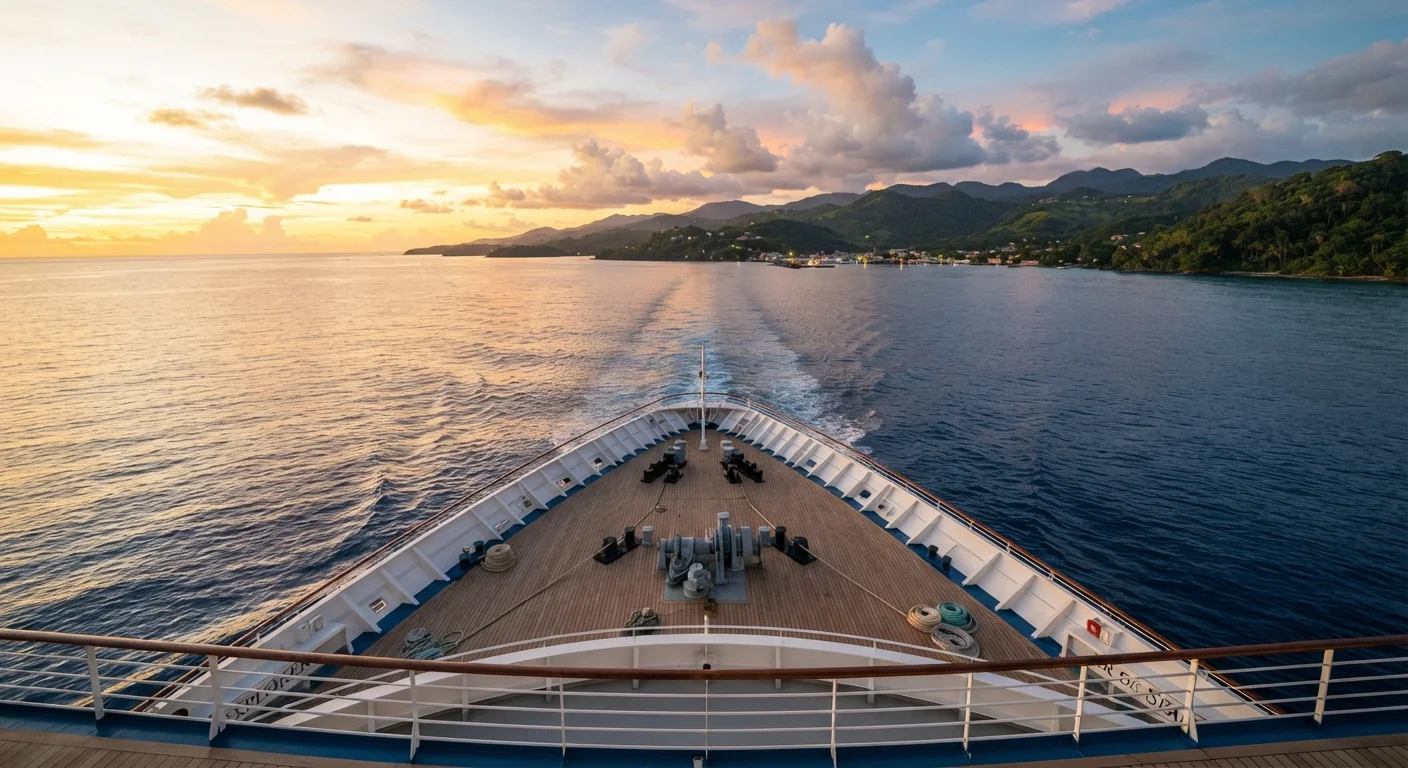
A mainstream cruise ship operates more like a floating resort than a vessel in any intimate sense. The largest ships carry several thousand passengers, offer dozens of dining venues, entertainment programs, pools, spas, and organized shore excursions — all within a single fare structure that makes per-day costs surprisingly reasonable compared to land-based vacations of comparable length.
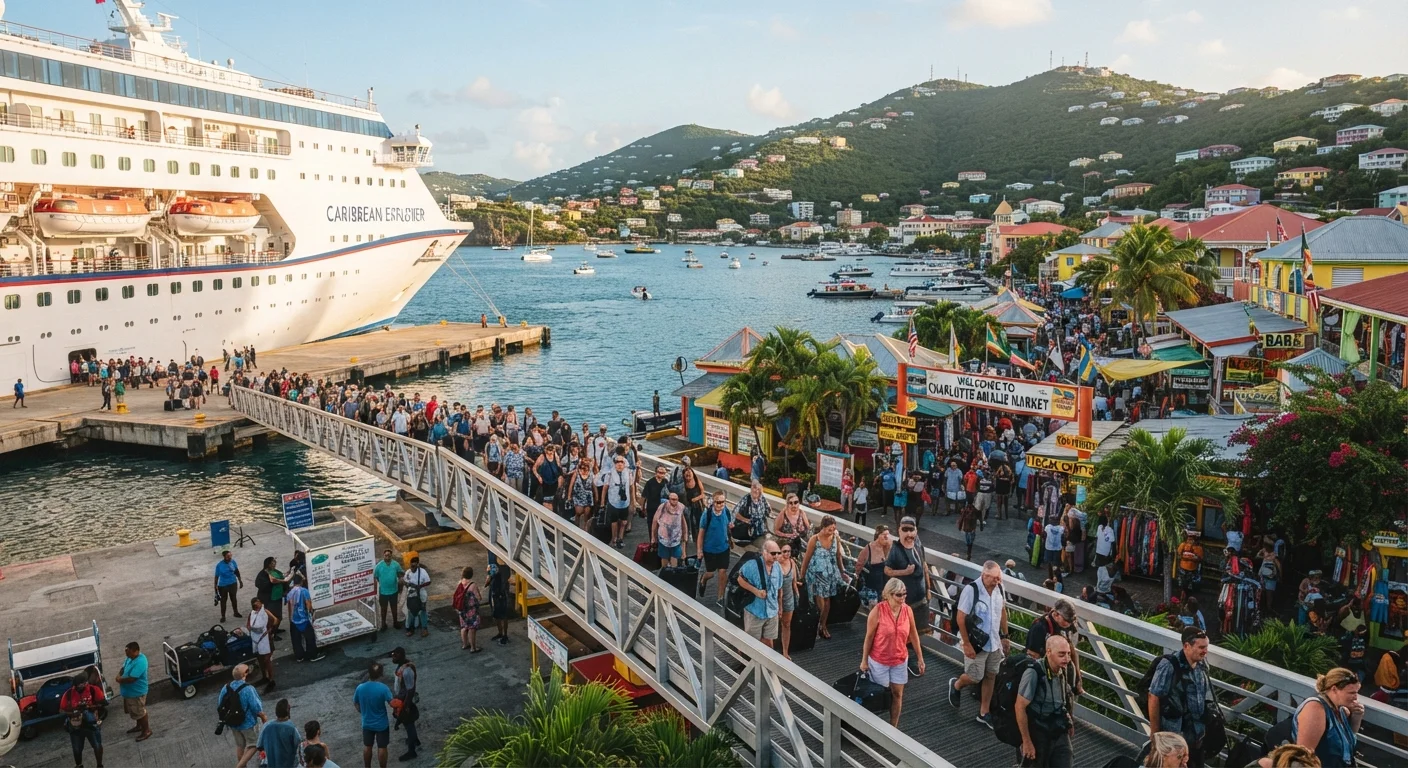
The structure is the point. Cruise itineraries are designed to deliver efficiency: wake up in one port, spend the day ashore, reboard, sleep, arrive somewhere new. For travelers who want to sample multiple destinations without the logistical burden of arranging ground transport between them, that model works well. Understanding how shore excursions work — whether booked through the ship or independently — is one of the more consequential planning decisions cruise passengers face.
Size, however, does bring genuine tradeoffs. A balanced look at what mega-ships do well and where they fall short reveals that larger vessels mean larger crowds, more regimented schedules, and ports that may be overwhelmed with fellow passengers from multiple ships docked simultaneously.
~3,000–6,000+
Passengers on largest cruise ships
The largest contemporary cruise vessels carry passenger capacities that rival small towns, according to cruise industry data.
7–14 days
Typical charter or cruise duration
One to two weeks is the most common booking window for both charter yachts and ocean cruise itineraries in popular sailing regions.
Making the Call: What Actually Matters to You
The right choice tends to become obvious once you strip away the marketing imagery and focus on the mechanics of how you travel. Group size is often the deciding factor. A charter spread across eight to ten people becomes far more competitive in cost-per-person terms; a couple traveling alone will almost always find a cruise ship dramatically more economical.
Destination matters too. Some coastlines and island chains are genuinely better experienced from a small vessel that can anchor in quieter waters. Others — transatlantic routes, Alaskan glacier approaches, Norwegian fjords — are well-served by larger ships that provide comfortable passage across significant distances. For travelers drawn to remote or rugged destinations, expedition cruising represents a middle path worth examining separately.
Finally, consider how much you want to plan versus how much you want handled. A charter requires decisions about provisioning, routing, anchoring permissions, and weather monitoring. A cruise handles all of that — at the cost of your autonomy. Neither approach is inherently superior; they simply fit different travelers and different trips.
This article is for general informational purposes only. Prices, availability, and travel conditions vary widely and should be verified directly with charter companies, cruise lines, and relevant authorities before booking. Always consult official government sources for current entry requirements, safety advisories, and travel regulations.