

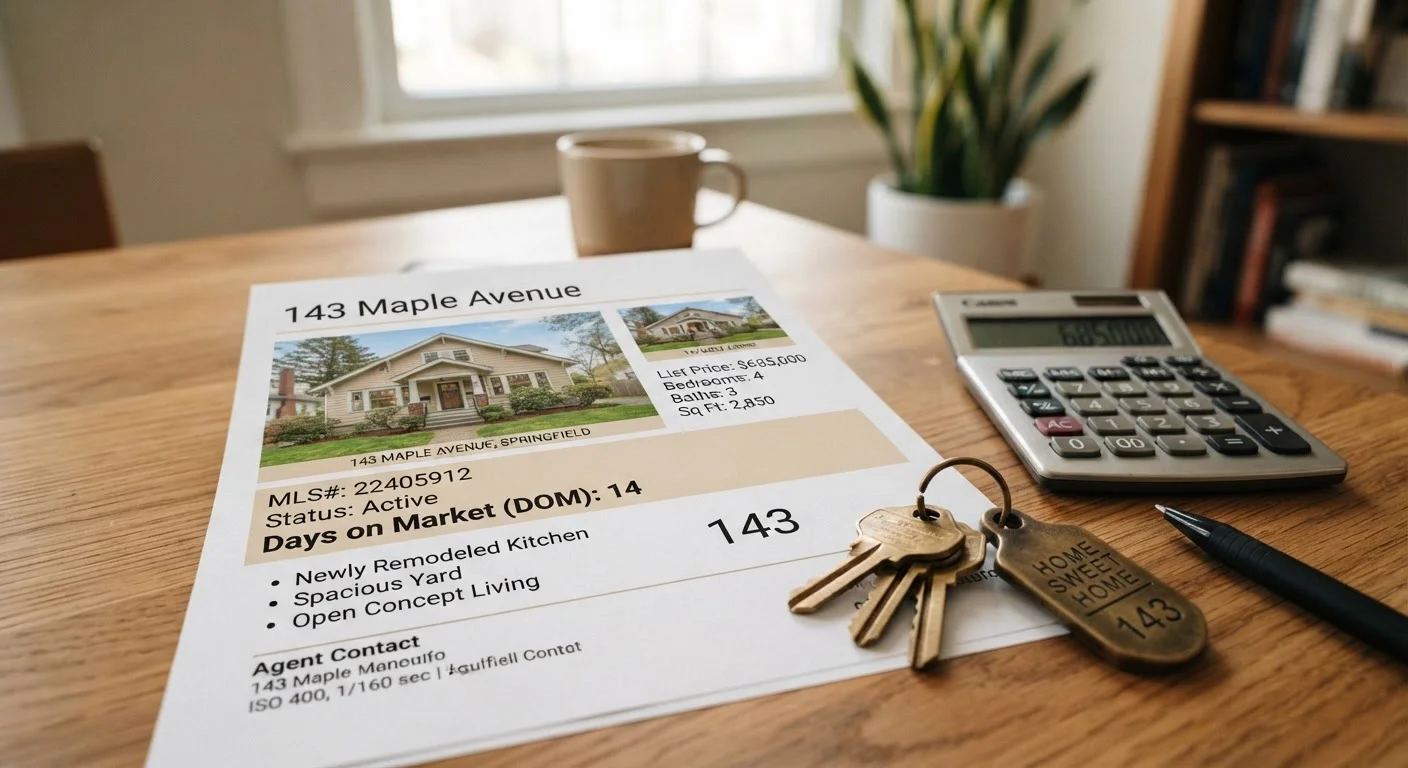
What DOM Actually Measures
Every real estate listing carries a days on market (DOM) figure, but many buyers scroll past it without a second look. That's a missed opportunity. DOM is one of the few objective data points in a listing — a timestamp that doesn't depend on marketing language or staging photos.
DOM begins the day a property is entered into the MLS as active and stops when its status changes to pending or under contract. It does not include the closing period. As part of the broader data found in any listing, DOM sits alongside fields like list price, square footage, and property taxes — all of which carry meaning when read together. For a full breakdown of listing fields, see what every field in a real estate listing actually means.
One important caveat: if a seller withdraws a listing and relists it, the DOM counter typically resets on most MLS platforms. This can make a property appear fresher than it actually is. Cumulative DOM (CDOM) is designed to address this, though not all platforms display it prominently. Always ask your agent which figure is being shown.
How to Interpret High vs. Low DOM
There is no universal threshold that defines a 'good' or 'bad' DOM — context is everything. The most useful benchmark is the local median DOM for comparable properties in the same area and price range.
18 days
Median DOM for US existing home sales
According to the National Association of Realtors, the median days on market for existing homes has fluctuated significantly with market conditions, reaching historic lows during peak seller's markets.
~1 in 5
Listings that experience at least one price reduction
Industry data suggests roughly 20% of active listings undergo a price reduction before going under contract, often correlating with elevated DOM figures.
30–90 days
Typical DOM reset window on most MLS systems
Most MLS platforms reset the DOM counter after a listing has been off-market for a defined period, commonly between 30 and 90 days depending on local MLS rules.
Low DOM (well below local median) typically signals strong buyer demand. The property may have attracted multiple offers quickly, which can mean less negotiating room for buyers. In competitive markets, homes priced accurately and presented well can go under contract within days.
High DOM (well above local median) warrants closer investigation. Common causes include:
- Overpricing relative to comparable sales
- Condition issues that surfaced during showings or inspection
- An unusual property that appeals to a limited buyer pool
- Seasonal slowdowns in local demand
- Marketing or accessibility problems
A high DOM doesn't automatically mean something is wrong with the property — but it does mean buyers should ask more questions. Listing language can sometimes hint at underlying issues too; reading between the lines of listing descriptions can help decode what sellers and agents may be signaling.
Ask Your Agent for the Full Listing History
Consumer-facing listing sites often display only the current DOM figure, which may have reset after a relisting. Your real estate agent can pull the full MLS history, including prior list prices, status changes, and cumulative DOM — giving you a much clearer picture of a property's market journey before you make an offer.
DOM as a Negotiating Tool
Buyers often use DOM as a starting point for assessing negotiating leverage. A property that has sat on the market for significantly longer than local norms may indicate a motivated seller — particularly if the listing history shows one or more price reductions.
That said, DOM alone should never drive a negotiating strategy. A seller who has already reduced their price to fair market value may have little room to go further, regardless of how many days the property has been listed. Conversely, a home with a high DOM due to a truly niche feature — a private airstrip, for example — may still command its asking price from the right buyer.
It also helps to understand where a property sits in its listing lifecycle. Understanding listing statuses can clarify whether a high DOM reflects ongoing active marketing or a deal that fell through and relisted. A relisted property — one that went under contract and then came back to active — carries a different story than one that has simply been sitting without interest.
When a Deal Falls Through and Relists
A property that returns to active status after a failed contract is sometimes called a 'back on market' listing. This can happen for many reasons — buyer financing issues, failed inspections, or the buyer simply walking away. The reason matters: an inspection-related fallthrough is worth investigating carefully, while a financing collapse on the buyer's side may have nothing to do with the property itself. Always ask why a contract was terminated.
Common Misconceptions About DOM
One widespread misconception is that a zero or very low DOM guarantees a property is fairly priced or problem-free. Fast-moving markets can sometimes carry overpriced homes briefly before buyers catch on. Real estate listing myths outlines several assumptions — including treating list price as fair value — that can cost buyers time and money.
Another misconception is that DOM is the same across all MLS systems. Rules about when DOM resets, how CDOM is calculated, and which figure appears on consumer-facing portals vary by region and platform. What you see on a third-party listing site may differ from the MLS data your agent can access directly.
Finally, DOM should always be read alongside price per square foot, recent comparable sales, and neighborhood trends — not as a standalone verdict. Price per square foot has its own limitations and works best when paired with contextual data like DOM rather than used in isolation.
This article is for general informational purposes only and does not constitute financial, legal, or real estate advice. Consult a licensed real estate professional for guidance specific to your situation and local market.