

Why the Source Matters
Where you get a pet shapes much more than the first week. It affects the animal's known health history, behavioral background, the support you receive after adoption, and in some cases the legal and financial obligations you take on. Before exploring which path suits you, it helps to understand what each actually involves — not the idealized version, but the realistic one.
If you haven't yet settled on a species, our comparison of dogs versus cats can help you think through which animal fits your lifestyle. Once you've decided, the pathway question becomes central.
Animal Shelters: Public and Humane Society Facilities
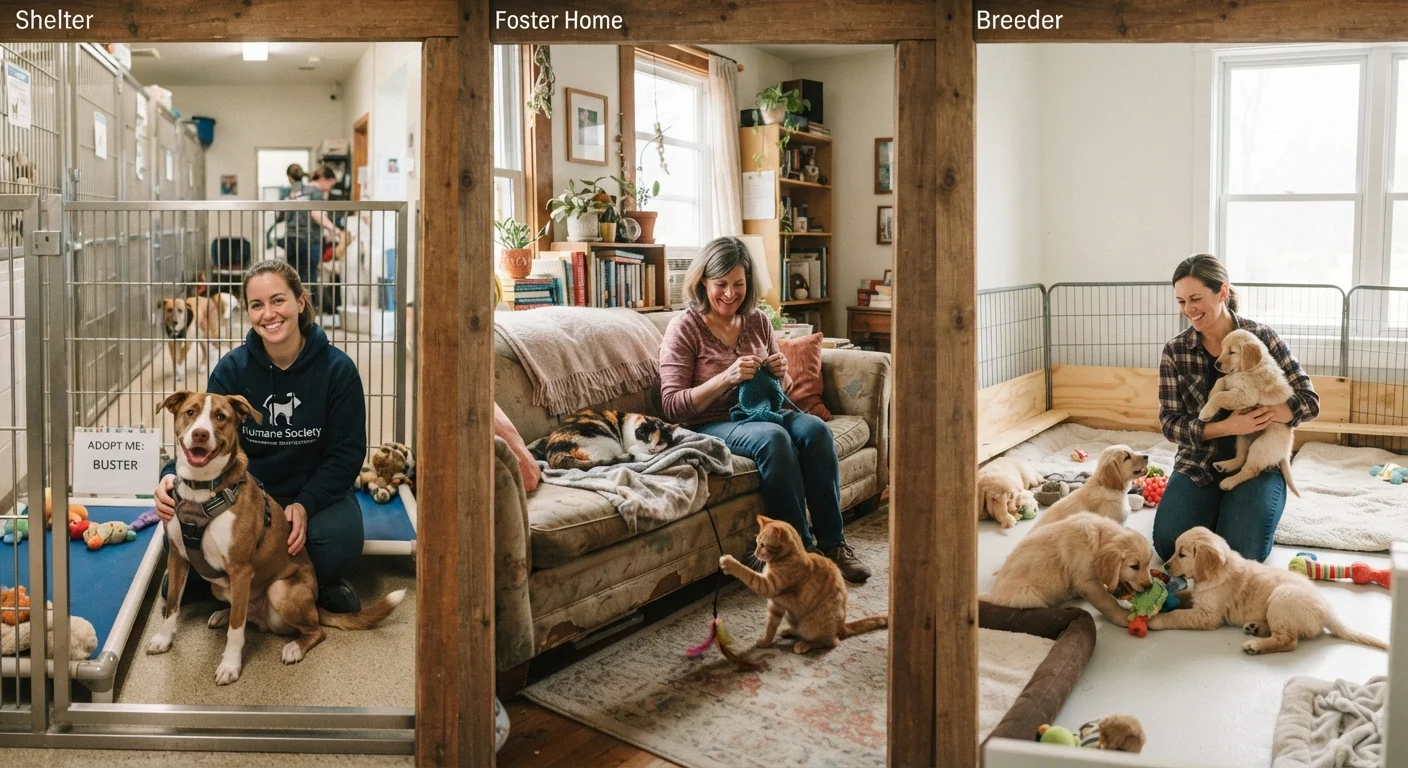
Municipal animal control shelters and humane societies take in stray, surrendered, and confiscated animals. Most operate as open-admission facilities, meaning they accept animals regardless of space. This results in a wide, constantly rotating inventory of dogs, cats, and occasionally small animals or rabbits.
What to expect: Adoption fees are generally lower than other sources — typically ranging from nominal amounts to a few hundred dollars, often including initial vaccinations and spay/neuter. The process can be completed in a single visit or over a few days. Staff may have limited behavioral history on individual animals, particularly strays, because that background simply isn't available.
Trade-offs: The speed and accessibility of shelter adoption is a genuine advantage. The potential downside is uncertainty — you may know little about an animal's previous environment or how it behaves in a home setting. Spending time with the animal during a meet-and-greet, and asking staff about observed behavior in the facility, is worthwhile.
Make the Most of Your Shelter Visit
Ask shelter staff which animals have been there the longest and why — sometimes a long stay reflects kennel stress rather than a behavioral problem. Request a quiet room to spend time alone with an animal before deciding. Observing how a dog or cat responds when the initial excitement settles tells you more than the first few minutes.
Rescue Organizations: Foster-Based Networks
Rescue organizations — whether breed-specific or general — typically operate through volunteer foster networks rather than physical facilities. Animals live in private homes before adoption, which means fosters can provide detailed observations: how the animal behaves around children, other pets, during thunderstorms, or when left alone.
What to expect: The application process tends to be more involved, sometimes including a home visit or reference check. Adoption fees are usually mid-range and often reflect veterinary costs the organization has already covered. Wait times vary; popular breeds or small dogs may have lengthy waitlists.
Trade-offs: The additional behavioral insight is a meaningful advantage, especially for first-time owners or households with children. The more selective screening process can feel intensive, but it is designed to improve match quality — which benefits both adopter and animal. Our overview for first-time pet owners covers what to prepare before that process begins.
| Animal Shelter | Rescue Organization | Responsible Breeder | |
|---|---|---|---|
| Typical adoption fee | Low to moderate | Moderate | High |
| Animal age range | All ages, often adults | All ages, mix of adult/puppy | Usually puppies or kittens |
| Behavioral history available | Limited, especially for strays | Detailed via foster observations | Breed tendencies; individual unknown |
| Health records provided | Basic vaccinations, spay/neuter | Often extensive vet care covered | Parental health testing records |
| Timeline to adopt | Days to one week | Weeks to months | Months, tied to litter availability |
| Application rigor | Straightforward | Thorough, may include home visit | Interview and contract required |
| Breed predictability | Low — wide mix | Variable, breed-specific rescues higher | High within breed standards |
Breeders: What Responsible Looks Like
Working with a breeder is a legitimate option when a specific breed's traits — energy level, coat type, size, or working ability — are genuinely important to your household. The critical distinction is between a responsible breeder and one operating primarily for volume or profit.
Markers of a responsible breeder: Health testing of parent animals for breed-specific conditions, transparency about those results, willingness to let you visit their facility, and a contract that includes a return clause if you can no longer keep the animal. Responsible breeders typically ask you questions too — they want their animals placed well.
What to expect: Costs are substantially higher than shelters or rescues. Wait times for a specific litter can run months. You will likely receive the most predictable outcome in terms of size, temperament range, and coat — because breed standards exist for a reason. That said, individual variation always exists, and no breeder can guarantee a specific personality.
Red flags to avoid: Multiple breeds available at once, no health testing records, pressure to decide quickly, and unwillingness to answer questions or allow a visit are all warning signs. Puppies sold through pet stores or shipped without a visit warrant extra scrutiny.
If you're also navigating housing logistics, our guide on renting with a pet is worth reviewing before finalizing any adoption decision.
Watch for High-Volume or Puppy Mill Operations
Operations that keep many breeds on hand, sell through intermediaries, or discourage in-person visits should be approached with caution. These conditions are associated with poor welfare practices and animals with undisclosed health histories. Taking time to verify health testing records and visit the facility in person before committing is a reasonable and appropriate step.
Preparing for What Comes Next
Regardless of which pathway you choose, the responsibilities of ownership begin before the animal arrives home. Supplies, veterinary selection, pet-proofing, and household routines all need to be in place. Our preparation checklist walks through each of those steps systematically.
It's also worth knowing that most rescue organizations and responsible breeders will expect — or require — that animals not already altered be spayed or neutered within a set timeframe. Understanding that commitment upfront avoids surprises. For broader ongoing care guidance, the Pet Care Basics hub covers feeding, grooming, and daily routines once your pet is home.
This article provides general educational information about pet adoption pathways and is not intended as legal, veterinary, or personalized advice. Consult a licensed veterinarian for health-related questions about a specific animal.