
Why Low-Impact Exercise Deserves More Respect
"Low-impact" is often misread as a polite term for easy workouts. In reality, it simply describes activities where at least one foot — or no feet at all — remains in contact with a surface at all times, sharply reducing the repetitive ground forces that accumulate during running or jumping. That distinction matters enormously for anyone dealing with joint pain, osteoarthritis, stress fractures, or the ordinary wear that comes with aging, without requiring a sacrifice in fitness outcomes.
Research consistently shows that low-impact modalities can improve cardiorespiratory endurance, muscular strength, flexibility, and even bone density when load-bearing elements are included. The key is selecting activities that match your goals and gradually increasing challenge over time. As our guide on training at a sustainable pace explains, exercising moderately and regularly outperforms sporadic high-intensity efforts for most people's long-term health.
Below are five well-supported low-impact options, what each one actually trains, and who stands to gain the most from incorporating it.
Swimming
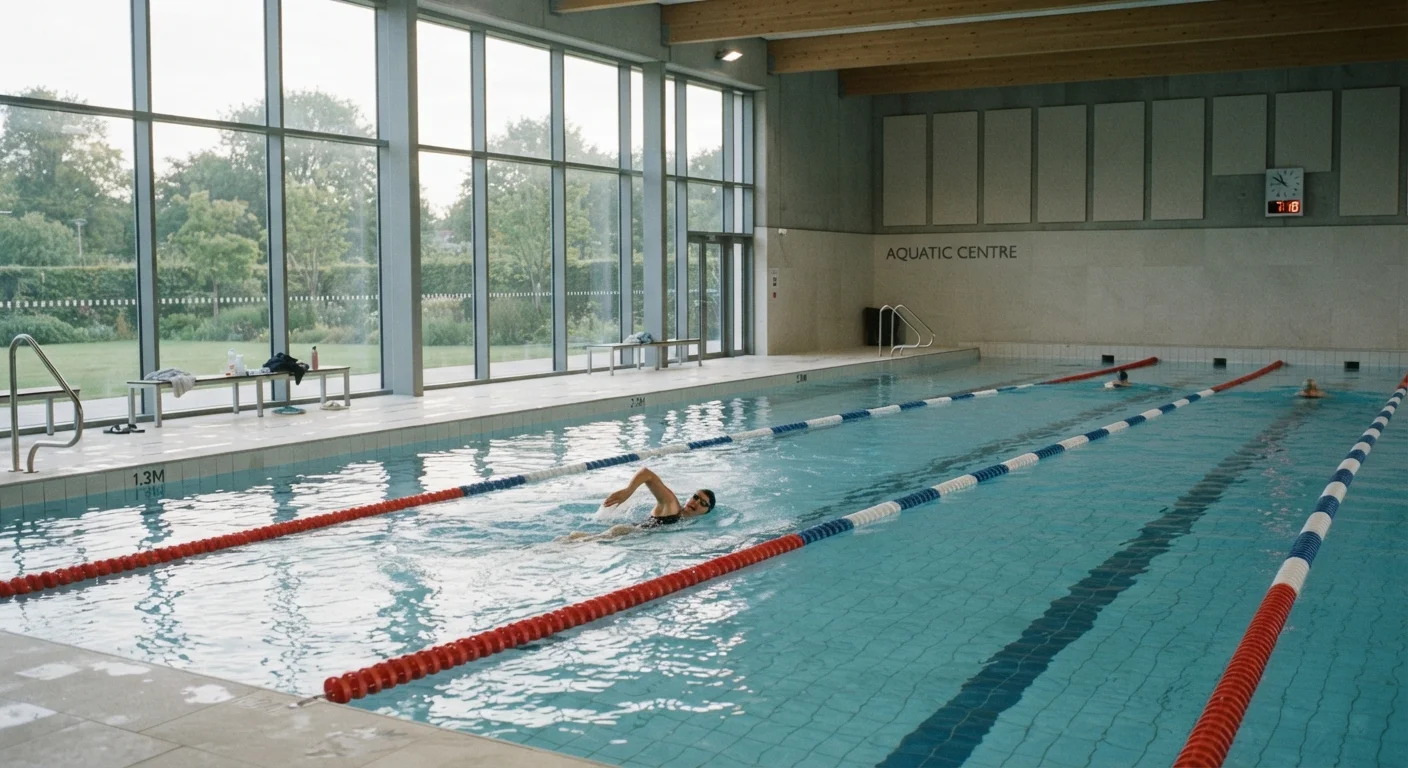
Water supports roughly 90% of body weight when a person is submerged to the neck, making swimming one of the most forgiving activities available for joints. Yet that buoyancy doesn't reduce the cardiovascular demand: swimming laps at a moderate pace elevates heart rate into aerobic training zones comparable to running at a similar perceived effort.
Beyond cardio, swimming engages nearly every major muscle group — shoulders, back, core, and legs all contribute depending on the stroke. Freestyle and backstroke emphasize the upper body and core; breaststroke adds hip flexor and inner thigh involvement. This full-body muscular recruitment is why competitive swimmers typically display impressive upper-body development despite never lifting a weight in the pool.
Best suited for: People with arthritis, joint replacements, lower back pain, obesity-related mobility limitations, or those rehabilitating from musculoskeletal injuries. Individuals with osteoporosis should note that swimming is not load-bearing and should discuss bone-density implications with their healthcare provider.
Swimming can match running's cardiovascular demand while eliminating nearly all joint impact stress.
Cycling (Stationary or Outdoor)
Cycling distributes body weight across the saddle and handlebars rather than concentrating it through the knees and ankles, which is why many orthopedic rehabilitation programs incorporate it early in recovery. Stationary cycling removes traffic and terrain variables, making it easier to control intensity precisely.
From a fitness standpoint, cycling primarily targets the quadriceps, hamstrings, glutes, and calves, while the cardiovascular system works continuously to meet the muscular demand. High-resistance, lower-cadence cycling builds muscular endurance in the legs; high-cadence, lower-resistance riding emphasizes aerobic capacity. Most people benefit from blending both.
Best suited for: Those with knee osteoarthritis (research suggests cycling can reduce knee pain over time rather than worsen it), older adults looking to maintain leg strength, and commuters or people with limited gym access who prefer outdoor activity. Note that saddle fit and bike geometry significantly affect knee comfort — poor setup can create, rather than prevent, overuse injuries.
Research suggests cycling may reduce knee pain over time, not worsen it, for people with osteoarthritis.
Rowing (Machine or Water)
Rowing is the rare low-impact activity that genuinely qualifies as a full-body workout in the truest sense. The drive phase loads the legs (primarily quads and glutes), the mid-pull transfers force through the core, and the finish engages the back and arms. According to exercise physiology research, rowing at moderate intensity can engage up to 86% of the body's muscle mass during each stroke cycle.
That muscular involvement, combined with continuous cardiovascular demand, makes rowing calorie-intensive relative to its joint impact. It's also one of the few low-impact options that meaningfully trains the posterior chain — the muscles along the back of the body — which are chronically underworked in people who spend long hours sitting.
Best suited for: Athletes cross-training around lower-extremity injuries, desk workers with upper back weakness, and individuals seeking a high-output workout without running. Beginners should prioritize technique before intensity; poor rowing form shifts load to the lower back and can cause strain.
Rowing engages the majority of the body's muscle mass per stroke while keeping joint impact negligible.
Elliptical Training
The elliptical trainer simulates a running motion without the foot ever leaving the pedal, eliminating the impact phase that produces repetitive stress in running. Studies using force-plate measurements confirm that peak ground reaction forces on an elliptical are significantly lower than during treadmill running at comparable speeds.
Ellipticals with moving handlebars add an upper-body pushing and pulling component, increasing total muscle recruitment and cardiovascular demand. Resistance and incline settings allow meaningful progression over time, which is important for continued adaptation. Without progressive challenge, any exercise eventually becomes less effective as the body acclimates.
Best suited for: Runners managing shin splints, stress fractures, or knee pain who want to maintain cardiovascular fitness during recovery. Also effective for older adults who prefer the feel of walking or running without the associated impact. The machine's guided motion means technique error is less of a risk than with rowing or swimming.
Elliptical training replicates the running motion while cutting peak joint forces substantially compared to treadmill running.
Yoga and Pilates
Yoga and Pilates occupy a different niche from the aerobic modalities above: they prioritize mobility, stability, and body-weight muscular endurance rather than cardiovascular output. Both have a meaningful evidence base — yoga has been shown to improve flexibility, balance, and self-reported quality of life in adults across age groups, while Pilates demonstrates particular effectiveness for core strength and chronic lower back pain reduction.
Neither is typically sufficient as a sole fitness activity for someone with cardiovascular health goals, but both serve as highly effective complements to aerobic training. They also address movement quality, which reduces injury risk across all other activities. See our guide to movement patterns every routine should cover for context on why this matters.
Best suited for: Anyone with chronic lower back pain (Pilates in particular), older adults focused on fall prevention and balance, and people who want structured recovery sessions between higher-intensity training days. Some yoga styles (hot yoga, power yoga) can generate substantial cardiovascular demand — but intensities vary widely.
Pilates shows particular effectiveness for core strength and reducing chronic lower back pain in research studies.
Building Your Low-Impact Routine
Progression Matters in Any Modality
Low-impact doesn't mean static. To continue building fitness over weeks and months, you need to gradually increase either duration, resistance, or frequency — a principle called progressive overload. If your sessions feel equally easy after several weeks, that's a signal your body has adapted and it's time to raise the challenge. Our guide on building an exercise habit that actually sticks covers the behavioral side of keeping momentum going.
No single modality covers every fitness component equally. Combining two or three of these activities across a weekly schedule — for example, cycling for cardiovascular endurance and yoga for flexibility and recovery — tends to produce more balanced results than relying on one alone. Our breakdown of cardio vs. strength training can help you understand how to balance these elements.
If you're returning after a long layoff, expect an adjustment period. Muscles, tendons, and cardiovascular systems all adapt on their own timelines. Our guide on starting exercise after a long break walks through what to realistically expect in that first month. And if you're struggling to find time, fitting exercise into a full-time work schedule offers practical scheduling strategies.
This article is for general informational purposes only and does not constitute medical advice. Consult a qualified healthcare professional before beginning any new exercise program, particularly if you have an existing health condition, injury, or are taking medication.