

Why Full-Time Workers Struggle to Exercise — and What Actually Helps
The most commonly cited barrier to regular physical activity among working-age adults isn't motivation — it's time. Long hours, unpredictable schedules, commutes, and family obligations leave many people feeling like exercise requires an hour they simply don't have. The good news: that framing is the main obstacle to fix.
Public health guidelines from the U.S. Department of Health and Human Services recommend at least 150 minutes of moderate-intensity aerobic activity per week for most adults — roughly 22 minutes a day. Research consistently shows that accumulated movement in shorter bouts (10 minutes or more) produces comparable cardiovascular and metabolic benefits to single longer sessions. You don't need a two-hour gym block to move the needle on your health.
What working adults need most is a realistic framework for fitting movement into existing structure — not a perfect plan that only works on uncrowded weekends. The steps below are built around that reality. For a deeper look at the behavioral mechanisms that make habits stick, see the science behind building a lasting exercise habit.
What you will need
Step-by-Step: Building Exercise Into a Packed Schedule
Follow these steps sequentially. Each one builds on the last to create a system that fits around work — rather than competing with it.
Audit Your Current Week Before Adding Anything
Before scheduling a single workout, map your existing week. Identify where you have genuine discretionary time — early mornings, lunch breaks, post-commute windows, or weekends. Note which days are reliably high-stress or unpredictable. You're looking for 2–3 windows per week that are consistently yours to control, even if each is only 20–30 minutes.
Schedule Workouts as Non-Negotiable Appointments
Block exercise sessions directly in your work calendar — the same system you use for meetings. Research on implementation intentions (specific plans that link a behavior to a time and place) shows this significantly increases follow-through compared to vague intentions like "I'll work out when I can." Mark them as busy so they don't get overwritten by meeting requests.
Match Exercise Timing to Your Energy, Not an Ideal
Morning workouts work well for people who wake easily and value having fitness done before the day's demands accumulate. Lunch-hour sessions suit those with flexible midday schedules. Evening exercise fits people whose energy peaks late — though for some it can interfere with sleep. There is no universally superior time; the best time is the one you'll actually use repeatedly.
Use Active Commuting and Movement Breaks Strategically
Walking or cycling to work, getting off transit one stop early, or parking farther away are low-friction ways to accumulate meaningful movement. Inside the workday, brief activity breaks — a 10-minute walk after lunch, standing during phone calls, or structured walking — are supported by evidence for their cardiovascular and metabolic effects. These aren't substitutes for dedicated exercise sessions, but they're a legitimate supplement, especially on days when a full workout isn't possible.
Choose a Format Sustainable Enough to Repeat 150+ Times a Year
A workout routine needs to be repeatable, not impressive. A 20-minute circuit at home you actually complete outperforms a 90-minute gym program you avoid. Consider covering fundamental movement patterns — push, pull, hinge, squat, and carry — in whatever setting fits your schedule. Rotating formats (a walk one day, bodyweight training another, a group class on weekends) can reduce monotony. For social accountability, group fitness classes offer structure and commitment cues that help some people stay consistent.
Review and Adjust Monthly
Set a monthly calendar reminder to evaluate what's working. Are you hitting your scheduled sessions most weeks? If not, identify the specific friction point — the time slot, the format, the location, or competing obligations — and adjust one variable. Avoid wholesale overhauls; small targeted changes tend to produce more durable improvements than restarting from scratch.
Shorter Sessions Count More Than You Think
Many working adults underestimate the value of a 15–20 minute workout because it feels "not enough." Current evidence supports accumulated movement across the day as a valid path to meeting weekly activity guidelines. A 20-minute brisk walk at lunch and a 20-minute bodyweight session after work together exceed most days' recommended minimum. Don't let the perfect be the enemy of the consistent.
Keeping the Habit Going When Work Gets Harder
Even well-designed routines face disruption. Deadlines, travel, illness, and family demands will periodically crowd out scheduled sessions. The critical skill isn't preventing those gaps — it's recovering from them quickly without abandoning the habit entirely.
Research in behavioral science suggests that missing one session rarely derails a habit; missing two or more consecutively is where most people fall off. Build a minimum viable session into your plan — even a 10-minute walk counts as honoring the habit on a difficult day. Exercising at a sustainable pace consistently outperforms sporadic high-intensity bursts for most people's long-term outcomes.
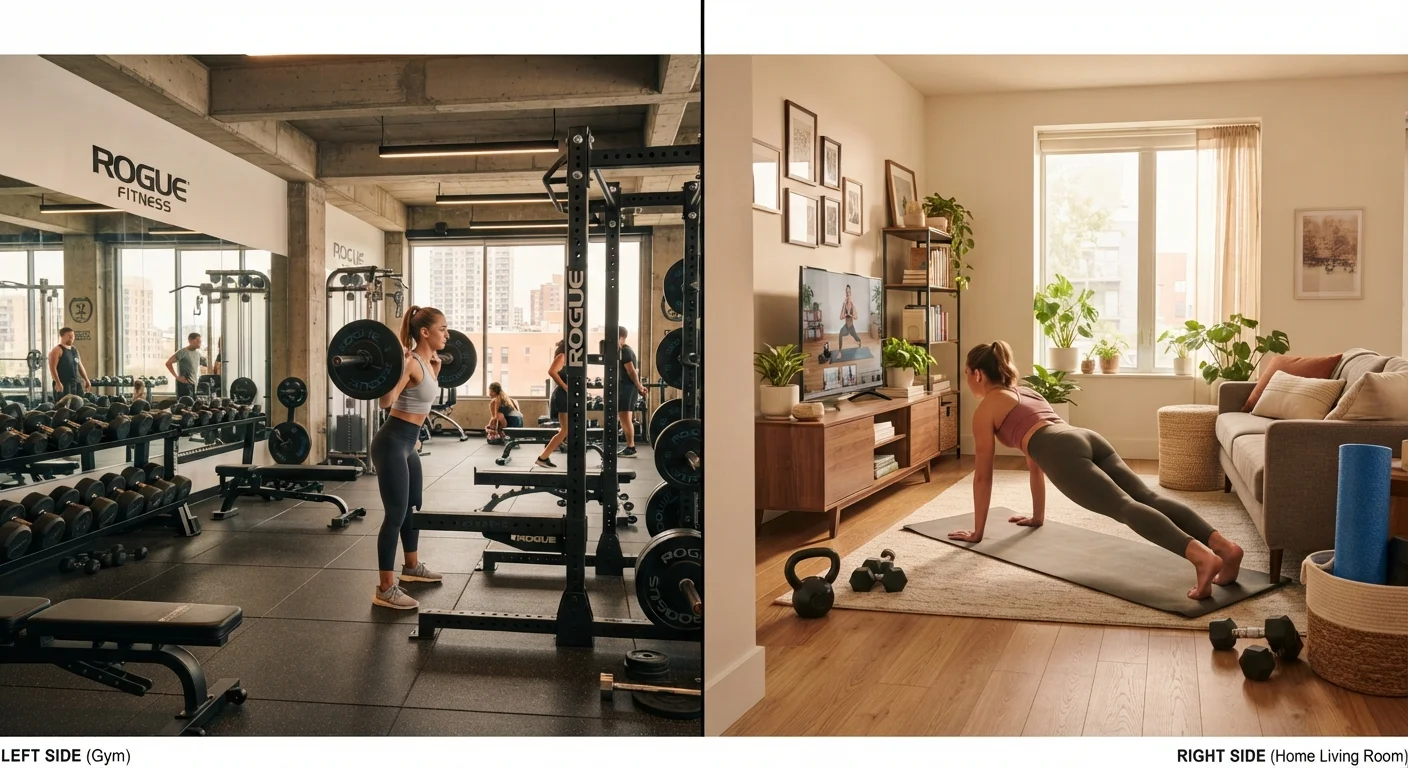
Also consider what format fits your life best. Some working adults thrive with the structure of a gym; others find home workouts more compatible with their schedule. Comparing gym and home exercise trade-offs can help you decide which environment sets you up for consistency. And if joint discomfort or fatigue from long workdays makes vigorous movement difficult, low-impact options like cycling and swimming deliver real fitness gains with less physical stress.
Overloading an Already Stressful Schedule Backfires
Adding intense exercise on top of chronic work stress without adequate sleep and recovery can increase injury risk and compound fatigue. If you're sleeping fewer than six hours regularly, prioritizing sleep quality may be a more impactful first step than adding workouts. Exercise and rest are complementary — not competing — health priorities. Visit our mental wellness resources for practical strategies on managing stress and sleep alongside an active lifestyle.
This article provides general health information for educational purposes and is not a substitute for advice from a qualified healthcare professional. If you have any underlying health conditions or concerns, consult your doctor before beginning a new exercise routine.