
Why a Feeding Schedule Matters
A consistent feeding routine does more than just fill your pet's bowl — it establishes digestive regularity, supports a healthy weight, and gives you a reliable baseline for spotting behavioral or health changes. Pets that eat at predictable times tend to be less anxious around food, less likely to beg compulsively, and easier to monitor for appetite shifts that might signal illness.
Free-feeding — where dry food is available around the clock — is still practiced by many cat owners, and it can work in multi-cat households where all animals maintain a healthy weight naturally. However, it removes visibility into how much each pet is actually consuming. For most dogs, and for cats prone to weight gain, scheduled meals are the more manageable and veterinarian-recommended approach.
If you're building routines for a pet you've recently adopted, our first-time pet ownership guide covers the broader picture of setting up a sustainable care routine from day one.
What you will need
How to Set Up Your Pet's Feeding Schedule
The steps below apply to healthy adult dogs and cats. Puppies, kittens, and pets with diagnosed health conditions should be evaluated by a veterinarian before establishing any feeding plan.
Measuring cup or kitchen scale
Ensures accurate portion sizes rather than eyeballing, which commonly leads to overfeeding.
Automatic pet feeder
Dispenses meals at set times, useful for owners with unpredictable schedules.
Slow-feed bowl
Reduces eating speed in dogs prone to gulping, which can help prevent digestive discomfort.
Decide between scheduled meals and free-feeding
Free-feeding — leaving food out all day — works for some cats but makes it nearly impossible to monitor intake or recognize appetite changes. Scheduled meals (one to three set times per day) give you visibility and control. Most veterinary guidance favors scheduled feeding for both dogs and cats, particularly when weight management is a concern. If you are transitioning from free-feeding, do it gradually over one to two weeks to avoid stress.
Determine the right number of daily meals
Meal frequency should match your pet's life stage and species:
- Puppies (under 6 months): 3–4 meals per day to support rapid growth and stable blood sugar.
- Adult dogs: 2 meals per day is standard and widely recommended by veterinarians.
- Kittens (under 6 months): 3–4 meals per day.
- Adult cats: 2–3 meals per day; some do well with more frequent, smaller servings.
- Senior pets or those with medical conditions: Follow your veterinarian's specific guidance — frequency may need to be adjusted.
Calculate portion size using the food label as a starting point
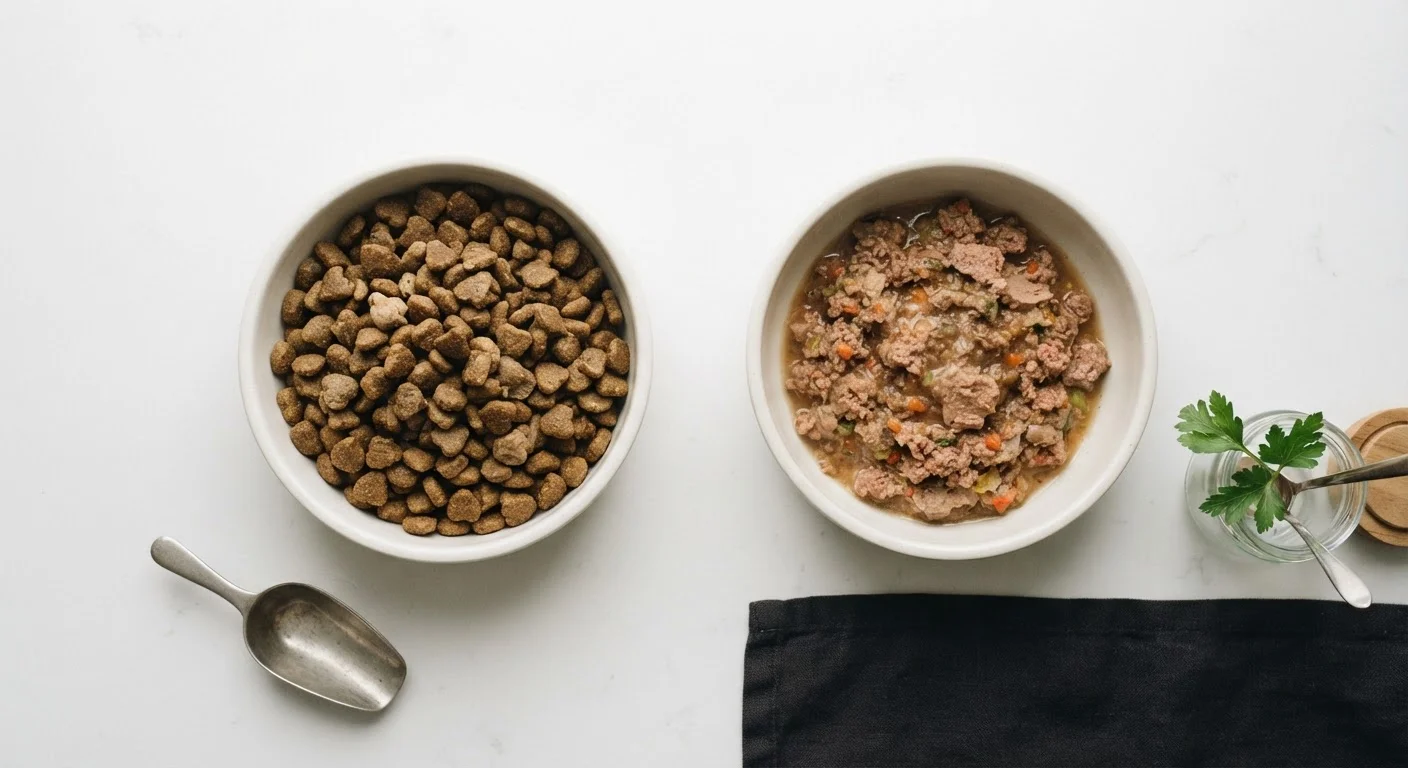
The feeding guide printed on pet food packaging is a reasonable starting point, not a fixed prescription. These guides are typically expressed as a daily amount based on weight ranges. Divide the daily total by the number of meals you've chosen. Use a measuring cup or scale — scooping by eye is one of the most common causes of unintentional overfeeding. Because caloric density varies between food types and brands, the portion for a wet food diet will look very different from a dry kibble diet. Our guide to dry vs. wet food explains those differences in detail.
Set and stick to consistent meal times
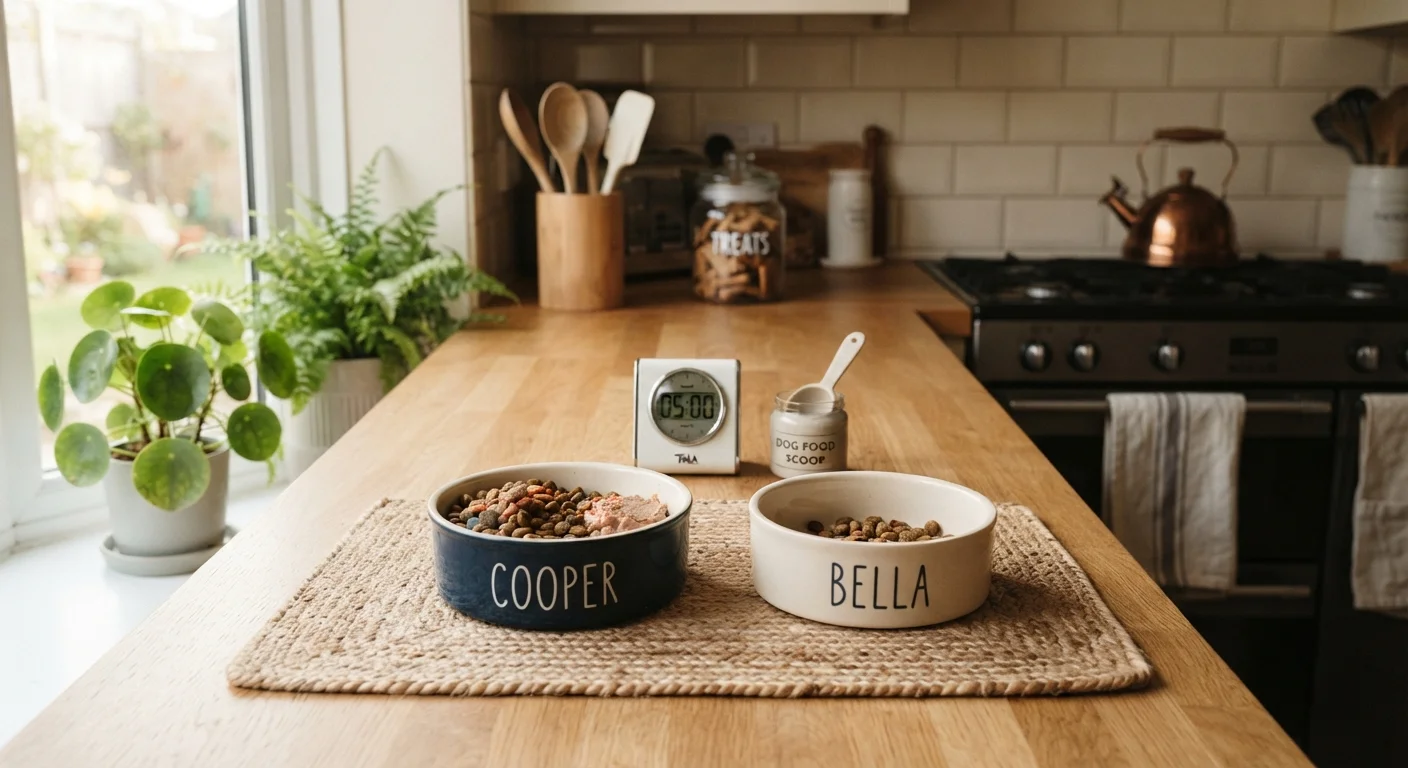
Pick feeding times that realistically fit your daily schedule — morning and evening are the most common for two-meal routines. Consistency matters: pets develop strong digestive rhythms around predictable mealtimes, and regular timing also makes it obvious when your pet skips a meal, which can be an early indicator of illness. Set a phone reminder or use an automatic feeder if your schedule varies. Remove uneaten food after 20–30 minutes to avoid spoilage and discourage grazing.
Monitor weight and adjust as needed
A feeding schedule is not a set-and-forget system. Weigh your pet monthly — many veterinary clinics allow drop-in weigh-ins at no charge. If your pet is gaining weight, reduce the daily portion in small increments (roughly 10% at a time) before making more significant changes. If they're losing weight or seem chronically hungry, speak with your vet before simply increasing portions. Gradual weight change in either direction often signals that adjustments to the plan are needed. For a deeper look at why pets gain weight and how routine factors in, see why pets gain weight and what helps.
Treats Count Toward Daily Calories
Many owners forget to account for treats when calculating daily intake. As a general guideline, treats should make up no more than 10% of your pet's total daily calories. Factor them in by slightly reducing the main meal portions on days when treats are given frequently.
Sudden Appetite Changes Warrant a Vet Visit
Consistently refusing meals, eating dramatically more or less than usual, or showing distress around mealtimes are signs that something may be medically wrong. Do not attempt to solve persistent appetite changes by adjusting the schedule alone — schedule a veterinary appointment to rule out underlying causes.
Always Consult Your Vet First
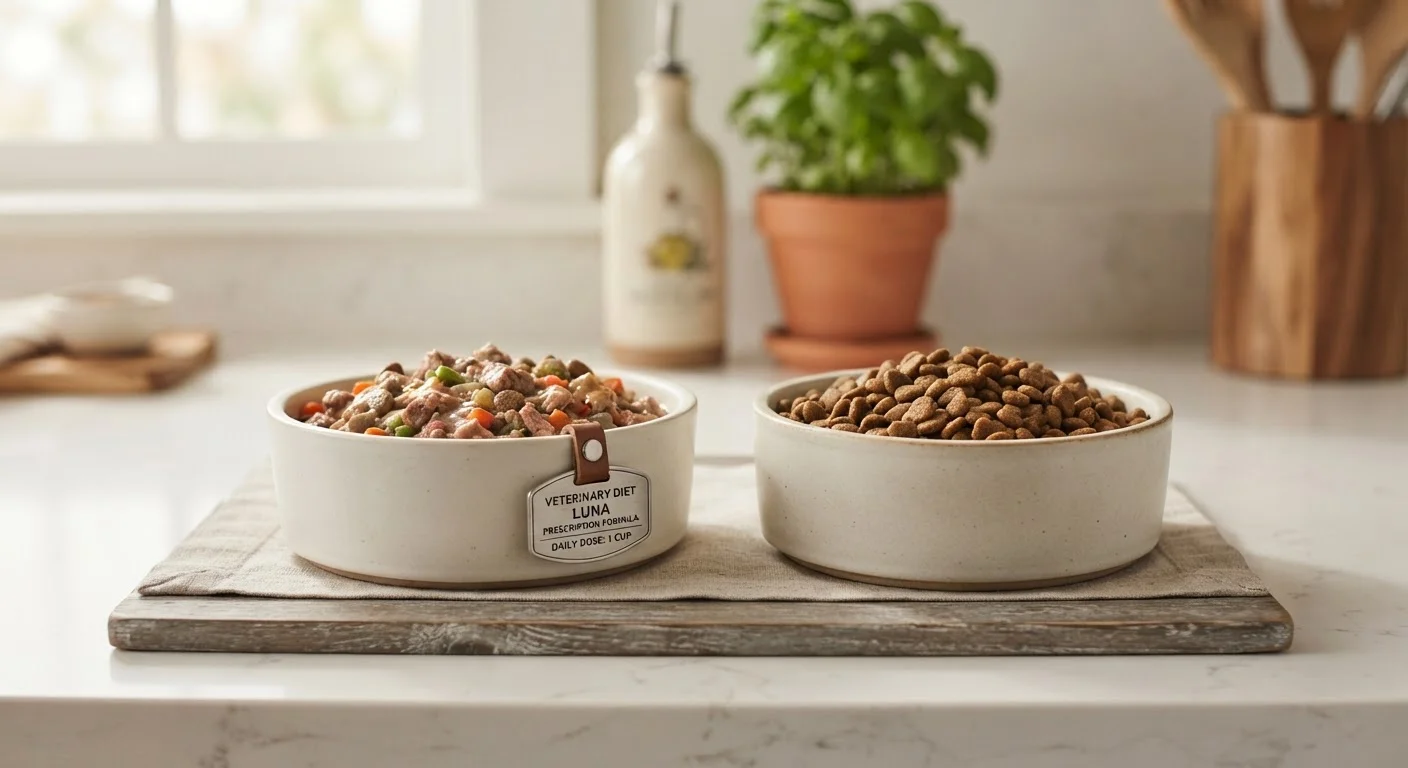
This article provides general guidance on feeding schedules and is not a substitute for personalized veterinary advice. Pets with diabetes, kidney disease, food allergies, or other health conditions may require therapeutic diets or customized feeding plans. See prescription vs. over-the-counter pet diets for more context on when a vet-directed diet is appropriate.
This article is for general informational purposes only and does not constitute veterinary or medical advice. Always consult a licensed veterinarian for guidance specific to your pet's health, age, and nutritional needs.