
Beyond the Ramp: How Accessibility Became Part of Hotel Architecture
For decades, accessibility in hotels was treated as a compliance checkbox — the minimum required by law, tucked into a corner of the property and rarely integrated into the overall guest experience. That approach has shifted noticeably in recent years, driven by a combination of stronger enforcement of existing regulations, advocacy from disability communities, and a broader industry recognition that accessible design benefits a wider range of guests than originally assumed.
The Americans with Disabilities Act, signed in 1990 and updated with revised standards in 2010, set enforceable minimums for U.S. hotels — covering everything from parking lot slope gradients to shower bench dimensions. But compliance with those minimums has always been uneven, and even fully compliant properties can feel alienating if accessibility was bolted on rather than built in.
Newer hotel construction tends to approach accessibility differently. Universal design principles — which aim to create spaces usable by the widest range of people without special adaptation — have moved from niche theory into mainstream architecture. The result is that features like lever door handles, curbless shower entries, and high-contrast room signage now appear in general-use rooms at many full-service properties, not just in designated accessible rooms.
Historic Properties and ADA Exemptions
Buildings listed on the National Register of Historic Places may qualify for limited ADA exemptions if full compliance would threaten the property's historic character. This does not mean these hotels provide no accessibility — many have made substantial modifications — but it does mean their compliance may differ from newer construction. Always verify directly with a historic property what accommodations are available.
What ADA-Compliant Rooms Actually Look Like
An ADA-compliant hotel room covers several distinct categories of need, and travelers benefit from understanding what each category includes before they arrive.
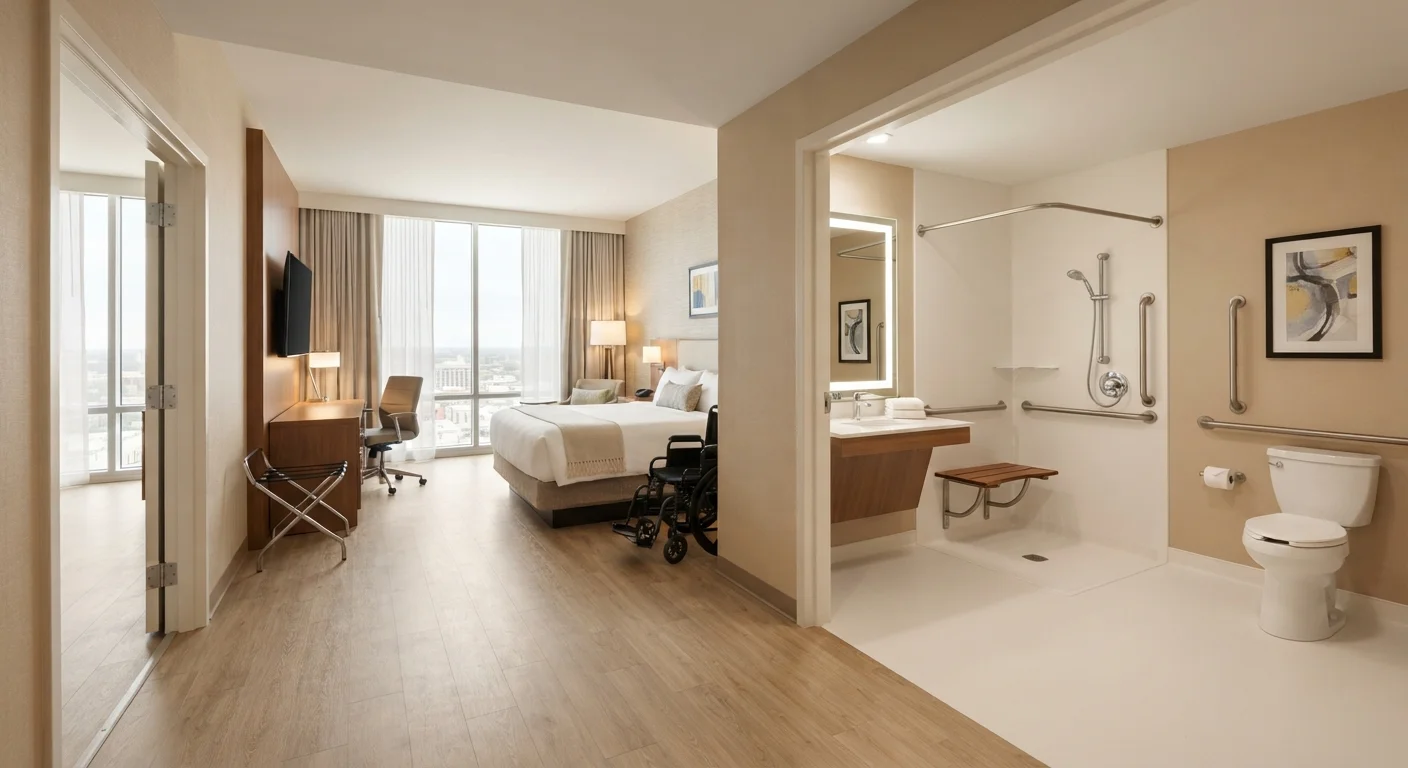
Mobility-accessible rooms feature doorways with at least 32 inches of clear width, turning radius space for wheelchairs (typically a 60-inch diameter clear floor circle), roll-in showers or accessible tub configurations with grab bars, toilet seat heights within a specified range, lowered closet rods and peepholes, and furniture arranged to maintain clear passage. Beds are expected to be at a height that allows transfer from a wheelchair.
Hearing-accessible rooms prioritize visual and tactile alerting systems: visual fire alarms that flash rather than only sound, vibrating bed shakers connected to the alarm system, visual notification for the telephone and door knock, and in some cases closed-captioning enabled by default on the television.
Combined rooms incorporate both sets of features, and many hotels allow guests to specify which features are most important so the property can assign the most appropriate room from its accessible inventory.
For travelers evaluating a destination's broader infrastructure — transportation, medical access, neighborhood walkability — the guide to reading a destination's tourism infrastructure offers a useful framework for thinking beyond the hotel room itself.
Ask for the Specific Room, Not Just the Category
When booking an accessible room, ask the hotel to note your assigned room number or specific room type in the reservation. Generic accessible room categories can vary considerably within the same property. Knowing you're confirmed for a particular room — not just 'an accessible room' — gives you something concrete to verify when you check in.
How Booking Practices Have Had to Adapt
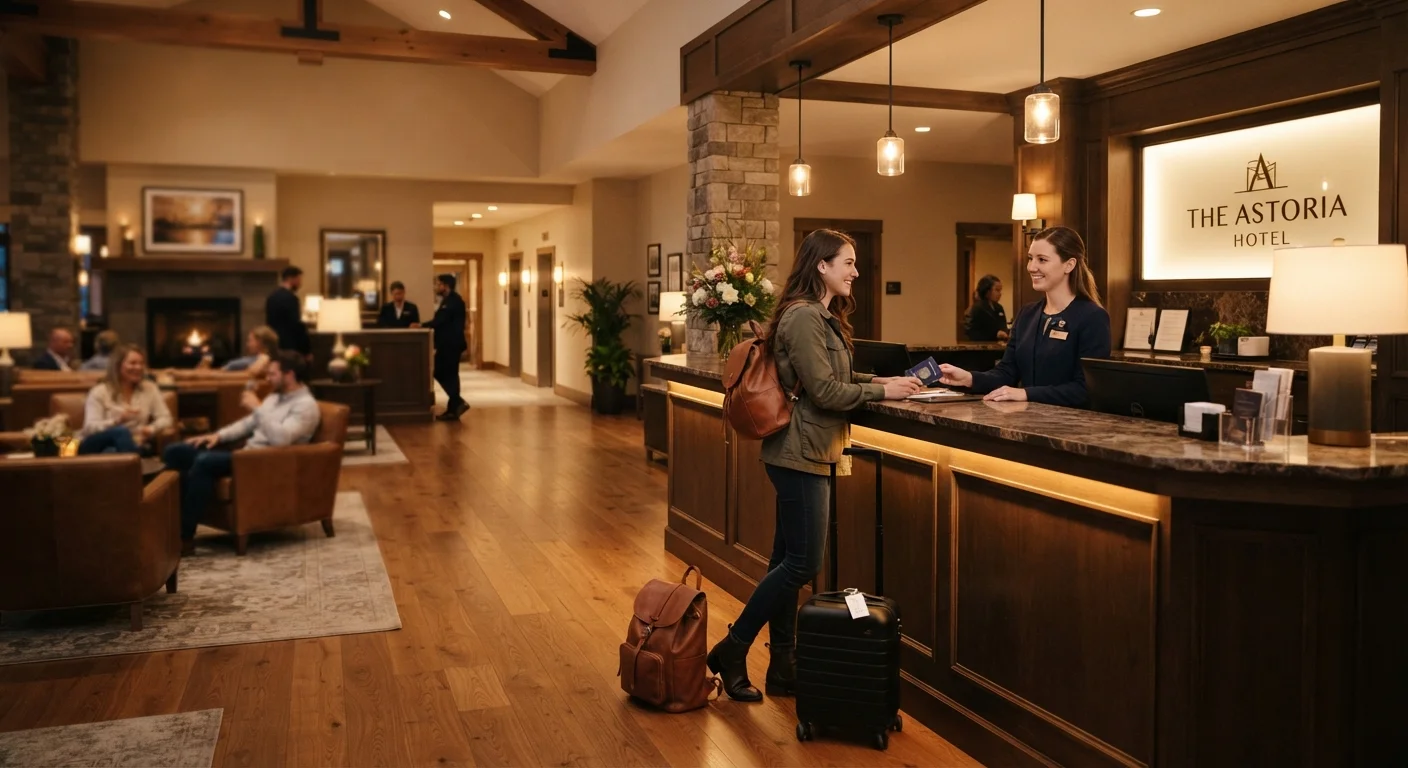
Reserving an accessible room has historically been one of travel's more frustrating processes. Third-party booking platforms have improved their filtering tools, but the underlying problem remains: accessibility information is self-reported by hotels, inconsistently described, and rarely verified by the platforms that list it.
What a listing calls an "accessible bathroom" might mean a grab bar near a standard tub at one property and a fully tiled roll-in shower with fold-down bench at another. This gap between description and reality is a common source of disappointment — and in some cases, a genuine safety concern for travelers who arrive expecting features that aren't present.
The questions worth asking before booking any accommodation apply with particular force here. Specific questions — "Does the roll-in shower have a fixed or fold-down seat?" "What is the exact door clearance of the bathroom?" "Is there a visual fire alarm in the room?" — yield far more useful answers than asking broadly whether a room is accessible.
Some travelers with more complex needs work with travel agencies and booking services that specialize in accessible travel, where agents have often visited properties personally or maintain relationships with accessibility coordinators on staff. This can significantly reduce the uncertainty that comes with booking remotely.
26%
U.S. adults living with some form of disability
According to the U.S. Centers for Disease Control and Prevention, approximately one in four American adults has a disability, representing a significant share of the traveling public.
1 in 25
Hotel rooms required to be ADA accessible
The ADA Standards for Accessible Design require that a minimum percentage of guest rooms meet accessibility criteria, scaling with property size — though the exact ratio depends on total room count.
$58.7B
Estimated annual travel spending by Americans with disabilities
Research published by the Open Doors Organization has highlighted the substantial and underserved economic value of the accessible travel market in the United States.
What to Do Before and After You Book
Once you've identified a property, a few practical steps can meaningfully improve the experience. Request the room assignment in writing before arrival, along with a confirmation of which specific features it includes. Ask whether the accessible room is near the elevator, and whether the path from the hotel entrance to the elevator involves any steps or steep grades.
If you're a first-time hotel booker or unfamiliar with the terminology used in room descriptions, the guide for first-time hotel bookers covers the broader landscape of what to verify before confirming any reservation — from deposit policies to room categories.
After you book, consider confirming again two to three days before arrival, particularly at busy properties where room assignments can shift. If a room doesn't meet the specifications you were promised upon arrival, notify the front desk immediately — hotels are obligated under the ADA to provide the accessible room you reserved, and most properties will work to resolve the issue rather than dispute it.
Travelers who have had meaningful experiences — positive or otherwise — with accessible hotel rooms often share detailed firsthand accounts in disability travel communities and forums. These peer sources can be more reliable than star ratings for evaluating accessibility in practice.
This article provides general travel information and is not legal or medical advice. Accessibility standards, hotel policies, and room availability vary by property and location. Verify all accessibility details directly with your hotel before travel, and consult relevant official sources for regulatory information.