

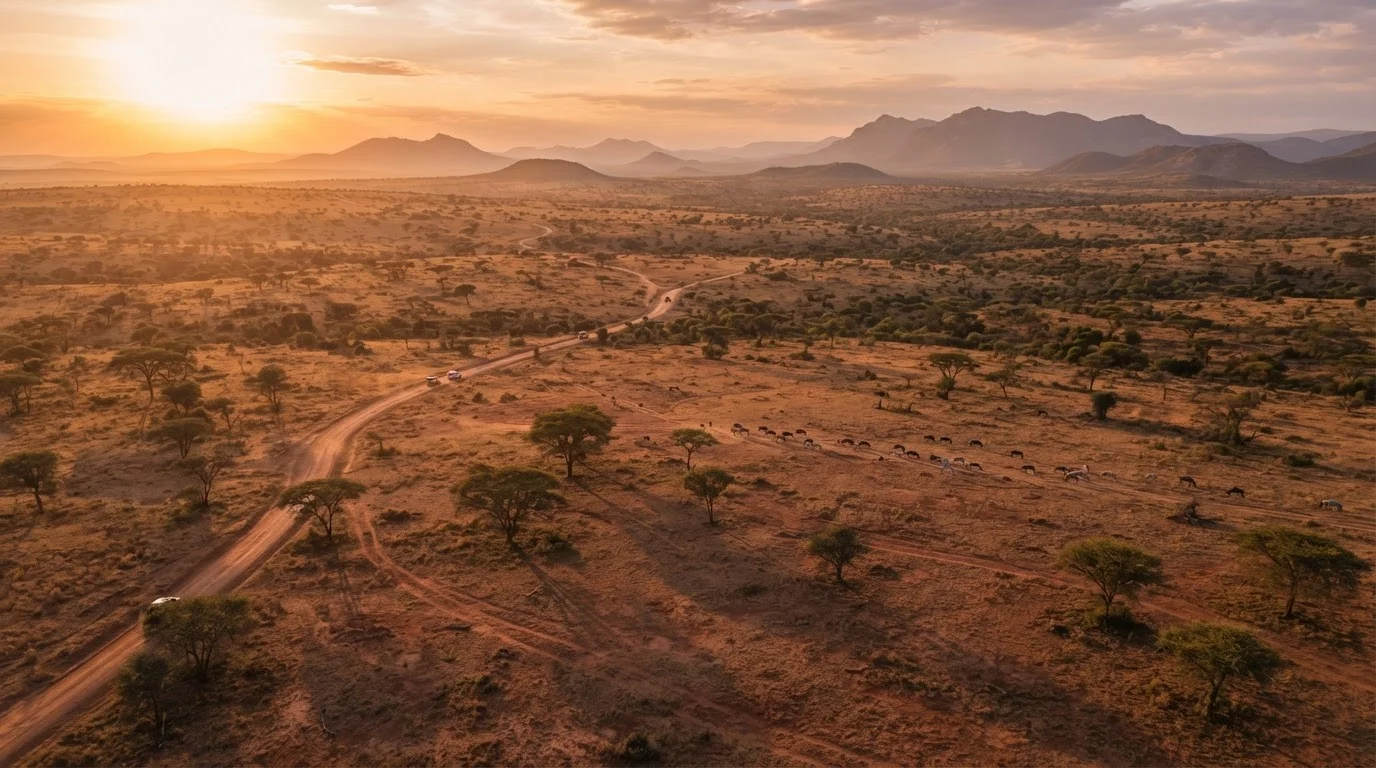
Why These Myths Persist — and Why They Matter
For many American travelers, Africa exists primarily as an abstraction — a composite of news footage, wildlife documentaries, and secondhand impressions that compress an entire continent of 54 countries and more than a billion people into a single, flattened image. The result is a persistent cluster of misconceptions that shape travel decisions in ways the evidence doesn't support.
This matters practically. Travelers who dismiss destinations out of unfounded fears miss extraordinary experiences. Conversely, travelers who don't prepare thoughtfully for specific regional conditions can run into real challenges. Accuracy serves both purposes. If you've found yourself making assumptions about planning trips in general, it's worth noting that travel planning myths affect many destinations beyond Africa — the pattern of outdated assumptions is broader than one continent.
The myth-and-fact pairs below address the most common misconceptions directly, with the goal of giving you a more accurate baseline for making your own informed decisions.
Myth
Africa is a country, or at least a place with a single culture, climate, and standard of living.
Fact
Africa is a continent comprising 54 recognized countries, thousands of distinct ethnic groups, dozens of climate zones, and an enormous range of economic conditions and infrastructure levels.
This conflation — treating Africa as a monolith — is the root cause of most other travel myths. Morocco and South Africa, Nigeria and Rwanda, Kenya and Madagascar are no more interchangeable than Portugal and Poland. Nairobi is a major metropolitan hub with international hospitals, modern hotels, and reliable broadband. The Sahara Desert spans eleven countries. The Congo Basin rainforest and the Namib Desert exist on the same continent. Any honest travel conversation about Africa must begin with this foundational acknowledgment of diversity.
Myth
It's too dangerous to travel to Africa as an American tourist.
Fact
Safety varies enormously by country and region, and many of Africa's most-visited tourist destinations have stable conditions and well-developed visitor infrastructure.
Countries such as Botswana, Rwanda, Namibia, Tanzania, Morocco, and South Africa receive millions of international visitors annually and consistently rank well on regional safety assessments. Like any destination, specific neighborhoods, border regions, or periods of political instability warrant caution — and the U.S. State Department publishes advisory levels for each country individually. Basing a decision about visiting Cape Town on headlines about conflict in a different country thousands of miles away is no more rational than refusing to visit Paris because of unrest elsewhere in Europe.
Myth
You'll need extensive medical treatment or you're likely to get seriously ill.
Fact
With appropriate pre-travel vaccinations and precautions relevant to your specific destination, most travelers visit Africa without significant health incidents.
Malaria is a genuine concern in many sub-Saharan regions and deserves serious preparation — consulting a travel medicine specialist well ahead of departure is strongly advised. However, not all of Africa is malaria-endemic: South Africa's major cities carry minimal risk, and high-altitude destinations like Rwanda's Volcanoes National Park present different risk profiles than low-altitude river basins. Many major African cities have internationally accredited hospitals. Preparation, not avoidance, is the appropriate response. Always consult a licensed healthcare provider for health guidance specific to your itinerary.
Myth
You won't find modern amenities, good hotels, or reliable internet access.
Fact
Major tourist corridors and cities across Africa offer a wide spectrum of accommodation and services, including internationally branded hotels, luxury lodges, and reliable connectivity.
Cape Town, Nairobi, Marrakech, Kigali, and Johannesburg all have modern international airports, five-star hotels, and sophisticated restaurant scenes. Safari lodges in Kenya's Maasai Mara or Tanzania's Serengeti often include high-end amenities specifically because international tourism is an established industry in those areas. Infrastructure does vary — rural and remote areas may have limited access to electricity, water, and internet — but this is equally true of remote areas in the American West, rural parts of Europe, or island destinations worldwide.
Myth
Wildlife is dangerous and roams everywhere — even in cities.
Fact
Wildlife encounters in Africa are primarily managed experiences that occur in designated national parks, conservancies, and reserves — not randomly on city streets.
Guided game drives in protected areas, such as Kruger National Park in South Africa or Amboseli National Park in Kenya, are structured experiences operated by licensed guides who follow established safety protocols. Urban centers like Accra, Addis Ababa, and Dar es Salaam function like any major city, with no meaningful risk of random wildlife encounters. Even in areas adjacent to parks, wildlife management systems exist specifically to minimize human-wildlife conflict. Visitors are briefed thoroughly on safety behavior before any wildlife activity.
Myth
Traveling to Africa requires an enormous budget that most Americans can't afford.
Fact
African travel spans an enormous price range — from backpacker-accessible routes to ultra-luxury safaris — with options suited to many budget levels.
While high-end safari experiences can be expensive (and often worth the cost for the access they provide), budget-conscious travel through countries like Morocco, Egypt, Uganda, and Ethiopia is genuinely feasible for travelers willing to plan carefully. Group tours, overland trips, and hostel networks exist across the continent. Costs vary significantly by country, season, and travel style. The assumption that Africa is either unaffordably expensive or uniformly cheap misrepresents a diverse market that accommodates a wide range of travelers.
What Thoughtful Preparation Actually Looks Like
Debunking myths isn't the same as saying travel to any part of Africa requires no preparation. It does — as does travel to many parts of Europe, Southeast Asia, or Latin America. The difference is that preparation for Africa should be specific, not driven by generalized anxiety.
54
Recognized countries on the African continent
The African Union lists 55 member states, reflecting the continent's vast political and geographic diversity across regions.
67M+
International tourist arrivals to Africa annually
According to UN Tourism data, Africa attracted over 67 million international arrivals in pre-pandemic years, with recovery ongoing.
~30
Countries with U.S. State Dept. Level 1 or 2 advisories
Roughly half of African nations carry the same or lower advisory level as many popular European and Asian destinations, per U.S. State Department assessments.
Start with the U.S. Department of State's country-by-country travel advisories, which assess risk at the individual country level rather than continent-wide. Consult a travel medicine clinic or your physician well in advance about vaccinations relevant to your specific itinerary — recommendations differ significantly depending on whether you're visiting an urban area, a rural region, or a malaria-endemic zone. Verify entry requirements, including visa rules and any health documentation, directly with embassies or official government sources, as these details change and no article can substitute for current official guidance.
Travel insurance with medical evacuation coverage is widely considered standard for destinations where emergency care infrastructure varies — a practical consideration that applies to wilderness travel in many parts of the world, not just Africa. The same thoughtful framework that applies to cruise travel misconceptions — separating real logistical considerations from outsized fears — applies here.
Verify Entry and Health Requirements Before You Book
Visa requirements, vaccination documentation (including yellow fever certificates for certain countries), and entry rules can change with relatively little notice. Do not rely on travel articles — including this one — as your final authority on these details. Check directly with the U.S. Embassy for your destination country and consult an official government travel health resource well in advance of departure.
Understanding what Africa actually offers, rather than what caricatures suggest, is the starting point for any trip worth taking.