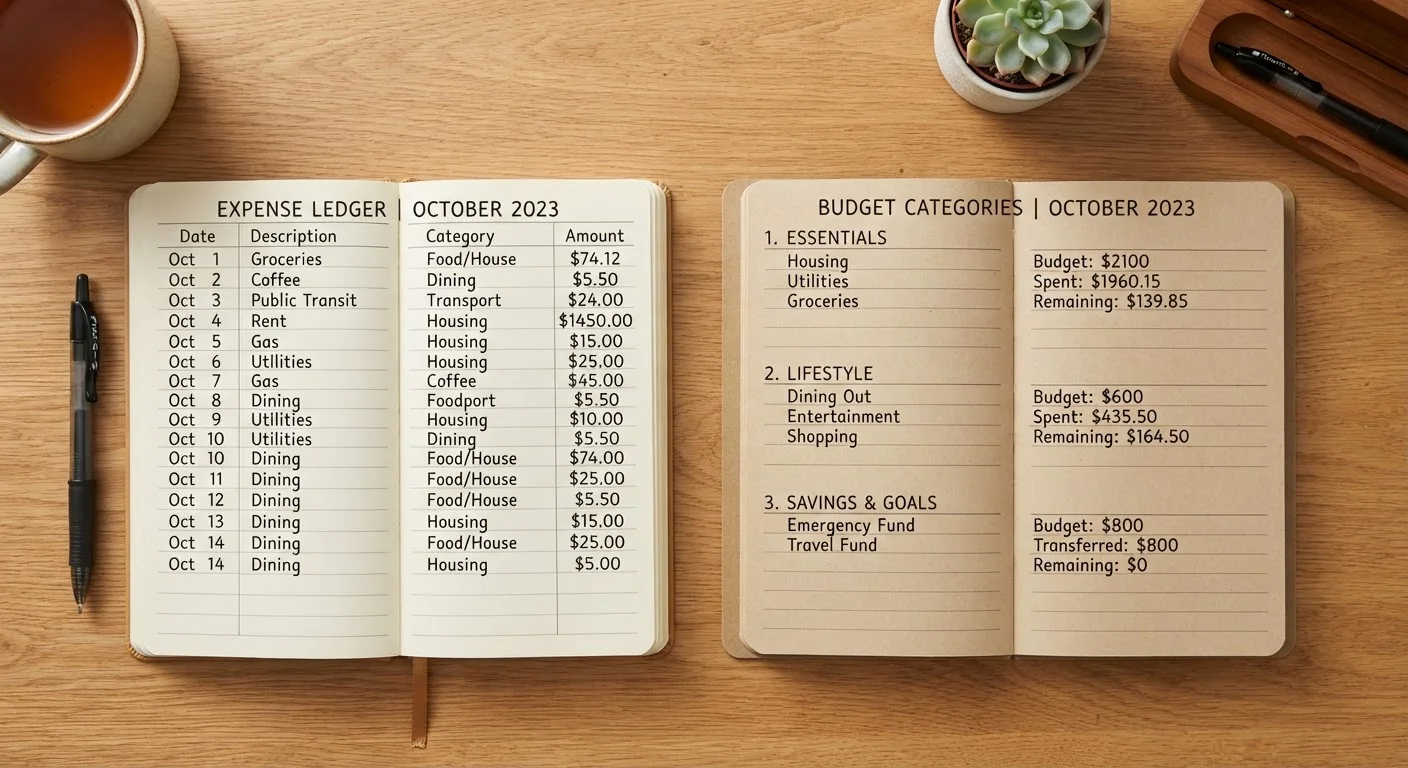


What 'Strict Budgeting' Actually Means
A strict budget assigns a specific spending limit to every category in your financial life — groceries, dining, transportation, clothing, entertainment, and beyond. Unlike looser frameworks that divide income into broad buckets, a strict budget requires you to track actual spending against pre-set limits, often on a weekly or even daily basis.
Two of the most well-known strict methodologies are zero-based budgeting — where every dollar of income is allocated a purpose — and detailed envelope-style systems. If you're weighing your options, our comparison of zero-based budgeting vs. the 50/30/20 rule breaks down how each approach works and who typically benefits most.
The core premise of strict budgeting is accountability: if you don't know where your money is going, you can't change its direction.
The Case For a Strict Budget
A detailed, category-by-category budget offers advantages that looser spending plans simply can't match.
Full visibility into every spending category
When every dollar has a label, patterns that were previously invisible — like $200 a month on impulse food delivery — become impossible to ignore. Awareness alone often changes behaviour.
Accelerates progress toward specific financial goals
Assigning surplus income to a named goal — debt payoff, emergency fund, or a major purchase — prevents it from quietly disappearing into discretionary spending.
Reduces financial anxiety through predictability
Many people report that a detailed budget, however uncomfortable initially, reduces the low-level stress of wondering whether they can afford something at the end of the month.
Exposes subscriptions and forgotten recurring costs
Category-level tracking reliably surfaces dormant subscriptions, auto-renewing memberships, and overlooked annual fees that quietly drain accounts over time.
Creates a factual baseline for future planning
Several months of strict tracking gives you real spending data — not estimates — which makes future financial decisions, like adjusting savings rates, far more grounded.
Beyond individual categories, strict budgets force you to confront spending categories most budgets forget — annual subscriptions, irregular bills, and costs that quietly erode your financial position month after month. When those expenses have a named slot in your plan, they stop becoming surprises.
~33%
Americans with a detailed written or digital budget
Surveys from financial research organisations consistently find only about one-third of US adults maintain a formal, detailed household budget.
2–3 months
Typical timeframe to spot meaningful spending patterns
Financial planning practitioners generally suggest at least two to three months of tracked data before drawing conclusions about average category spend.
The Case Against a Strict Budget
Despite the clear benefits, strict budgeting carries real drawbacks that explain why many people abandon the approach within weeks of starting.
Time-consuming to build and maintain consistently
Categorising transactions, reviewing limits, and updating the plan for irregular expenses demands ongoing attention that many households find difficult to sustain alongside daily life.
Can feel punishing and increase spending guilt
When every purchase is measured against a cap, small overruns can trigger a sense of failure. This psychological pressure sometimes causes people to abandon budgeting entirely rather than adjust.
Rigid categories struggle with life's unpredictability
A car repair, a medical bill, or a family emergency doesn't fit neatly into pre-set category limits. Without buffer categories or sinking funds built in, strict budgets frequently collapse under real-world stress.
Variable income makes fixed limits impractical
For freelancers or anyone with irregular pay, setting firm monthly category caps requires re-building the budget nearly every month — a burden that erodes the system's usefulness.
Overly tight budgets can discourage reasonable spending
Setting limits too aggressively — eliminating all discretionary spending — is a common beginner mistake that makes compliance unsustainable and can create an unhealthy relationship with money.
Understanding the difference between fixed and variable expenses is foundational here. Variable costs — fuel, medical co-pays, seasonal spending — fluctuate in ways that a rigid category system struggles to accommodate without constant adjustment.
Budgeting Myths Worth Questioning
Many people avoid strict budgets based on assumptions — that budgets are only for people in financial trouble, or that tracking spending means never enjoying money. These ideas often say more about cultural attitudes toward money than about how budgets actually work. Our piece on budgeting myths that keep people stuck examines the most common misconceptions with clearer, evidence-grounded thinking.
Who Tends to Thrive — and Who Struggles
Strict budgeting tends to work well for people with predictable, salaried income and defined financial goals with a clear timeline — paying off a specific debt balance, saving a down payment, or rebuilding after a financial setback. It also suits people who genuinely enjoy tracking systems and find satisfaction in detailed data.
On the other hand, freelancers, gig workers, or anyone with variable monthly income often find that income unpredictability makes category-level caps nearly impossible to maintain without significant stress. Similarly, households managing chronic illness costs, childcare, or other irregular high-spend areas frequently find strict budgets too brittle to survive real life.
If you've never budgeted formally before, start simpler. Our guide to building your first monthly budget from scratch offers a plain-English foundation before you commit to a more demanding system. You can also use the monthly budget setup checklist to make sure you've gathered everything you need before locking in any spending limits.
This article is for general informational and educational purposes only and does not constitute personalised financial advice. Consider speaking with a licensed financial professional about your specific circumstances.