
The Core Question: What Actually Drives Results?
Before comparing gyms and home workouts, it helps to ground the discussion in what exercise science actually tells us about outcomes. A substantial body of research — including reviews published in journals like Sports Medicine — consistently points to adherence as the strongest predictor of fitness benefits, not the specific location or equipment used. In other words, the environment that keeps you exercising regularly is, for most people, the better environment.
That said, setting does influence several real variables: cost, access to equipment, motivation cues, social support, and schedule friction. Understanding how each setting performs across these dimensions helps you make a choice you can sustain — rather than one that looks ideal on paper but falls apart within a few weeks.
See also: fitting exercise into a full-time work schedule for practical strategies when time is your biggest constraint.
Cost and Equipment Access
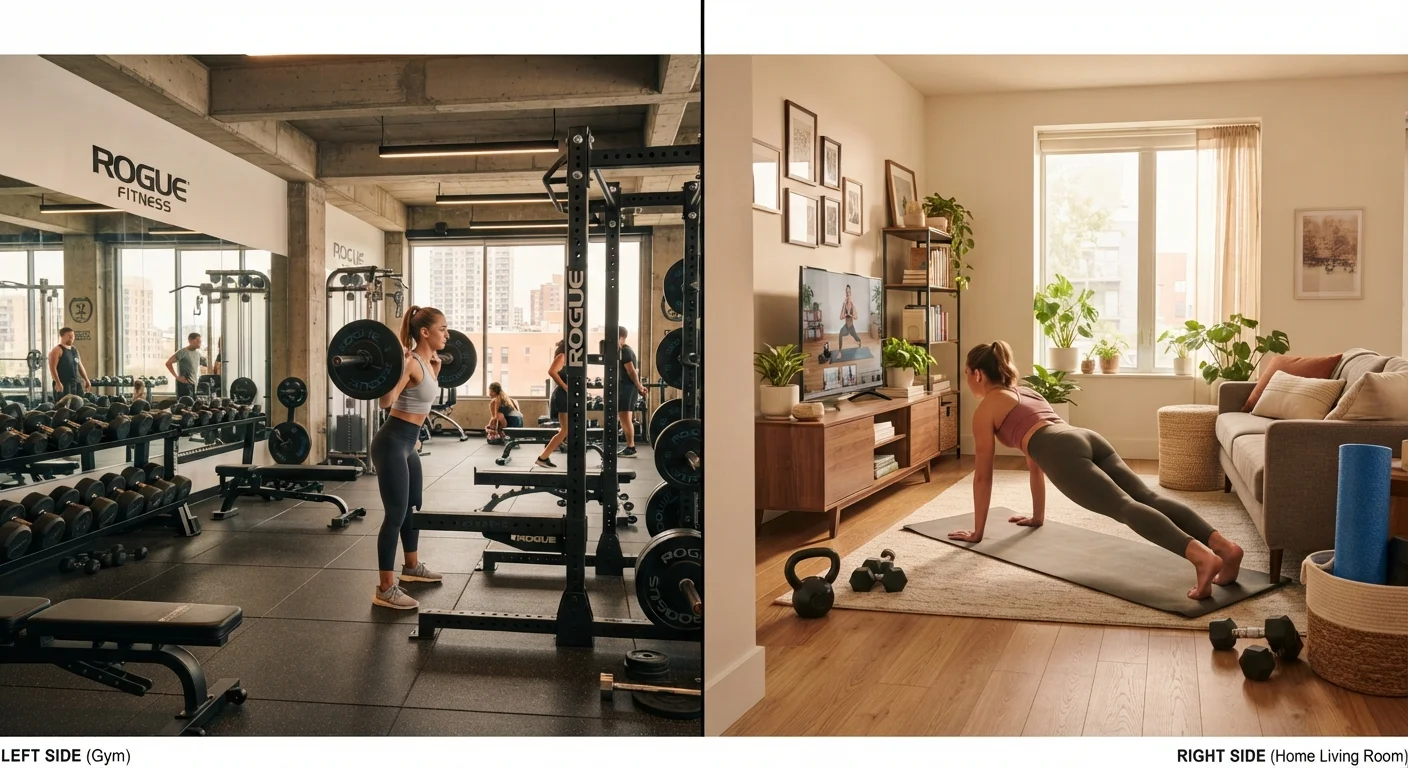
Gym memberships in the U.S. typically range from around $10 per month at budget chains to well over $100 per month at premium facilities. Over a year, that's a meaningful expense — though it does purchase access to a wide range of resistance machines, free weights, cardio equipment, and often amenities like pools or group classes.
Home workouts have a higher upfront potential cost if you invest in equipment, but many effective routines require little beyond a resistance band set, a few dumbbells, or bodyweight only. For people focused on general fitness rather than sport-specific performance, bodyweight training has solid evidence behind it. Low-impact options like cycling and rowing can also be incorporated at home with moderate equipment investment.
| Gym Workouts | Home Workouts | |
|---|---|---|
| Monthly cost | $10–$100+ per month | Minimal ongoing cost after setup |
| Equipment variety | Extensive — machines, free weights, cardio | Limited to what you own |
| Commute / time cost | 20–60 min round trip typical | None |
| Privacy | Shared, public environment | Fully private |
| Social motivation | High — peers and classes available | Low unless virtual |
| Schedule flexibility | Bound by gym hours | Any time, any day |
| Progressive overload potential | High — full weight range available | Moderate — depends on equipment |
Convenience, Schedule, and Friction
Commute time is one of the most underappreciated barriers to consistent exercise. If getting to a gym requires 20–30 minutes of travel each way, that adds nearly an hour to every workout session. For people with demanding work schedules or family responsibilities, that friction alone can cause workouts to be skipped.
Home workouts eliminate travel entirely, making it easier to exercise during short windows — a lunch break, early morning, or after putting children to bed. However, home environments come with their own barriers: household distractions, limited space, and the absence of the psychological cue that a dedicated gym space provides.
Reduce Friction to Build the Habit
Behavioral research suggests that lowering the effort required to start a workout is one of the most effective habit-building strategies. If you work out at home, set out your equipment the night before. If you go to a gym, pack your bag in advance and keep it by the door. Small environmental cues like these can meaningfully improve follow-through on days when motivation is low.
For a deeper look at building habits around a busy lifestyle, see strategies for exercising around a full-time work schedule.
Variety, Progression, and Training Goals
Gyms have a clear advantage when it comes to progressive overload — systematically increasing resistance over time — because they stock a full range of weights and machines. For those aiming to build significant muscle mass or train for specific athletic performance, this variety is practically important.
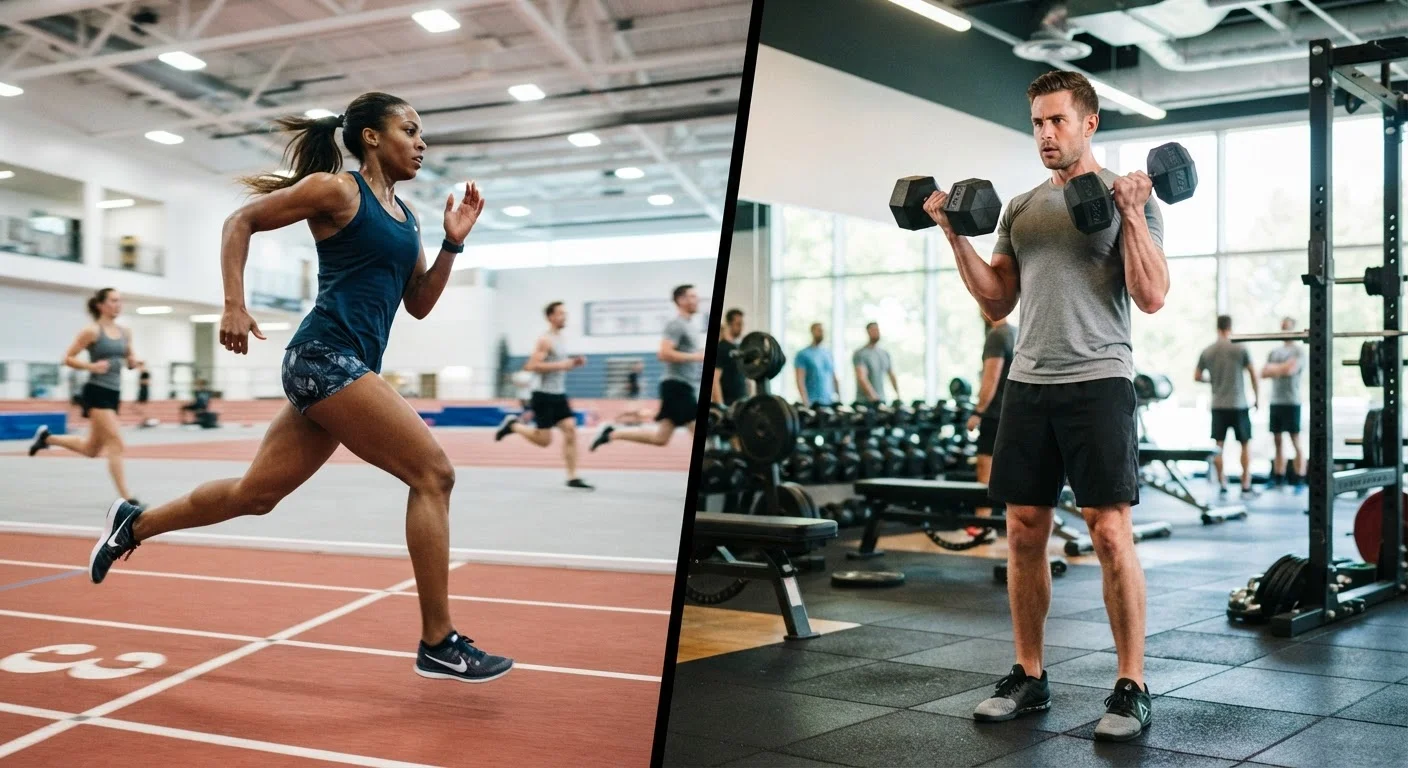
Home workouts can still support meaningful strength and cardiovascular gains, particularly for general fitness goals. Bodyweight progressions, resistance bands with varying tensions, and adjustable dumbbells cover a wide range of needs. Understanding how cardio and strength training differ can help you identify which emphasis aligns with your goals — and whether your home setup can support it.
Group fitness classes, available at most gyms, offer structured variety and accountability that some people find essential. The trade-offs of group classes vs. solo training covers this dimension in more detail.
~$58
Average U.S. monthly gym membership fee
According to the International Health, Racquet & Sportsclub Association (IHRSA), average monthly dues vary widely by facility type and region.
67%
Gym members who rarely or never attend
Industry analyses have consistently found that a substantial portion of gym members use their memberships infrequently, highlighting the adherence challenge.
Motivation, Accountability, and Long-Term Adherence
Social environment matters. Research in behavioral psychology suggests that exercising alongside others — even strangers at a gym — can enhance motivation and effort through social facilitation effects. For people who are externally motivated, the gym's social atmosphere and the sunk cost of a membership can act as adherence tools.
Conversely, people who are more introverted, or who feel self-conscious in a gym setting, often exercise more consistently at home where there's no perceived social pressure. The environment that reduces psychological friction is, practically speaking, the one more likely to produce lasting habits.
A hybrid model — gym sessions when schedule allows, home workouts on compressed days — is a pragmatic middle ground that many fitness professionals suggest for long-term sustainability. Even regular walking can be meaningfully integrated on days when neither gym nor structured home workouts fit.
This article is for general informational purposes only and is not a substitute for personalized advice from a qualified fitness or healthcare professional. Individual needs vary; consult a professional before starting a new exercise program.