
Why Movement Patterns — Not Exercises — Are the Foundation
Most people think about exercise in terms of individual moves: squats, push-ups, rows. But exercise scientists and strength coaches organize training around movement patterns — broad categories of how the human body moves. This framework ensures your program develops balanced strength, reduces injury risk, and prepares your body for the demands of everyday life.
A program built around movement patterns will naturally include variety across muscle groups and joint actions, whereas a program built around favorite exercises tends to create imbalances over time. Understanding these categories is a practical first step whether you're designing your own routine or evaluating a trainer's program.
If you're curious about building habits around these patterns, our guide to forming lasting fitness routines covers the behavioral science behind staying consistent.
| Core movement pattern categories | 6 (Push, Pull, Hinge, Squat, Carry, Core Anti-Movement) (Common framework used in evidence-based strength and conditioning) |
| Recommended training frequency | 2–4 sessions per week for general fitness (ACSM Physical Activity Guidelines) |
| Push-to-pull balance | Roughly 1:1 ratio recommended to support shoulder health (Widely cited in physical therapy and strength coaching literature) |
| Most commonly neglected pattern | Carries and core anti-movement (Noted across practitioner experience and programming research) |
| Functional carry example | Farmer's carry — walking with weights held at sides |
The Six Core Movement Patterns Explained
Most evidence-based training frameworks recognize six foundational patterns. Together, they cover virtually every muscle group and joint action the body performs.
1. Push (Horizontal & Vertical)
Pushing movements involve pressing resistance away from the body. Horizontal pushes (e.g., push-ups, bench press variations) primarily develop the chest, front shoulders, and triceps. Vertical pushes (e.g., overhead press) target the upper and middle shoulders and triceps. Most programs benefit from both orientations.
2. Pull (Horizontal & Vertical)
Pulling is the counterpart to pushing and is frequently underrepresented in beginner programs. Horizontal pulls (e.g., rows) strengthen the mid-back and rear shoulders. Vertical pulls (e.g., lat pulldowns, pull-ups) develop the lats and biceps. Balancing push and pull volume helps maintain healthy shoulder function.
3. Hip Hinge
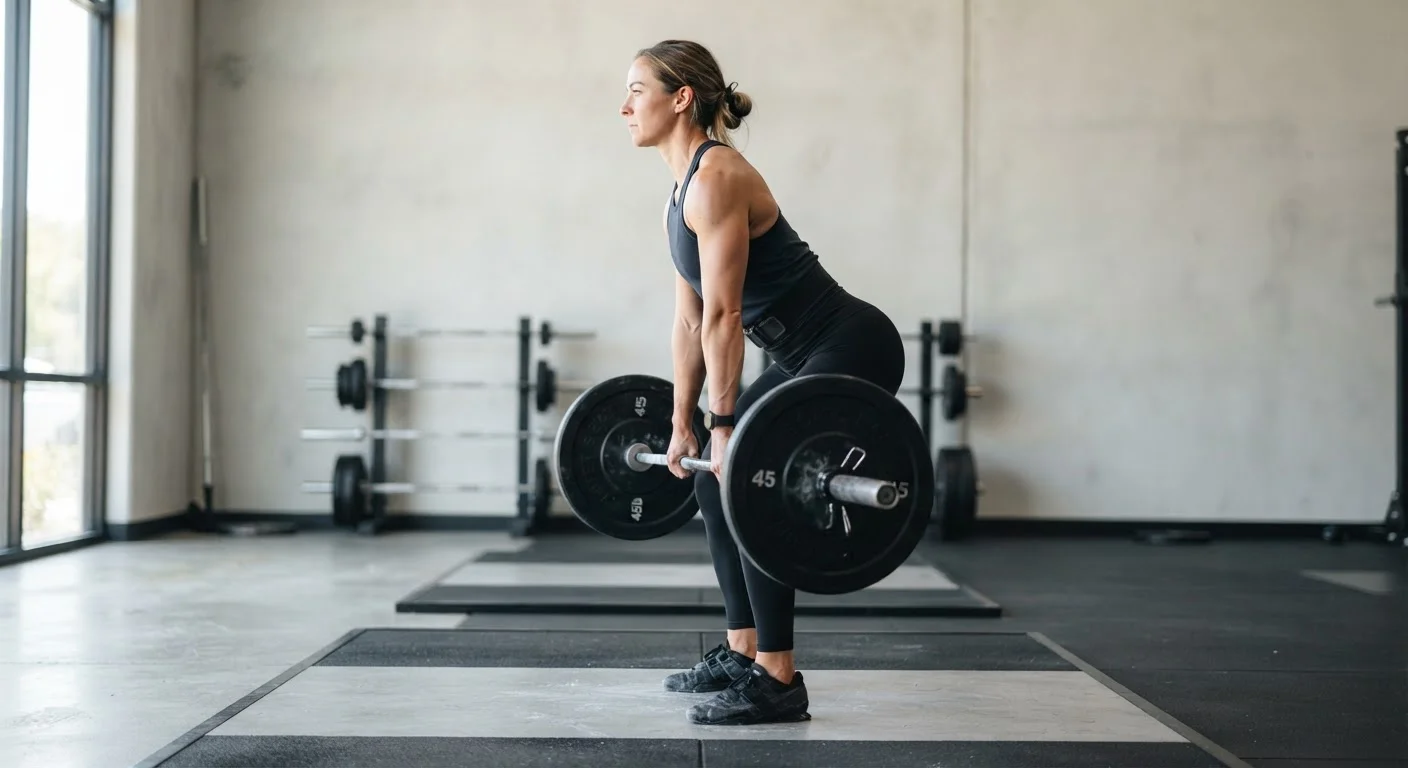
The hinge pattern — loading and extending through the hip joint while maintaining a neutral spine — is one of the most functionally important movements humans perform. Deadlifts and their variations are the classic example. This pattern develops the hamstrings, glutes, and lower back, and directly translates to safely picking objects off the floor.
4. Squat
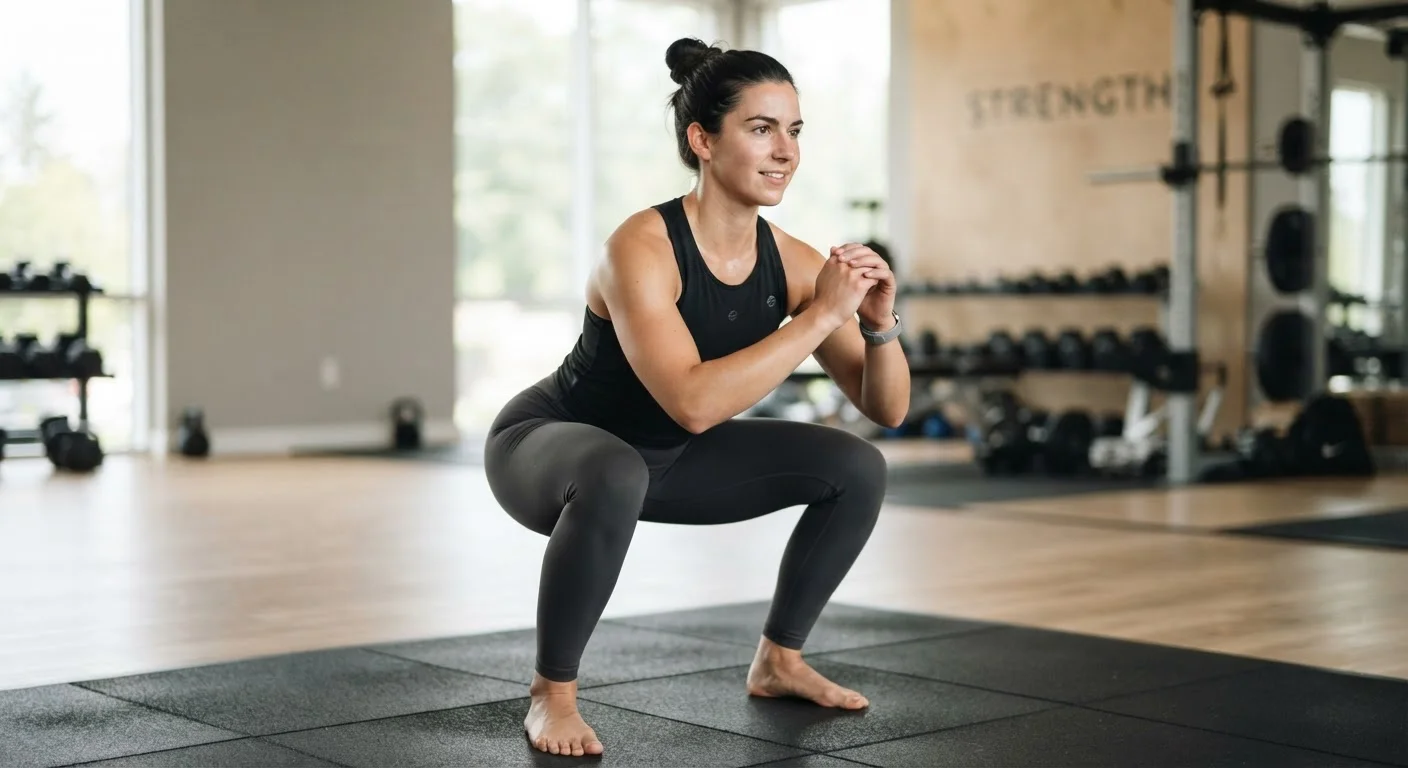
Squat patterns involve bending at both the hips and knees while keeping the torso relatively upright. They develop the quadriceps, glutes, and adductors. Bodyweight squats, goblet squats, and barbell back squats all belong here. Squatting capacity is strongly associated with lower-body functional independence across the lifespan.
5. Carry
Often overlooked, carry patterns — walking while holding a load — build grip strength, core stability, and postural endurance simultaneously. Farmer's carries and suitcase carries are accessible options that translate directly to daily activities like carrying groceries or luggage.
6. Core Anti-Movement
Rather than crunching, evidence-based core training emphasizes resisting unwanted movement — anti-rotation, anti-lateral flexion, and anti-extension. Exercises like planks, Pallof presses, and dead bugs train the core in its primary stabilizing role.
Movement pattern
A broad category of human movement defined by joint actions and muscle groups involved, rather than a specific exercise. Training by pattern ensures balanced muscular development.
Hip hinge
A movement in which the hips bend backward while the spine stays neutral and the knees remain relatively straight. It's the foundation of exercises like deadlifts and Romanian deadlifts.
Anti-movement (core)
Core training that focuses on resisting — rather than producing — movement. Planks and Pallof presses train the core to stabilize the spine under load, which reflects its primary real-world function.
Progressive overload
The gradual increase of training stress over time — through more weight, reps, or difficulty — that prompts the body to adapt and grow stronger.
Bilateral vs. unilateral
Bilateral exercises use both limbs simultaneously (e.g., barbell squat); unilateral exercises use one limb at a time (e.g., split squat). Both have value and address different stability demands.
Building a Balanced Routine Around These Patterns
A well-rounded routine doesn't require a different machine for every muscle. Instead, aim to include at least one exercise from each movement category per week. For most people training two to four days per week, this means each session includes a push, a pull, a hinge or squat, and some core stability work, with carries added as energy allows.
Start Light, Progress Gradually
Every movement pattern can be performed at bodyweight or with minimal equipment. Mastering the mechanics before adding load is the most effective way to build long-term strength and reduce injury risk. If a pattern causes pain — not to be confused with normal muscle fatigue — stop and consult a qualified professional before continuing.
Beginners and those returning after time away should start with bodyweight or light-load versions of each pattern before adding resistance. Our guide for returning to exercise explains what to expect physically in your first month back. When you're ready to add load systematically, our primer on strength training for beginners walks through safe progression step by step.
If joint pain or injury limits certain patterns, low-impact alternatives can often satisfy the same movement category with less joint stress. And if time is the constraint, fitting exercise into a busy schedule offers practical strategies for making these patterns accessible on a packed calendar.
This article is for general informational purposes only and does not constitute medical or fitness advice. Consult a qualified healthcare professional or certified fitness professional before beginning any new exercise program, particularly if you have existing health conditions or injuries.