
What At-Home Grooming Actually Covers
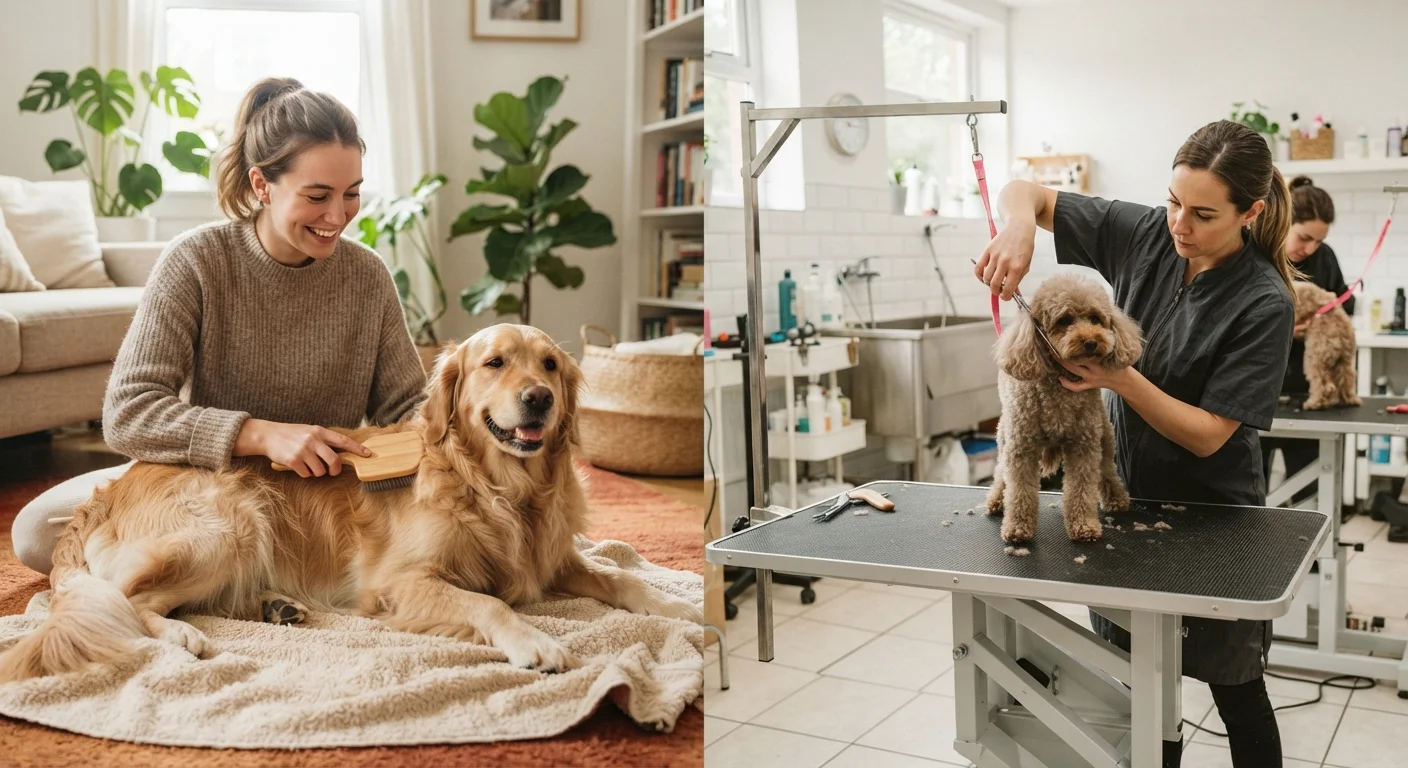
At-home grooming typically includes brushing, basic bathing, ear cleaning, and occasional nail trims. For many pets, these tasks — done consistently — keep the coat healthy and manageable between professional appointments. Regular brushing, for instance, prevents matting, distributes natural skin oils, and gives owners a chance to notice lumps, skin irritation, or parasites early.
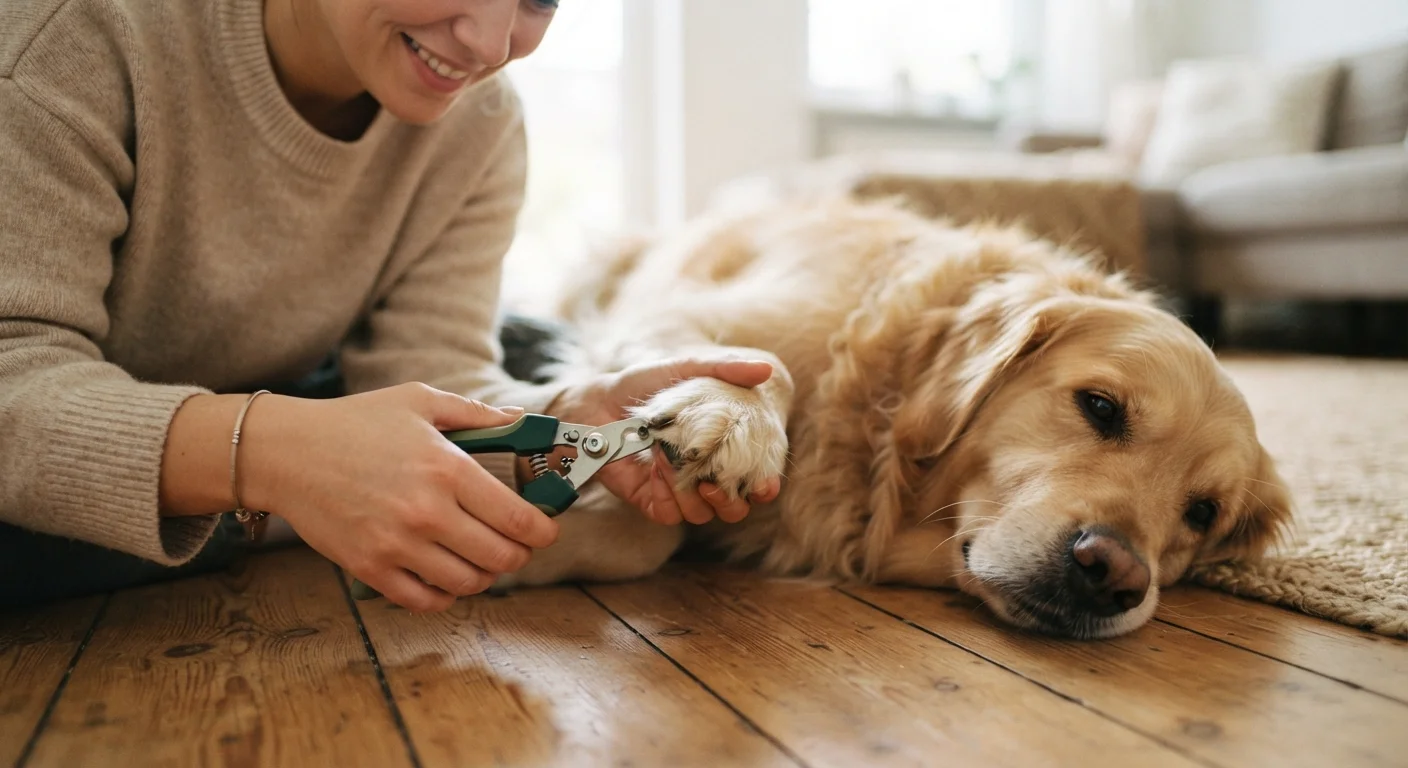
That said, at-home grooming has real limits. Most owners don't have professional-grade clippers, high-velocity dryers, or grooming tables with non-slip surfaces — all of which make detailed coat work safer and more precise. Trimming around eyes, ears, and paws requires practice and the right tools; mistakes can cause nicks or uneven cuts that a professional would avoid. Nail trimming is another common challenge — cutting too close to the quick causes pain and bleeding. If you're working toward this skill, the step-by-step nail trimming guide walks through it carefully.
What Professional Grooming Includes
A professional grooming session typically goes well beyond a bath. Most groomers offer coat trimming and breed-specific styling, thorough blow-drying, ear cleaning and hair removal, nail grinding or clipping, and anal gland expression — tasks that are genuinely difficult or uncomfortable for the average owner to perform at home.
Professional groomers are also trained to handle anxious or uncooperative pets safely, using techniques and restraint that reduce stress without sedation. For double-coated breeds like Huskies or Samoyeds, or breeds with continuous hair growth like Poodles or Shih Tzus, professional grooming isn't just cosmetic — it's part of managing coat health and preventing painful mats that can trap moisture and cause skin infections.
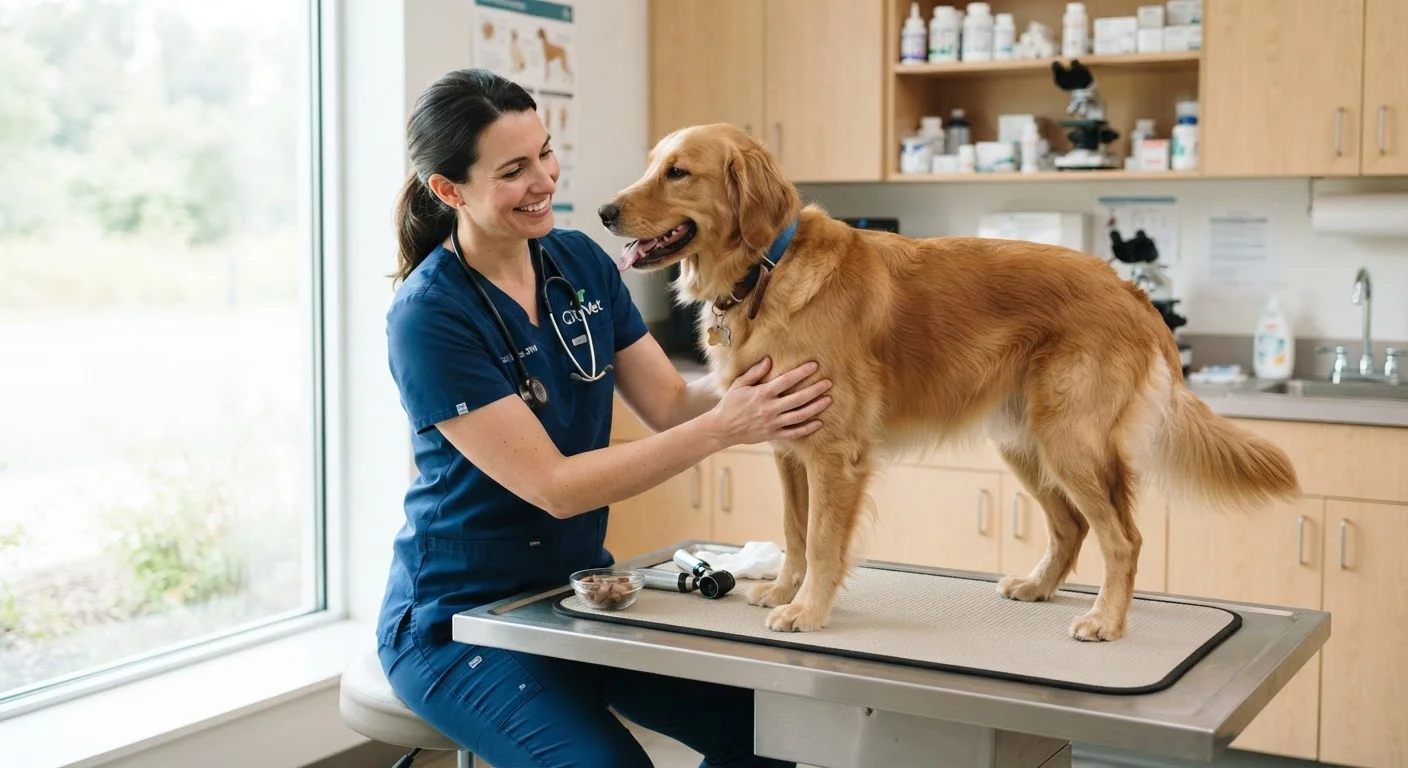
Groomers also serve an informal health-screening function. Because they handle pets closely, they often notice things owners miss — unusual lumps, ear odor suggesting infection, or dental concerns — which complements what your veterinarian looks for during routine wellness visits.
Cost, Time, and Practical Trade-offs
Cost is one of the most significant factors. Professional grooming for a medium-to-large dog can range from roughly $50 to over $100 per session depending on coat complexity, location, and services included — and high-maintenance breeds may need grooming every four to six weeks. Over a year, that adds up quickly.
$70–$100+
Typical professional grooming cost per session
Industry surveys and groomer pricing guides indicate mid-size dogs with moderate coats commonly fall in this range, with complex breeds running higher.
Every 4–8 weeks
Recommended professional grooming frequency
The American Kennel Club notes that breeds with continuously growing coats generally need professional grooming every four to eight weeks to prevent matting and maintain coat health.
At-home grooming requires an upfront investment in tools — a quality brush, nail clippers, pet-safe shampoo, and possibly clippers — but these costs are spread over time. The ongoing expense is lower, though so is the ceiling on what most owners can realistically accomplish.
Time is the other variable. Professional sessions can take two to four hours, which means drop-off and pick-up logistics. At-home sessions can be shorter and done on your own schedule, but they require your direct involvement and a pet that tolerates handling. Some dogs and cats are more cooperative at home with a familiar person; others are actually calmer with a practiced stranger.
Grooming Frequency Varies Widely by Breed
A Labrador Retriever with a short, dense coat may need professional grooming only a few times a year, while a Bichon Frise or Doodle mix may need it monthly. Researching your specific breed's coat type — or asking your veterinarian — will help you set realistic expectations for how often professional appointments are actually necessary versus how much you can handle at home.
Finding the Right Balance for Your Pet
For most pet owners, the most practical approach isn't choosing one exclusively — it's understanding which tasks each setting handles best. Brushing, light bathing, and ear checks are reasonable at-home tasks for most owners willing to practice them. Breed-specific haircuts, full dematting, nail grinding, and anal gland expression are generally better left to professionals unless you've received hands-on instruction.
Your pet's coat type, age, and temperament should guide how you split responsibilities. Senior pets or those with anxiety may need extra care about where and how they're handled. Puppies and kittens benefit from early, positive grooming exposure in both settings — it builds tolerance for handling throughout their lives, and that's valuable regardless of who does most of the work. Keeping up with grooming is also part of the broader picture of preventive care described in the Pet Health hub — it's not separate from health, it's part of it.
This article is for general informational purposes only and is not a substitute for advice from a licensed veterinarian or certified professional groomer familiar with your individual pet's needs.