
Why Pet Dental Health Is a Serious Medical Issue
Dental disease is among the most prevalent health conditions diagnosed in companion animals, yet it remains one of the most underappreciated by owners. According to the American Veterinary Medical Association (AVMA), periodontal disease — the most common dental condition in pets — affects the majority of dogs and cats by the time they reach three years of age.
The consequences extend well beyond bad breath. Chronic oral infection and inflammation can allow bacteria to enter the bloodstream, where research suggests a potential link to damage in the heart, kidneys, and liver. While the full extent of those systemic effects is still being studied, veterinary consensus holds that a healthy mouth is a meaningful component of overall well-being.
Pet dental care is a core element of preventive veterinary care, not an optional upgrade. Owners who treat oral hygiene as routine — rather than reactive — consistently give their animals a better foundation for long-term health.
~80%
Dogs with periodontal disease by age 3
The American Veterinary Medical Association reports that most dogs show signs of periodontal disease by their third year.
70%
Cats affected by dental disease by age 3
The American Veterinary Dental College notes that the majority of cats develop some form of dental disease by age three.
#1
Most common health problem in pets
Dental disease consistently ranks as the most frequently diagnosed condition in companion animals during routine veterinary exams.
How Dental Disease Develops in Dogs and Cats
Understanding the progression of dental disease helps owners recognize why prevention matters more than intervention. The process begins almost immediately after eating, when bacteria in the mouth combine with saliva and food particles to form plaque — a soft, sticky film that coats teeth and gumlines.
Within days, plaque that is not disrupted through brushing or mechanical action begins to calcify into tartar (also called calculus) — a hard, yellow-brown deposit that cannot be removed by brushing alone. Tartar harbors bacteria below the gumline, triggering inflammation of the gums (gingivitis). Left untreated, this progresses to periodontal disease, which destroys the tissues and bone that anchor teeth.
By the time visible signs appear — loose teeth, receded gums, exposed roots — significant damage has often already occurred. This is why routine monitoring is so important, since early-stage disease is frequently painless and invisible to the untrained eye.
Signs of Dental Problems to Watch For
Pets rarely signal tooth pain the way humans do. They continue eating even when their mouths are uncomfortable, which means owners need to look for subtler indicators. Common signs that warrant a veterinary conversation include:
- Persistent bad breath — while not all halitosis is dental-related, chronic foul odor is a frequent indicator of bacterial buildup or infection.
- Visible tartar or discoloration — yellowing or brown deposits along the gumline.
- Red, swollen, or bleeding gums — hallmarks of gingivitis.
- Dropping food, chewing on one side, or reluctance to chew — signs of oral discomfort.
- Excessive drooling or pawing at the mouth — less common but worth noting.
- Loose or missing teeth — often a sign of advanced periodontal disease.
If you observe any of these signs, schedule a veterinary appointment. Some of these symptoms can also indicate other health issues, so professional evaluation is essential. For guidance on when a symptom needs prompt attention, see when to seek same-day vs. scheduled care.
Check Your Pet's Mouth Monthly
Make it a habit to lift your pet's lips and look at the teeth and gumline once a month. You're looking for changes in color, swelling, tartar buildup, or anything asymmetrical. Early detection is one of the most valuable things an owner can do, and it takes less than a minute.
At-Home Oral Care: What Works and What Doesn't
The gold standard for at-home dental care is daily tooth brushing using a toothbrush designed for pets and a toothpaste formulated specifically for animals. Human toothpaste contains fluoride and other ingredients that can be harmful if swallowed — never use it on pets.
Introduce brushing gradually, especially with puppies and kittens. Start by letting the animal lick pet-safe toothpaste from your finger, then progress to touching the gumline, and finally to a soft-bristled brush. Consistency and patience matter more than perfection at first.
Beyond brushing, the Veterinary Oral Health Council (VOHC) evaluates dental products for demonstrated effectiveness. Their accepted products — which carry the VOHC Seal — include certain dental chews, water additives, and dental diets. These can complement brushing but generally should not replace it.
Products without independent evaluation may offer limited benefit despite marketing claims. When in doubt, ask your veterinarian which adjunct products are appropriate for your pet's specific needs.
Focus brushing on the outer surfaces of the upper teeth — that's where tartar accumulates fastest and where the parotid salivary gland deposits mineral-rich saliva.
Most periodontal disease in dogs begins on the buccal (cheek-facing) surfaces of the upper molars and canines, making these the highest-priority areas for daily brushing.
If your pet resists brushing, try wrapping a small piece of gauze around your finger and using gentle circular motions — it's less intimidating than a brush and still disrupts plaque effectively.
Mechanical disruption of plaque is the goal; the tool matters less than the consistency and contact with the tooth surface.
Professional Dental Cleanings: What to Expect
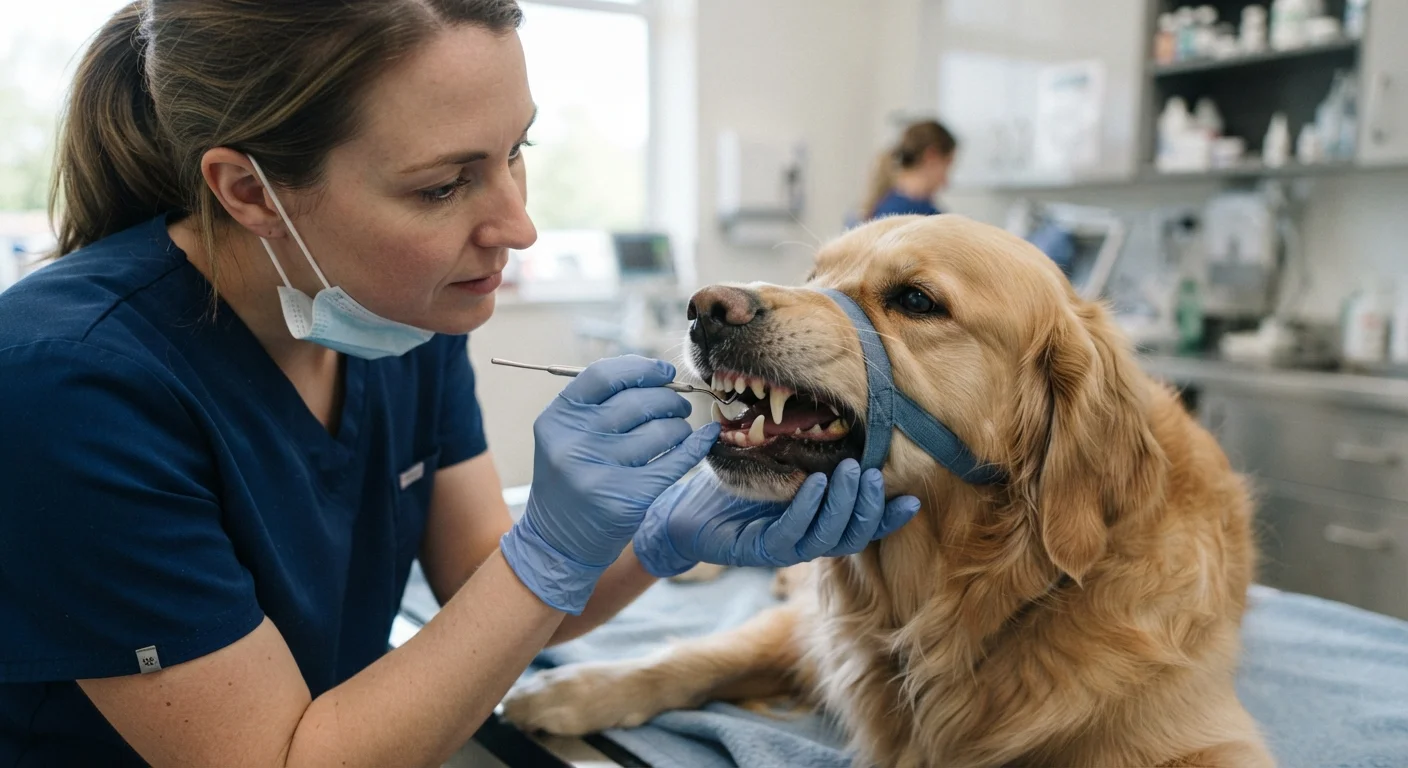
At-home care slows plaque accumulation but cannot address tartar below the gumline or evaluate the full extent of dental disease. That requires a professional veterinary dental cleaning, which is performed under general anesthesia.
Anesthesia is not optional — it allows the veterinarian to safely probe every tooth, take dental radiographs (X-rays), clean below the gumline, and perform any necessary extractions without causing pain or stress to the animal. Awake or sedation-only dental procedures, sometimes offered at non-veterinary grooming facilities, cannot accomplish these goals and are not considered appropriate care by major veterinary organizations.
A typical professional cleaning includes supragingival and subgingival scaling (removing plaque and tartar above and below the gumline), polishing, irrigation, charting, and radiographic evaluation. Pre-anesthetic bloodwork is commonly recommended to assess organ function prior to anesthesia, particularly in older animals.
Frequency varies by individual — some pets need annual cleanings, others less often. Your veterinarian will recommend a schedule based on your pet's oral health status, breed, and home care habits. These cleanings are routinely addressed during annual wellness exams.
Building a Dental Care Routine for Your Pet
Starting early is the single most effective strategy. Pets introduced to tooth brushing as puppies or kittens are far more accepting of the process as adults. If your pet is older, gradual desensitization still works — it simply takes more patience.
A practical routine for most pet owners includes:
- Daily brushing — aim for the same time each day to build habit. Even a few seconds of brushing is better than none.
- VOHC-accepted supplemental products — dental chews or water additives as recommended by your vet.
- Routine veterinary oral exams — at least annually, more often for pets prone to dental disease.
- Professional cleanings on a vet-recommended schedule — don't wait for obvious symptoms to develop.
Dental care pairs naturally with other grooming routines. If you're establishing a broader care schedule, daily grooming habits that support year-round health offers a useful framework. New pet owners building foundational habits can also consult our first pet health and wellness primer for broader guidance.
This article is for general informational purposes only and is not a substitute for professional veterinary advice. Always consult a licensed veterinarian regarding your pet's specific health needs.