

Why Pet Food Labels Can Be Confusing
Walk down the pet food aisle and you'll see bags covered in phrases like "grain-free," "ancestral diet," "human-grade," and "superfood blend." These terms appear on the front of the package and are almost entirely unregulated — they're marketing, not nutrition science. The information that actually matters is printed in smaller type on the back or side panel.
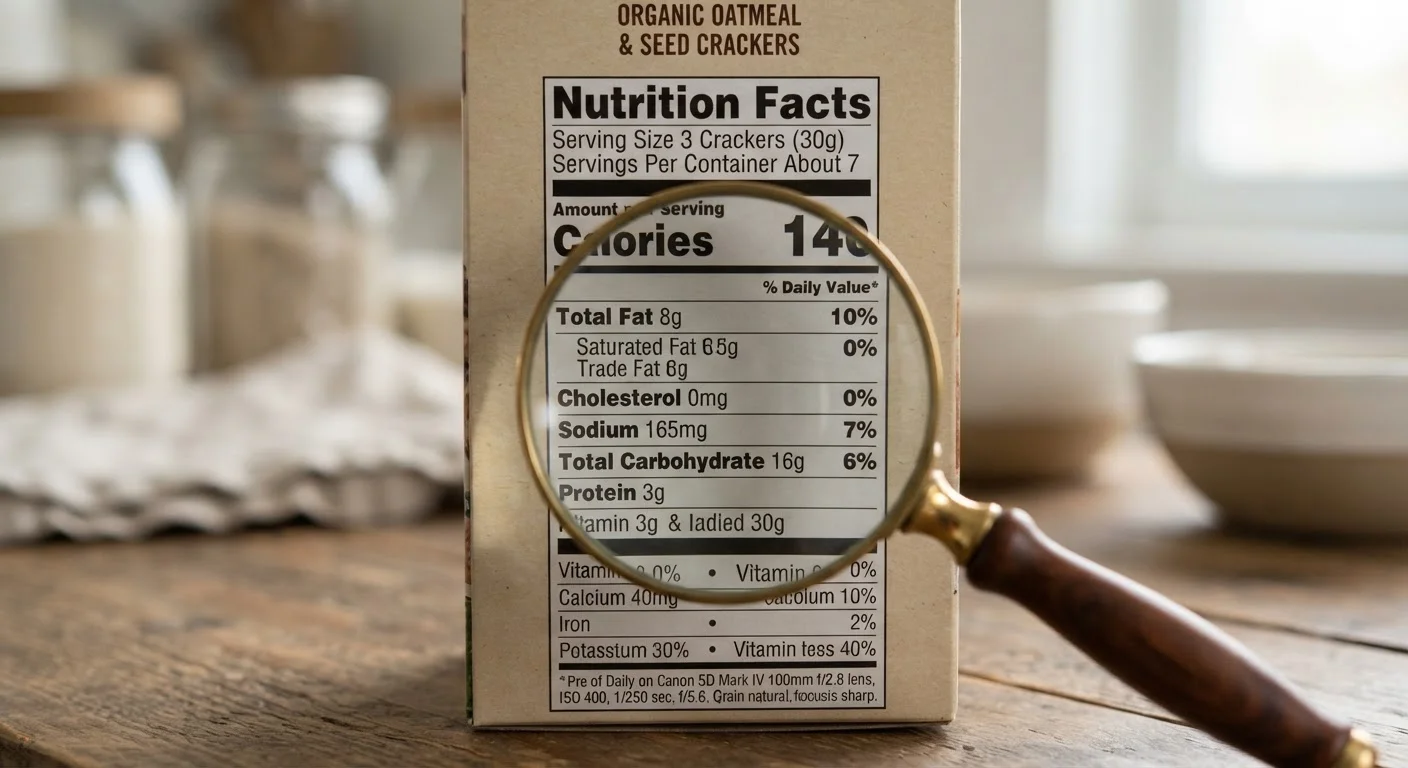
A pet food label has two distinct zones: the principal display panel (the front, dominated by branding) and the information panel (the back or side, containing regulated disclosures). Learning to focus on the information panel is the first step to reading a label accurately. For a useful parallel on how label literacy applies to human food, see Reading a Nutrition Facts Label Without the Confusion.
50+
States with AAFCO-influenced pet food regulations
Most U.S. states have adopted some version of AAFCO's model pet food regulations, though enforcement and specifics vary by state.
3%
Minimum meat content for a 'with [protein]' label claim
Under AAFCO's naming conventions, a food labeled 'with chicken' is only required to contain 3% of that named ingredient by weight.
95%
Minimum meat content for a single-ingredient named food
Per AAFCO guidelines, a product named simply 'Chicken for Dogs' must contain at least 95% chicken, excluding added water.
The Ingredient List: What It Tells You (and What It Doesn't)
Pet food ingredients are listed in descending order by pre-cooking weight. This means a whole meat like chicken may appear first because it contains a lot of water — but once that moisture is cooked away, a dry ingredient like rice or corn may actually contribute more weight to the finished product. This is known as ingredient splitting when manufacturers separate a single ingredient (such as corn) into multiple forms to push it further down the list.
Look for named protein sources — "chicken," "salmon," "lamb" — rather than vague terms like "meat" or "poultry." Similarly, "chicken meal" is a concentrated, dried protein that can be a legitimate high-protein ingredient; the word "meal" alone isn't a red flag if the source animal is named. Ingredients you should note carefully include preservatives (natural ones like mixed tocopherols versus synthetic ones), and whether carbohydrate sources are whole grains or refined starches.
Check for a Named Protein Source First
When scanning an ingredient list quickly, look at the first five ingredients. Ideally, you'll see a named animal protein — like 'deboned salmon' or 'turkey' — near the top. If the first several ingredients are grain or starch-based and no named protein appears until further down, that's a signal about where protein falls in the formula's overall composition.
The Guaranteed Analysis: Reading the Numbers Right
The guaranteed analysis panel lists four required values: minimum crude protein, minimum crude fat, maximum crude fiber, and maximum moisture. These are regulatory thresholds, not exact measurements — the actual protein in the bag could be higher than the listed minimum.
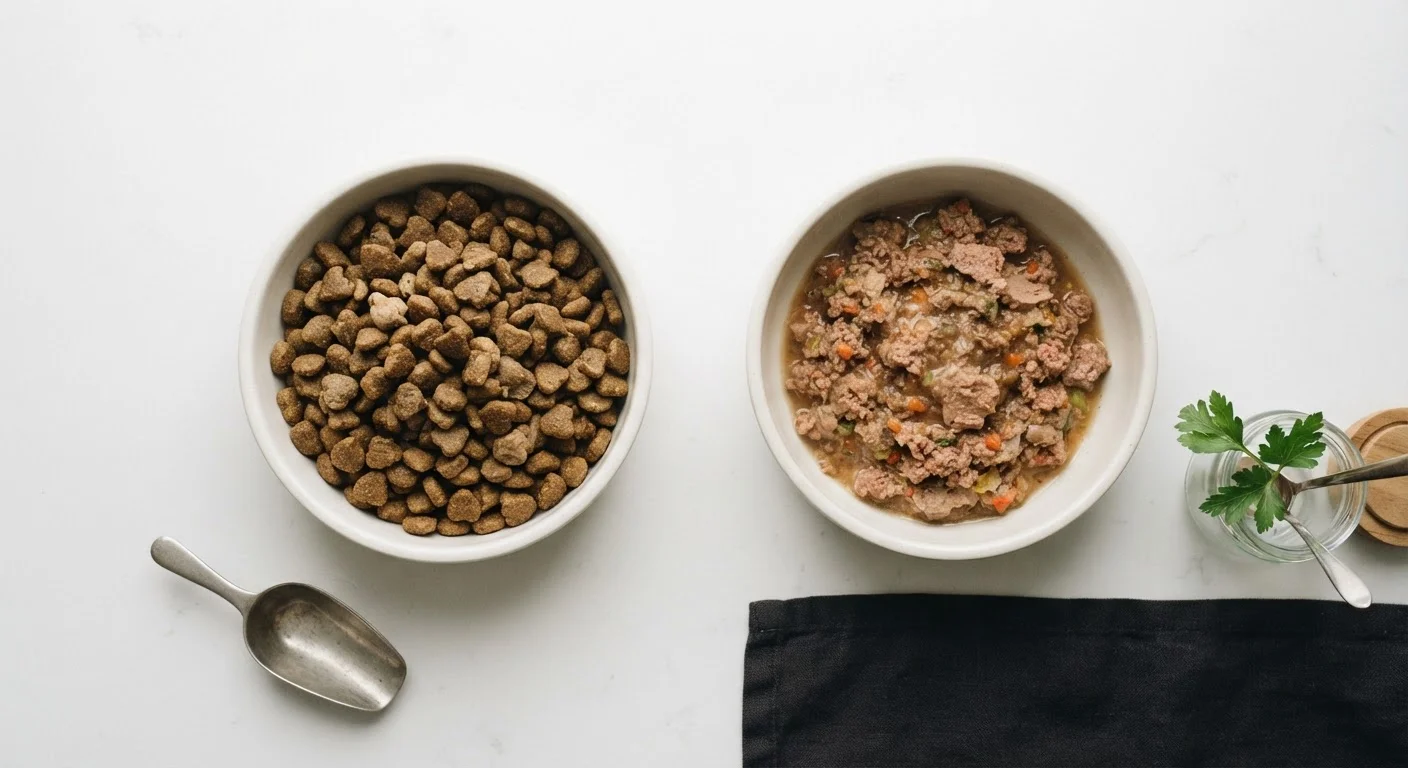
One important limitation: these numbers are expressed as fed, meaning they include moisture content. Comparing a wet food (which might show 8% protein) to a dry kibble (which might show 28% protein) using these raw numbers is misleading because wet food contains far more water. To compare fairly, nutritionists use a dry matter basis calculation, which removes moisture from the equation. Your veterinarian or a board-certified veterinary nutritionist can help interpret these figures for your pet's specific needs. For a deeper look at choosing between formats, see Dry Food vs. Wet Food for Cats and Dogs.
The AAFCO Statement: The Most Important Line on the Label
The nutritional adequacy statement — commonly called the AAFCO statement — is arguably the single most informative line on any pet food label. It tells you two things: whether the food is complete and balanced, and which life stage it's formulated for.
A complete and balanced claim means the food either passed AAFCO feeding trials or was formulated to meet AAFCO's published nutrient profiles. Life stage designations include growth (puppies or kittens), adult maintenance, reproduction, or "all life stages" — which must meet the highest nutritional bar because it covers growth and reproduction. If a label says the food is intended for "intermittent or supplemental feeding," it is not nutritionally complete on its own.
If your pet has a medical condition requiring a special diet, see Prescription Pet Food vs. Over-the-Counter Diets for guidance on when a veterinarian's recommendation is essential.
Front-of-Bag Claims: How to Put Them in Perspective
Terms like "premium," "holistic," "natural," and "human-grade" carry little or no regulatory definition in pet food. AAFCO does define "natural" loosely — it generally prohibits artificial flavors, colors, and chemical preservatives — but it says nothing about ingredient quality or sourcing practices.
The "95% rule," "25% rule," and "with" rule are three AAFCO naming conventions that do have specific meaning. A food called "Chicken for Dogs" must contain at least 95% chicken (excluding water). A food called "Chicken Dinner" or "Chicken Entrée" must contain at least 25% chicken. A food "with Chicken" need only contain 3% chicken. These naming thresholds are worth knowing when a protein sounds prominent on the label.
This article is for general informational purposes only and is not a substitute for advice from a licensed veterinarian. Always consult a veterinary professional before making significant changes to your pet's diet, especially for animals with health conditions.
“The nutritional adequacy statement is the most important thing to look for on a pet food label. Without it, you don't know if the food meets your pet's basic nutritional needs.”
— Lisa Freeman, Board-Certified Veterinary Nutritionist, Cummings School of Veterinary Medicine