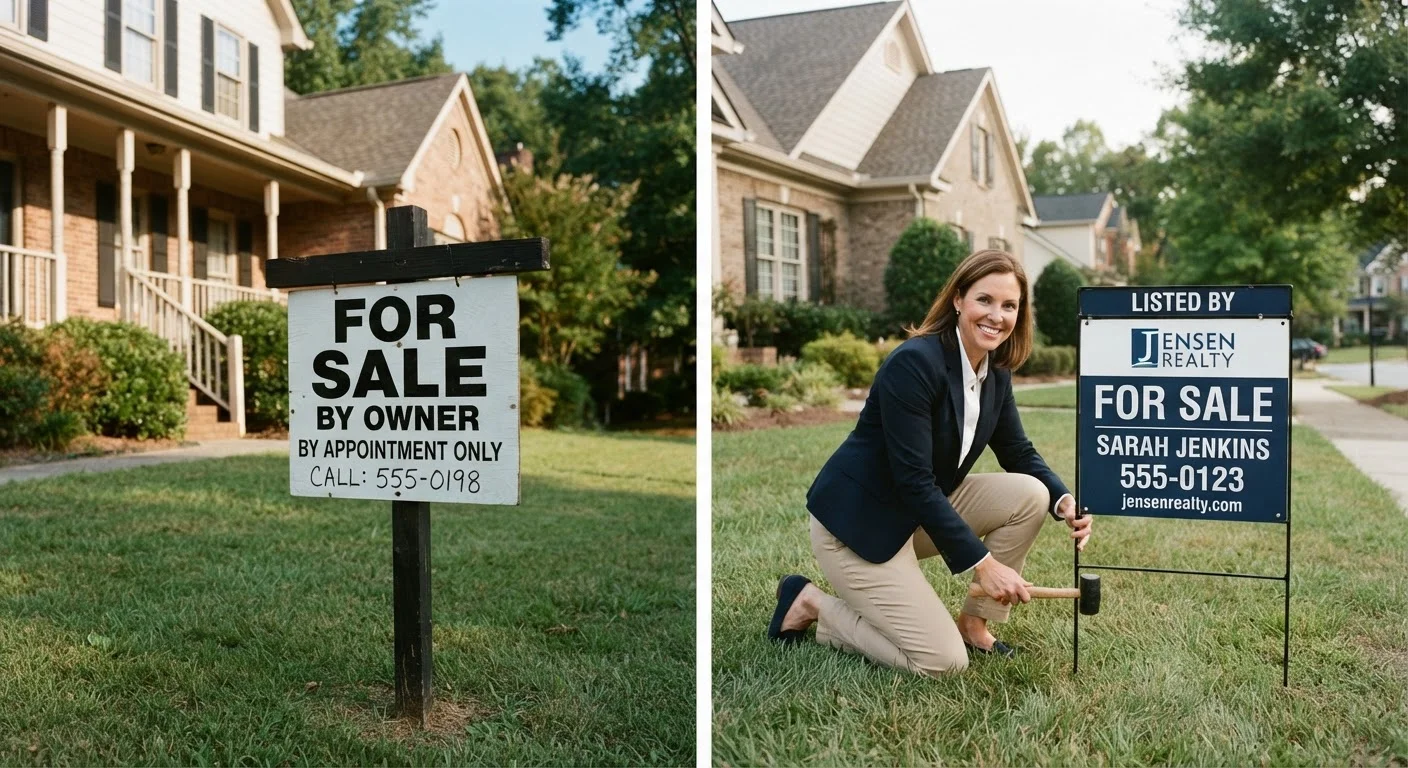

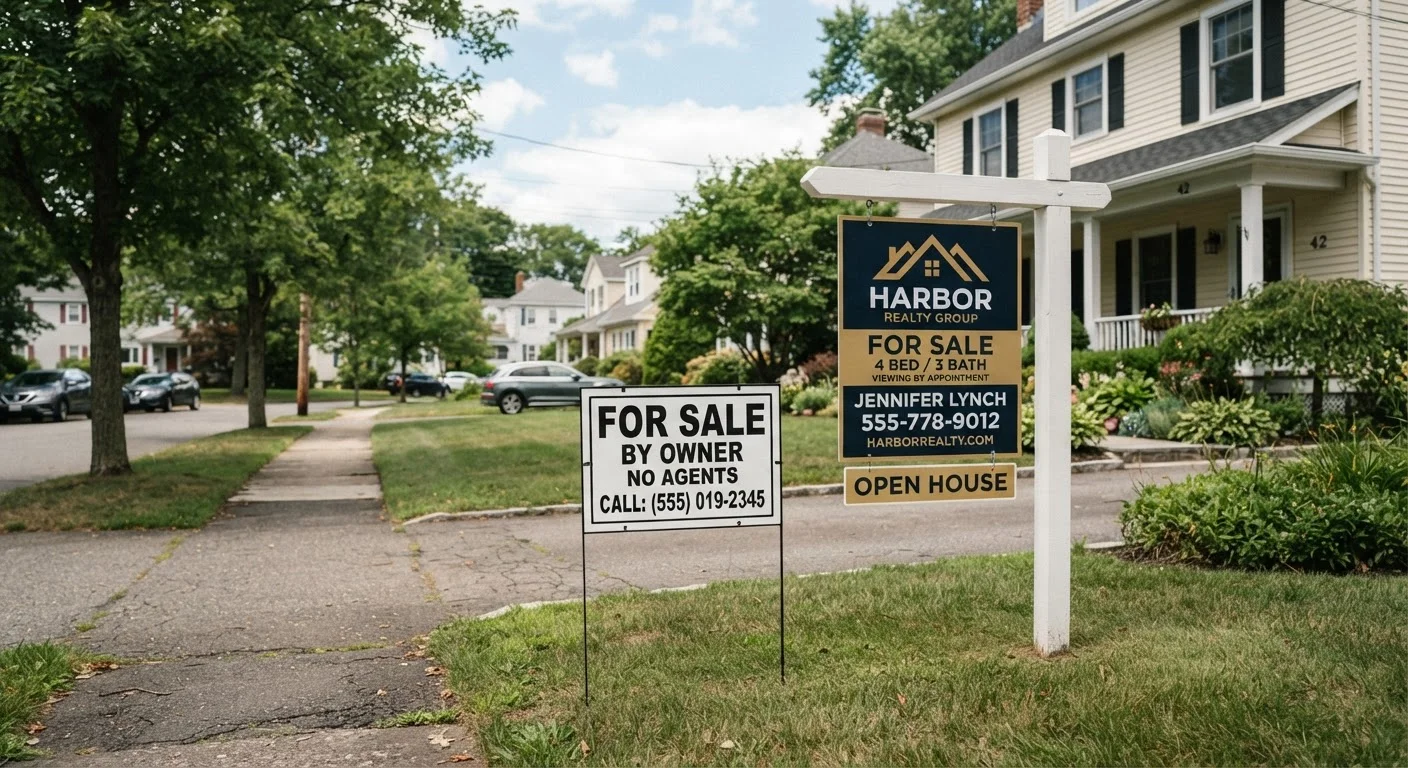
What Each Listing Path Actually Provides
A flat-fee MLS listing is a service offered by licensed real estate brokers who, for a one-time flat fee — commonly ranging from a few hundred dollars to around $1,000 depending on the provider and market — submit your property to the local Multiple Listing Service (MLS). The MLS is the centralized database used by agents and buyer-facing platforms like Zillow and Realtor.com to syndicate listings. Access to the MLS has historically required working with a licensed broker, which is why flat-fee services exist as a middle ground between full FSBO and full-service representation.
A full-service listing agent provides a comprehensive package: comparative market analysis (CMA) for pricing, professional photography, marketing coordination, showing management, offer review, negotiation, and transaction management through closing. This is compensated through a commission — historically around 5–6% of the sale price split between listing and buyer's agents, though structures are evolving. The listing agent's share is typically 2–3%.
It's worth noting that even sellers using flat-fee MLS services generally still offer a buyer's agent commission — commonly 2–3% — to incentivize buyer representation. Failing to offer a competitive buyer's agent commission can reduce showing activity in some markets. For more on how listing agents operate and where their loyalty lies, see how listing agents differ from buyer's agents.
What Sellers Gain and Give Up With Flat-Fee MLS
The primary appeal of a flat-fee MLS listing is cost control. By paying a fixed upfront amount rather than a percentage commission, sellers in higher price ranges can retain significant equity — a meaningful consideration on a $500,000 home where a 2.5% listing commission equals $12,500.
However, the trade-offs are real and operational. With a flat-fee service, sellers typically take on:
- Pricing decisions: Without a CMA from an experienced local agent, sellers must research comparable sales independently. Mispricing — either too high or too low — carries financial consequences.
- Showing coordination: Scheduling, lockbox management, and responding to buyer inquiries fall to the seller.
- Offer evaluation and negotiation: Reviewing purchase agreements, countering offers, and navigating contingencies require either real estate knowledge or paid legal counsel.
- Disclosure compliance: Sellers remain legally obligated to provide required property disclosures regardless of representation. First-time sellers are often caught off guard by disclosure requirements and other process details.
Flat-Fee Is Not the Same as FSBO
Flat-fee MLS listings still involve a licensed broker submitting your property to the MLS, giving it exposure on major real estate platforms that pure FSBO listings may not receive. This distinction matters for buyer agent activity and listing visibility. If you're comparing options, review how each affects your reach before deciding.
Flat-fee MLS is not the same as selling For Sale By Owner (FSBO), though there is overlap. The key distinction is MLS access — flat-fee sellers appear in agent databases and on syndicated platforms, which FSBO listings may not. For a full comparison, see FSBO vs. agent-listed properties.
What Sellers Gain and Give Up With Full-Service Listings
A full-service listing agent provides expert infrastructure around your sale. Agents with deep local market knowledge can price strategically, advise on pre-listing improvements, and manage buyer psychology through negotiation — all of which can influence net proceeds, not just gross sale price.
The structure also reduces seller burden substantially. The agent handles scheduling, filters unqualified buyers, coordinates with escrow and title, and flags contract issues before they become problems. For sellers managing a move, an estate, or a time-sensitive relocation, that operational support has tangible value.
The cost is real, though. Commission-based compensation means the fee scales with your sale price. A seller netting $400,000 who pays a 2.5% listing commission spends $10,000 on that service — whether the sale was straightforward or required months of skilled negotiation.
| Flat-Fee MLS | Full-Service Listing Agent | |
|---|---|---|
| Upfront cost | Fixed fee, often $200–$1,000 | Typically no upfront cost |
| Total commission cost | Buyer's agent commission only (if offered) | Listing + buyer's agent commission (often 4–6% total) |
| MLS access | Yes, through broker | Yes, through agent |
| Pricing strategy support | Not included — seller's responsibility | Included via comparative market analysis |
| Negotiation support | Not included — seller handles directly | Fully managed by agent |
| Showing coordination | Seller manages independently | Agent coordinates and screens buyers |
| Disclosure and paperwork | Seller's legal obligation; no agent assistance | Agent guides process; legal review may still be advisable |
| Best market fit | Strong seller's markets, experienced sellers | Complex markets, first-time or time-constrained sellers |
There are also alignment questions worth considering. A listing agent is legally obligated to act in your interest, but commission structures can create subtle incentives around offer acceptance timing or pricing strategy. Understanding that dynamic helps sellers ask better questions and stay engaged in key decisions.
How to Decide Which Path Fits Your Sale
Neither approach is universally better. The decision comes down to four practical factors:
- Market conditions
- In high-demand markets with low inventory, properties may sell quickly regardless of representation level. In balanced or buyer-favoring markets, a skilled negotiator may recover more than their commission costs.
- Seller experience
- Sellers who have completed multiple transactions, understand purchase contract terms, and are comfortable with direct buyer communication are better positioned to manage a flat-fee listing without costly missteps.
- Property complexity
- Unusual properties — historic homes, land with easements, properties with permit issues — benefit from an agent who can proactively address buyer objections and lender concerns.
- Time and bandwidth
- A flat-fee listing is not passive. Sellers should realistically assess how much time they can dedicate to managing inquiries, showings, and negotiations before committing to the lower-cost path.
Some sellers also explore hybrid models — paying flat-fee for MLS access while hiring a real estate attorney for contract review, or purchasing à la carte services like professional photography or a market pricing report. These middle-ground approaches exist, though service availability varies by market.
This article is for general informational purposes only and does not constitute legal, financial, or real estate advice. Consult a licensed real estate professional or attorney regarding your specific situation.