

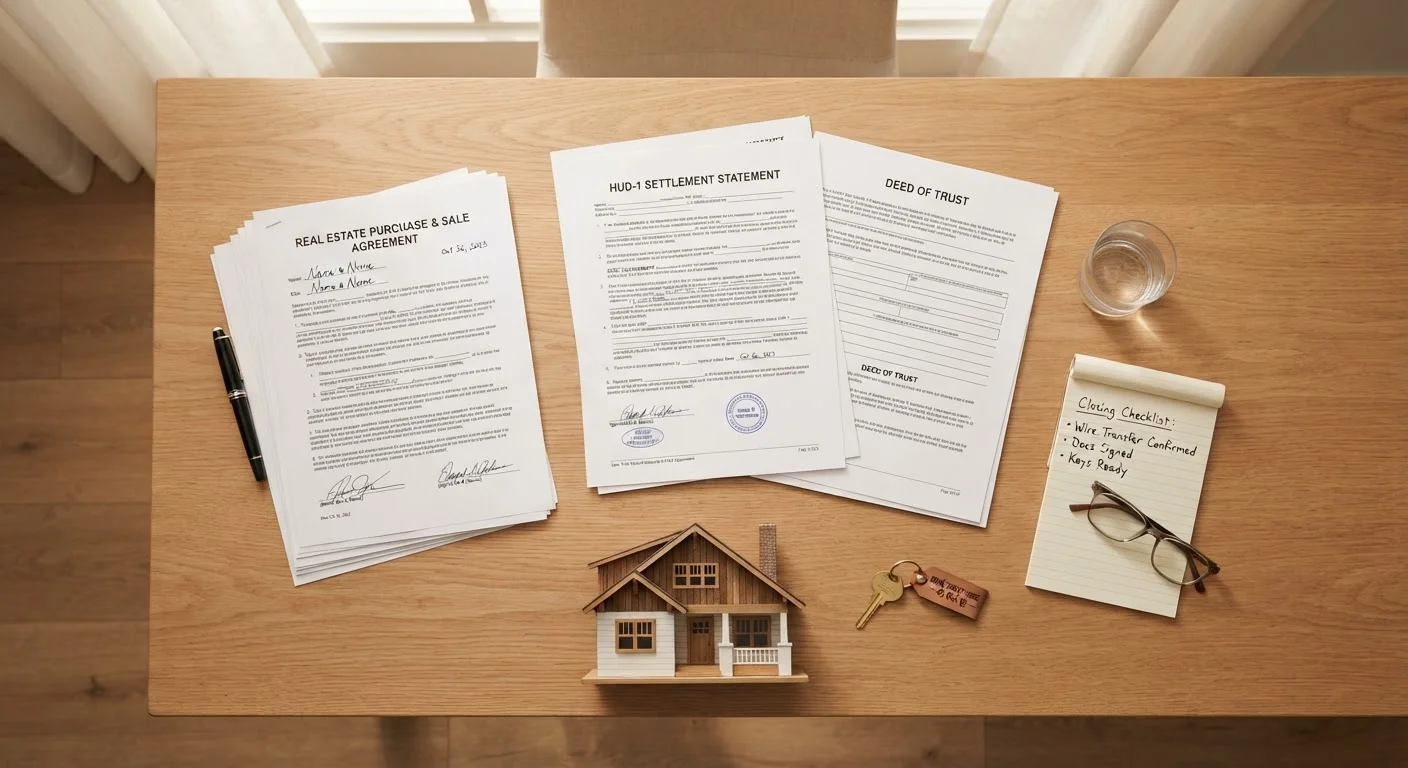
What Escrow Actually Is
Escrow is a neutral, legally structured arrangement in which a third party — typically an escrow officer or title company — holds funds, documents, and instructions on behalf of both the buyer and the seller. Neither party controls those assets until every condition in the purchase contract has been fulfilled. Think of it as a secure waiting room for your transaction.
Escrow exists to reduce risk for everyone involved. The seller knows the buyer's earnest money is real and accessible. The buyer knows the deed won't transfer until the seller meets their obligations. The lender knows their funds will be released only when ownership is properly conveyed. Understanding this structure removes much of the anxiety that surrounds the period between a signed offer and closing day.
For a broader view of every professional involved in a transaction, see Real Estate Services From Contract to Closing.
What you will need
The Escrow Process, Step by Step
While timelines vary by market and contract terms, most residential escrow periods follow a predictable sequence. The steps below reflect the typical arc of a standard purchase transaction in the United States.
Open Escrow and Deposit Earnest Money
Once the purchase contract is fully executed, either the buyer's agent or the listing agent submits it to an escrow company or title company to formally open escrow. The buyer then deposits earnest money — a good-faith sum, commonly 1–3% of the purchase price — within the timeframe specified in the contract, often one to three business days.
The escrow officer assigns a file number and becomes the central coordinator for all subsequent paperwork, funds, and instructions.
Submit Loan Application and Open Title
If the buyer is financing the purchase, a formal loan application is submitted to the lender — if not already done — immediately after contract execution. Simultaneously, the title company begins its title search, examining public records to verify that the seller has clear, marketable ownership and that no outstanding liens, judgments, or encumbrances exist on the property.
Complete the Home Inspection
Within the inspection contingency window — typically 7 to 14 days — the buyer arranges a professional home inspection. The inspector evaluates the property's structure, systems, and components and provides a written report. Based on findings, the buyer may request repairs, a price reduction, or credits; negotiate as-is; or, in some cases, exit the contract within the contingency window.
Satisfy the Appraisal Contingency
The lender orders an independent appraisal to confirm the property's market value supports the loan amount. If the appraised value meets or exceeds the purchase price, this contingency is satisfied. If it comes in lower, the buyer and seller must decide how to proceed — common options include renegotiating the price, the buyer covering the gap in cash, or invoking the appraisal contingency to exit the contract.
Receive and Review the Loan Commitment
After the lender's underwriting team has reviewed the full application, appraisal, title report, and supporting documents, they issue a loan commitment — also called conditional approval. Remaining conditions typically include updated pay stubs, homeowner's insurance proof, or clarification letters. The buyer must satisfy each condition promptly to avoid timeline delays.
Review the Closing Disclosure
Federal law (RESPA and TRID regulations) requires lenders to deliver the Closing Disclosure at least three business days before the scheduled closing date. This document details the final loan terms, closing costs, prepaid items, and the precise cash-to-close figure. Buyers should compare it line by line against the Loan Estimate received early in the process and raise any discrepancies with the lender immediately.
Conduct the Final Walk-Through
The final walk-through — typically held within 24 hours of closing — gives the buyer a last opportunity to verify that the property is in the agreed-upon condition, that any negotiated repairs have been completed, and that the seller's personal property has been removed. It is not a second inspection; it is a condition check.
Close, Fund, and Record
At closing, both parties sign the required documents — the buyer signs loan documents, both parties sign the settlement statement, and the deed is prepared for recording. The buyer wires or delivers the remaining cash to close. Once all funds are confirmed, the lender releases (funds) the loan, the escrow officer disburses proceeds to the seller, pays off any existing liens, and the deed is recorded with the county. At that point, ownership officially transfers.
Wire Fraud Targets Real Estate Transactions
Escrow wires are a frequent target for cybercriminals who intercept emails and send fraudulent wiring instructions. Always verify wire instructions by calling your escrow officer directly at a phone number you sourced independently — never one provided in an email. Once funds are wired to a fraudulent account, recovery is extremely difficult.
What Can Slow or Derail Escrow
Even well-prepared transactions can encounter friction. Common causes of delay include appraisal values that come in below the agreed purchase price, title issues such as unresolved liens or ownership disputes, lender requests for additional documentation, and inspection findings that require renegotiation.
When an appraisal falls short, buyers and sellers often renegotiate the price, with the buyer covering the gap out of pocket, or the deal dissolving. Title defects discovered during the search phase must be resolved — or insured against — before closing can proceed. This is one reason title insurance exists: it protects both the lender and the owner against claims that surface after closing.
Keep a Personal Escrow Checklist
Create a simple document tracking each contingency deadline, document submission, and scheduled appointment. Escrow involves many moving parts across multiple parties, and small items — like returning a signed addendum — can stall the entire timeline if overlooked. Your real estate agent can help you build a checklist tailored to your contract terms.
If you're approaching this process as a seller for the first time, the things that surprise first-time sellers about the listing process article offers useful context on what to expect before escrow even opens.
This article is for general informational and educational purposes only. It does not constitute legal, financial, or real estate advice. Transaction timelines, procedures, and requirements vary by state, lender, and contract terms. Consult a licensed real estate professional or attorney for guidance specific to your situation.