
How Each Method Actually Works
Exfoliation is the process of removing dead skin cells from the outer layer of skin, but the mechanism behind each method is fundamentally different. Understanding that difference makes it easier to choose wisely — and to recognize what's happening when your skin reacts.
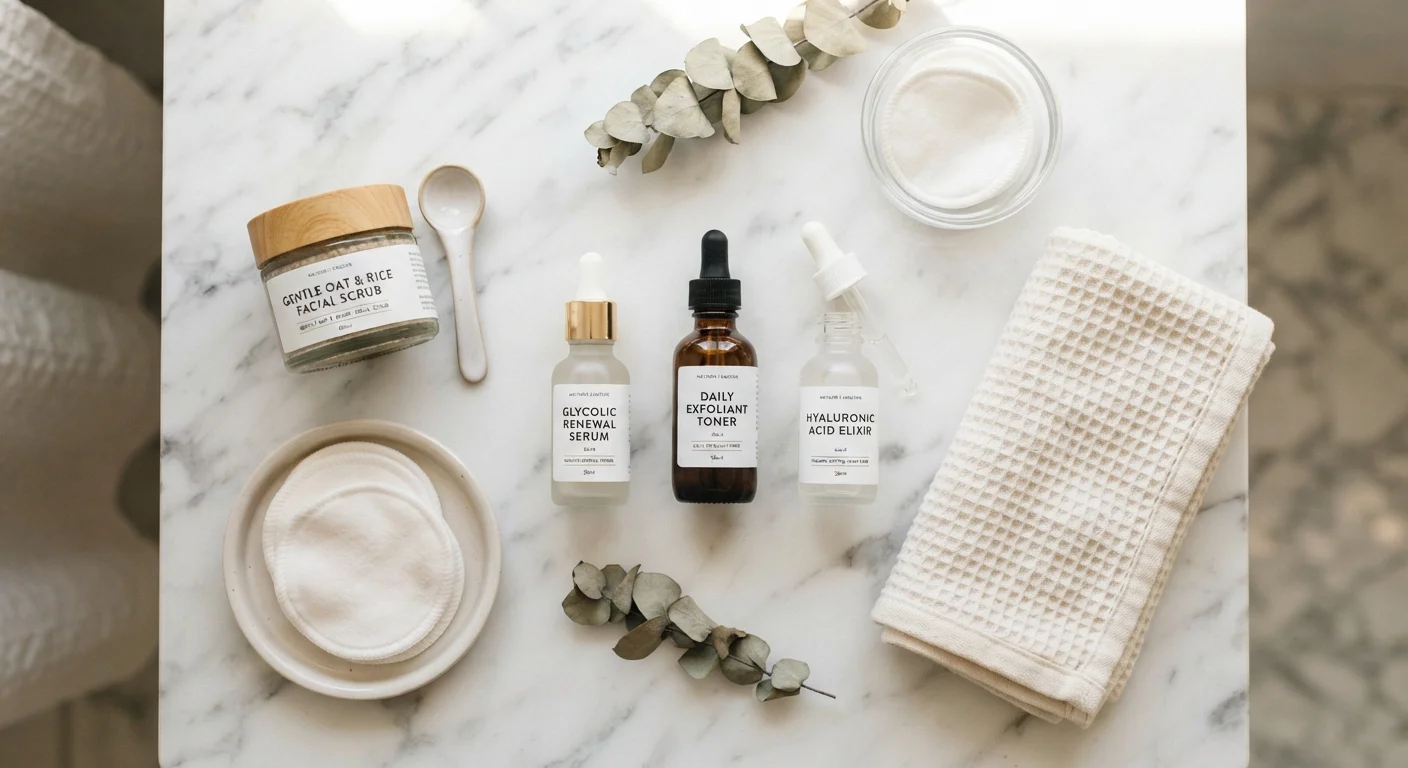
Chemical exfoliants use acids or enzymes to break the bonds that hold dead skin cells together. Alpha hydroxy acids (AHAs) — such as glycolic acid and lactic acid — work primarily on the skin's surface and are water-soluble. They're often cited for improving texture, tone, and radiance. Beta hydroxy acids (BHAs), most commonly salicylic acid, are oil-soluble and can penetrate into pores, making them a frequent recommendation for oily or acne-prone skin types. Enzyme exfoliants, derived from sources like papaya or pineapple, offer a gentler alternative that breaks down dead cells without acid.
Physical scrubs rely on abrasive particles — sugar, salt, rice powder, or synthetic microbeads — to manually slough away dead cells through friction. The result is immediate: skin feels smoother and looks brighter right after use. However, the quality of that friction matters. Coarse or jagged particles can create microtears in the skin barrier, which is why many dermatologists express caution around scrubs with irregular, hard particles.
To understand where exfoliation fits within a full routine, see how product layering order affects results.
| Criterion | Chemical Exfoliants | Physical Scrubs |
|---|---|---|
| Mechanism | Dissolves cell bonds with acids or enzymes | Buffs away cells via physical friction |
| Depth of action | Surface to pore level (BHAs go deeper) | Surface only |
| Results timeline | 4–6 weeks for noticeable improvement | Immediate smoothness after use |
| Best skin types | Acne-prone, sensitive, uneven tone | Normal, resilient, non-reactive |
| Irritation risk | Low to moderate (concentration-dependent) | Moderate to high (particle-size dependent) |
| Pore-clearing ability | High (especially BHAs) | Low — surface-level only |
| Ease of use | Requires attention to concentration and pH | Straightforward — apply and rinse |
| Ingredient interaction risk | Higher — avoid with retinol without guidance | Lower — fewer active interactions |
What Actually Changes When You Switch
If you've been using a physical scrub and decide to switch to a chemical exfoliant — or vice versa — your skin will likely go through an adjustment period. That's not necessarily a warning sign; it's often your skin recalibrating.
When switching to a chemical exfoliant, some people notice temporary increased sensitivity, mild redness, or initial breakouts as cell turnover accelerates. Starting with a low concentration (for example, 5–8% glycolic acid or 0.5–1% salicylic acid) and limiting use to once or twice per week helps the skin adapt without overwhelming it. It can take four to six weeks of consistent use before visible improvements in tone and texture become apparent.
Switching away from chemical exfoliants to physical scrubs tends to feel more immediately satisfying — the tactile sensation is familiar and results are visible right away. But users with acne-prone or easily irritated skin may find that scrubbing reintroduces inflammation that acids were managing. Technique matters considerably here: light pressure, circular motions, and rinsing thoroughly all reduce irritation risk.
~60%
Consumers who over-exfoliate without knowing
A survey by the International Dermal Institute found that a majority of people using exfoliating products do so more frequently than their skin type warrants, increasing barrier disruption risk.
4–6 weeks
Typical adjustment period for chemical exfoliants
Dermatologists generally advise giving chemical exfoliants at least one full skin-cell-turnover cycle before assessing results, as cell renewal takes roughly this long for most adults.
2–3x/week
General safe exfoliation frequency for most skin types
Most dermatology resources cite two to three times per week as a general upper limit for exfoliation, though individual skin sensitivity may call for less.
It's also worth knowing that certain active ingredients interact poorly with exfoliants. Some ingredient pairings can cause irritation or reduce effectiveness — for example, combining strong AHAs with retinol in the same routine requires care. If your skin seems to be reacting unexpectedly after a switch, a routine audit can help pinpoint the cause.
Sun Sensitivity After Chemical Exfoliation
AHAs in particular can increase photosensitivity, meaning skin may burn more easily after use. This is a well-documented effect, not a reason to avoid them — but it does mean applying a broad-spectrum sunscreen daily is an important companion step when using acid exfoliants. This applies even on cloudy days or when spending most of the day indoors near windows.
Matching the Method to Your Skin Type
Neither approach is universally superior — fit depends on your skin's characteristics and how your routine is structured overall.
- Oily or acne-prone skin: BHAs tend to be the most targeted option. Salicylic acid clears out the pore lining in a way no physical scrub can replicate. Scrubbing over active breakouts can spread bacteria and worsen inflammation.
- Dry or dehydrated skin: AHAs like lactic acid can improve hydration retention alongside exfoliation. Physical scrubs risk stripping already-compromised moisture. If you're unsure whether your skin is dry or dehydrated, that distinction changes which products will actually help.
- Sensitive or reactive skin: Low-concentration enzyme exfoliants or mild AHAs used infrequently are generally better tolerated than abrasive scrubs. Patch testing before full-face application is always advisable.
- Normal or resilient skin: Either approach can work. Alternating between a gentle scrub and a light chemical exfoliant — used on different days — is a practical middle ground many people use successfully.
Frequency also matters as much as the type chosen. Over-exfoliating — whether chemical or physical — disrupts the skin barrier, leading to redness, tightness, and breakouts. For most skin types, two to three times per week is considered a general upper limit, though individual tolerance varies.
This article is for general informational purposes only and is not a substitute for personalised advice from a licensed dermatologist or skincare professional.