
The Core Difference: Skin Type vs. Skin Condition
Dry skin and dehydrated skin are frequently confused because they produce similar feelings — tightness, discomfort, and a dull appearance. But confusing one for the other leads to reaching for the wrong products, which can make either problem worse.
Dry skin is a skin type. It describes skin that produces less sebum (natural oil) than other types. Because oil is a key component of a healthy skin barrier, people with dry skin tend to have a compromised outer layer that lets moisture escape more easily and struggles to keep environmental irritants out. This characteristic is largely genetic and relatively stable over time, though it can intensify with age as sebum production decreases.
Dehydrated skin is a skin condition — a temporary state that occurs when the skin lacks sufficient water. Crucially, any skin type can become dehydrated, including oily skin. Common triggers include over-cleansing, harsh surfactants, low humidity, excessive caffeine or alcohol intake, and barrier damage from over-exfoliation. Because it's condition-based, dehydration is addressable and often reversible.
The practical implication: dry skin needs more oil, while dehydrated skin needs more water. Piling a heavy occlusive cream onto dehydrated skin without first delivering water can trap dryness in rather than correct it. Similarly, applying a water-based hydrating serum alone to dry skin may temporarily relieve tightness but won't replenish the lipid barrier that's structurally deficient.
How to Tell Which One You're Dealing With
A few simple self-assessments can point you in the right direction — though for persistent or severe skin concerns, a dermatologist can provide a more precise evaluation.
The Pinch Test
Gently pinch a small section of skin on your cheek and release. If the skin snaps back immediately, it's reasonably well-hydrated. If it takes a moment to return to its normal position — sometimes called "tenting" — the skin may be lacking water. This test is a general guide, not a diagnostic tool.
The Hour-After-Cleansing Check
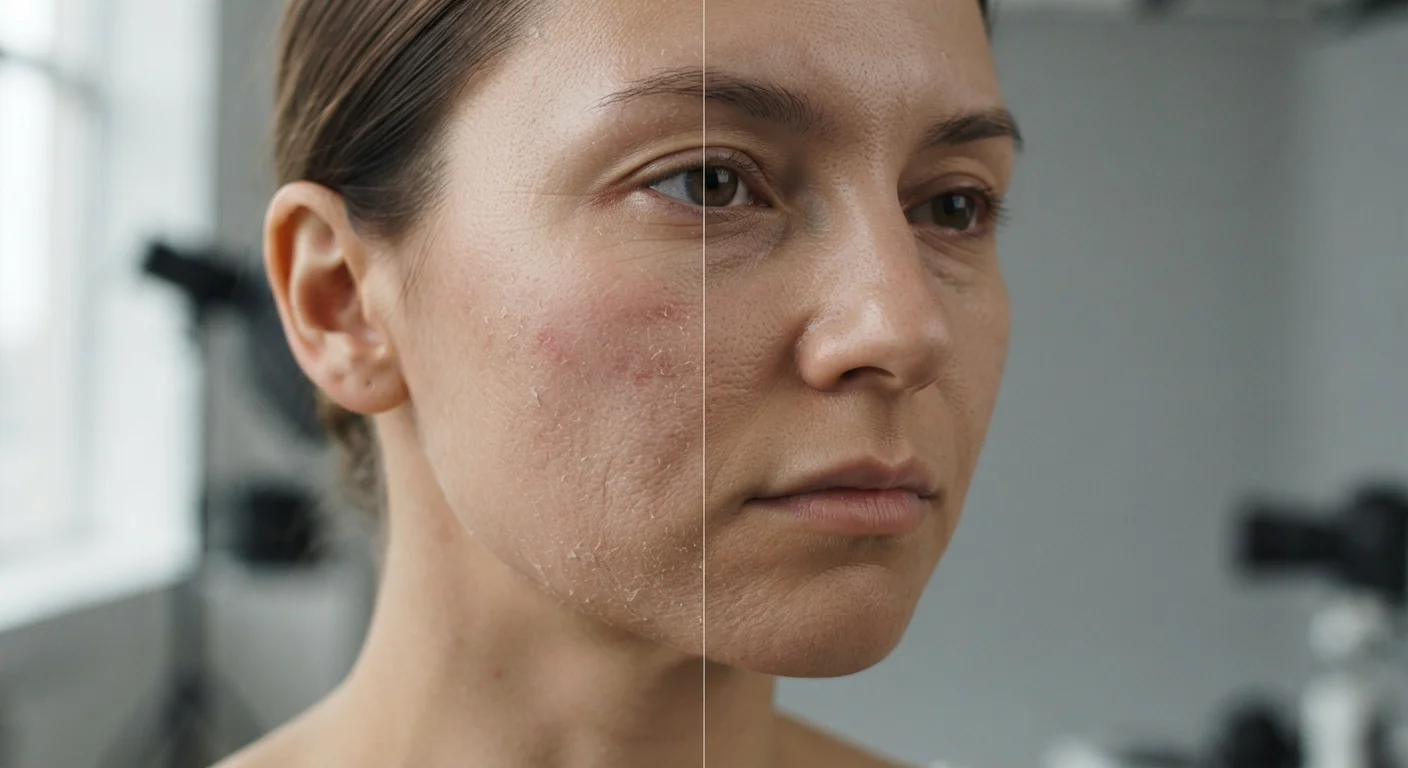
Wash your face with your usual cleanser, pat dry, and apply nothing for 30–60 minutes. If your skin feels tight, looks dull, or shows fine lines that weren't noticeable before washing, dehydration is likely a factor. If your skin feels rough, looks flaky, or produces almost no oil at all in this window, you may be dealing with a dry skin type.
Reading Seasonal vs. Constant Patterns
Dry skin tends to be a consistent, year-round experience. Dehydrated skin often spikes in winter (low humidity, indoor heating) or with certain lifestyle factors. If your skin only struggles at particular times or in response to specific habits, dehydration is the more probable culprit.
| Criterion | Dry Skin | Dehydrated Skin |
|---|---|---|
| Classification | Skin type (genetic, stable) | Skin condition (temporary, fixable) |
| Root cause | Low sebum (oil) production | Insufficient water in skin cells |
| Who it affects | People with naturally low oil output | Any skin type, including oily |
| Key symptom | Rough texture, flaking, tight feeling | Dullness, fine lines, tight feeling |
| Common triggers | Genetics, age, cold weather | Over-cleansing, diet, low humidity, barrier damage |
| What it needs | Lipid-replenishing oils and occlusives | Humectants (hyaluronic acid, glycerin) |
| Seasonality | Consistent year-round | Often spikes in winter or with lifestyle changes |
What Each Condition Needs in a Routine
Once you've identified which condition — or combination — you're working with, the product logic becomes much clearer.
For Dry Skin
The goal is to reinforce the lipid barrier and slow down transepidermal water loss (TEWL). Look for moisturizers containing ceramides, fatty acids, and cholesterol — the three lipids that make up the natural skin barrier. Occlusive ingredients like petrolatum or plant-based waxes form a physical seal that reduces moisture evaporation. Rich creams and balms are generally better suited to dry skin than gel or water-based formulas.
For Dehydrated Skin
The goal is to draw water into the skin and hold it there. Humectants — ingredients like hyaluronic acid, glycerin, and panthenol — attract water molecules from the environment or deeper skin layers to the skin's surface. Apply humectants to slightly damp skin for best effect, then follow with a moisturizer to seal the hydration in place. This layering approach is key: humectant first, then an emollient or occlusive on top.
For Both at Once
If you have dry skin that's also dehydrated, you need both steps: a humectant layer followed by a barrier-supporting cream. Evaluate your cleanser too — harsh foaming cleansers strip both oil and water from the skin. A gentle, low-pH cleanser can make a meaningful difference before you even apply any treatment product. You may also want to review your exfoliation frequency, as over-exfoliating is a common and underappreciated driver of barrier damage. See our guide to chemical exfoliants vs. physical scrubs for help calibrating that part of your routine.
~50%
Adults who report dry or sensitive skin
Multiple dermatological surveys estimate roughly half of adults self-report dry or sensitive skin, though clinical definitions vary by study.
3 layers
Lipid components of the skin barrier
Ceramides, cholesterol, and fatty acids form the three primary lipid classes that maintain the skin's natural barrier function, according to established dermatology literature.
If your skin continues to signal imbalance even after adjusting your routine, it may be worth a broader review of your regimen. Our skincare routine audit walks through common signals that something needs to change.