
What Business Casual Actually Means
"Business casual" is one of the most inconsistently used dress codes in American workplaces. In a law firm it might mean pressed slacks and a blazer; at a tech startup it could mean dark jeans and a neat polo. The phrase describes a broad middle ground between formal business attire and casual everyday wear — but the exact boundaries shift depending on your industry, company culture, and even your geographic region.
Rather than looking for a universal rulebook, treat the phrase as a prompt to read your specific environment. If you're starting a new role, observe what colleagues at your level — and one level above you — are wearing in the first week. That observation is more reliable than any general guide. When in doubt, dressing slightly more formal than necessary is almost always safer than underdressing.
When in Doubt, Observe First
No style guide replaces real-world observation. On your first few days in a workplace, pay attention to what well-regarded colleagues are wearing — not just what the dress code policy says. Written dress codes are often aspirational or outdated; the actual daily standard is what matters for fitting in professionally.
What You'll Need Before You Start
Before building or refining your business casual wardrobe, take stock of what you already own and identify the gaps. You don't need to start from zero.
What you will need
If your current wardrobe is thin, prioritize a few high-impact foundational pieces before adding variety. Our guide to building a wardrobe on a tight budget walks through which items to buy first when money is limited.
Step-by-Step: Building Your Business Casual Wardrobe
Follow these steps to put together a functional, versatile business casual wardrobe that works across most professional environments.
Read your workplace environment first
Spend your first few days at a new job observing what colleagues wear before purchasing anything new. Note whether blazers appear regularly, how casual footwear is, and whether denim is present at all. Use what you see to anchor your shopping decisions to reality rather than assumption.
Build a neutral foundation
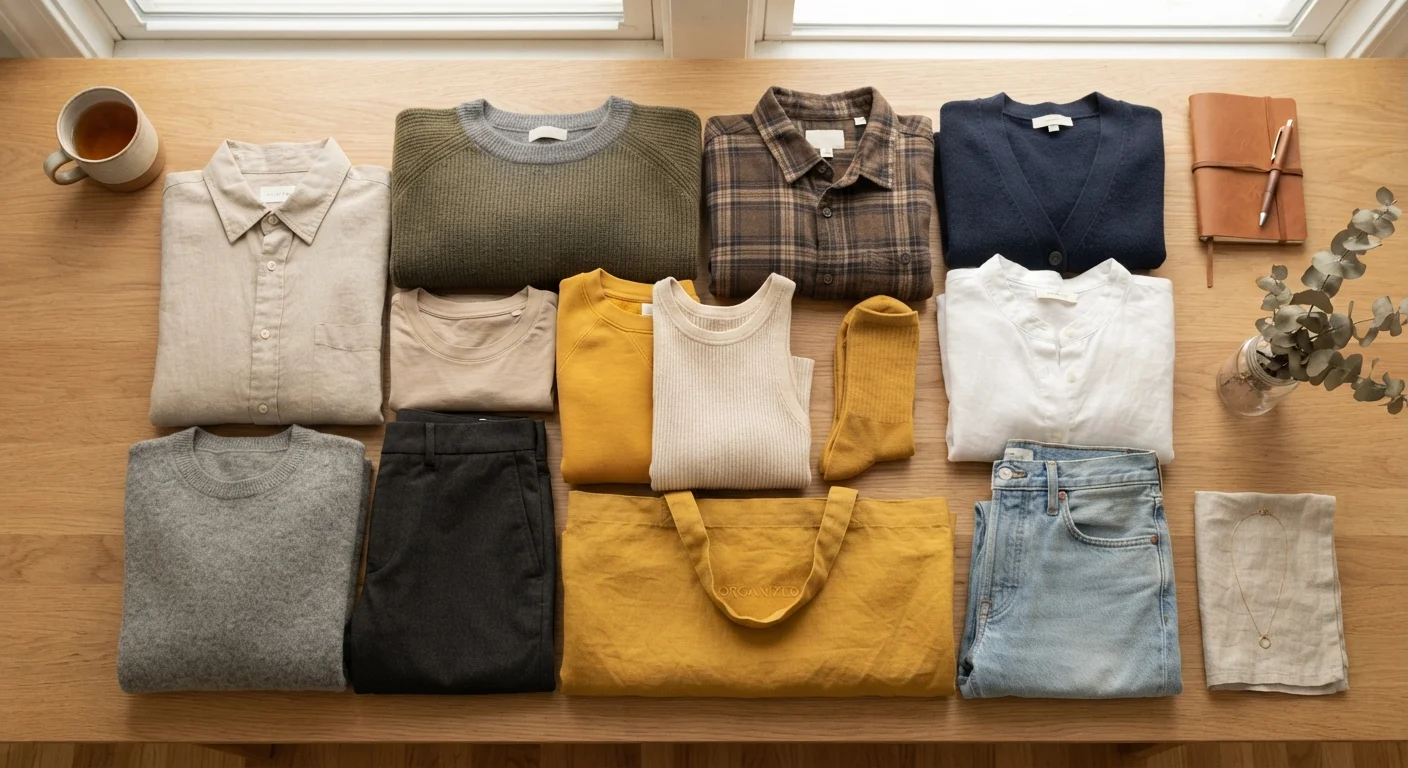
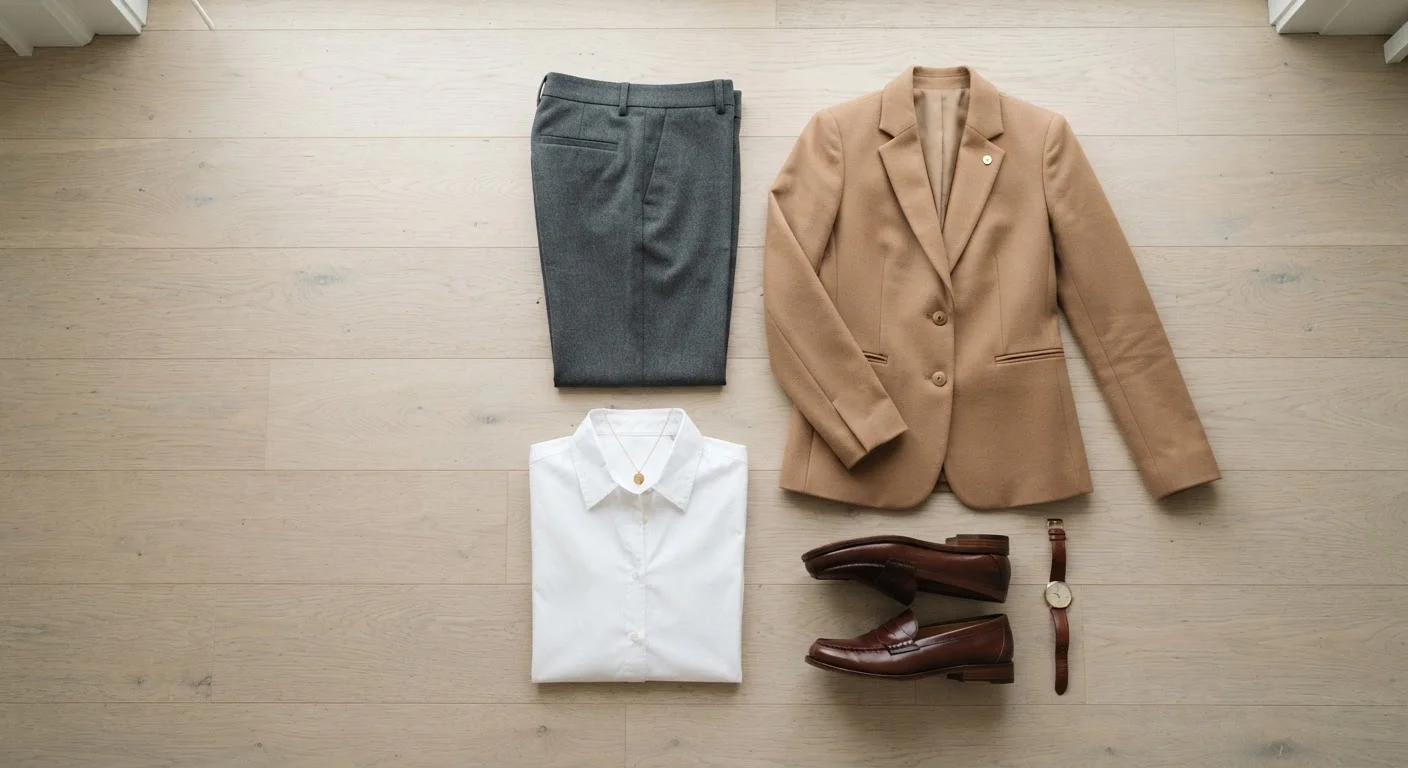
Start with a small set of neutral-colored pieces: navy, grey, tan, black, and white form a core palette that mixes freely. For most business casual environments, aim for two or three pairs of well-fitted trousers or chinos, three to four tops (button-downs, blouses, or fitted knits), and one or two blazers or structured cardigans. These items should work together interchangeably.
Choose appropriate footwear
Footwear often determines how formal an outfit reads. Leather or leather-look loafers, Oxford shoes, block-heeled shoes, and clean ankle boots typically work across business casual environments. Avoid athletic sneakers, flip-flops, and heavily distressed styles unless you've observed colleagues wearing them without issue.
Prioritize fit over brand or price
Try on everything before buying when possible, paying attention to shoulder seams, trouser break, and shirt length. Clothing that pulls, gaps, or bunches at any point is the wrong fit regardless of size on the label. If a piece fits well everywhere except one area — such as trouser length — budget for a basic alteration rather than abandoning the item.
Add limited accent pieces deliberately
Once your foundation is in place, one or two accent items — a patterned scarf, a structured bag, a watch — can add personality without disrupting professionalism. Limit accent pieces so they highlight your outfit rather than compete with it. Avoid introducing multiple bold patterns or colors at once until you're confident with how they read in your workplace.
Maintain and care for your pieces
Business casual clothing lasts significantly longer when cared for properly. Follow care label instructions, hang or fold garments promptly after wearing, and address stains quickly. Rotate pieces so no single item is over-worn. A clothing brush removes lint and surface debris from blazers and trousers without washing, which extends the life of structured items.
Once your foundational pieces are in place, focus on color combinations that keep your options open. Our color coordination guide explains practical pairing principles without any fashion jargon. And if you want to stretch further variety from fewer items, see how a smaller wardrobe can produce more outfit combinations.
Common Pitfalls and How to Avoid Them
Even with good intentions, certain missteps are easy to make when navigating business casual for the first time.
Avoid Buying Everything at Once
It's tempting to do a complete wardrobe overhaul before starting a new role. Resist this impulse. Buying a large number of items before you understand the actual dress culture of your workplace often leads to wasted spending. A targeted, minimal initial purchase — adjusted after your first few weeks — is a more practical and cost-effective approach.
Another frequent mistake is buying clothes in the wrong size with the assumption that fit doesn't matter as long as the item looks professional. Fit is arguably the single biggest factor in how polished any outfit appears. Inexpensive clothing that fits well reads as more put-together than expensive clothing that doesn't. Many tailors offer basic alterations — hemming trousers or taking in a shirt — at modest cost. If you're unsure how clothing should fit different body proportions, our breakdown of fit and proportion advice offers a clear, judgment-free explanation.
Finally, avoid over-investing early. Buy a minimal set of pieces first, wear them through a few weeks of work, then assess what's actually missing before spending more.
Dress Codes Can Have Legal Dimensions
Workplace dress codes must comply with employment law, including accommodations for religious practice, disability, and other protected characteristics. If a dress code requirement conflicts with your religious observance or a medical need, you have the right to request a reasonable accommodation from your employer. Consult your HR department or a qualified employment attorney if you have concerns about a specific policy.