
Where the Term Comes From
The concept of comedogenicity — an ingredient's tendency to cause comedones — emerged from dermatological research in the 1970s. Scientists developed rating scales (typically 0 to 5) to classify individual ingredients by their likelihood of clogging pores. A rating of 0 indicates no comedogenic potential; a rating of 4 or 5 signals high risk. These scales were largely based on rabbit ear studies, a methodology that has since been criticized for not translating reliably to human facial skin.
Cosmetic marketers adopted the term non-comedogenic as consumer awareness of acne triggers grew. By labeling products this way, brands communicated — without a formal promise — that the formula had been designed with acne-prone skin in mind. The label caught on quickly and today appears on everything from foundation and sunscreen to moisturizers and hair oils.
For more on how to decode ingredient terminology across beauty categories, see our hair ingredient glossary — the same decoding skills apply to skincare labels.
What the Label Does Not Guarantee
The most important thing to understand about non-comedogenic claims is that they carry no legal weight in the United States. The Food and Drug Administration (FDA) regulates cosmetics under the Federal Food, Drug, and Cosmetic Act but does not define, certify, or enforce the term non-comedogenic. A brand does not need to submit any clinical evidence before placing it on packaging.
This matters in two key ways. First, testing standards vary: some brands conduct human skin patch studies before making the claim; others rely on ingredient-level data alone, or on no formal testing at all. Second, comedogenicity is a property of a formulation, not just its individual parts. An ingredient rated 3 out of 5 on a comedogenicity scale may behave very differently at low concentrations, or when combined with other components that alter skin absorption.
No Universal Testing Standard Exists
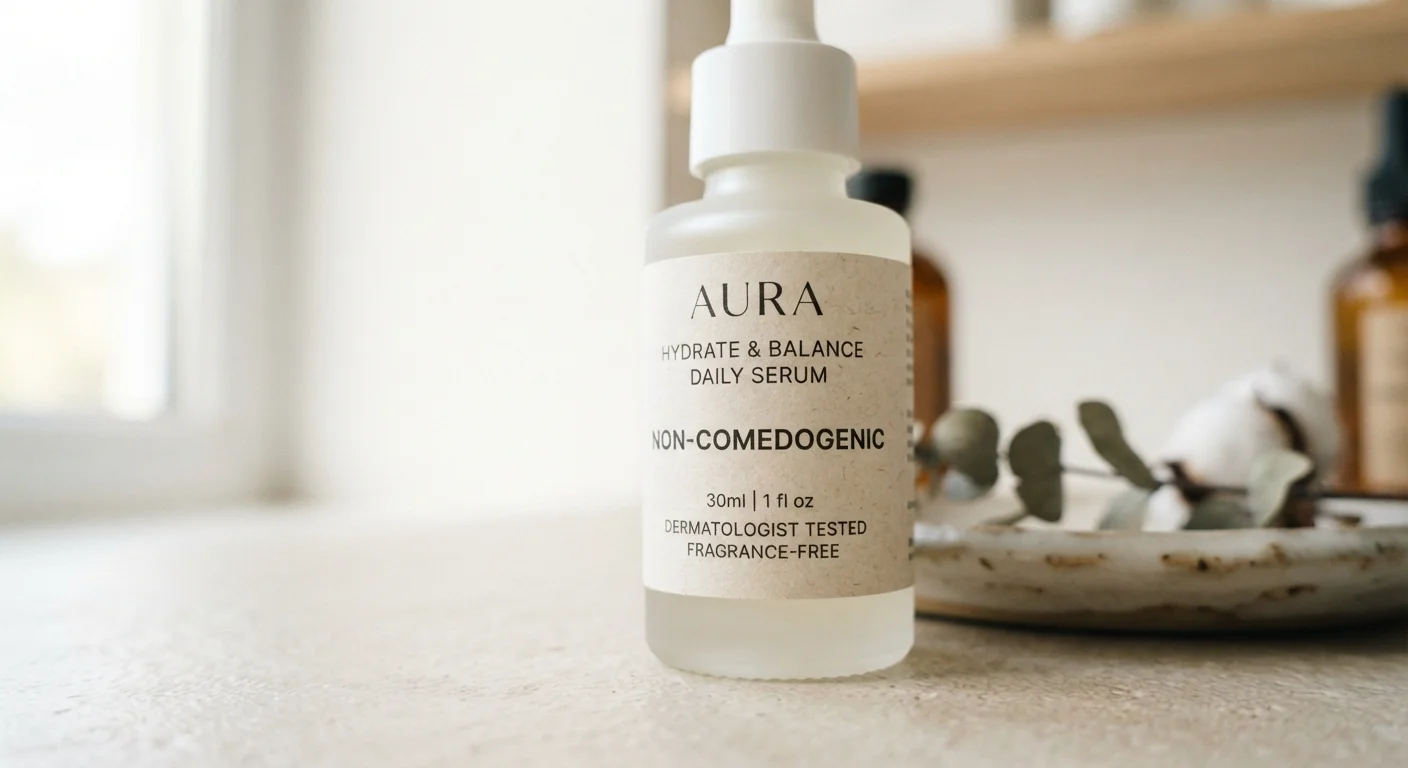
Because there is no industry-wide protocol for proving a non-comedogenic claim, different brands may use very different methods — or none at all — to support their labeling. When a brand volunteers information about its testing methodology (such as dermatologist-tested or clinically evaluated), that transparency is generally a positive indicator, though it still does not constitute regulatory certification.
If you're navigating product labels more broadly — from coverage levels to finish types — our foundation label guide breaks down what common makeup claims actually mean.
Why Individual Responses Still Vary
Even a rigorously tested non-comedogenic product can trigger breakouts in certain individuals. Skin is highly personal. Factors that influence whether a product clogs your pores include your skin's baseline oiliness, your hormonal environment, how much product you apply, and whether you cleanse thoroughly after wear.
Environmental factors matter too. Humidity, heat, and physical activity can affect how a product behaves on skin over time. A lightweight non-comedogenic moisturizer that works well in cool, dry climates may feel occlusive and problematic in a humid summer environment.
Patch Test Before You Commit
Introduce new products one at a time — not all at once — so you can identify any specific formula causing a reaction. Apply a small amount to a discreet patch of skin and wait at least 48 hours before expanding use. This applies equally to products labeled non-comedogenic, hypoallergenic, or 'clean.'
This is why dermatologists consistently recommend patch testing any new product — particularly for acne-prone skin — before applying it broadly across the face. Apply a small amount to the jawline or inner arm, wait 48–72 hours, and monitor for reactions before committing to full-face use.
How to Use the Label as a Starting Point
Despite its limitations, the non-comedogenic label isn't meaningless. Brands that invest in rigorous formulation testing and make the claim genuinely are offering a product designed with pore health as a consideration. When combined with other label-reading habits, the claim can help narrow down options.
A practical approach: check the ingredient list alongside the non-comedogenic label. Publicly available comedogenicity rating references — many hosted by dermatology resources online — allow you to look up key ingredients individually. Pay attention to where potentially comedogenic ingredients fall in the list; ingredients listed toward the end are present in smaller concentrations and often pose lower risk.
Also consider product type. Leave-on formulas like heavy cream moisturizers or occlusive balms carry more pore-clogging potential than rinse-off products, regardless of labeling. Our guide to makeup hygiene explores how product freshness and application habits can also influence skin health over time.
0–5
Comedogenicity rating scale range
Ingredient comedogenicity scales, developed from dermatological research, rate individual ingredients from 0 (non-comedogenic) to 5 (highly comedogenic).
0
FDA standards requiring non-comedogenic proof
The US Food and Drug Administration does not define or enforce the non-comedogenic claim, meaning brands are not required to submit testing data to use the label.
Ultimately, non-comedogenic is a useful signal — not a guarantee. Treating it as one factor in a broader label-reading strategy, rather than a definitive green light, puts you in a more informed position as a consumer.
This article is for general informational purposes only and is not a substitute for personalised advice from a licensed dermatologist or healthcare provider.