
Coverage: What It Actually Means on a Label
Coverage is one of the most misunderstood terms on a foundation label. It describes how much of the skin's natural variation — redness, dark spots, uneven tone, or blemishes — a product conceals.
- Sheer coverage adds a wash of color that evens out tone without masking texture or spots. It suits people who prefer a barely-there look or have naturally even skin.
- Medium coverage is the most versatile level. It softens discoloration and minor blemishes while still allowing natural skin texture to show through.
- Full coverage creates an opaque layer that minimizes the visible appearance of scarring, hyperpigmentation, and most blemishes.
Many foundations marketed as "buildable" start at medium coverage and can be layered to approach full coverage. Thin, light applications built gradually tend to look more natural than piling on product at once. For readers navigating foundation alongside a full skincare routine, proper skincare layering can influence how evenly foundation applies and adheres.
Finish Types and Which Skin Types They Suit
Finish describes the visual quality of the skin once foundation is set — and it is often the deciding factor between two otherwise similar formulas.
- Matte: Absorbs light and minimizes shine. Generally preferred for oily or combination skin. On very dry skin, a matte finish can settle into dry patches and emphasize texture.
- Satin or natural: Sits between matte and dewy, reflecting a soft amount of light for a healthy-looking result without obvious shine. This finish tends to work across a broad range of skin types.
- Dewy or luminous: Reflects more light, creating a moisturized appearance. Works well for dry or dull skin. On oily skin, a dewy formula may accentuate shine by midday.
If you have sensitive skin, finish type alone may not be the key consideration — formula ingredients matter equally. See makeup guidance for sensitive skin for more on what to look for and avoid.
Formula Types: Matching Format to Your Needs
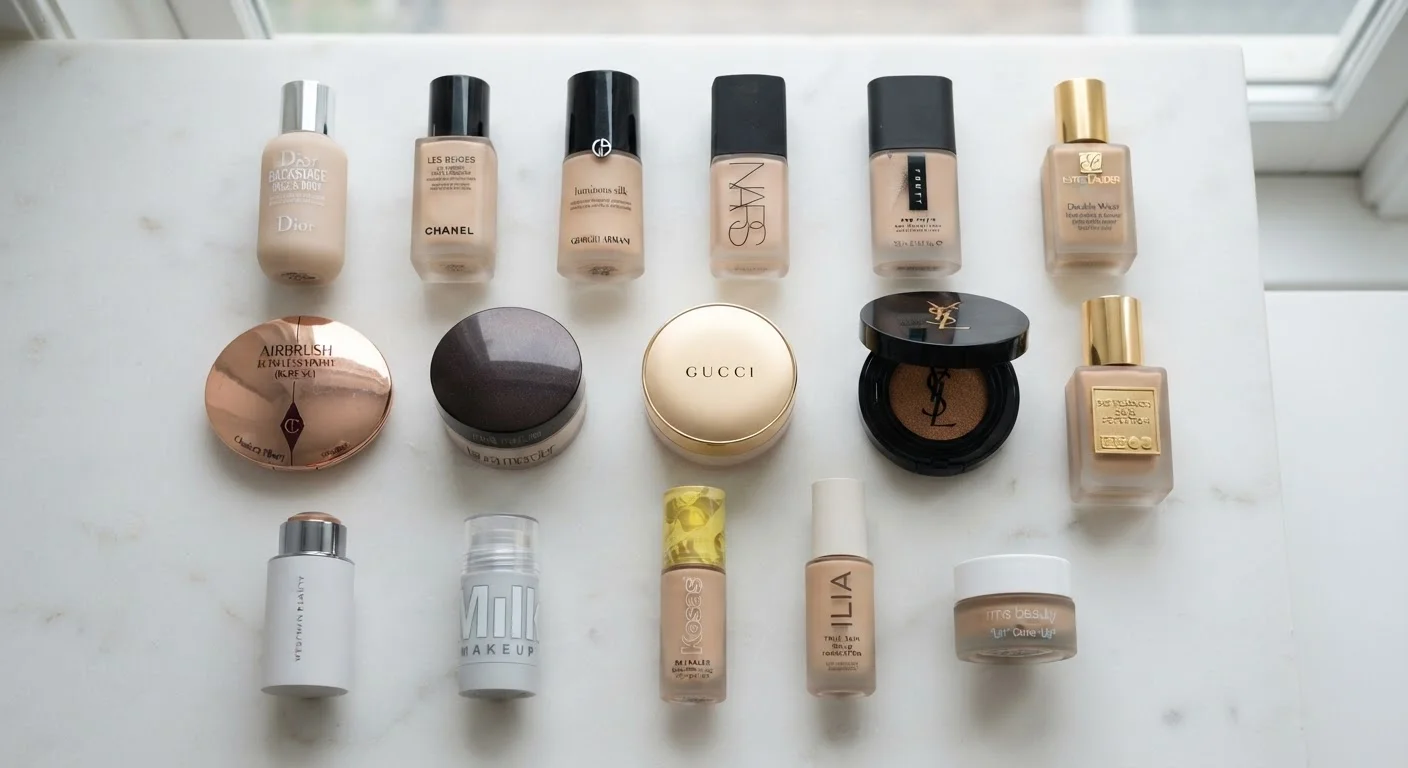
Foundation comes in several physical formats, each with practical trade-offs.
- Liquid: The most common format, ranging from lightweight and sheer to rich and full-coverage. Blends easily and suits most skin types depending on formulation.
- Powder: Applied dry; works well for oily skin but may feel drying on parched or flaky skin.
- Stick: Convenient for travel and touch-ups, often offering medium to full coverage. Formula composition varies widely, so it is worth checking ingredient lists for acne-prone skin.
- Cushion compact: A sponge-soaked format offering a buildable, dewy finish in a portable package.
- Tinted moisturizer or skin tint: The lightest category — sheer coverage with skincare-adjacent ingredients, ideal for those who prefer minimal makeup.
For a streamlined approach, a minimalist makeup routine often centers on a tinted moisturizer or light liquid foundation rather than a high-coverage product. It is also worth understanding label claims: what non-comedogenic actually means is especially relevant when evaluating foundations for pore-clogging potential.
Shade Matching: The Most Practical Approach
Shade matching is where many foundation purchases go wrong — primarily because testing in artificial store lighting or on the wrist gives unreliable results.
The jawline test in natural daylight is generally considered the most dependable method. A well-matched shade disappears into the skin at the jaw without creating a visible line between the face and neck. Undertone matters as much as depth: a shade that is the right darkness but the wrong undertone will still look off once it sets.
- Cool undertones (pink, red, or bluish hues) generally suit foundations labeled "cool" or "rose."
- Warm undertones (golden, peachy, or yellow hues) tend to work well with foundations labeled "warm," "golden," or "beige."
- Neutral undertones have more flexibility and can often wear both warm and cool shades.
Some formulas are also prone to oxidation — the shade can shift slightly darker or more orange after application. Wearing a sample for a few hours before committing is the most reliable way to catch this. Once you have a formula that works, pairing it with a well-established morning skincare routine helps ensure your skin is consistently prepped for an even, lasting application.
This article is for general informational purposes only and does not constitute personalized beauty, medical, or dermatological advice. Individuals with skin conditions or specific concerns should consult a qualified dermatologist or healthcare professional.