
Why Fabric Knowledge Matters for Everyday Dressing
Most clothing labels tell you what a garment is made of — but not what that actually means for how it feels against your skin, holds up to washing, or performs on a hot afternoon. Understanding fabric properties removes guesswork from shopping and helps you build a wardrobe that works across seasons, budgets, and activities.
This reference covers the most common clothing materials you'll encounter, their real-world characteristics, and when each fabric type makes sense. As with any clothing decision, fit still drives how a piece looks and feels — see our guide on why fit matters more than brand or price for context.
| Most common fabric in US clothing | Cotton (Textile Exchange Preferred Fiber & Materials Report) |
| Best fabric for hot, humid weather | Linen or lightweight cotton |
| Most wrinkle-resistant natural fiber | Wool |
| Fabric that weakens when wet | Rayon / viscose |
| Most durable synthetic fiber | Nylon |
| Best fiber for odor resistance in travel | Merino wool |
Natural Fibers: Cotton, Linen, and Wool
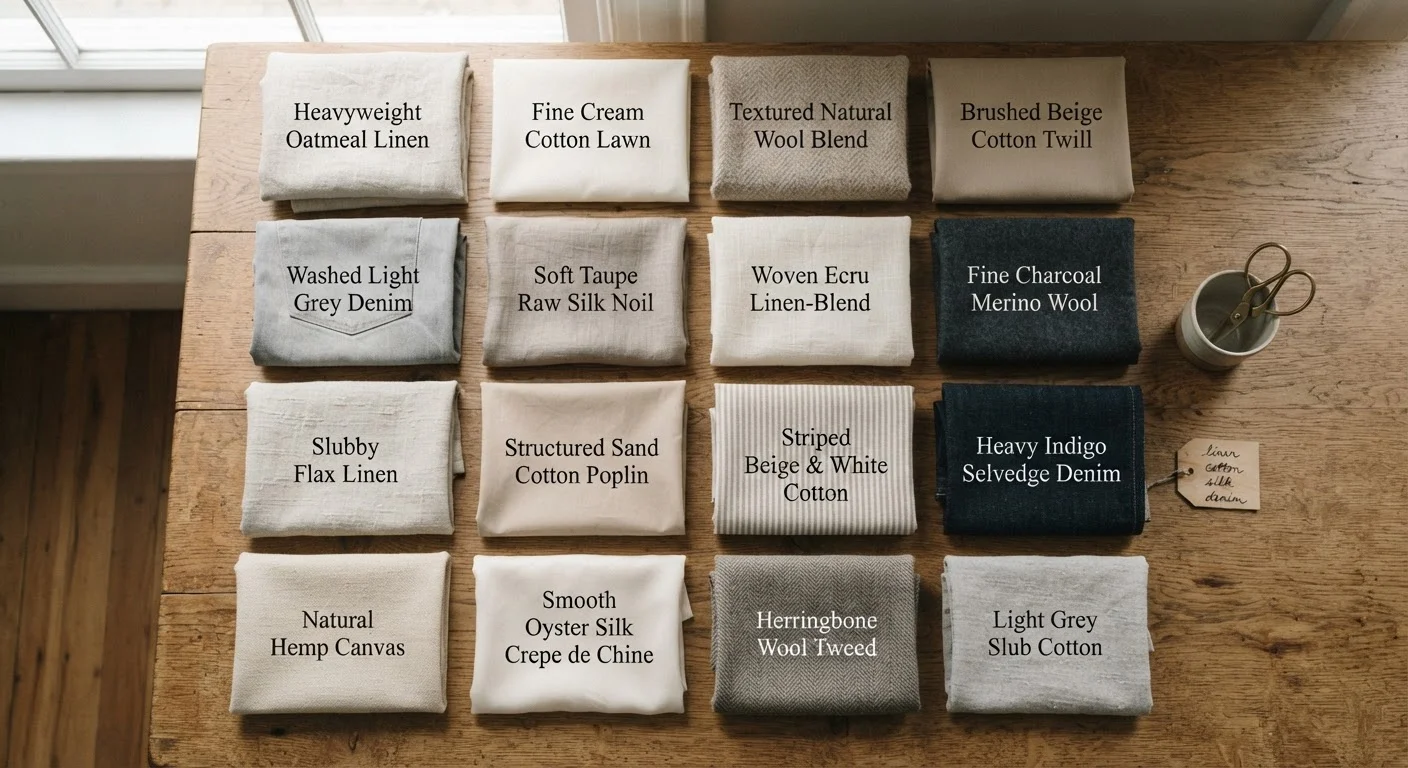
Cotton is the most widely used natural fiber in American clothing. It's soft, breathable, and comfortable against most skin types. Cotton absorbs moisture well, making it practical for warm weather and active use. The trade-off: it wrinkles easily, takes longer to dry than synthetics, and can shrink if washed in hot water. Heavier cotton weaves like canvas or twill are more durable; lighter weaves like jersey and voile feel softer but may wear thin over time.
Linen is made from the flax plant and is noticeably stiffer than cotton, especially when new. It's highly breathable and gets softer with repeated washing, making older linen pieces often more comfortable than new ones. Linen wrinkles significantly — an accepted characteristic of the fabric rather than a flaw — and performs best in warm, dry climates. It's less stretchy than cotton, so cuts need to account for movement.
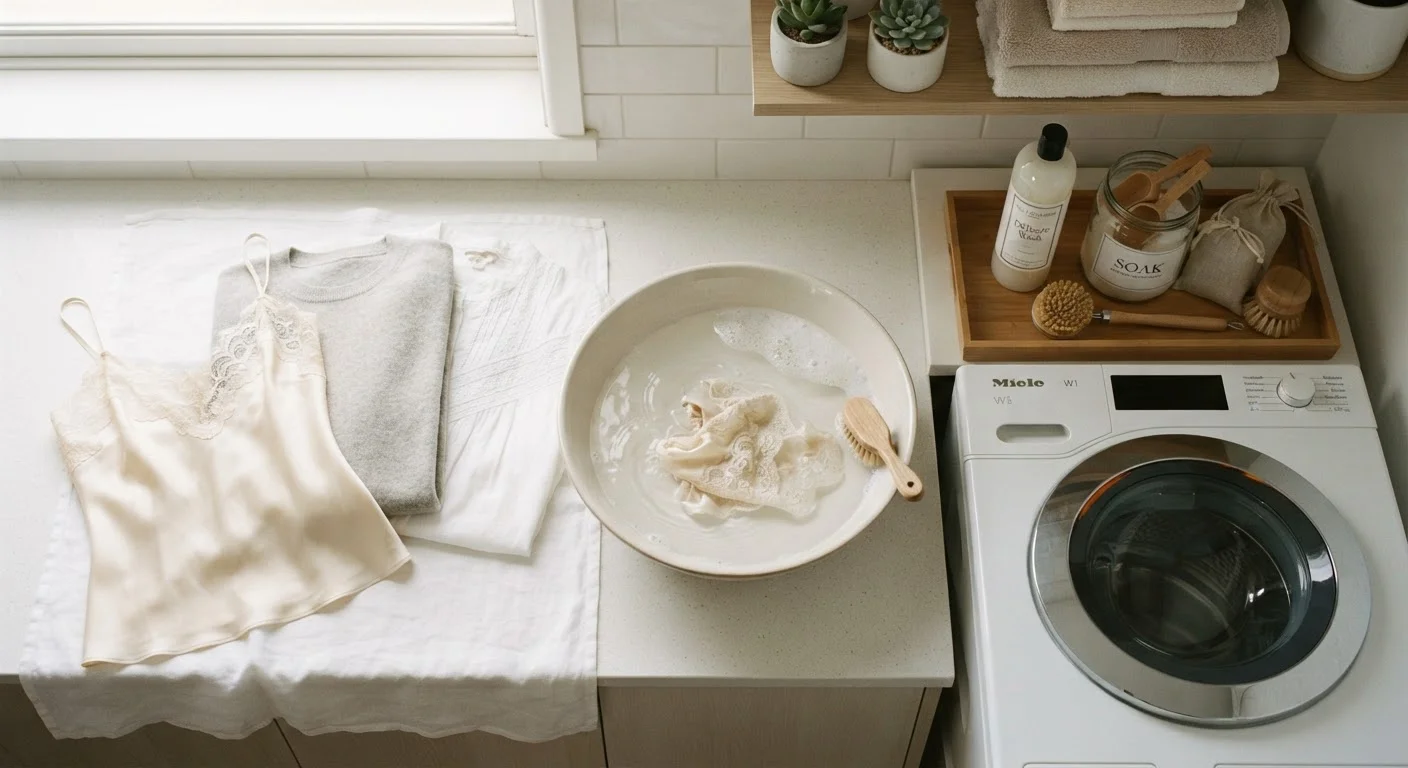
Wool is a natural insulator that regulates body temperature in both cold and mild weather. Merino wool — a finer variety — is soft enough for direct skin contact and resists odor well, making it popular for travel and layering. Standard wool can feel scratchy against bare skin. Wool is more moisture-resistant than cotton but requires gentler care; machine-washing can cause felting and permanent shrinkage. Knowing the right washing method is especially important for wool garments.
Natural fiber
A textile fiber derived directly from plants or animals, such as cotton (plant), linen (plant), or wool (animal). Natural fibers are generally more breathable than synthetics but may require more care.
Synthetic fiber
A textile fiber produced through chemical processes, typically from petroleum-based materials. Polyester and nylon are common examples. Synthetics tend to be durable and wrinkle-resistant but less breathable.
Semi-synthetic fiber
A fiber made by chemically processing a natural raw material, usually plant cellulose. Rayon, viscose, and modal fall into this category — they have some natural origin but require significant industrial processing.
Moisture-wicking
A property, often engineered into synthetic fabrics, that draws sweat away from the skin and toward the fabric's outer surface where it can evaporate. Common in activewear.
Felting
An irreversible matting and shrinking of wool fibers caused by heat, agitation, and moisture — typically from machine-washing. Felted wool cannot be restored to its original state.
Fabric blend
A textile made by combining two or more fiber types — for example, cotton-polyester — to combine the desirable properties of each, such as breathability and wrinkle resistance.
Synthetic and Semi-Synthetic Fibers: Polyester, Nylon, and Rayon
Polyester is the most produced synthetic fabric globally. It resists wrinkles and shrinking, dries quickly, and holds color well — practical advantages that explain its widespread use. However, polyester traps heat and doesn't absorb moisture the way natural fibers do, which can feel uncomfortable in warm weather or during exercise unless the fabric has been engineered for moisture-wicking. Blended with cotton, it brings some of those durability benefits while improving breathability.
Nylon is lightweight, strong, and abrasion-resistant, which is why it appears in activewear, outerwear linings, and hosiery. Like polyester, it doesn't breathe as well as natural fibers, but it holds its shape reliably and dries fast.
Rayon (including its variants viscose and modal) occupies a middle ground. It's made from processed plant cellulose, making it semi-synthetic. Rayon drapes softly and feels lightweight, often mimicking the feel of silk or linen at a lower cost. Its weakness is durability: rayon weakens when wet, wrinkles readily, and may shrink or distort if machine-washed aggressively. Modal is a more stable variant that holds up better in the wash.
Price alone doesn't predict how well a fabric will hold up over time — a point worth exploring in our piece on the myth that expensive clothes always last longer.
~52%
Share of global fiber production that is synthetic
According to the Textile Exchange Preferred Fiber & Materials Report, synthetic fibers — led by polyester — now account for more than half of total global fiber output.
3–5x
Strength increase of nylon vs. natural fibers by weight
Nylon's high tensile strength relative to its weight is why it remains a standard choice for outerwear, activewear linings, and hosiery.
20–30%
Typical shrinkage possible in untreated wool when machine-washed hot
Wool fibers have scales that interlock under heat and agitation; shrinkage rates vary by weave, weight, and wash conditions.
Choosing Fabric for the Situation
No single fabric excels in every condition. The practical rule is to match fiber properties to your environment and use case. Hot, humid weather calls for breathable naturals like cotton or linen. Cold weather favors wool or insulated synthetics. Travel benefits from wrinkle-resistant, quick-dry fabrics like polyester or nylon blends. Sensitive skin generally does better with tightly woven, fine-gauge natural fibers or modal.
Fabric blends — combinations like cotton-polyester or wool-nylon — are common because they balance the strengths of each material. A 60/40 cotton-polyester blend, for example, retains some cotton breathability while gaining polyester's wrinkle resistance and shape retention. Reading the fabric content label before purchasing is one of the simplest habits for building a wardrobe that actually performs.
Check the Care Label Before Washing
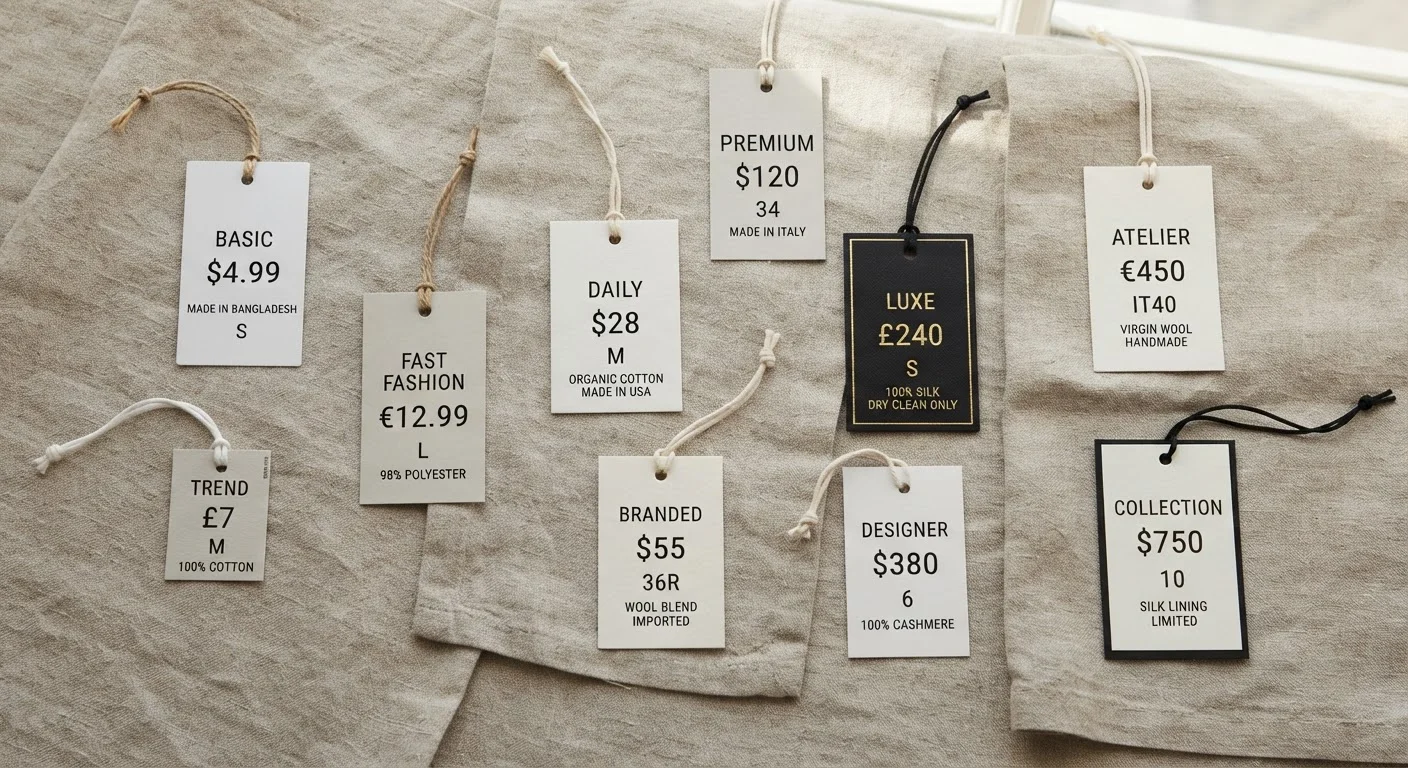
Fabric content and care instructions appear on the sewn-in label of virtually every garment sold in the US — required by the Federal Trade Commission's Care Labeling Rule. The label indicates fiber percentages and recommended washing temperatures, drying methods, and whether dry cleaning is advised. Following these instructions is the single most reliable way to extend a garment's life, regardless of fabric type.