

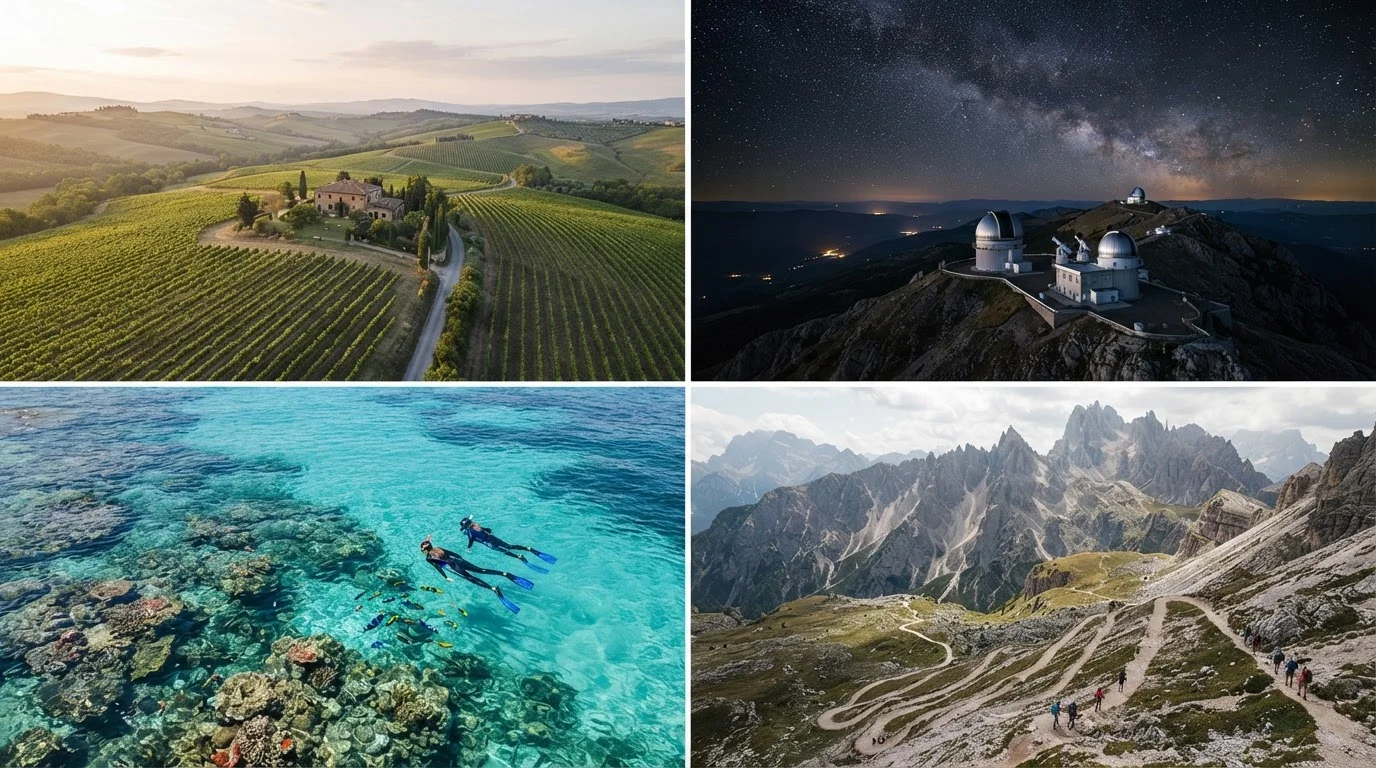
What Counts as Specialty Travel
Most tourism fits a general mold: fly somewhere, stay somewhere, see things. Specialty travel — sometimes called niche tourism — breaks from that pattern by organizing an entire trip around a specific interest, activity, or value system. The destination becomes secondary to the experience type.
The categories below are among the most widely recognized. They are not mutually exclusive; a farm stay in rural Tuscany could qualify as agritourism, slow travel, and culinary tourism simultaneously. What matters is understanding what each term signals about priorities, infrastructure, and the traveler profile it typically attracts. If you're assessing whether a destination supports a particular niche well, our guide on reading a destination's tourism infrastructure before you go offers a practical framework.
| Estimated global specialty travel segments | Dozens of recognized categories (World Tourism Organization typology frameworks) |
| Fastest-growing niche | Wellness and nature-based travel (Global Wellness Institute trend reporting) |
| Agritourism presence | Active in 40+ U.S. states (USDA National Agricultural Statistics Service) |
| Dark Sky designations | 200+ certified sites worldwide (International Dark-Sky Association) |
Nature-Based and Outdoor Categories
Ecotourism centers on natural environments with an explicit commitment to conservation and minimal environmental impact. Legitimate ecotourism operations typically invest a portion of revenue in habitat protection and hire local guides. The term is loosely regulated, however, and travelers should look for third-party certifications when evaluating operators.
Astrotourism draws visitors to locations with exceptional night-sky visibility. The International Dark-Sky Association certifies parks, reserves, and communities that meet rigorous light-pollution standards — a useful benchmark when planning a stargazing trip.
200+
Certified dark-sky sites globally
As designated by the International Dark-Sky Association across parks, reserves, and communities.
40+
U.S. states with agritourism activity
According to USDA National Agricultural Statistics Service survey data on farm-based tourism.
Adventure tourism encompasses physically demanding activities — white-water rafting, mountaineering, backcountry skiing — where the activity itself is the core draw. Risk levels vary enormously; reputable operators will provide clear information on physical requirements, safety protocols, and insurance expectations before booking.
Wildlife tourism focuses on observing animals in their natural habitats. Responsible programs maintain distance standards and avoid baiting or distressing wildlife. This category overlaps significantly with ecotourism but doesn't always carry the same conservation ethos.
Cultural, Heritage, and Educational Categories
Heritage tourism motivates travelers to visit sites of historical, cultural, or ancestral significance. The UNESCO World Heritage List is a foundational reference, though thousands of meaningful heritage sites exist outside that designation. Ancestry tourism — a related subset — involves tracing family roots to specific regions or communities.
Specialty Travel and Overtourism Overlap
Some niche categories — heritage tourism in particular — concentrate visitors at fragile or already-pressured sites. Before visiting a popular cultural landmark, it's worth understanding how your presence affects local communities and ecosystems. See our piece on overtourism and the traveler's role in it for a fuller picture.
Culinary tourism treats food and drink as the primary lens for experiencing a place. This ranges from street food tours and cooking classes to winery visits and regional market exploration. It overlaps heavily with agritourism when the food experience is grounded in a working farm or production facility.
Educational and study travel — sometimes called edu-tourism — combines structured learning with destination experience. Language immersion programs, field research trips, and archaeological digs all fall here. These trips often require advance enrollment and carry academic or program prerequisites.
Astrotourism
Travel to destinations specifically chosen for dark skies and minimal light pollution, with the primary goal of stargazing or attending astronomy-related events. Certified dark-sky parks and remote high-altitude sites are common draws.
Agritourism
A form of rural tourism where visitors participate in or observe agricultural activities — such as harvests, cheese-making, or farm stays. It connects travelers with food systems and rural community life.
Voluntourism
Travel that combines tourism with organized volunteer work, such as conservation projects or community construction. The model has attracted scrutiny; the quality and ethics of programs vary considerably.
Slow Travel
A philosophy of traveling that prioritizes depth over breadth — spending extended time in fewer places to develop genuine familiarity with local life, culture, and environment rather than checking off attractions.
Heritage Tourism
Travel motivated by a desire to experience places of historical, cultural, or ancestral significance. This includes visiting UNESCO World Heritage Sites, ancestral homelands, and preserved historic districts.
Wellness Tourism
Trips organized around physical or mental health goals, ranging from spa retreats and yoga immersions to medically supervised detox programs. It is distinct from medical tourism, which centers on clinical treatment.
Wellness, Agricultural, and Emerging Categories
Wellness tourism is now one of the fastest-growing segments globally. It spans a wide spectrum: a weekend yoga retreat differs substantially from a medically supervised program abroad. Travelers should distinguish between lifestyle wellness offerings and those making clinical claims, and verify credentials accordingly.
Agritourism connects visitors directly to working farms, ranches, and food-production operations. This might mean a farm stay in Vermont's dairy country, an olive harvest in Greece, or a vineyard harvest in California's wine country. The USDA documents agritourism activity across more than 40 U.S. states, and regulations governing farm visitor access vary by state.
Slow travel is less a destination category and more a mode of engagement — prioritizing extended stays, local rhythm, and fewer attractions over a packed itinerary. It has grown in parallel with remote work flexibility and is often practiced alongside other specialty categories.
For help navigating trip types and finding specialists who focus on these niches, the types of travel specialists worth knowing about overview is a useful companion. Broader destination context — including which regions support which niche categories well — is available through our tourist destinations hub.
This article is for general informational purposes only. Travel conditions, site access, and program availability change frequently. Always verify current entry requirements, safety advisories, and operator credentials through official government and provider sources before traveling.