

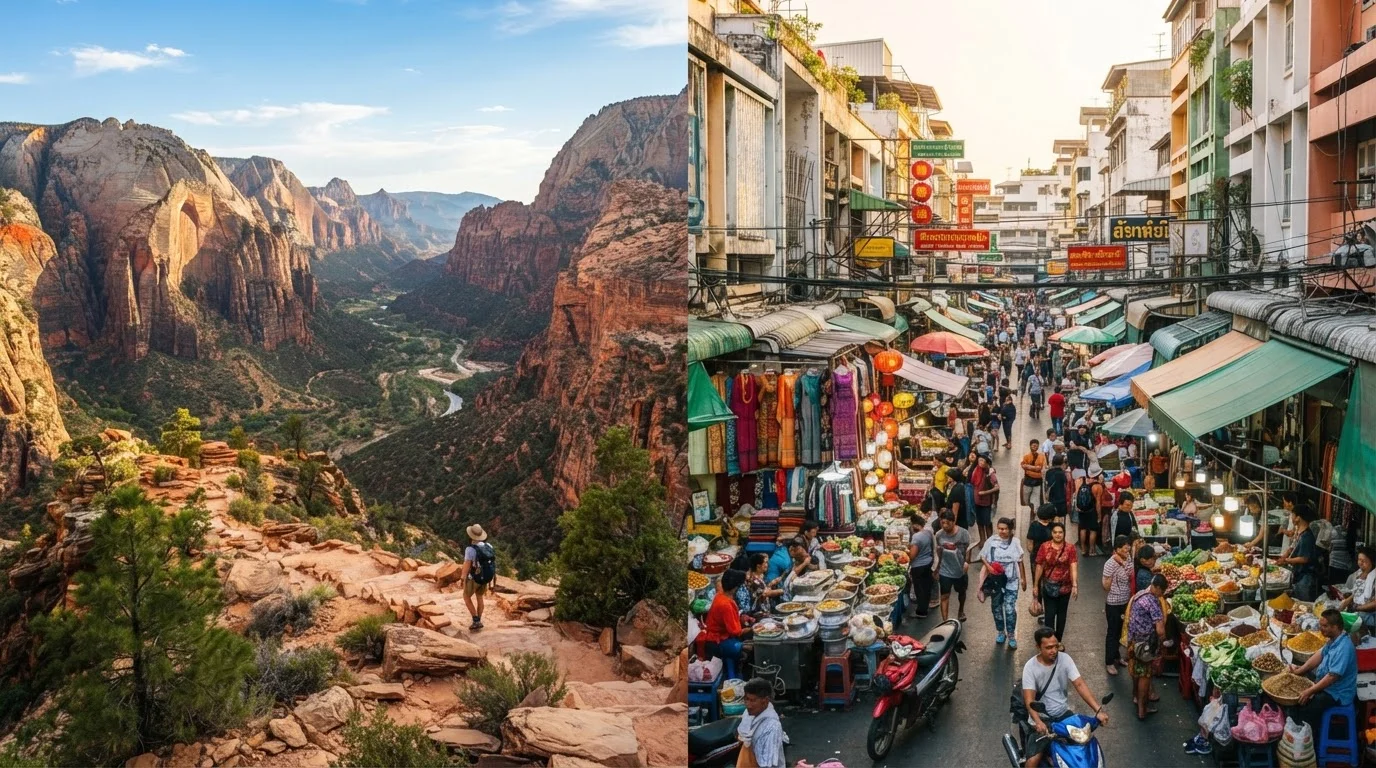
The Real Cost Picture: What Each Option Actually Runs
Sticker price rarely tells the whole story with vacation budgeting. A national park road trip through Utah's Mighty Five, for example, might run a family of four $1,500–$2,500 for a week — covering gas, campsite or motel fees, food from a cooler, and an $80 America the Beautiful annual pass that grants entry to over 400 federal sites. International travel to, say, Mexico's Oaxaca or Portugal's Alentejo region can reach a similar per-person total once flights are added, but the cost curve varies enormously by destination.
The structural difference is in how costs are distributed. Domestic park trips front-load expenses at the fuel pump and on lodging, with very low per-day spending once you're on-site. International itineraries tend to absorb a larger fixed cost at booking — flights, travel insurance, and passport fees if you don't already have one — but daily expenses in many countries with favorable exchange rates can run surprisingly lean. For general guidance on navigating those early international planning costs, see our guide for first-time American international travelers.
| National Parks | International Travel | |
|---|---|---|
| Typical cost range (week, family of four) | $1,500–$3,000 | $3,000–$7,000+ |
| Documentation required | Minimal (driver's license, park pass) | Passport, possibly visa |
| Lead time needed | 2–6 months for peak sites | 3–9 months recommended |
| Cultural immersion depth | Low to moderate | High (varies by destination) |
| Logistics complexity | Low to moderate | Moderate to high |
| Wildlife and wilderness access | Exceptional | Varies widely |
| Language barrier | None for most travelers | Possible; varies by country |
Logistics and Lead Time: How Much Planning Each Requires
National parks require meaningful advance planning — popular destinations like Yosemite Valley, Zion's Angel's Landing trail, and Glacier's Going-to-the-Sun Road now operate reservation systems, and campgrounds at high-demand parks can fill months ahead. But the documentation burden is minimal: no passport, no visa research, no currency conversion, and no language barrier for most travelers.
International travel demands a longer runway. Passport processing alone can take several weeks under standard government timelines, and some destinations require visas. Entry rules, health requirements, and travel advisories shift, which means verifying conditions with official government sources before booking is essential rather than optional. Understanding the tourism infrastructure of your intended country — how easy is it to get around, what's the healthcare access like — matters more than many first-timers expect. Assessing a destination's infrastructure before you commit can prevent costly surprises once you arrive.
Build in a Buffer for Both Trip Types
Whether you're booking a Yosemite campsite or a flight to Lisbon, reservation systems and airfare pricing reward early action. For national parks, check the official Recreation.gov site for reservation windows, which sometimes open exactly six months in advance. For international travel, locking in flights and accommodation 3–5 months out generally provides the most flexibility without the last-minute premium.
Experience Depth: What You Actually Bring Home
This is where the comparison gets genuinely personal. National parks offer something international destinations rarely match: access to landscapes that feel genuinely wild and, at their best, humbling in scale. Standing at the rim of the Grand Canyon or watching a geyser erupt in Yellowstone carries a specific emotional weight rooted in geological drama and ecological authenticity. For travelers whose primary goal is outdoor immersion, the national park system is an extraordinary resource.
International travel trades that wilderness grandeur for a different kind of depth — cultural contrast. Navigating a foreign city, eating unfamiliar food, encountering different social norms, and hearing a language you're learning all engage the mind in ways that a national park drive typically doesn't. This isn't a value judgment; it's a distinction in what kind of growth or pleasure you're seeking. Travelers drawn to extended stays in fewer places may find that the international route, paired with a slow travel approach, generates the most lasting impressions.
For those interested in adventure-focused or niche travel experiences, the specialty travel hub covers a wide range of options worth exploring alongside a traditional national park or international itinerary.
Don't Underestimate Hidden Costs Abroad
International travel budgets frequently undercount expenses like airport transfers, checked baggage fees, international phone plans, and travel insurance premiums. Entry fees at popular sites abroad can also add up quickly — some heritage destinations charge separately per attraction. Build a realistic buffer of 15–20% beyond your estimated total to avoid mid-trip financial stress.
Making the Call: Matching the Option to Your Situation
Neither path is inherently superior — each serves different travelers well at different life stages. A household with young children, a constrained budget, and no current passports has a compelling case for a national park itinerary this year. A seasoned traveler with flexible dates, a valid passport, and a specific cultural curiosity — say, Central American archaeology or Southeast Asian cuisine — may find international travel delivers something domestic parks simply can't replicate. A country-by-country look at Central America's tourism landscape illustrates how varied international options can be even within a single region.
If cost is your primary constraint, an honest accounting matters. Build out your national park itinerary with real numbers for fuel, lodging, and food — then do the same exercise for one or two international destinations at mid-range and budget levels. The results sometimes surprise people in both directions. Accommodations also shift the math considerably; comparing hotels to vacation rentals for your specific trip type can close or widen the gap between options meaningfully.
Ultimately, the best vacation budget decision is the one that honestly reflects what you want to experience — not the one that looks most impressive on a highlight reel.