
How Each Camper Connects to Your Vehicle
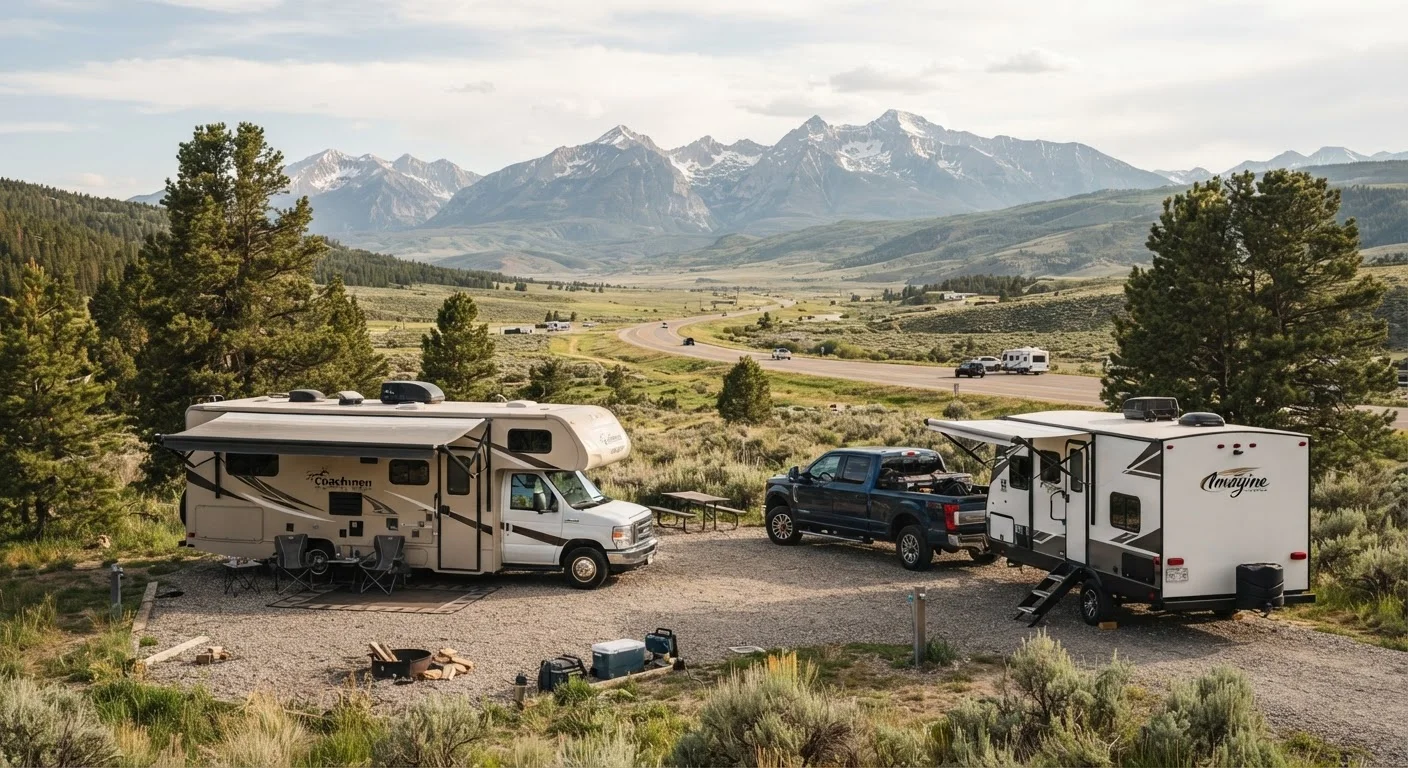
The most fundamental difference between these two towable types lies in how they physically connect to a tow vehicle. A travel trailer uses a conventional ball-and-coupler hitch mounted to the rear of the tow vehicle. This system is straightforward, widely available, and compatible with trucks, SUVs, and even some large crossovers — provided the tow ratings are met.
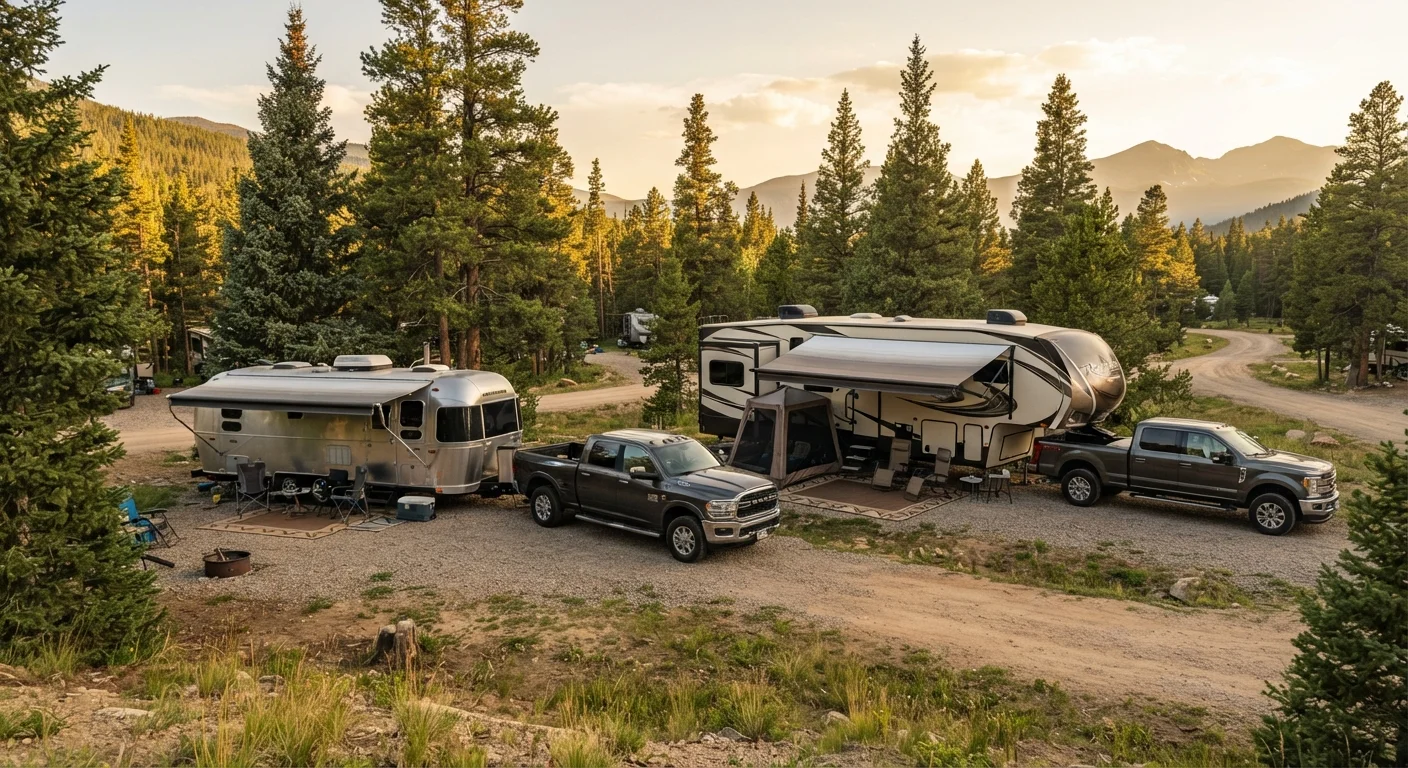
A fifth wheel, by contrast, uses a kingpin that locks into a horseshoe-shaped hitch plate mounted inside the bed of a pickup truck. This design places the connection point over or just forward of the rear axle, rather than behind it. That geometry is the source of the fifth wheel's towing advantage: weight is distributed more directly over the truck's rear axle, which reduces trailer sway and improves overall stability.
The practical consequence is clear: fifth wheels are exclusively a pickup-truck option. If your current vehicle isn't a pickup — or if you prefer to keep your truck bed unencumbered — a travel trailer is the only tow-behind path available to you. For context on how these camper types compare against self-propelled options, see our guide to motorhomes vs. towable campers.
| Criterion | Travel Trailer | Fifth Wheel |
|---|---|---|
| Hitch type | Standard ball-and-coupler | Kingpin / in-bed plate hitch |
| Compatible tow vehicles | Trucks, SUVs, some crossovers | Pickup trucks only |
| Towing stability | Good with weight-distribution hitch | Superior — weight over rear axle |
| Interior layout | Single-level floor plan | Bi-level with raised bedroom |
| Typical ceiling height | Lower (6–6.5 ft range common) | Higher (up to 8 ft in some models) |
| General price range | Lower entry cost | Higher, but varies by size |
| Maneuverability | Easier in tight campgrounds | Longer overall length; more planning needed |
| Truck bed access when hitched | Bed fully available | Hitch occupies portion of bed |
Space, Layout, and Everyday Livability
Fifth wheels consistently deliver more usable interior space. Their signature feature is a raised front section — typically housing the master bedroom — which creates a bi-level floor plan and elevated ceiling heights that feel more residential than trailer-like. Slide-outs on both types expand living areas when parked, but fifth wheels tend to have more of them and in more functional locations.
Travel trailers span an enormous range of sizes: from ultralight models under 20 feet to full-size units exceeding 35 feet. Smaller travel trailers are particularly well-suited to couples or minimalist campers, while larger ones can comfortably sleep families. However, even large travel trailers typically offer a single-level floor plan with lower ceilings than a comparable fifth wheel.
For those considering full-time RV use, the fifth wheel's layout advantage becomes more significant. Living in an RV full-time amplifies every comfort and inconvenience — so the additional headroom and bedroom separation a fifth wheel provides can meaningfully improve day-to-day quality of life on the road.
35+ ft
Longest common travel trailer lengths
Large travel trailers now rival fifth wheels in overall length, though not in bi-level floor plan design.
~20–25%
Typical tongue weight as % of trailer GVWR
Industry guidance generally places travel trailer tongue weight at 10–15% and fifth wheel pin weight at 18–25% of loaded trailer weight.
2
Minimum axles on most fifth wheels
Dual axles are standard on fifth wheels due to their greater size and weight, improving tracking and load distribution.
Cost, Tow Vehicle Requirements, and Setup Considerations
Travel trailers generally carry a lower purchase price than fifth wheels of comparable quality, in part because they're simpler to manufacture and more competitively produced. However, total cost of ownership depends heavily on what you already drive. If you don't own a capable pickup truck, adding that expense to a fifth wheel purchase narrows — or eliminates — any price gap.
Tow capacity is non-negotiable for either type. Always verify your tow vehicle's Gross Combined Weight Rating (GCWR), tow rating, and — critically — its payload capacity. Payload is often the limiting factor, particularly for fifth wheels where tongue weight loads the truck bed directly. A half-ton truck may technically have a tow rating that suggests compatibility with a given fifth wheel, but its payload rating may not support the hitch weight involved. Consult your truck's door placard and owner's manual, and when in doubt, have a qualified mechanic or RV dealer run the numbers. Common RV myths — including the belief that any truck can tow any trailer — can lead buyers into mismatched setups.
Setup time at a campsite is comparable between the two, though fifth wheel hitches require proper installation in the truck bed and aren't as quickly swapped between vehicles. Travel trailers reconnect to a ball hitch in minutes, making them easier to loan, switch between tow vehicles, or sell independently.
Payload Capacity: The Overlooked Number
Many buyers focus exclusively on a truck's advertised tow rating without checking payload capacity. Payload — the total weight the truck can carry, including passengers, cargo, and hitch weight — is often the binding constraint when towing a fifth wheel. Exceeding payload limits stresses suspension and braking systems and can create unsafe handling conditions. Check the yellow sticker inside your driver's door jamb for your specific truck's payload rating, not just the general model spec.
This article is for informational purposes only. Always confirm your specific vehicle's tow and payload ratings with the manufacturer's documentation or a qualified professional before purchasing or towing any camper.