

Why 'Hybrid' Doesn't Mean One Thing
Walk through any dealership lot and you'll encounter vehicles labelled hybrid, plug-in hybrid, or mild hybrid — sometimes with little explanation of what separates them. The term is used loosely, which leads to genuine confusion about what a buyer is actually getting. These three systems share a basic premise: they combine an internal combustion engine with some form of electric assistance. Beyond that, they differ considerably in how much electric capability they provide, how the battery is replenished, and what that means for fuel consumption.
For anyone navigating a vehicle purchase, understanding these distinctions matters — especially when comparing fuel economy estimates. As our guide on fuel economy figures and real-world differences explains, EPA ratings are estimates, and how a powertrain's technology matches your actual driving patterns shapes what efficiency you'll realistically see.
How Each System Works
Mild Hybrid (MHEV)
A mild hybrid uses a small battery and an integrated starter-generator (ISG) to assist the gasoline engine — typically during acceleration and to enable smoother engine stop-start at traffic lights. Crucially, the electric motor in a mild hybrid cannot propel the vehicle on its own. It offloads some demand from the engine, which can improve fuel economy modestly, but the system is fundamentally gas-dependent. Mild hybrids do not have a plug and require no charging infrastructure.
Standard (Full) Hybrid (HEV)
A conventional hybrid uses a meaningfully larger battery and a more powerful electric motor. At low speeds — particularly in urban stop-and-go traffic — many full hybrids can operate briefly on electricity alone. The battery is recharged automatically through regenerative braking (converting kinetic energy to electricity when slowing) and by the gasoline engine. No external charging is involved. This self-sufficiency is why standard hybrids tend to shine in city driving, where the regenerative braking cycle is frequent.
Plug-In Hybrid (PHEV)
A plug-in hybrid carries a significantly larger battery than a standard hybrid and can be charged from an external power source — a wall outlet or a dedicated EV charger. This enables a meaningful all-electric driving range, which varies by model but commonly falls in the range of 20 to 50 miles on a full charge. Once that electric range is depleted, the vehicle operates similarly to a conventional hybrid. PHEVs deliver their greatest efficiency advantage when driven primarily within their electric range and charged regularly. For longer trips, the gasoline engine takes over seamlessly. For a fuller picture of what life with a purely electric vehicle looks like, see EV ownership in everyday practice.
| Mild Hybrid (MHEV) | Standard Hybrid (HEV) | Plug-In Hybrid (PHEV) | |
|---|---|---|---|
| Electric-only driving | Not possible | Brief, low-speed only | Yes, 20–50+ miles typically |
| External charging required | No | No | Yes, for full benefit |
| Battery size | Small (48V typical) | Medium | Large |
| Best driving environment | Any | City/stop-and-go | Short daily commutes |
| Fuel savings potential | Modest (few %) | Moderate to significant | High (if charged regularly) |
| Charging infrastructure needed | None | None | Home outlet or charger |
Fuel Savings: Where Each System Performs Best
The efficiency gains from each system are directly tied to how and where you drive. Mild hybrids typically improve fuel economy by a few percentage points compared to a non-hybrid equivalent — useful, but not transformative. Standard hybrids can offer substantially better city fuel economy because regenerative braking works hardest in traffic. Highway driving, where there is little braking to harvest, narrows the gap considerably.
PHEVs present a more complex picture. A driver who commutes 30 miles daily, charges every night, and rarely travels long distances could run primarily on electricity, dramatically reducing gasoline consumption. A driver who takes frequent long trips and rarely charges will see fuel economy closer to a standard hybrid — or potentially less efficient if the heavier battery adds weight without the electric benefit being realized. The vehicle shopping hub offers additional guidance for evaluating powertrains in the context of your actual needs.
Match the System to Your Charging Reality
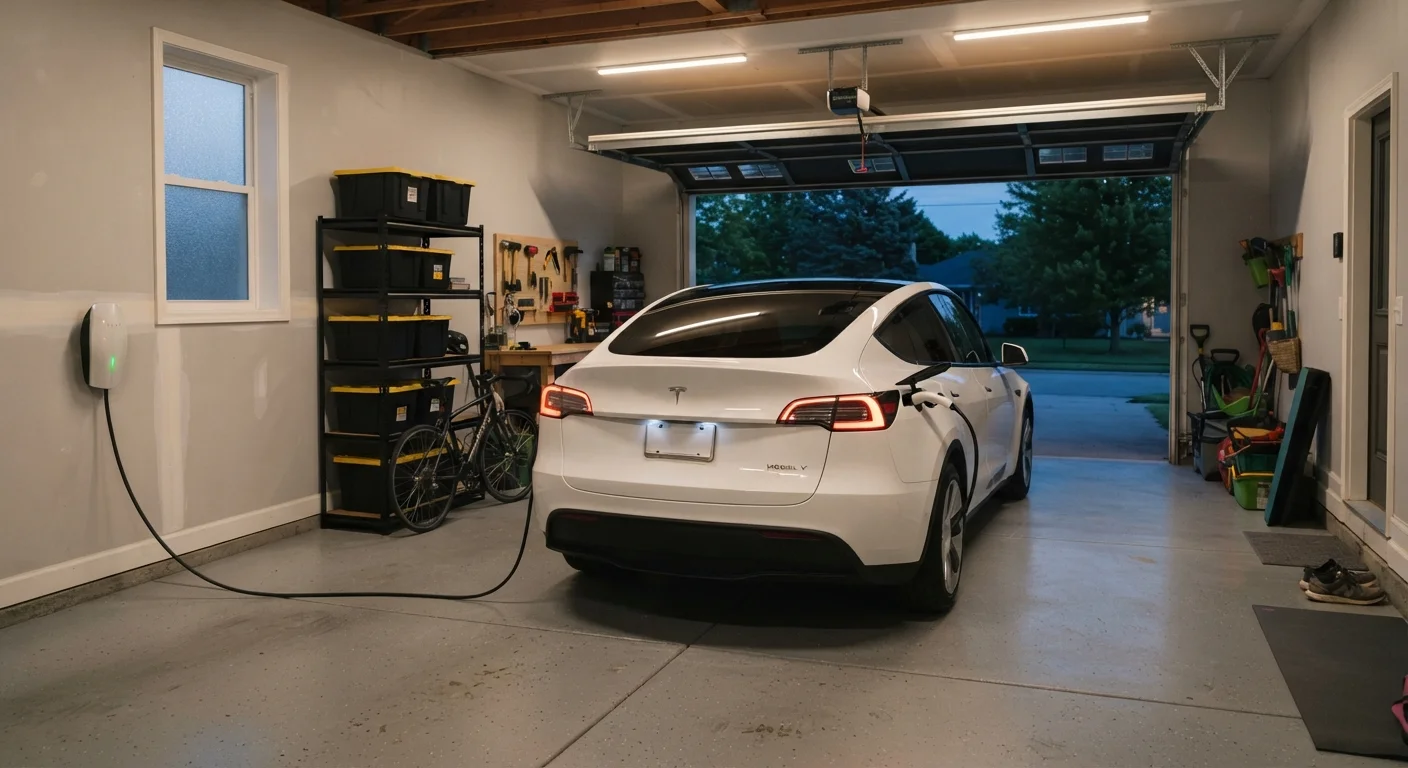
Before choosing a plug-in hybrid, honestly assess whether you can charge daily. If you park in a garage or have workplace charging available, a PHEV can meaningfully reduce fuel costs. If you rely primarily on public charging or rarely plug in, a standard hybrid may deliver more consistent real-world savings without the complexity. The technology only performs as well as the habits surrounding it.
Practical Considerations Before Choosing
Beyond fuel economy, each system carries different ownership implications:
- Charging access: PHEVs reward drivers who can charge at home or at work regularly. Without convenient charging, much of the efficiency benefit is forfeited.
- Driving environment: Standard hybrids are notably well-suited to dense urban and suburban driving. Mild hybrids provide a smaller edge regardless of environment. PHEVs shine on short, predictable commutes.
- Maintenance complexity: All three systems are generally considered lower-maintenance than traditional automatics in some respects (brake wear is reduced due to regenerative braking), though PHEV battery packs introduce additional long-term considerations.
- Vehicle availability: These systems are now offered across most vehicle types — sedans, crossovers, SUVs, and trucks. For context on how body types intersect with powertrain choices, see matching vehicle type to your driving patterns.
For those considering a fully electric alternative, how battery EVs work provides a useful technology baseline.