How the Two Channels Work
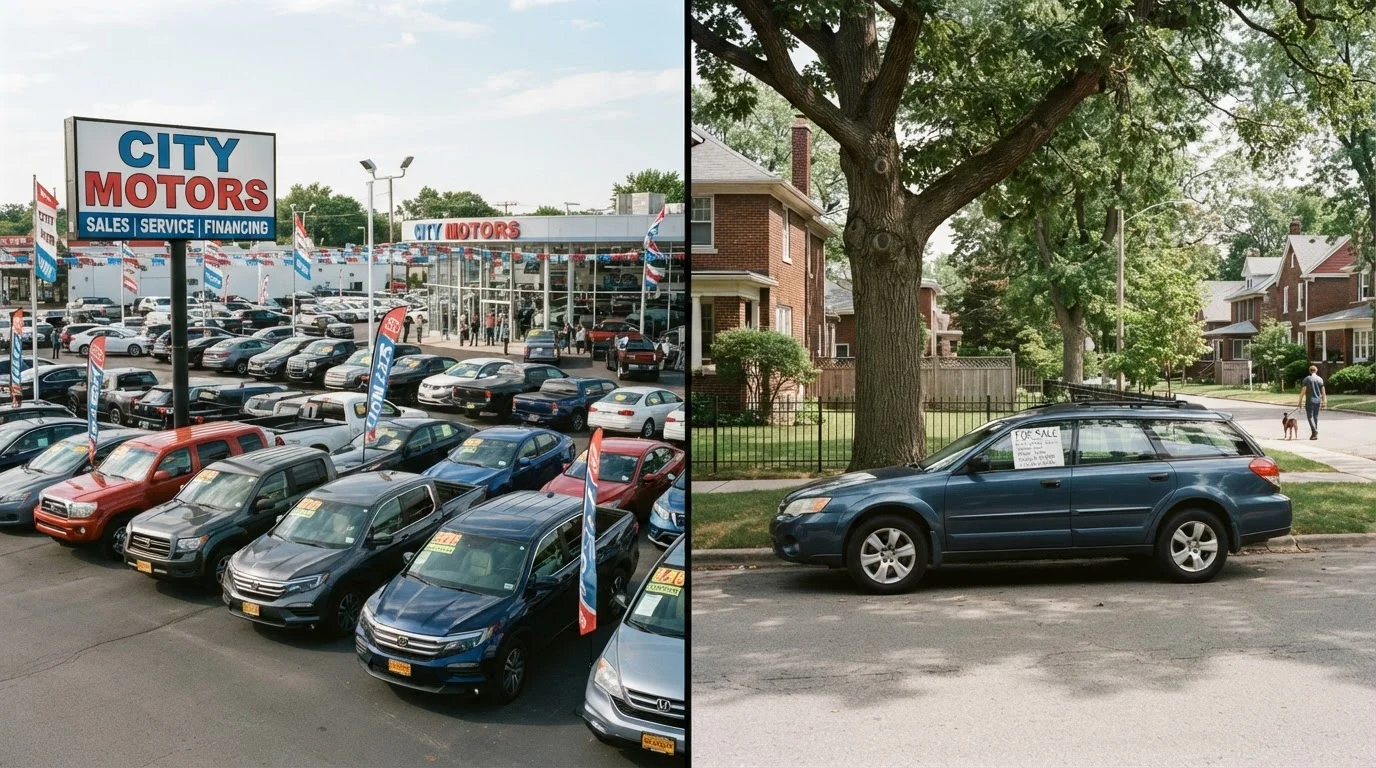
Buying from a private seller means transacting directly with an individual — typically someone selling their own vehicle. There's no intermediary, no dealer overhead, and no regulatory licensing governing the sale. The transaction is governed primarily by state consumer protection laws, which vary widely and generally offer limited recourse after the sale is complete.
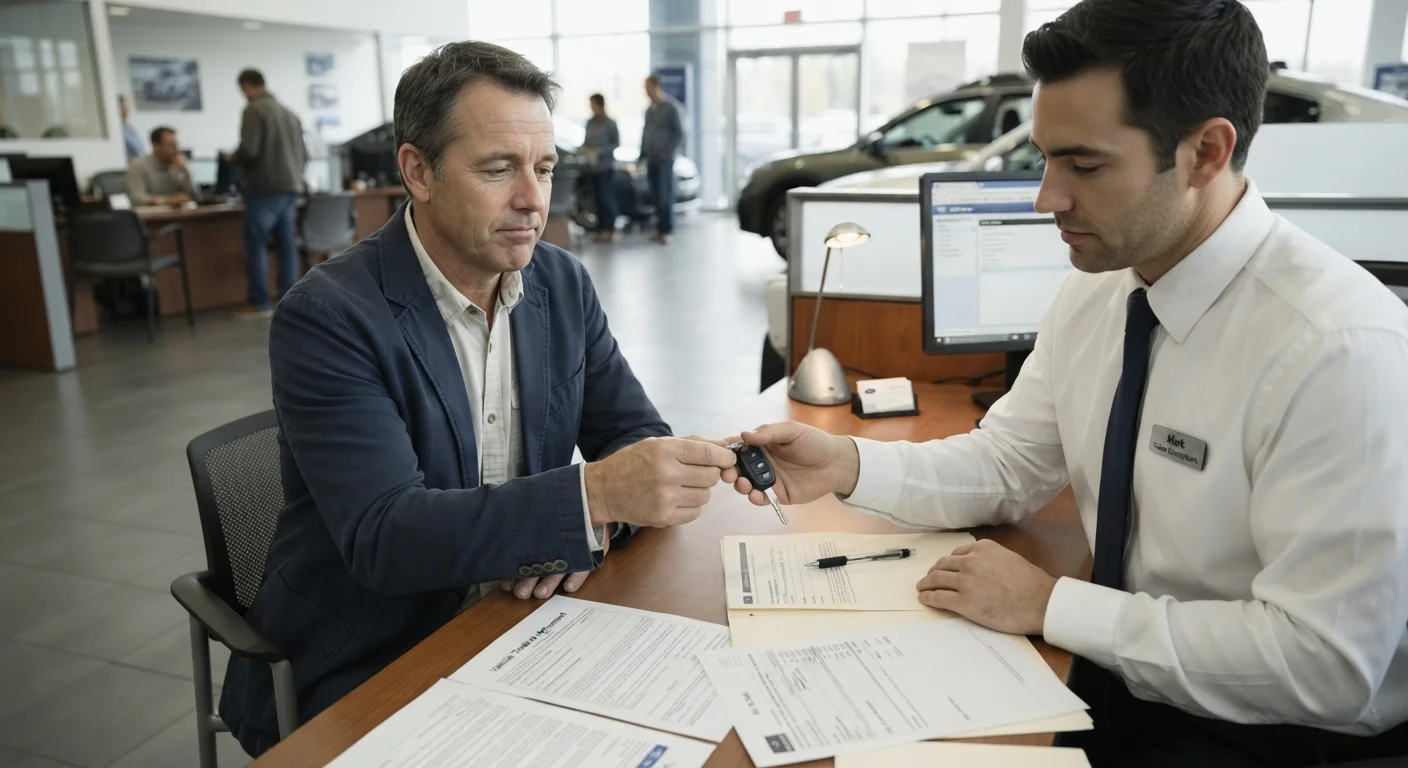
Buying from a dealership means working with a licensed business subject to federal and state regulations, including the FTC's Used Car Rule, which requires dealers to display a Buyers Guide disclosing warranty terms on used vehicles. Dealers may offer certified pre-owned (CPO) programs, in-house financing, and service departments — all of which add layers of process but also layers of accountability.
Understanding how each channel operates is the foundation for evaluating them. Before committing to either, it's worth completing thorough vehicle research — see our practical walkthrough for researching a car before you buy for a structured approach.
Price, Negotiation, and Financing
Private sellers generally list vehicles closer to or below market value because they aren't carrying dealership overhead — advertising costs, lot fees, reconditioning expenses, or sales staff salaries. That structural difference can translate into meaningful savings, particularly on older or high-mileage vehicles.
However, financing a private-party purchase is more complex. Most banks and credit unions do offer private-party auto loans, but rates are often slightly higher than dealer-sourced financing, and the process requires more coordination from the buyer. Dealers, by contrast, frequently work with multiple lenders and can structure financing on-site — though it's always worth comparing their offered rate against pre-approval from your own bank or credit union before signing.
| Private Seller | Dealership | |
|---|---|---|
| Typical Price Point | Often below market due to no overhead | Typically higher, reflecting overhead and reconditioning |
| Financing Options | Buyer arranges own loan externally | On-site financing with multiple lender access |
| Warranty Coverage | None — as-is in most cases | CPO or limited warranties often available |
| Legal Protections | Minimal; varies by state law | FTC regulations apply; licensed and accountable |
| Negotiation Style | Informal; seller may be emotionally attached | Structured; trained sales staff |
| Title Transfer Process | Buyer and seller manage independently | Dealer handles transfer process |
| Inventory Variety | Single vehicle; specific to seller | Wide selection across makes, models, years |
Negotiation also differs. Private sellers are often emotionally attached to their vehicles and may have firm price expectations. Dealerships, while often starting higher, may have more flexibility on add-ons, extended warranties, or financing terms — and sales staff are trained negotiators. If you're trading in a current vehicle, be aware that bundling the trade-in discussion with purchase price negotiation can obscure the true value of each transaction. Our guide to trade-in pitfalls covers this in detail.
Risk, Warranty, and Legal Protections
This is where the two channels diverge most sharply. Private sales are almost universally "as-is" transactions. Once the title transfers, the buyer assumes full responsibility for any mechanical or structural issues discovered afterward. There is no warranty, no return policy, and typically no recourse short of fraud litigation — which is both difficult to prove and costly to pursue.
Private Sales Offer Very Limited Recourse
Once you've signed a bill of sale and driven off, recovering money from a private seller for undisclosed defects is extremely difficult. Proving intentional fraud requires documentation, time, and often legal fees that exceed the value of the dispute. Never waive the right to inspect a vehicle, and treat any seller who refuses an inspection request as a significant red flag.
Dealerships, especially those selling CPO vehicles, offer warranty coverage that can range from powertrain guarantees to bumper-to-bumper coverage. Even non-CPO used vehicles sold by dealers must comply with the FTC Buyers Guide disclosure requirements, which at minimum clarifies whether any warranty applies. If problems arise after purchase, dealers are licensed entities with reputations and regulatory obligations — avenues that simply don't exist in a private transaction.
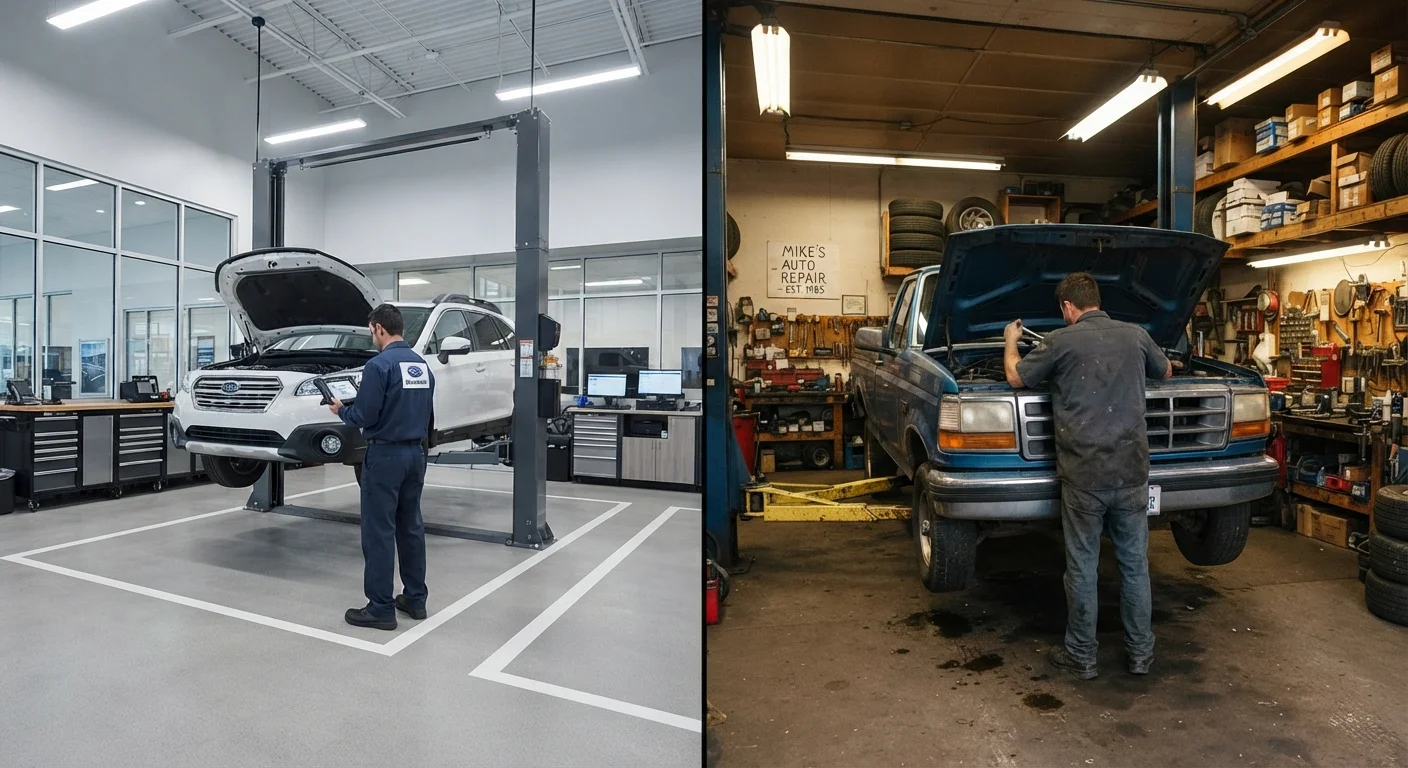
That said, dealer warranties and CPO programs come at a cost, built into the vehicle's price. Whether that premium is worthwhile depends on the vehicle's age, mileage, and your appetite for repair risk. For ongoing service decisions after purchase, understanding the difference between dealer service centers and independent shops is equally relevant — see our comparison of dealership service centers and independent mechanics.
Due Diligence You Should Do Either Way
Regardless of where you buy, certain steps are non-negotiable for any used vehicle purchase:
- Vehicle history report: Services like Carfax or AutoCheck pull title records, reported accidents, odometer readings, and service history. Neither channel guarantees a clean report, so request one for every vehicle you seriously consider.
- Pre-purchase inspection (PPI): A qualified independent mechanic should inspect the vehicle before money changes hands. This is especially critical in private sales where no warranty applies, but it's equally prudent at a dealership. Most reputable sellers — private or dealer — will allow this.
- Title verification: Confirm the seller holds a clean title free of liens. In private transactions, verify the name on the title matches the seller's ID. Dealers are required to handle title transfers as part of the sale, which simplifies this step.
Always Get a Pre-Purchase Inspection
Even if a vehicle looks clean and the seller seems trustworthy, an independent mechanic's inspection is your most reliable safety net. Budget roughly $100–$200 for a thorough PPI — it's far cheaper than discovering a significant mechanical issue after the sale. Most private sellers and dealers will accommodate a reasonable inspection request; hesitation to allow one is itself a warning sign.
The channel you choose shifts who bears the burden of discovery, but it doesn't eliminate the need for your own careful evaluation. Informed buyers — regardless of where they shop — are far better positioned to avoid costly mistakes.