
How the Two Options Differ at a Glance
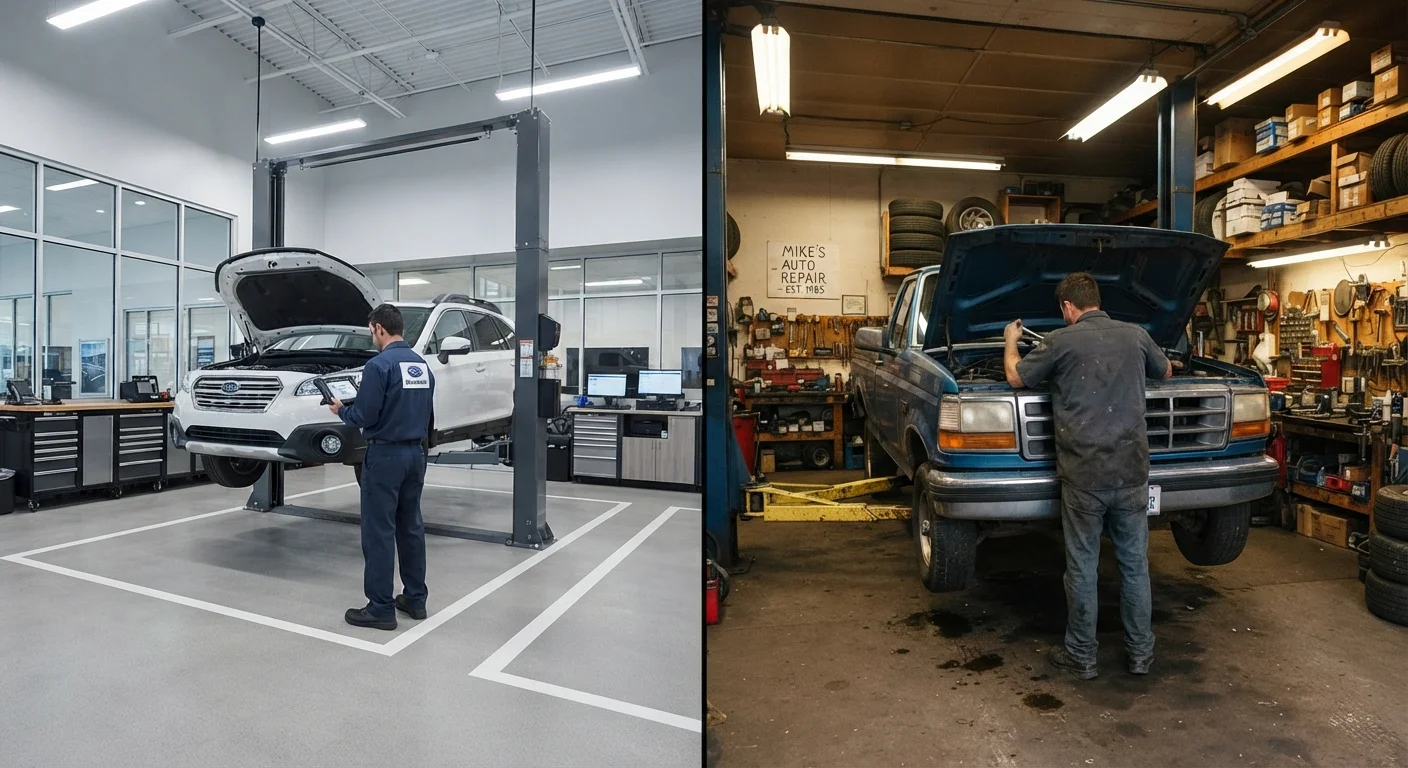
When your car needs service, you generally have two primary options: a franchised dealership service center affiliated with your vehicle's manufacturer, or an independently owned repair shop. On the surface, both change your oil, replace brake pads, and run diagnostic scans. The meaningful differences lie in training focus, parts sourcing, pricing structures, and the types of work each handles most effectively.
Dealership technicians are trained specifically on one manufacturer's lineup and have direct access to proprietary software, technical service bulletins, and OEM (Original Equipment Manufacturer) parts. Independent shops employ general automotive technicians — many holding ASE (Automotive Service Excellence) certifications — and source parts from the aftermarket supply chain, which includes a wide range of quality tiers.
| Dealership Service Center | Independent Mechanic | |
|---|---|---|
| Typical Labor Rate | $150–$200/hr (varies by brand/region) | $80–$130/hr (varies by shop/region) |
| Parts Used | OEM parts standard | Aftermarket or OEM upon request |
| Technician Training | Brand-specific factory training | ASE-certified general training |
| Warranty & Recall Work | Required for warranty; recalls free | Generally not eligible for warranty work |
| Brand-Specific Diagnostics | Proprietary tools and software access | Aftermarket tools; may have limitations |
| Amenities | Loaner cars, shuttle, waiting area | Varies; often more limited |
| Appointment Availability | Can be heavily booked | Often more flexible scheduling |
| Customer Relationship | Rotating advisors, less continuity | Consistent mechanic, long-term familiarity |
Cost: Where the Numbers Actually Land
Labor rates at dealerships are consistently higher than at most independent shops. A dealership may charge $150–$200 per labor hour depending on the region and brand, while independent shops commonly range from $80–$130. That gap adds up quickly on multi-hour jobs. For a detailed breakdown of what drives those differences, see our guide on why mechanic labor rates vary.
Parts pricing follows a similar pattern. OEM parts from a dealership carry a manufacturer markup; aftermarket alternatives at independent shops can be substantially less expensive, though quality varies by supplier. That said, some independent shops do offer OEM parts upon request, and some warranty-backed aftermarket parts are built to equivalent specifications.
Get Written Estimates From Both
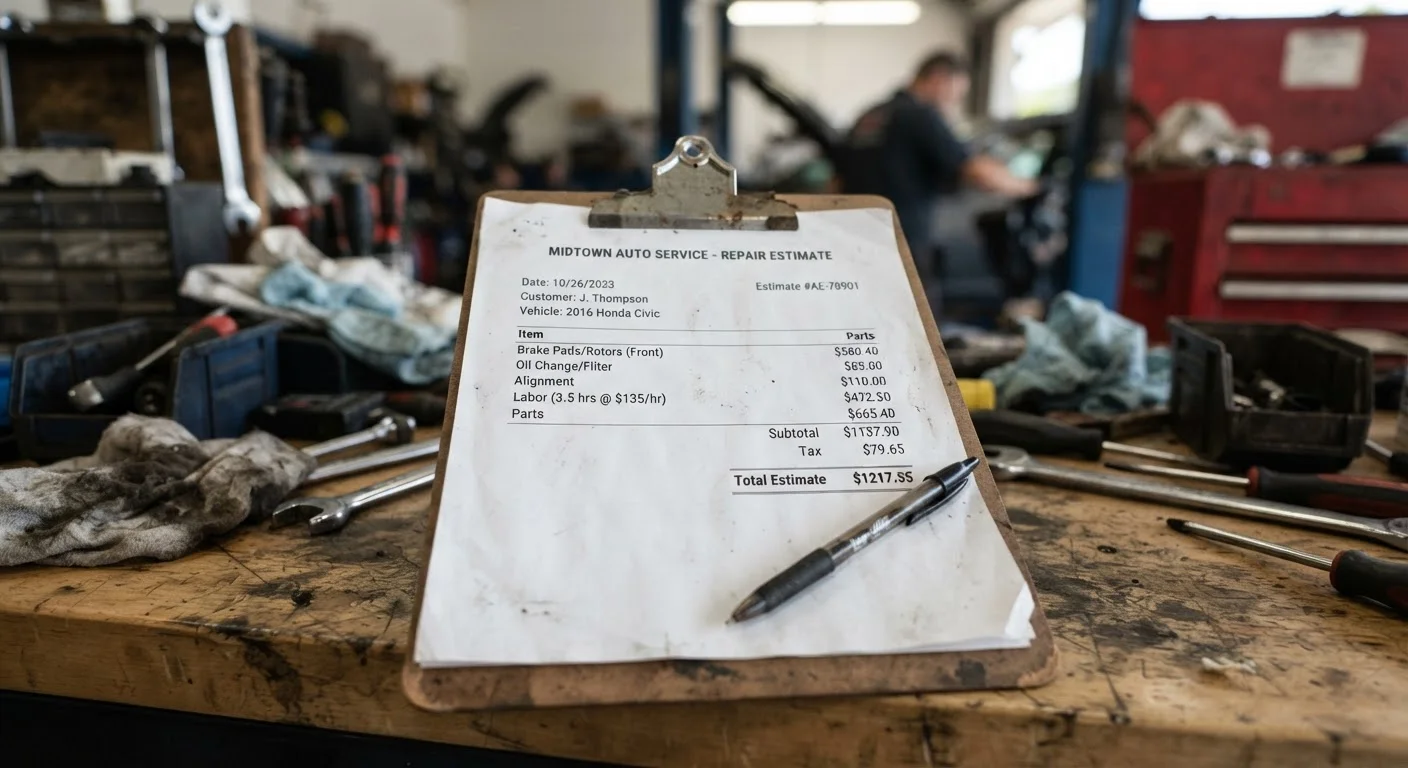
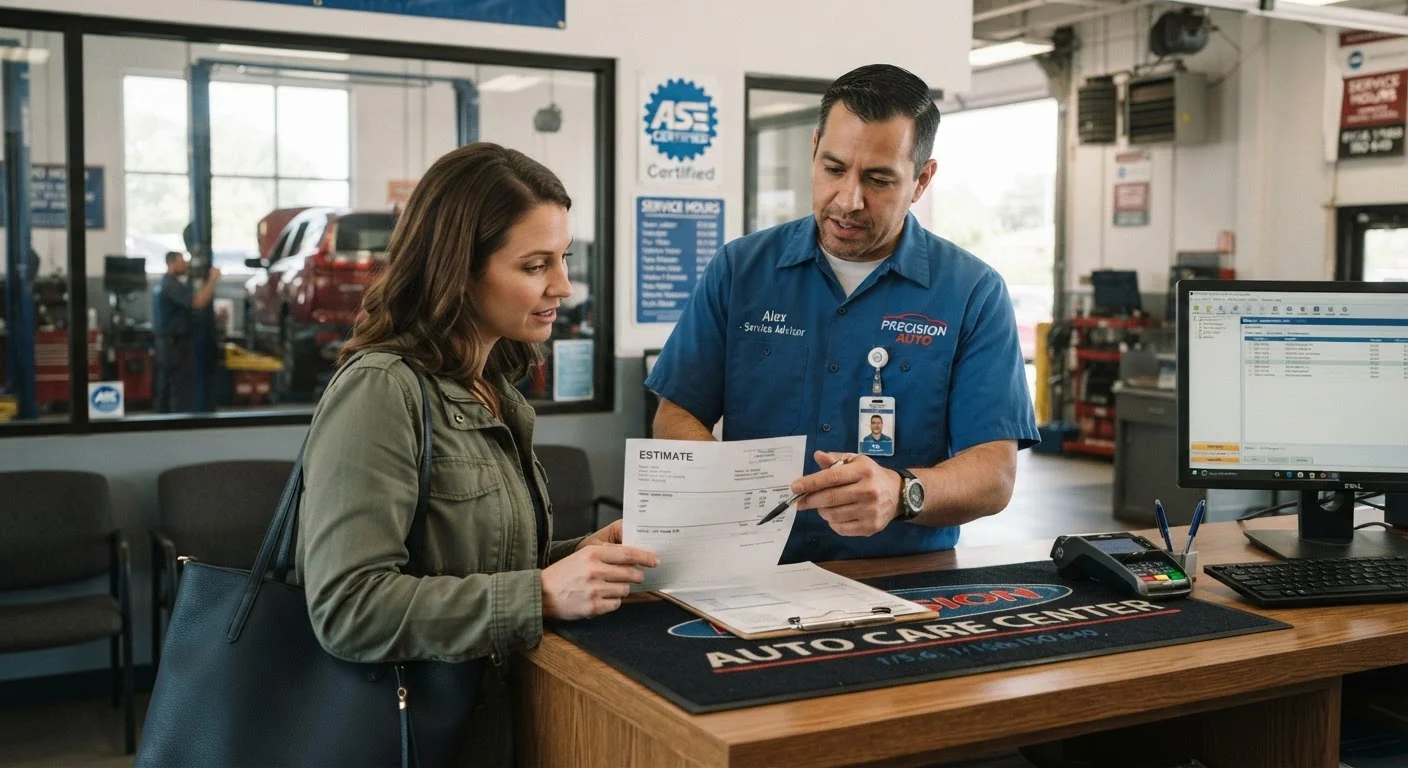
For non-urgent repairs, it's entirely reasonable to get written estimates from both a dealership and a local independent shop before committing. Prices can differ significantly for identical work. Make sure each estimate specifies the parts brand and labor hours so you're comparing equivalent scopes of work.
When comparing estimates, make sure you're looking at total job cost — parts plus labor plus shop fees. Our guide to reading a repair estimate walks through every line item to watch for.
Expertise, Warranty Work, and Recalls
Dealerships hold a clear structural advantage for two specific scenarios: active warranty repairs and safety recalls. Manufacturer warranty work must generally be performed at an authorized dealership to maintain coverage, and recall repairs are always completed at no charge through the dealership network. Attempting either at an independent shop typically voids or complicates the process.
Brand-specific diagnostics are another area where dealerships lead. Modern vehicles — especially those with advanced driver-assistance systems, hybrid powertrains, or complex infotainment integration — often require proprietary scan tools and software updates that independent shops may not have access to, though this gap is narrowing as aftermarket diagnostic platforms improve.
Don't Assume Independent Means Lower Quality
A lower price at an independent shop does not automatically mean inferior work, and a dealership invoice does not guarantee superior results. ASE certification, verifiable reviews, and a shop's willingness to provide written estimates and explain their recommendations are more reliable quality indicators than the type of facility alone.
For classic or vintage vehicles, the calculus shifts considerably. Dealerships rarely stock parts or maintain expertise for older models, while specialized independent shops often have deeper knowledge of legacy systems. If you own a classic, check out the resources in our Classic Vehicles hub for more relevant guidance.
Convenience, Relationship, and Trust
Dealerships often provide amenities — loaner vehicles, shuttle services, and clean waiting areas — that smaller independent shops may not match. Appointment availability, however, can cut either way: some dealership service departments are heavily booked, while a local independent shop may get you in the same day.
One factor that independent shops frequently excel at is the ongoing customer relationship. A trusted mechanic who knows your vehicle's history can offer continuity that a dealership's rotating service advisors sometimes don't. Before approving any repair at either type of shop, it's worth asking the right questions — our guide on questions to ask before approving a repair covers exactly what to say.
If you're also weighing where to buy your next vehicle — and how that purchase decision might affect your service relationship — the comparison in private seller vs. dealership trade-offs is worth a read as well.