

What Each One Actually Is
Consumers often use the terms interchangeably, but credit reports and credit scores are fundamentally different tools. Understanding the distinction helps you use each one correctly.
A credit report is a structured document — sometimes dozens of pages — compiled by a credit bureau. It records your full credit history: every open and closed account, your payment record on each, current balances, credit limits, the dates accounts were opened, any collections, bankruptcies, and recent credit inquiries. Three major bureaus maintain these files in the US: Equifax, Experian, and TransUnion. Each bureau collects data independently, so your three reports may contain slightly different information depending on which creditors report to which bureaus.
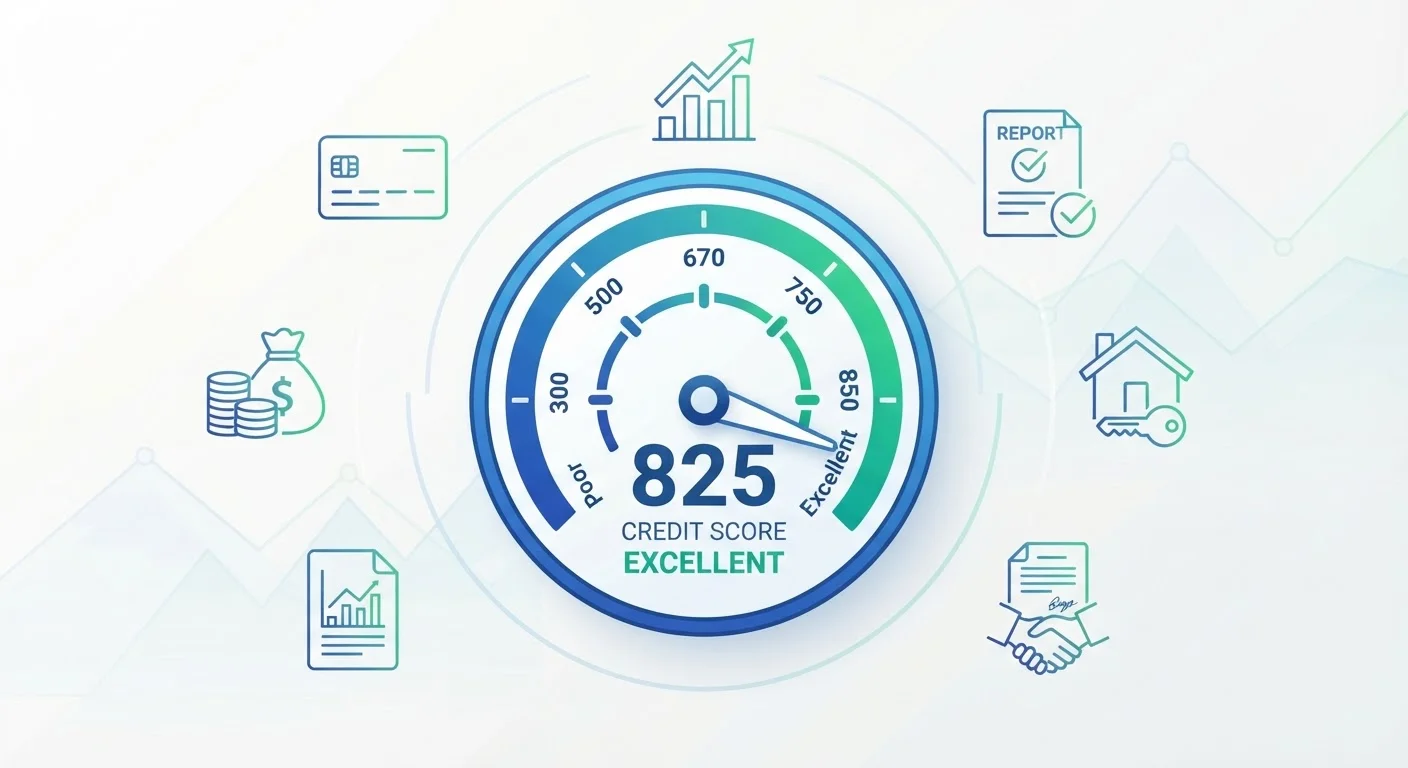
A credit score, by contrast, is a numerical output — typically ranging from 300 to 850 — produced by applying a mathematical model to the data inside a credit report. The most widely used scoring models are FICO and VantageScore. The score distills your credit history into a single figure that lenders use as a quick risk indicator. Importantly, scores are not stored in your credit report; they are calculated on demand from report data at a specific point in time.
Think of the report as the source material and the score as the summary grade derived from it. For a deeper look at what goes into that number, see our guide to what a credit score actually measures.
| Criterion | Credit Report | Credit Score |
|---|---|---|
| What it is | Detailed record of credit history | Single numerical summary |
| Who creates it | Equifax, Experian, TransUnion | FICO, VantageScore (from report data) |
| Typical range | N/A — narrative document | 300–850 |
| Free access entitlement | Yes — annually via FCRA | No universal federal entitlement |
| Updated | As creditors report (often monthly) | Recalculated on demand |
| Shows individual accounts | Yes — full detail | No — aggregate output only |
| Can be disputed | Yes — directly with each bureau | Not directly; fix the report to change the score |
| Primary lender use | Deep review of borrowing behavior | Fast initial risk screening |
Who Creates Them and How You Access Each
Credit reports and credit scores are generated by entirely different entities, and accessing them involves separate processes.
Under the Fair Credit Reporting Act (FCRA), you are entitled to one free credit report from each of the three major bureaus every 12 months. The official government-authorized source for these requests is AnnualCreditReport.com. Reviewing all three reports — not just one — matters because lenders may report to only one or two bureaus, and errors may appear in one file but not another.
Credit scores are a different matter. While some banks and credit card issuers now provide a free score as a customer benefit, and several consumer financial platforms offer scores at no cost, there is no universal legal entitlement to a free score equivalent to the credit report right. The score you see may also differ from the one a specific lender pulls, because lenders can use different scoring models or industry-specific score versions (auto lenders, for instance, sometimes use specialized FICO Auto Scores).
3
Major US credit bureaus maintaining separate files
Equifax, Experian, and TransUnion each compile independent credit reports, meaning your data may vary across all three.
300–850
Standard FICO and VantageScore range
Both leading scoring models use this scale; scores above 670 are generally considered 'good' under most lender frameworks, though thresholds vary.
1 per year
Free credit reports per bureau under FCRA
Federal law entitles every US consumer to request one free report from each of the three major bureaus annually via AnnualCreditReport.com.
When reviewing your report, pay attention to the inquiries section, which logs who has accessed your file. Our explainer on hard vs. soft inquiries clarifies which types affect your score and which do not.
Why Both Matter for Your Financial Life
Neither document is sufficient on its own. They serve complementary roles, and responsible credit management involves paying attention to both.
Your credit score tells you quickly whether your overall credit position is strong, fair, or weak relative to lending thresholds. It's the number that determines whether you pass an initial screening and, often, what interest rate you'll be offered. A higher score generally signals lower risk to lenders, which can translate to more favorable borrowing terms — though no specific outcome is guaranteed, as lenders weigh many factors.
Your credit report tells you why your score is where it is. If your score drops unexpectedly, the report reveals the cause — a late payment posting, a new collection account, or a sharp increase in utilization. It's also the document you need to review for errors. Common mistakes include accounts belonging to someone with a similar name, incorrect payment statuses, or outdated derogatory information that should have aged off. Disputing errors directly with the bureau that holds the inaccurate record is your right under federal law.
For a structured walkthrough of what each section of your report contains, see our field guide to reading your credit report. And if you want to understand how one specific factor — your credit card balances relative to limits — shapes your score, our overview of credit utilization explains the mechanics in detail.
This article is for general informational and educational purposes only and does not constitute personalized financial or legal advice. Consult a licensed financial professional for guidance specific to your situation.