
How Minimum Payments Are Calculated — and Why the Math Hurts
Credit card issuers typically set minimum payments at either a flat dollar amount (often $25–$35) or a small percentage of the outstanding balance — usually 1% to 3% — whichever is greater. At first glance, paying $75 a month on a $3,000 balance feels responsible. But when the card charges 22% APR, a significant portion of that $75 goes straight to interest, leaving very little to reduce what you actually owe.
This is the core problem with minimum-only repayment: your balance shrinks so slowly that interest has time to accumulate on a nearly unchanged principal. The math compounds against you. Each month, interest is calculated on the remaining balance, which is nearly as large as it was the month before. The cycle repeats, and what felt like steady progress can amount to years of payments with the principal barely moving.
Minimum Payments Are Not a Payoff Plan
Credit card issuers are required by law to show on your statement how long it will take to pay off your balance if you only make minimum payments — and the number is often shocking. On a $3,000 balance at 22% APR, paying only the minimum can stretch repayment to a decade or more, with total interest exceeding the original debt. This disclosure exists precisely because the minimum payment is designed to keep the account in good standing, not to get you out of debt efficiently.
Understanding this mechanism is not about blame — it's about recognizing that minimum payments were never designed to pay off debt quickly. They are designed to keep an account current. Anything beyond that requires a deliberate, numbers-driven decision on your part.
Common Mistakes That Keep Balances Growing
Most cardholders don't set out to mismanage their credit. The mistakes that keep balances high tend to stem from reasonable-looking assumptions that turn out to be financially costly. Recognizing them is the first step toward correcting course.
Treating the minimum payment as the intended payment amount.
Why it happens: Credit card statements display the minimum payment prominently, and it's always a manageable-looking number. Many cardholders assume this figure represents a reasonable repayment pace rather than a legal floor.
Ignoring how daily periodic interest compounds on your remaining balance.
Why it happens: Most people think of APR as a once-a-year charge. In reality, credit card interest is typically calculated daily — dividing the APR by 365 and applying it to each day's balance — so carrying even a moderate balance compounds quickly.
Making extra purchases on a card while carrying an existing balance.
Why it happens: Available credit feels like available money, especially when cash flow is tight. Cardholders often rationalize small new purchases as manageable additions to an already existing balance.
Overlooking the credit score impact of a high, slowly declining balance.
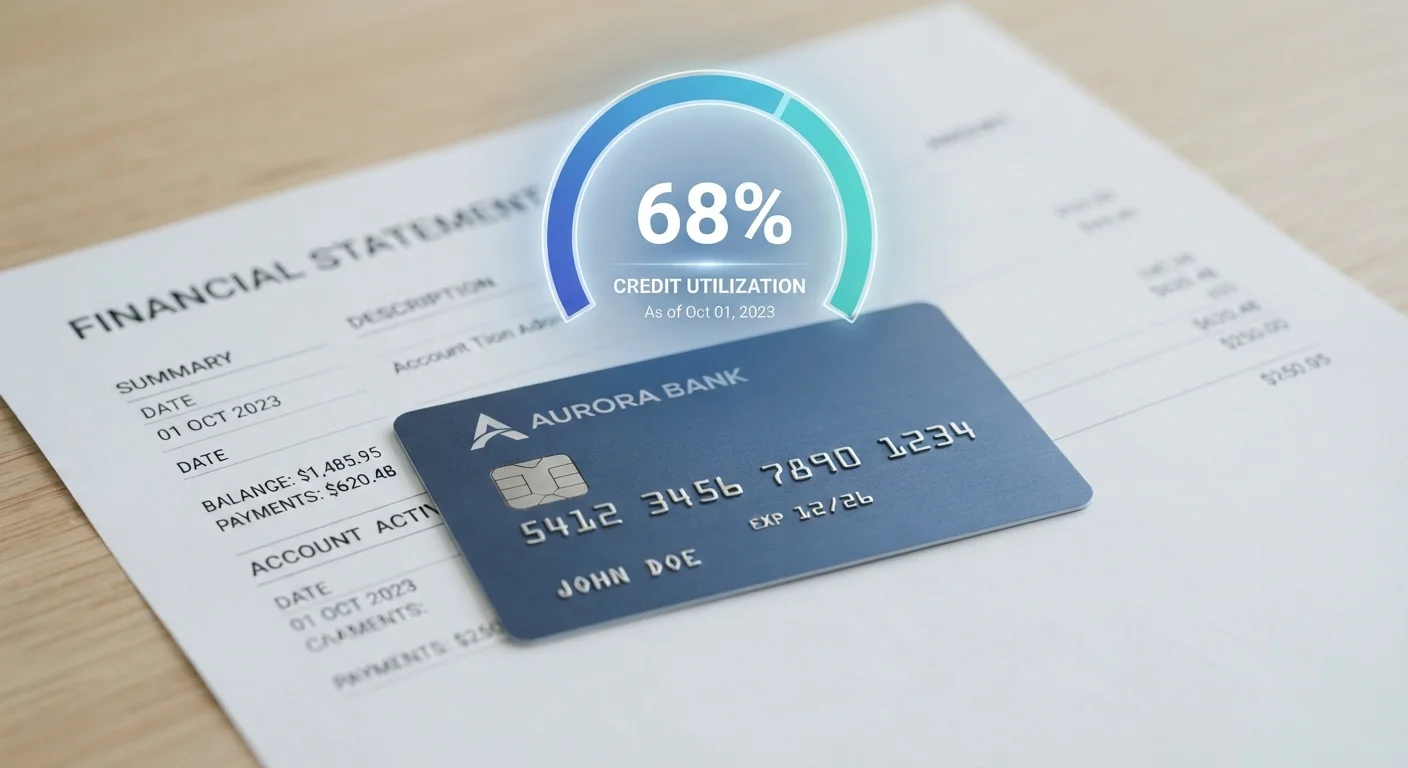
Why it happens: Many people focus on payment history as the only credit score factor, missing that credit utilization — how much of your available credit you're using — accounts for a substantial portion of your score.
Failing to account for credit card repayment in the monthly budget.
Why it happens: Cardholders often treat the minimum payment as a fixed bill and consider the debt handled, without allocating additional funds toward principal reduction. The result is a balance that lingers for years.
It's also worth noting what isn't a mistake: making only the minimum payment to protect your account during a genuine short-term cash crunch is a legitimate use of the feature. The problem arises when minimum payments become the permanent default rather than a temporary measure. For a broader picture of consistent credit management, habits that keep credit card debt in check offers a practical framework.
A Different Approach to Paying Down Card Debt
The most direct path out of revolving credit card debt is to pay more than the minimum every month — consistently. Even modest increases have outsized effects because they reduce the principal faster, which in turn reduces the balance on which interest accrues. On a $3,000 balance at 22% APR, doubling the minimum payment can cut years off the repayment timeline and save hundreds of dollars in interest, depending on the specific terms.
Two widely discussed payoff strategies offer structured approaches. The avalanche method directs extra payments to the highest-interest card first, minimizing total interest paid. The snowball method targets the smallest balance first, providing psychological momentum through faster wins. Neither is universally superior — the best approach is one you'll actually follow through on.
22%+
Average credit card APR in the US
According to Federal Reserve data, average credit card interest rates have exceeded 20% APR in recent reporting periods, making carried balances especially costly.
10+ years
Potential payoff timeline on minimum-only payments
On a mid-sized balance at a high APR, paying only the minimum can extend repayment well beyond a decade, as shown in federally required statement disclosures.
30%
Credit utilization threshold widely recommended
Credit scoring guidance broadly suggests keeping utilization below 30% of available credit to avoid a negative impact on your score.
If cash flow is tight, revisiting your budget for reallocation opportunities is worthwhile. The pay-yourself-first framework is commonly applied to savings goals but the same logic — committing a specific amount before spending on discretionary items — can be adapted to accelerated debt repayment. Separately, checking whether you have misconceptions about how credit scores work can remove psychological barriers that sometimes make people reluctant to aggressively pay down debt.
This article is for general informational purposes only and does not constitute personalized financial or legal advice. For guidance specific to your financial situation, consider consulting a licensed financial professional.