

Why Savings Frameworks Matter
Most Americans know they should be saving more. The harder question is how — and that's where structured frameworks earn their value. A good savings strategy doesn't just tell you to spend less; it gives you a repeatable system for deciding where every dollar goes before the month gets away from you.
The frameworks below represent some of the most widely discussed approaches in personal finance education. Each has genuine strengths, real limitations, and a different kind of household it tends to suit best. None of them are guarantees — but understanding their mechanics gives you the tools to build a plan that fits your actual life, not an idealized version of it. For a deeper look at how to adapt any framework to irregular income or unpredictable costs, see our guide to savings planning around real life.
Start With One Framework, Not Five
Trying to implement multiple budgeting systems simultaneously is a common cause of early abandonment. Pick the one framework that best matches your current habits and income structure, apply it consistently for two to three months, and only layer in additional complexity once the core habit is stable. Incremental adoption is more durable than wholesale overhaul.
Five Savings Strategies Worth Understanding
The 50/30/20 Rule
Popularized in the personal finance space and often traced to frameworks discussed by bankruptcy law professor Elizabeth Warren, the 50/30/20 rule divides after-tax income into three buckets: 50% for needs (housing, food, utilities, insurance), 30% for wants (dining out, entertainment, subscriptions), and 20% for savings and debt repayment.
Its appeal is simplicity. You don't need to track every transaction — just monitor whether your broad spending categories stay within their target percentages. That makes it a reasonable starting point for people new to budgeting or those who find granular tracking unsustainable.
The limitation is that it assumes 50% is enough to cover essentials — an assumption that breaks down in high-cost cities where rent alone can consume 40% or more of take-home pay. In those cases, the 20% savings target may need to flex. Think of the 50/30/20 rule as a useful benchmark, not a rigid prescription. You can explore a direct comparison with zero-based budgeting in our article on zero-based budgeting vs. the 50/30/20 rule.
The 50/30/20 rule works best as a benchmark — not a rigid prescription for every income level.
Zero-Based Budgeting
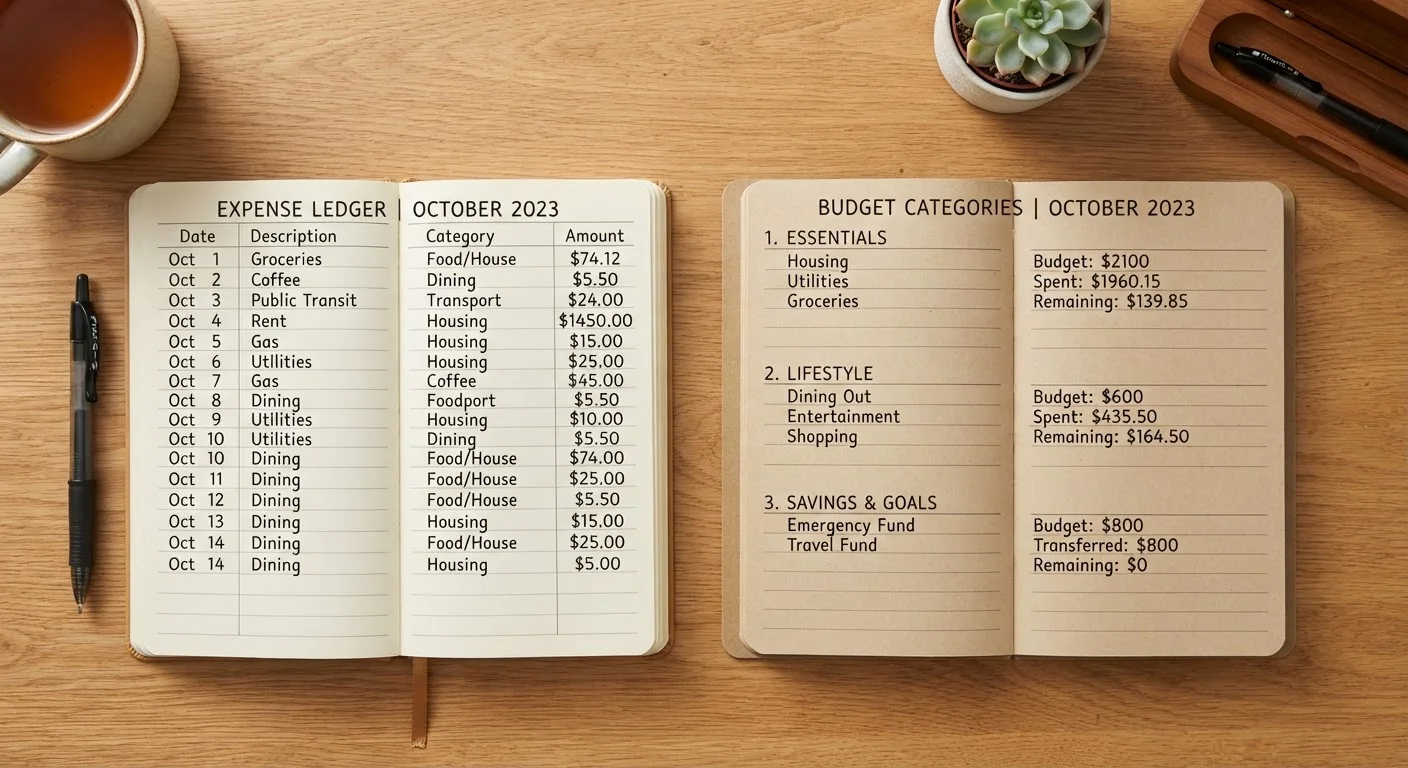
Zero-based budgeting (ZBB) operates on a single principle: income minus expenses equals zero. That doesn't mean spending everything — it means every dollar is intentionally assigned to a category, whether that's rent, groceries, savings, or a debt payment. At month's end, no dollar is unaccounted for.
This approach forces a level of intentionality that percentage-based methods don't require. For people who tend to lose track of discretionary spending — a common pattern with digital payments and subscription services — ZBB surfaces exactly where money disappears and creates a natural checkpoint before the next month begins.
The tradeoff is effort. Building and maintaining a zero-based budget requires time up front and consistent tracking throughout the month. It suits people with variable expenses or those in an active debt-payoff phase, where precise allocation matters more than simplicity. For households with irregular income, the monthly reset can also create friction.
Zero-based budgeting works because it makes every spending decision deliberate, not accidental.
Pay Yourself First
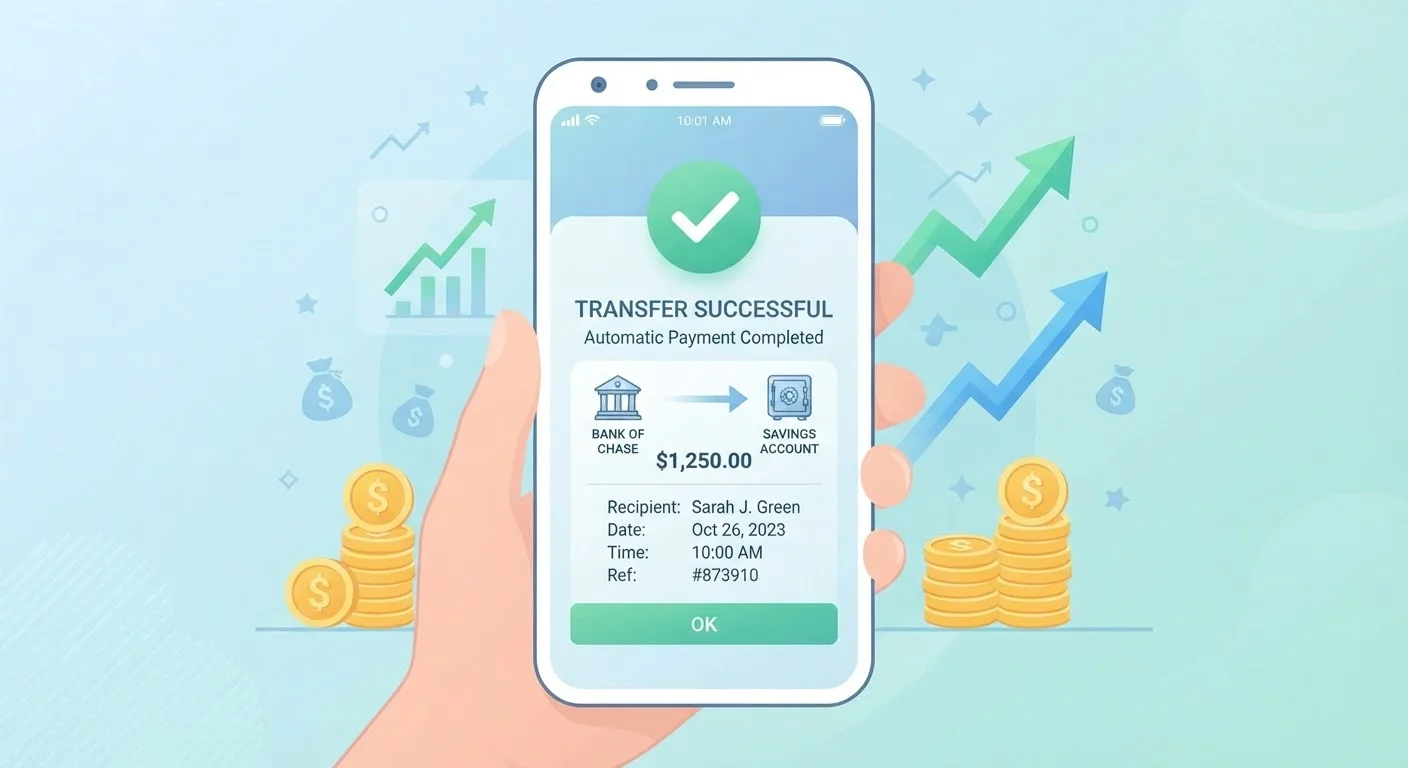
Pay-yourself-first (PYF) inverts the typical savings logic. Instead of saving whatever's left after spending, you transfer a set amount to savings the moment income arrives — before discretionary spending begins. The rest of your budget then covers expenses with what remains.
The behavioral logic here is well-established: money that is saved before it can be spent is far less likely to be spent. This is why employer-sponsored retirement plans like 401(k)s are built on automatic payroll deductions — the contribution happens before most employees see the money hit their bank account.
PYF works best when paired with automation. Setting up a recurring transfer to a dedicated savings account on payday removes the decision entirely. See our article on automating your savings for a practical look at how to configure this. The strategy is less prescriptive about what you do with the rest of your income, which makes it appealing to those who resist detailed budgeting but still want savings to be consistent.
Money transferred to savings before spending begins is almost always more likely to stay saved.
Goal-Based Saving
Rather than applying a universal rule to all savings, goal-based saving earmarks money for specific, named purposes — an emergency fund, a vacation, a home down payment, a car replacement. Each goal gets its own target amount and timeline, which makes progress concrete and motivation easier to sustain.
The psychological advantage is significant. Research in behavioral economics consistently shows that people save more effectively when money is mentally — or literally — separated into labeled accounts rather than pooled into one general savings balance. It's harder to dip into a fund labeled "emergency fund" than one simply called "savings."
Goal-based saving pairs well with other frameworks: you might use the 50/30/20 rule to determine how much to save overall, then use goal-based logic to allocate that savings across specific purposes. For more on structuring this approach, see our article on goal-based saving. Building a fully funded emergency fund is often the recommended first goal — our article on what an emergency fund is and how to size it covers the fundamentals.
Named, separated savings goals are harder to raid and easier to stay motivated about.
The Envelope Method (and Its Digital Equivalents)
Originally a cash-based system, the envelope method involves dividing physical cash into labeled envelopes for each spending category — groceries, gas, dining, entertainment. When an envelope is empty, spending in that category stops for the month.
The tactile nature of handling physical cash creates a spending awareness that digital payments can obscure. Studies in consumer behavior have found that people tend to spend less when paying with cash than with cards, in part because the transaction feels more immediate and finite.
Modern budgeting apps replicate this logic digitally — assigning virtual "envelopes" or spending pots to categories and alerting users when they approach limits. The method works especially well for categories where overspending is habitual, such as dining or impulse purchases, rather than fixed expenses like rent that don't require active management. It's a natural fit for households already using the budgeting basics framework who want a more hands-on layer of category control.
The envelope method's power lies in making spending limits visible and finite in real time.
No Framework Replaces a Financial Professional
The strategies described here are widely discussed educational tools, not personalized financial advice. How well any of them works depends on your specific income, expenses, debts, and goals. If you're navigating significant debt, a major life transition, or complex financial circumstances, a licensed financial adviser or credit counselor can provide guidance tailored to your situation.
Choosing What Works for You
The most effective savings strategy is the one you'll actually follow consistently. That might mean adopting one framework wholesale, or it might mean combining elements — using the 50/30/20 rule as a rough guide while applying zero-based budgeting within one spending category where you tend to overspend.
It's also worth remembering that savings goals aren't uniform. A short-term goal like an emergency fund calls for different account choices and timelines than a long-term goal like a down payment. Our article on short-term vs. long-term savings goals walks through how your approach should shift depending on your horizon. And if you're curious how some common savings beliefs hold up under scrutiny, separating savings myth from reality is worth a read.
This article is for general informational purposes only and does not constitute personalized financial advice. For guidance specific to your circumstances, consider consulting a qualified financial professional.