
Two Accounts, Two Very Different Jobs
At first glance, sinking funds and emergency funds look like the same thing: money you set aside for later. But conflating them is one of the most common budgeting mistakes American households make — and it can leave you dangerously exposed when real financial pressure hits.
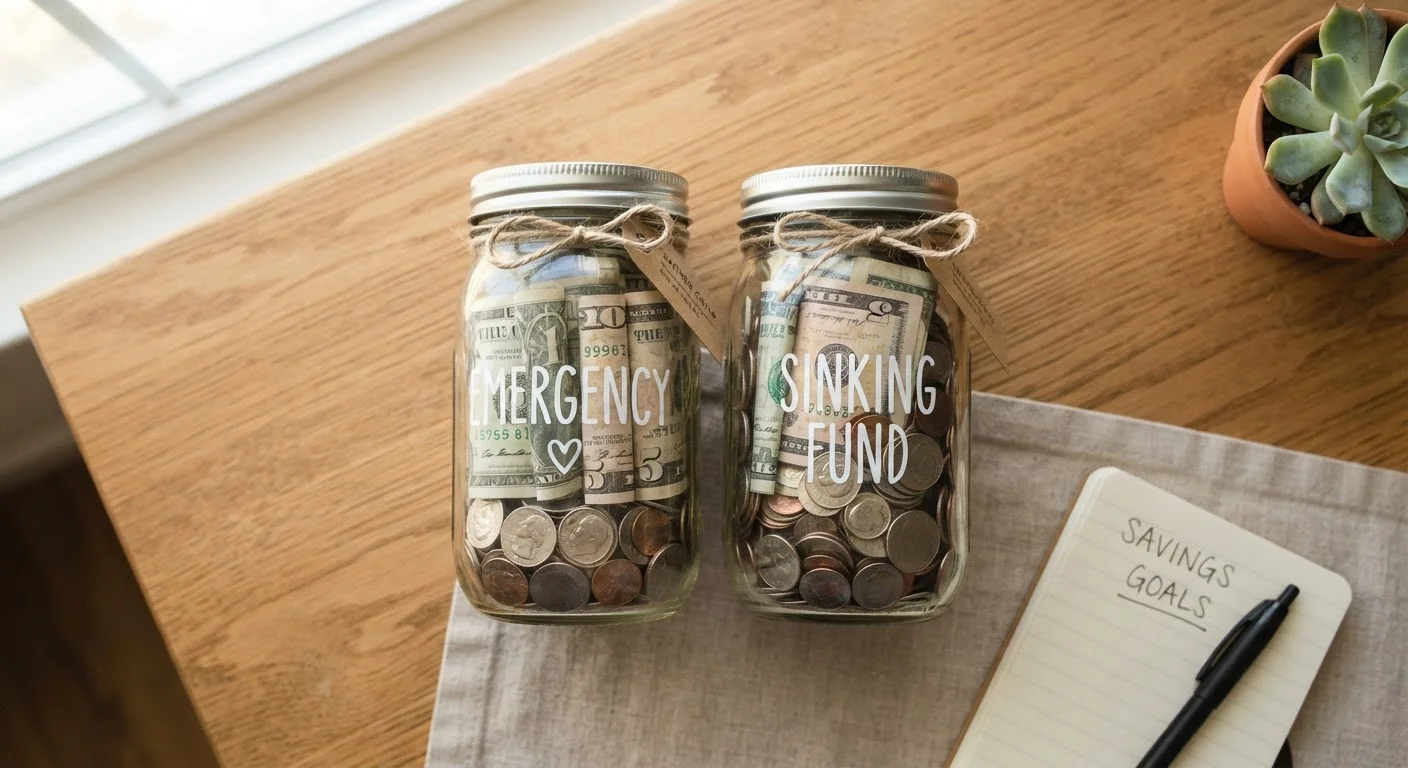
The core distinction is predictability. A sinking fund is savings with a plan — you know the expense is coming, you know roughly what it will cost, and you're simply spreading the payment out over time. An emergency fund, by contrast, is a buffer against the unknown: job loss, a sudden medical bill, an urgent home repair that can't wait.
Understanding how fixed and variable expenses work makes this distinction clearer. Many costs people treat as surprises — annual insurance premiums, car registration, holiday spending — are actually predictable. They're variable in timing but not in existence. That's precisely where sinking funds shine.
| Criterion | Sinking Fund | Emergency Fund |
|---|---|---|
| Purpose | Planned, known expenses | Unexpected financial shocks |
| Predictability | High — you know it's coming | Low — timing is unknown |
| Target amount | Cost of specific goal | 3–6 months of essential expenses |
| Replenishment | Spent and rebuilt each cycle | Restored after each use |
| Examples | Car repair, holiday gifts, travel | Job loss, medical bill, urgent repair |
| Account type | Sub-account or labeled savings | Separate high-yield savings account |
| Priority order | Build after emergency fund floor | Fund first, before other savings |
How Sinking Funds Actually Work
A sinking fund is built around a simple formula: divide your target amount by the number of months until you need it, then save that amount each month. If your car registration costs $360 and it's due in six months, you set aside $60 per month. No stress, no credit card charge when the bill arrives.
The power of sinking funds is that they turn irregular expenses into manageable monthly line items. Common sinking fund categories include vehicle maintenance, home repairs, medical copays, travel, back-to-school costs, and annual subscriptions. Goal-based saving frameworks recommend naming each fund specifically — a labeled sub-account or even a dedicated spreadsheet row — because earmarked money is psychologically harder to spend impulsively.
Most major banks and online savings platforms allow multiple sub-accounts within a single high-yield savings account, making it practical to maintain several sinking funds without opening multiple accounts.
~56%
Americans unable to cover a $1,000 emergency
A Bankrate survey found that a majority of U.S. adults could not pay for an unexpected $1,000 expense from savings alone.
3–6 months
Standard emergency fund target
Most mainstream financial education sources, including the Consumer Financial Protection Bureau, recommend this range as a general guideline.
12+
Potential sinking fund categories per household
A typical American household has over a dozen predictable irregular expenses annually that are well-suited to a sinking fund approach.
Emergency Funds: The Non-Negotiable Financial Floor
An emergency fund serves a fundamentally different purpose: it exists so that an unexpected financial shock doesn't force you into debt or force you to liquidate long-term savings. General guidance from financial educators typically targets three to six months of essential living expenses, though the right size depends on your income stability, household size, and risk tolerance.
The critical rule is that emergency funds should only be accessed for genuine emergencies — not for a vacation, a car upgrade, or even a predictable annual bill. When those funds get raided for non-emergencies, you're left without a real safety net when you need one most.
Emergency funds should be kept liquid and accessible — a high-yield savings account is the standard recommendation — but separated from your everyday checking account to reduce the temptation to spend it casually.
Don't Let Your Emergency Fund Double as a Sinking Fund
One of the most common mistakes is treating the emergency fund as a catch-all savings pool. When predictable expenses — like car maintenance or holiday spending — get paid from emergency reserves, the fund is perpetually depleted. This leaves households genuinely exposed when an unexpected event, such as a job loss or medical emergency, actually occurs. Keeping the two accounts mentally and physically separate is the structural safeguard that makes both work.
Building Both Without Stretching Your Budget
The most common objection to maintaining both types of accounts is budget pressure: I don't have enough to fund two savings buckets. The practical answer is to start small and prioritize sequence. A basic emergency cushion — often cited as $500 to $1,000 — offers meaningful protection even before you reach a full multi-month reserve. Once that floor is in place, you can begin layering in sinking funds for your most predictable upcoming expenses.
A savings plan built around real-life constraints acknowledges that irregular income and competing priorities are the norm, not the exception. The goal isn't perfection — it's building a system that keeps working even when your budget is under pressure. Automating contributions to both fund types, even modest ones, removes the decision from your monthly willpower and turns saving into a default behavior.
For a broader look at how your time horizon affects strategy, consider how short-term and long-term savings goals require different approaches. Sinking funds are inherently short- to medium-term; your emergency fund is a permanent fixture in your financial plan.
This article is for general informational purposes only and does not constitute personalized financial advice. Consult a licensed financial professional for guidance tailored to your individual circumstances.