
Lifespan and Safety: A Significant Gap
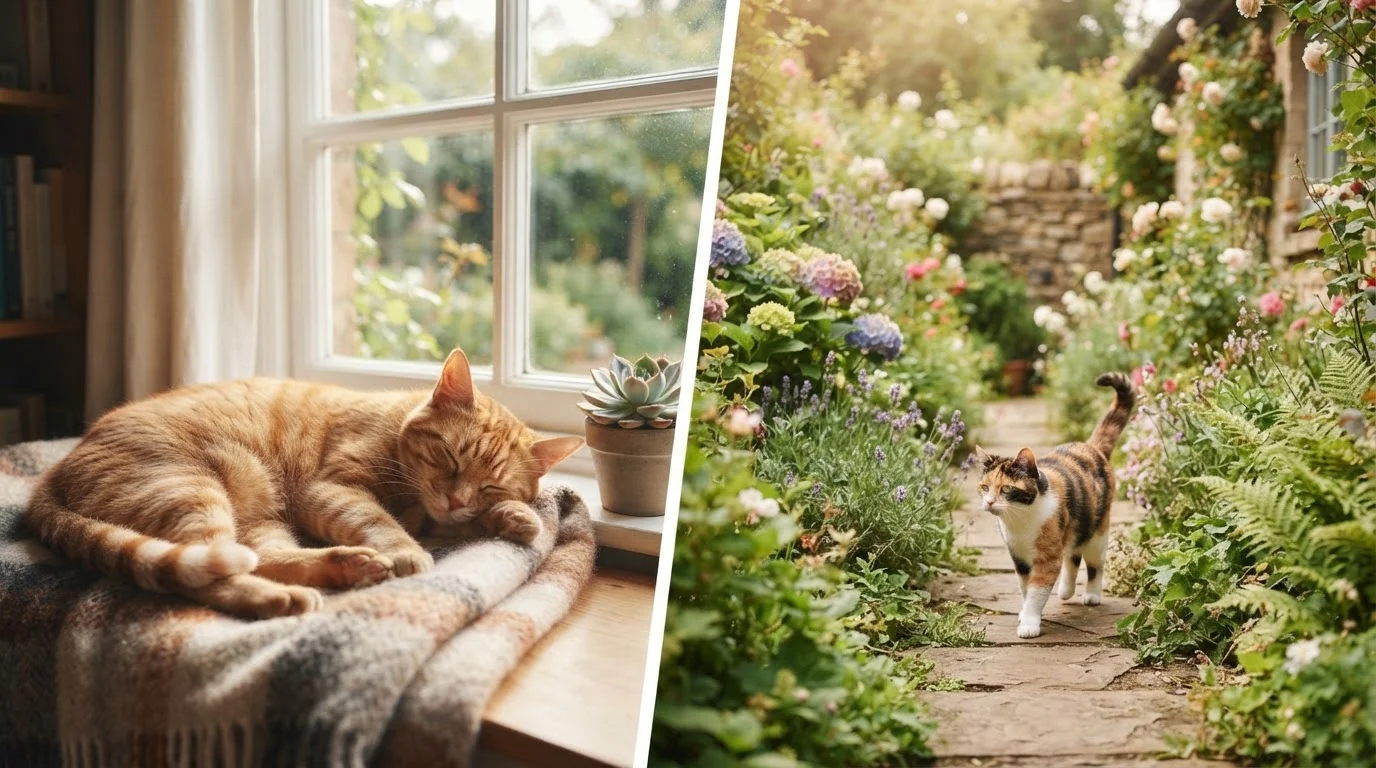
The lifespan difference between indoor and outdoor cats is one of the most well-documented disparities in companion animal care. According to the American Veterinary Medical Association and various veterinary sources, indoor cats commonly live into their mid-to-late teens, while outdoor cats have a considerably shorter average lifespan — often cited in the range of 2 to 5 years, depending on the environment.
Outdoor cats face a distinct set of hazards: vehicle traffic, predation from dogs or wildlife, territorial fights with other cats, ingestion of toxins or poisoned prey, and exposure to infectious diseases. Feline immunodeficiency virus (FIV) and feline leukemia virus (FeLV), both of which spread through bite wounds and close contact, are substantially more prevalent in outdoor populations.
Indoor cats are not risk-free, but their risks are more manageable — primarily obesity, dental disease, and behavioral issues stemming from under-stimulation. For context on how these risks evolve over time, see our guide on how health needs shift as cats age.
| Indoor Cats | Outdoor Cats | |
|---|---|---|
| Average lifespan | 12–18+ years | 2–5 years (varies widely) |
| Primary health risks | Obesity, dental disease, boredom-related stress | Trauma, FIV/FeLV, parasites, toxin exposure |
| Vaccination needs | Core vaccines; FeLV less critical | Core vaccines plus FeLV; more frequent updates |
| Parasite prevention | Lower risk; situational prevention | Year-round flea, tick, and parasite control required |
| Enrichment requirement | High — owner must provide stimulation actively | Moderate — self-directed through environment |
| Vet visit frequency | Annually for healthy adults | Every 6 months recommended |
| Environmental impact | Minimal | Can affect local wildlife populations |
Preventive Care Requirements
Both indoor and outdoor cats need core vaccinations — typically against rabies and feline distemper (panleukopenia, herpesvirus, calicivirus). However, outdoor cats generally require additional vaccines, particularly for FeLV, and may need them updated more frequently based on their exposure level. Your veterinarian is the appropriate guide for building the right protocol.
Parasite prevention is where the care gap widens most sharply. Outdoor cats require year-round flea, tick, and intestinal parasite prevention without exception. Indoor cats may need some parasite protection depending on household factors — other pets who go outside, or the owner's own outdoor exposure — but the risk profile is lower. Heartworm prevention is also relevant in many U.S. regions for outdoor cats, though often overlooked.
Talk to Your Vet About a Custom Prevention Plan
There is no universal parasite or vaccine protocol that fits every cat. A veterinarian who knows your cat's lifestyle, region, and health history will build the most appropriate schedule. Don't rely on over-the-counter products alone — some are ineffective or even harmful for cats.
Veterinary visit frequency should also reflect lifestyle. Outdoor cats benefit from twice-yearly wellness exams given their higher exposure to injury and infectious disease. Annual exams may be appropriate for healthy indoor cats, though your vet's recommendation should always take precedence.
Enrichment and Behavioral Needs
One of the most common mistakes indoor cat owners make is assuming that safety equals sufficiency. Cats are natural predators with strong instincts to hunt, climb, scratch, and patrol territory. An indoor environment that doesn't account for these needs produces bored, frustrated animals — which can manifest as destructive behavior, aggression, or stress-related health conditions such as overgrooming or urinary issues.
Effective indoor enrichment includes vertical space (cat trees, shelving), rotating puzzle feeders, interactive play sessions that mimic prey movement, and window access for visual stimulation. The honest trade-offs of apartment cat ownership are worth understanding if space is limited.
Outdoor cats self-direct much of their enrichment through exploration and hunting, but this comes at the cost of the risks described above. A middle path — supervised outdoor time, a secured catio, or leash training — gives some cats the best of both worlds without full free-roam exposure. Nutrition choices also interact with activity level; our breakdown of dry versus wet food covers how feeding format affects hydration and caloric density, which matters differently for active outdoor cats versus sedentary indoor ones.
12–18 years
Typical indoor cat lifespan
Veterinary organizations consistently report indoor cats outlive outdoor cats by a wide margin due to reduced hazard exposure.
~50%
Estimated U.S. cats kept exclusively indoors
Surveys by the American Pet Products Association suggest roughly half of owned cats in the U.S. are kept fully indoors.
This article is for general informational purposes only and is not a substitute for professional veterinary advice. Consult a licensed veterinarian for guidance specific to your cat's health and lifestyle needs.