
What the Ingredient List Actually Tells You
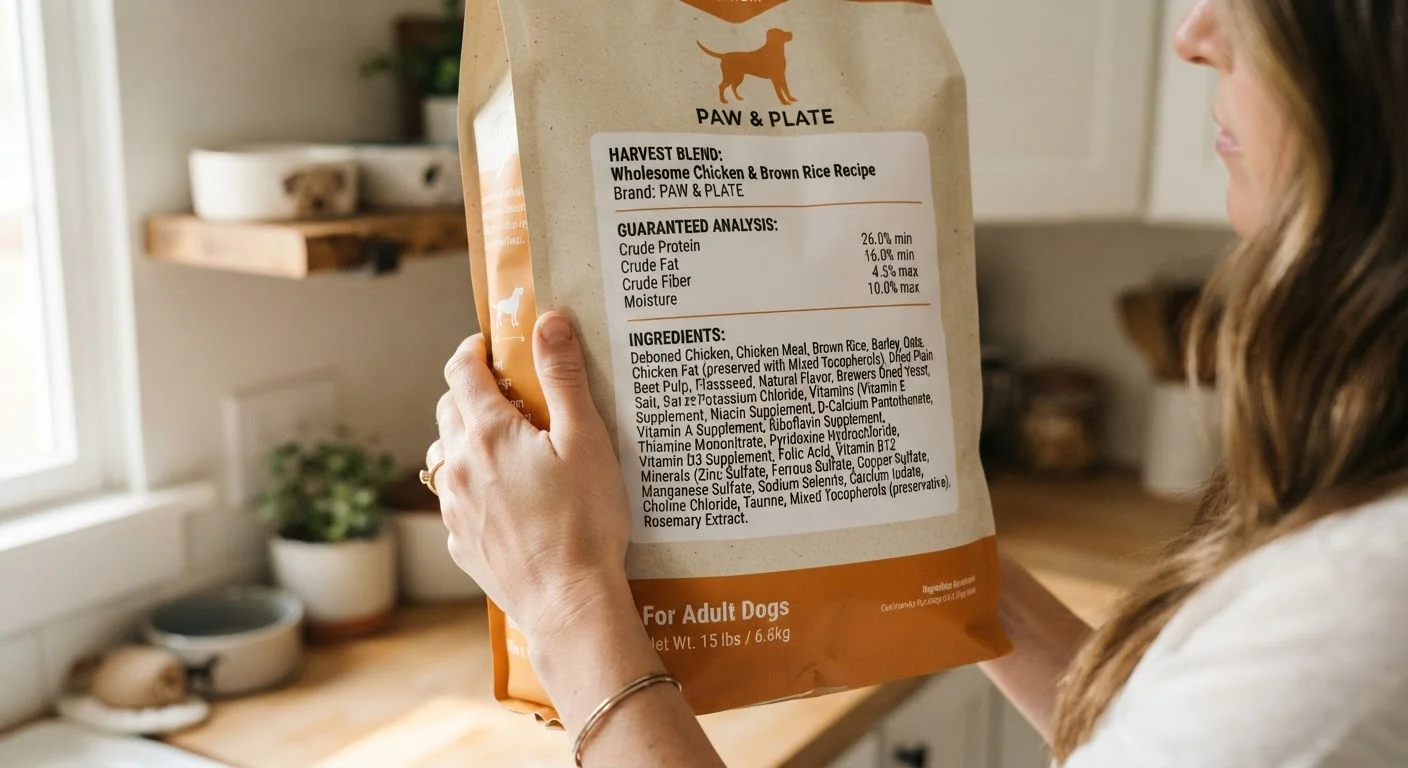
Pet food ingredient lists follow the same basic rule as human food labels: ingredients are listed in descending order by weight before cooking or processing. This matters because moisture content significantly affects where an ingredient appears. A fresh chicken listed first may contain up to 70% water — once cooked down, it contributes far less protein by weight than the label's top position implies.
This doesn't mean fresh or whole meats are bad ingredients — they can offer high-quality nutrition — but it does mean a single ingredient's position isn't the whole story. Look at the first five to seven ingredients collectively, since they make up the majority of the food's composition.
A few terms worth knowing:
- Meat meal (e.g., chicken meal): A concentrated, dried form of meat with moisture removed. It often delivers more protein per pound than fresh meat and is not inherently inferior.
- By-products: Organ meats and other non-muscle parts. These can be nutritious — liver, for example, is nutrient-dense — but quality varies by source.
- Splitting: Some manufacturers list similar ingredients separately (e.g., ground corn, corn gluten meal, corn bran) to keep each lower on the list. Considered together, they may represent a large portion of the formula.
For a broader look at ingredient myths, see common myths about feeding pets human food.
What you will need
Decoding the Guaranteed Analysis
The guaranteed analysis panel lists minimum percentages of crude protein and crude fat, and maximum percentages of crude fiber and moisture. Note the word crude — these are measurements of chemical composition, not of digestibility or biological availability. A food can show high crude protein while that protein is poorly digestible.
Because wet and dry foods have very different moisture content, comparing their guaranteed analyses directly is misleading. To compare on equal footing, you need to convert both to a dry matter basis: subtract the moisture percentage from 100, then divide each nutrient percentage by that number. For example, a wet food with 78% moisture and 8% crude protein has a dry matter protein of roughly 36% — much higher than it first appears.
Converting to Dry Matter Basis
To compare wet and dry foods fairly, use this formula: Dry Matter % = (Nutrient % ÷ (100 − Moisture %)) × 100. For example, a wet food showing 10% protein and 78% moisture has a dry matter protein of about 45%. This single step removes the distortion caused by water content and makes side-by-side comparisons much more accurate.
The guaranteed analysis won't tell you about ingredient quality, amino acid profiles, or actual digestibility. It's a starting point, not a complete nutritional picture. Your veterinarian or a board-certified veterinary nutritionist can help interpret these numbers for your specific pet's needs.
What AAFCO Statements Mean — and Don't Mean
The Association of American Feed Control Officials (AAFCO) establishes nutritional profiles that serve as the standard for complete and balanced pet foods in the United States. Look for a statement on the label such as: " is formulated to meet the nutritional levels established by the AAFCO Dog Food Nutrient Profiles for all life stages."
This statement can be reached one of two ways:
- Formulation method: The recipe is calculated to meet AAFCO nutrient minimums on paper. No feeding trial is required.
- Feeding trial method: The food was tested on live animals over a defined period. This is a higher bar and will say so explicitly (look for language like "as substantiated by feeding tests").
Also check which life stage the food is approved for. "All life stages" includes growth and reproduction — the most demanding standard — so it's appropriate for puppies and kittens. "Adult maintenance" foods are not formulated for growing animals. If the label says "for intermittent or supplemental feeding only," the food is not nutritionally complete on its own.
Grain-Free Diets and Heart Disease Risk
The FDA has been investigating a potential association between grain-free diets — particularly those high in legumes like peas and lentils — and dilated cardiomyopathy (DCM) in dogs. Research is still ongoing and no definitive causal link has been established. However, if you're considering a grain-free diet, discuss the current evidence with your veterinarian before making the switch.
For a deeper look at foundational pet care decisions, the Pet Care Basics hub covers feeding, grooming, and daily routines.
Marketing Terms You Can Safely Ignore
Pet food packaging is covered in words that feel meaningful but carry little or no regulatory definition. Understanding which terms are regulated helps you focus on what matters.
- Premium / Super-premium / Ultra-premium: No legal definition. Any manufacturer can use these words regardless of ingredient quality.
- Natural: AAFCO defines this loosely as ingredients derived from plant, animal, or mined sources without synthetic chemical alteration. It says nothing about nutritional quality or sourcing standards.
- Holistic: No regulatory definition in pet food whatsoever.
- Human-grade: Technically meaningful only if the entire manufacturing process meets USDA standards for human food facilities — a high bar few products actually meet. When used loosely, it's a marketing claim.
- Grain-free: The absence of grains doesn't automatically improve a diet. Grains are often replaced with legumes or potatoes. The FDA has investigated a possible link between grain-free diets and dilated cardiomyopathy (DCM) in dogs, though research is ongoing. Discuss this with your veterinarian before choosing grain-free.
The truth behind common pet health myths article addresses several related misconceptions worth reviewing. And if you're weighing food formats, dry food vs. wet food for cats and dogs breaks down the practical trade-offs.
This article is for general informational purposes only and does not constitute veterinary or dietary advice. Consult a licensed veterinarian or board-certified veterinary nutritionist before making significant changes to your pet's diet.