

What Price Per Square Foot Actually Measures
Price per square foot (PPSF) is calculated by dividing a property's list or sale price by its total finished square footage. If a 1,800-square-foot home sells for $360,000, the PPSF is $200. The figure appears routinely in listing descriptions, market reports, and agent presentations as a shorthand for comparing value across properties.
The appeal is intuitive: if two homes sit on the same block, have similar layouts, and one costs significantly more per square foot than the other, that gap deserves scrutiny. Within a narrow, well-defined comparison set, PPSF can surface meaningful pricing differences. The problems arise when buyers apply it more broadly than the metric was designed to support.
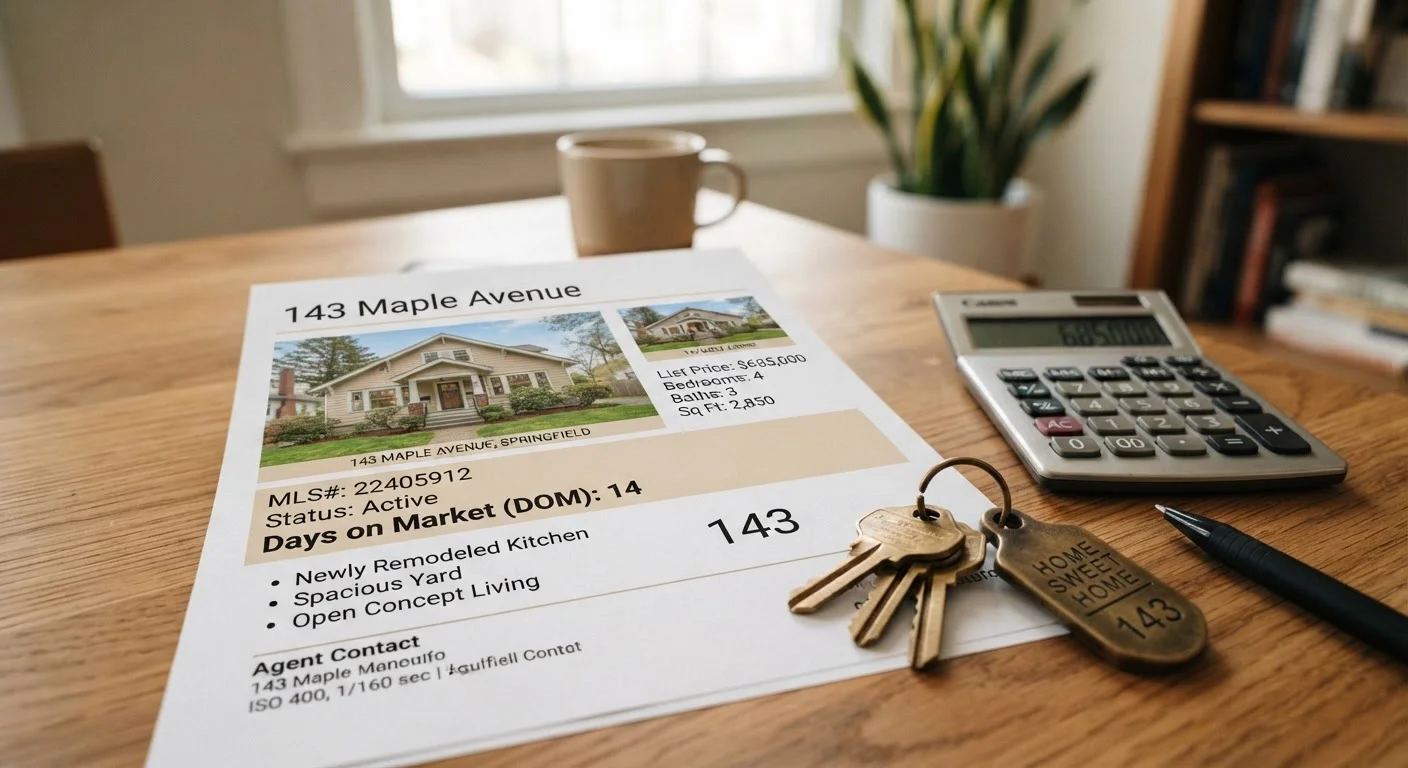
For a fuller picture of how listing data can be interpreted alongside this figure, see what days on market reveals about a property.
Where the Metric Genuinely Helps
Easy to calculate and widely available in listings
Because the inputs — price and square footage — appear on nearly every listing, buyers can compute PPSF instantly without specialized tools or expertise.
Useful for spotting outliers within a comparable set
When properties are genuinely similar in type, age, and location, a significant deviation in PPSF is a reliable signal to investigate pricing, condition, or market positioning more closely.
Provides a shared language for market trend analysis
Median PPSF tracked over time helps buyers and sellers gauge whether a neighborhood is appreciating, softening, or holding steady — enabling more informed timing decisions.
Used by appraisers as a component of valuation
Licensed appraisers incorporate PPSF when reviewing comparable sales, giving the metric some grounding in formal property valuation methodology.
Within a comparable set — same neighborhood, similar age, same property class — PPSF gives buyers a fast, data-driven baseline. It can flag outliers worth investigating: a listing priced at $280 per square foot in a market averaging $220 may be overpriced, or it may offer premium finishes. Either way, the number raises a useful question.
The metric also provides a common language for communicating market trends. When median PPSF rises or falls quarter over quarter in a zip code, it signals shifts in demand that buyers and sellers can act on. Lenders and appraisers regularly use it as one component of valuation when reviewing comparable sales.
Where Price Per Square Foot Falls Short
Misleads when comparing different property types
Condos, townhomes, and single-family homes operate under fundamentally different cost structures, making cross-type PPSF comparisons unreliable guides to relative value.
Ignores property condition and renovation quality
Two homes with identical PPSF figures can have dramatically different actual values if one requires significant repairs or lacks modern systems and finishes.
Does not account for lot value or land
In markets where land is a major cost driver, a smaller home on a premium lot can appear overpriced by PPSF while actually representing strong locational value.
Smaller homes skew higher, distorting comparisons
Fixed-cost features like kitchens and bathrooms raise the PPSF of compact units structurally, not because they are priced at a premium relative to larger homes on the same street.
Layout efficiency is entirely invisible
A poorly designed floor plan with wasted hallway space or awkward room flow will show the same PPSF as a highly functional layout of equal square footage.
The most common misuse of PPSF is comparing properties that are not genuinely comparable. A 900-square-foot condo and a 2,400-square-foot single-family home will almost always show very different figures for structural reasons — not because one is a better deal. Smaller units routinely show higher PPSF because fixed costs like kitchens and bathrooms represent a larger share of a compact footprint.
Condition and quality are entirely invisible in the calculation. A recently renovated home with high-end finishes and a dated home needing $60,000 in repairs can carry the same PPSF if their raw numbers align. Listing myths that confuse buyers explores how surface-level figures like this can create costly misunderstandings.
Square Footage Measurement Is Not Standardized
Different listings may calculate square footage differently — some include finished basements or enclosed porches, others do not. Measurement methods also vary by appraiser and MLS convention. Before using PPSF to compare two properties, confirm what each figure actually includes. Discrepancies in how square footage is reported can make a meaningful difference in the resulting calculation.
Building a More Complete Comparison
Relying on a single metric for a decision as significant as a home purchase is rarely sufficient. PPSF is most defensible when layered with other data points: recent comparable sales, lot size and value, property condition, and the costs that follow purchase.
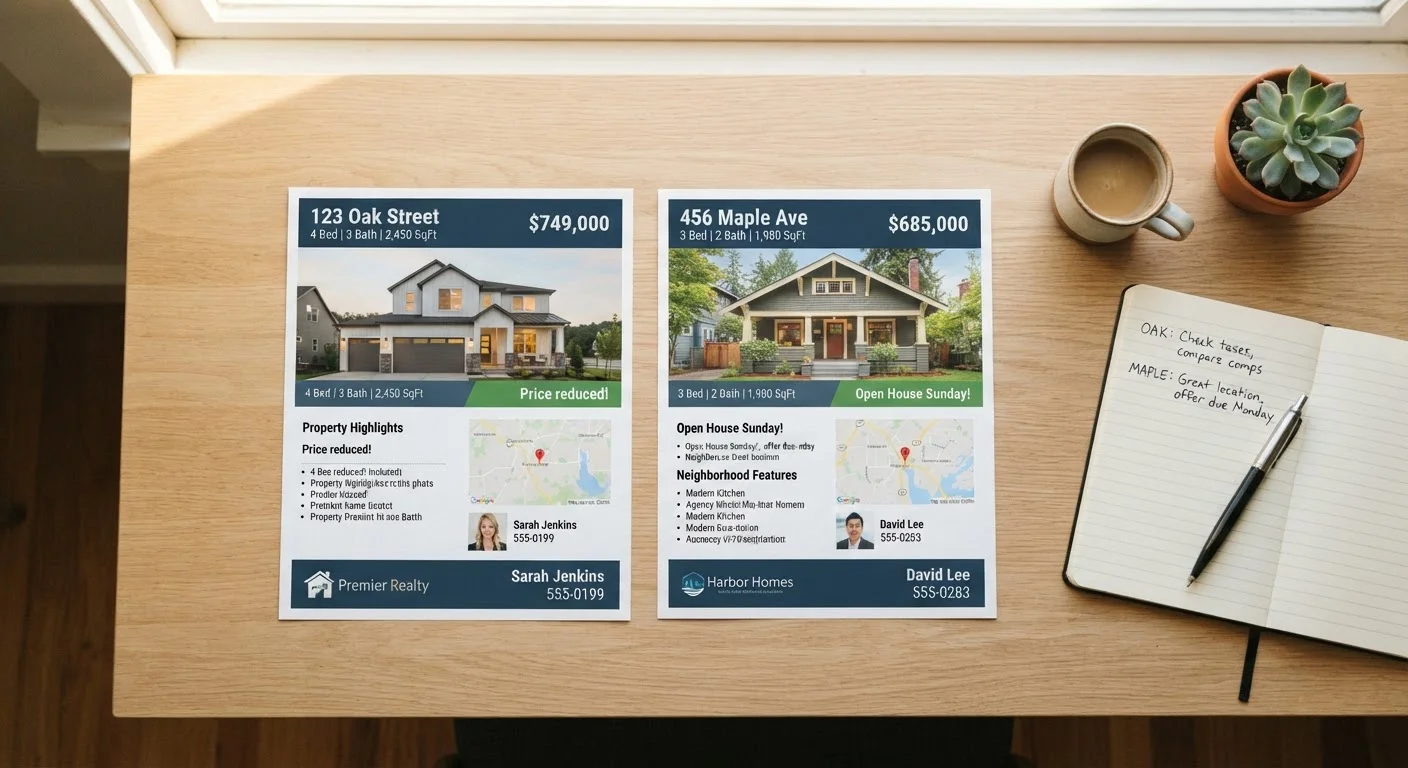
Layout and livability matter in ways square footage does not capture. A well-designed 1,600-square-foot home may feel more functional than a sprawling 2,200-square-foot floor plan with awkward room placement. For a structured approach to evaluating two similar listings side by side, see how to compare two similar listings.
30–50%
Land value share in high-demand urban markets
In many major U.S. metros, the land component of a home's price can represent nearly half its total value — a factor price per square foot does not reflect.
~15–25%
PPSF premium for smaller units vs. larger units
Real estate analysts consistently observe that smaller homes and condos trade at higher per-square-foot prices than larger units in the same building or block, driven by fixed-cost distribution.
It is also worth noting that in many markets, land value accounts for a substantial share of a home's total price. In high-demand urban areas, the lot itself may represent 30–50% of value — a factor that PPSF calculations ignore entirely. Buyers in these markets who filter heavily by PPSF may systematically undervalue well-located properties on smaller footprints.
This article is for general informational purposes only and does not constitute financial, legal, or real estate advice. Consult a licensed real estate professional for guidance specific to your situation and local market.