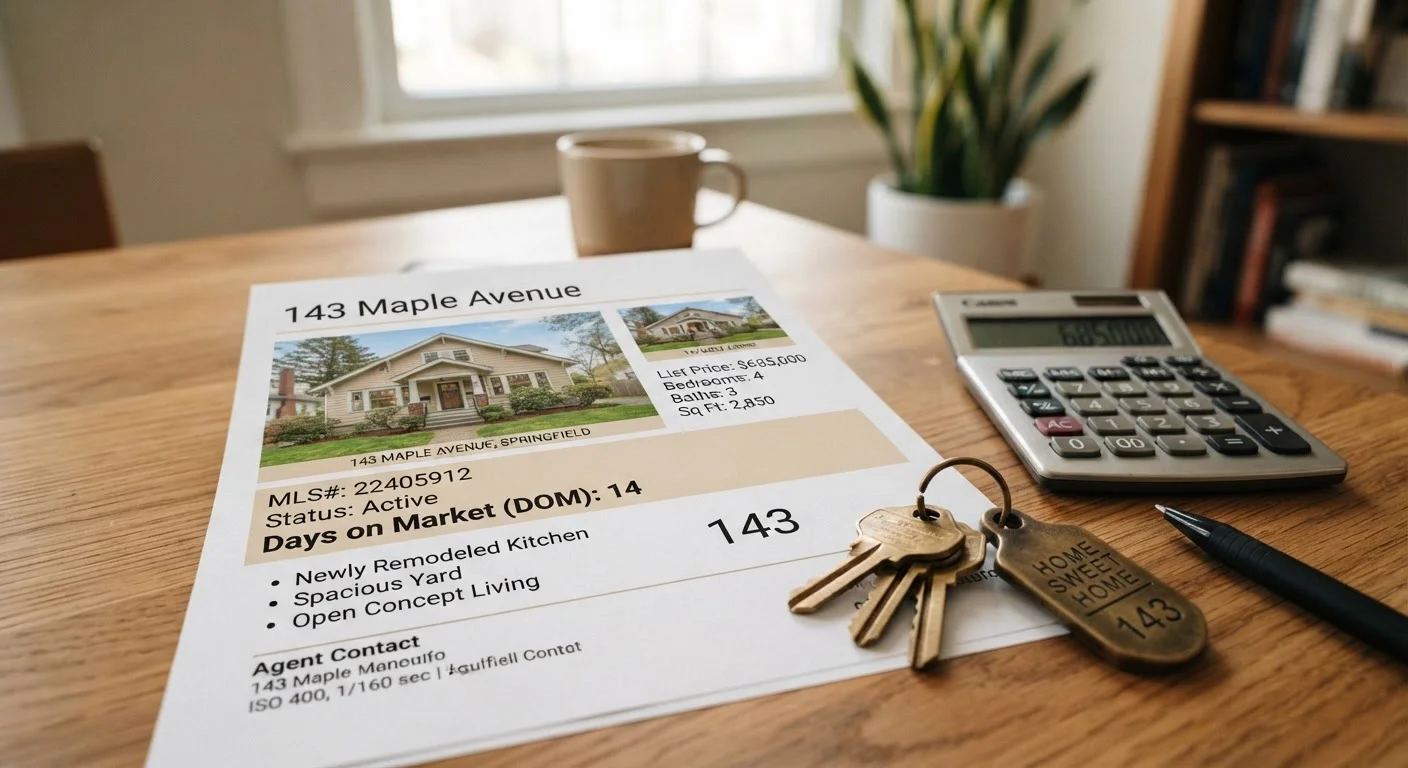


Why Listing Misconceptions Cost Buyers
Real estate listings are the first — and often most influential — touchpoint between a buyer and a property. They set expectations, shape emotional responses, and, when misread, can lead buyers into costly missteps. The problem isn't that listings are dishonest by design; it's that buyers often interpret marketing language and data points as objective facts when they aren't.
Understanding the gap between how listings present information and what that information actually means is one of the most practical skills a buyer can develop. It informs better questions, smarter tours, and more grounded offers. For a broader look at how listing language is constructed, see how listing descriptions are written. And if you're curious about how agent incentives and roles are also frequently misunderstood, common myths about real estate agents covers that ground in detail.
Myth
The listing price reflects what the home is actually worth.
Fact
The listing price is set by the seller and may be above, below, or close to market value — but it is not an objective valuation.
Sellers and their agents choose a listing price based on strategy, local comparable sales, and market conditions. In competitive markets, some properties are intentionally priced below estimated value to attract multiple offers. In slower markets, sellers may price aspirationally and later reduce. An independent appraisal or a comparative market analysis from a buyer's agent provides a more grounded picture. Price per square foot is one data point buyers often cite, but it requires careful context to be meaningful.
Myth
'Move-in ready' means the home has no significant issues to address.
Fact
The phrase has no standardized definition and is used as a marketing descriptor, not a condition guarantee.
'Move-in ready' typically signals that a home is clean, unoccupied, and not visibly distressed — but it says nothing about mechanical systems, roofing, plumbing, or hidden defects. A professional home inspection remains essential regardless of how a property is described. Listing descriptions are carefully crafted, and phrases like 'cozy,' 'as-is,' and 'investor special' often carry practical meanings that differ from their surface reading.
Myth
A long days-on-market count always signals something is wrong with the property.
Fact
Days on market can reflect pricing missteps, seasonal timing, or local demand — and can be reset through relisting.
While a prolonged days-on-market figure can sometimes indicate buyers have passed for a reason, it is not a reliable standalone signal. Sellers can withdraw and relist a property, resetting the counter. Seasonal slowdowns, a brief period of overpricing followed by a reduction, or a home with a narrow buyer pool can all produce elevated numbers without indicating a defect. A listing's days on market figure deserves thoughtful interpretation rather than reflexive dismissal or assumption.
Myth
The square footage shown in a listing is accurate and independently verified.
Fact
Square footage figures vary in how they are calculated and are not always verified before a listing is published.
There is no single national standard dictating how residential square footage must be measured. Some listings include finished basement space; others do not. Some measure from exterior walls; others use interior dimensions. Figures may originate from tax records, prior appraisals, or seller estimates — each potentially using a different methodology. Buyers who need precise square footage should request appraisal documentation or arrange their own measurement. Several listing details deserve a closer look before a buyer schedules a tour, let alone submits an offer.
Myth
Listing photos give a realistic sense of a property's size and condition.
Fact
Listing photography is a professional marketing exercise using wide-angle lenses, staging, and selective framing that routinely makes spaces appear larger or better-maintained than they are.
Wide-angle lenses compress perceived distances and make rooms appear more spacious. Professional staging removes clutter, adds flattering furniture, and controls lighting conditions. Photographers choose angles that conceal low ceilings, awkward layouts, or proximity to neighboring structures. Listing photos can mislead in ways easy to miss without knowing what to look for — always supplement photo review with an in-person tour before forming strong opinions.
Myth
All listing platforms show the same property data at the same time.
Fact
Third-party aggregator sites often pull MLS data on a delay and may display outdated status, price, or availability.
The Multiple Listing Service (MLS) is the authoritative source for most listed properties, but consumer-facing aggregator sites receive that data via feeds that can lag by hours or days. A property showing as active on a consumer portal may already be under contract. Not all listing platforms show the same data, and working with an agent who has direct MLS access gives buyers the most current picture. Understanding what each listing status means helps avoid wasted effort chasing properties already off the market.
What Buyers Should Do Instead
Correcting these misconceptions isn't about distrust — it's about calibration. Listings serve a legitimate purpose, but they are most useful when layered with independent verification.
Listings Are Marketing Documents First
Real estate listings are prepared by sellers or their agents with the goal of attracting buyers. While factual misrepresentations can carry legal consequences, descriptions, pricing, and photography are all curated to present the property favorably. Treat every listing as a starting point for due diligence — not a definitive account of the property's condition or value.
Before making an offer, buyers should request a comparative market analysis or independent appraisal to check pricing, commission a home inspection regardless of how the property is described, and verify current listing status directly through an agent with MLS access rather than relying on consumer aggregator sites. Checking property tax history in the listing is also worth doing early — the figures shown are historical and your actual post-purchase bill may differ significantly.
Skipping the Inspection Is a Costly Gamble
No listing description, marketing phrase, or seller disclosure replaces a professional home inspection. Even properties described as move-in ready, newly renovated, or recently updated can have undisclosed structural, mechanical, or environmental issues. Waiving an inspection to compete in a hot market is a risk that carries real financial consequences — one buyers should weigh carefully before proceeding.
For sellers, understanding how buyers interpret listings has its own value. First-time sellers are often surprised by how much scrutiny buyers apply to pricing strategy, disclosure requirements, and presentation. Informed buyers and informed sellers together produce smoother, more transparent transactions.
~1 in 5
Buyers who discover post-closing repair surprises
Industry surveys have consistently found that a notable share of buyers encounter unexpected repair needs or undisclosed defects after closing, underscoring the limits of listing descriptions alone.
Up to 3%
Typical square footage measurement variance
Appraisal practitioners note that discrepancies of several percentage points between listing claims and appraiser measurements are not uncommon across residential properties.