
Why Your Morning Routine Needs Its Own Logic
Morning skin care has a different job than nighttime care. While your PM routine focuses on repair and recovery, the AM routine is about preparation — shielding skin from environmental stressors like UV radiation, pollution, and moisture loss that accumulate throughout the day. Understanding that distinction makes it easier to select the right products and apply them in the right order.
If you're starting from scratch, that's actually an advantage. You can build intentional habits without having to unlearn anything. And you don't need a shelf full of products — four steps cover the essentials for most people. For a deeper look at why sequencing matters, see the logic behind layering skincare for a full breakdown.
Consistency Beats Complexity
A four-step routine you complete every morning will deliver better results than a ten-step routine you use occasionally. When building a new habit, start with the bare minimum and layer in additional steps only after the basics feel automatic.
What You'll Need Before You Start
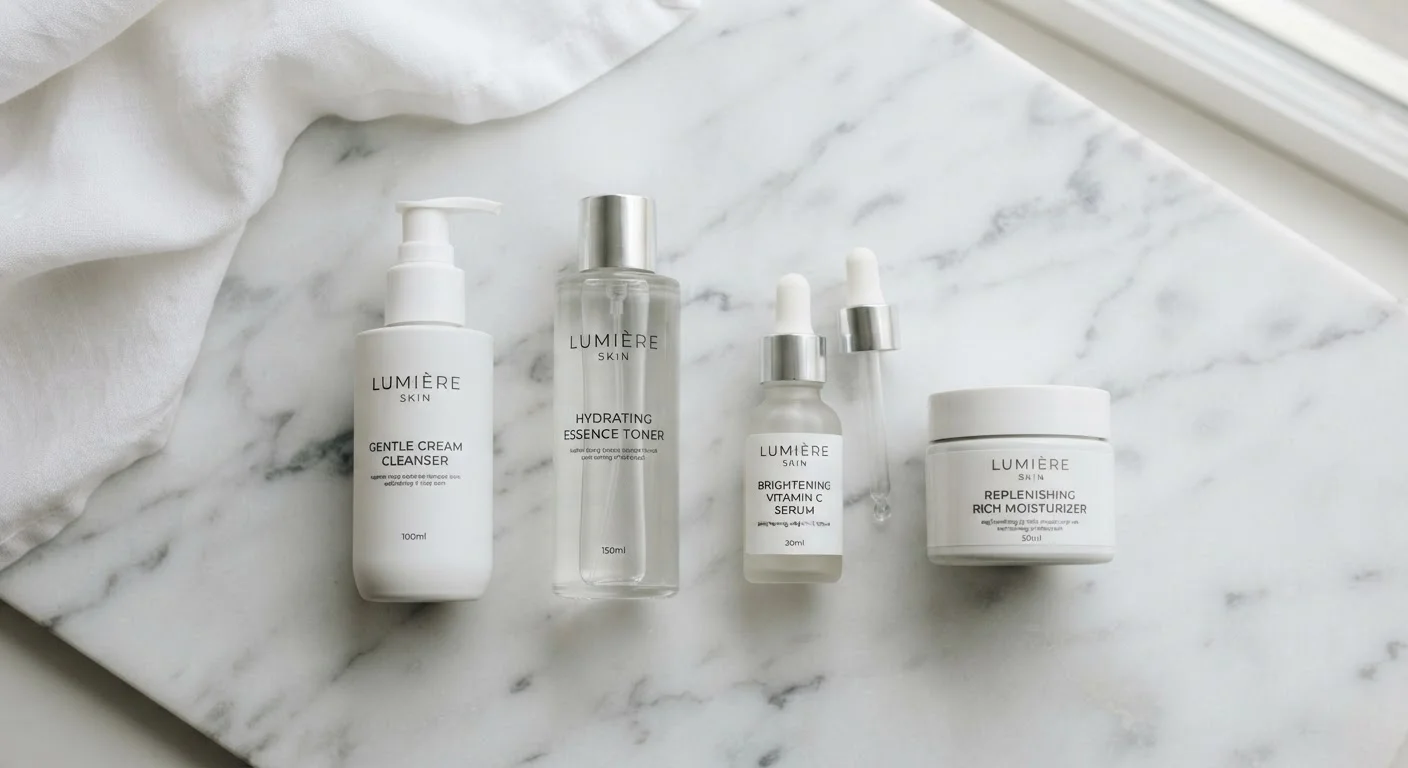
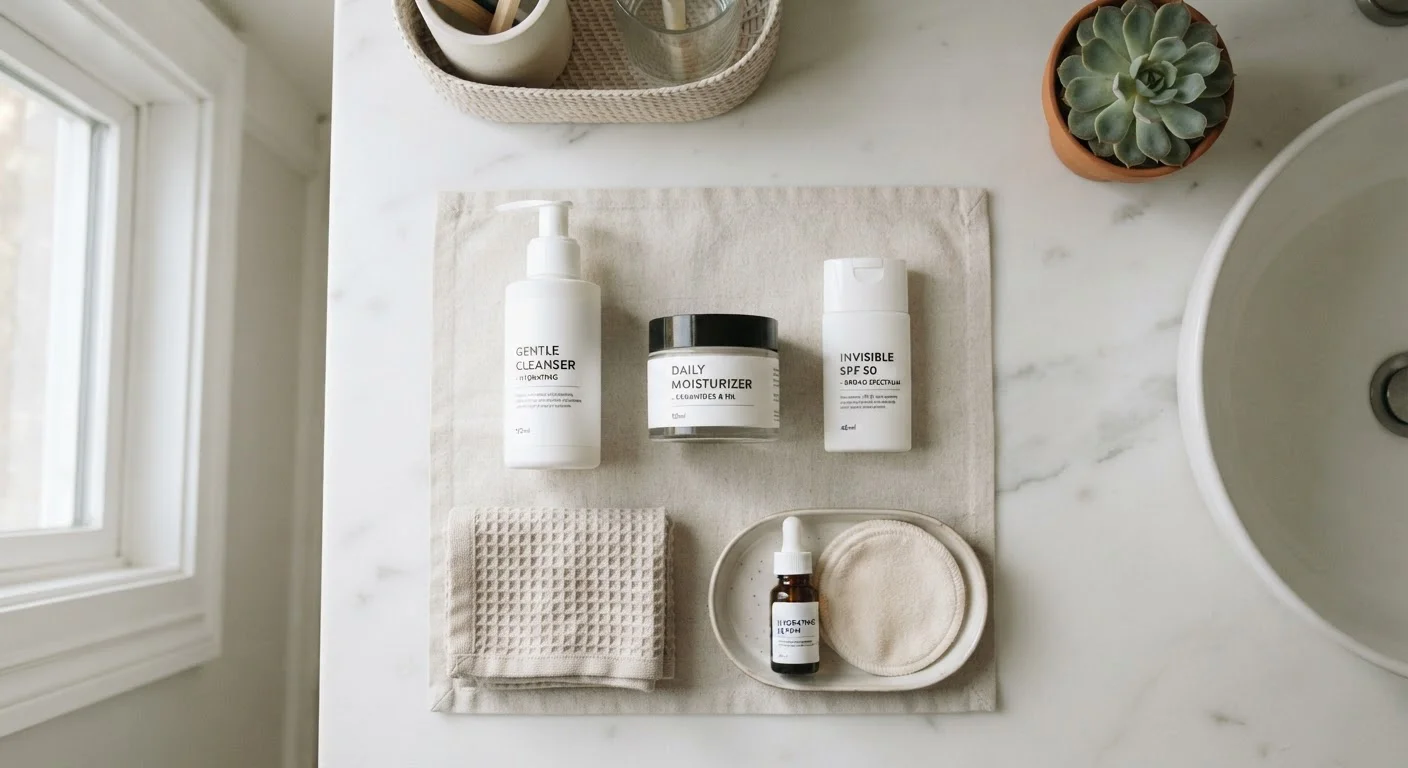
Building a routine doesn't require a significant upfront investment. Start with the minimum — a gentle cleanser, a lightweight moisturizer, and a broad-spectrum SPF 30 or higher sunscreen. If you have a specific skin concern like hyperpigmentation or breakouts, a targeted treatment serum can be added between cleansing and moisturizing, but it's optional when you're just getting started.
What you will need
Gentle Cleanser
Removes overnight oil, sweat, and residue without disrupting the skin's natural moisture barrier.
Treatment Serum
Addresses specific skin concerns such as dullness or uneven tone between cleansing and moisturizing.
Moisturizer
Reinforces the skin barrier and provides hydration before sunscreen application.
Broad-Spectrum Sunscreen (SPF 30+)
Protects skin from UV damage — the most essential product in any morning routine.
Once your routine feels consistent — meaning you're completing it most mornings without friction — that's the right time to consider adding or adjusting steps. If your skin reacts unexpectedly after introducing new products, the skincare routine audit guide can help you identify what to change.
The Four Core Steps
Follow these steps each morning in the order listed. Each step builds on the previous one, so sequence matters.
Cleanse
Wash your face with a gentle, pH-balanced cleanser suited to your skin type. This removes overnight oils, sweat, and any residue from nighttime products, giving the skin a clean surface for everything that follows. Use lukewarm water — hot water can strip the skin's natural barrier.
Apply Treatment (If Using One)
This step is optional but worth including if you have a specific skin concern. A vitamin C serum, for example, is commonly used in the morning for its antioxidant properties, which may help neutralize free radical damage from UV and pollution exposure. Apply to damp or dry skin after cleansing, before moisturizer.
Moisturize
Apply a moisturizer suited to your skin type — lightweight gel formulas tend to work well for oily or combination skin, while richer creams suit drier skin. Moisturizer reinforces the skin's moisture barrier and helps create a smooth base for sunscreen. Apply while skin is still slightly damp for better absorption.
Apply Sunscreen
Apply a broad-spectrum sunscreen with SPF 30 or higher as the final step in your routine. This is the most evidence-supported step in any AM skincare routine — daily sunscreen use helps protect against UV-related skin damage, premature aging, and skin cancer risk. Apply generously to the face and neck, and reapply throughout the day if you're spending extended time outdoors.
Don't Skip SPF on Cloudy Days
UV radiation penetrates cloud cover and can affect the skin even on overcast or cold days. Dermatology guidance consistently recommends daily sunscreen use year-round, regardless of weather or season. Make sunscreen the non-negotiable final step.
For context on how a morning routine differs from evening care, the evening skincare guide explains how nighttime repair logic works differently. And if your next step after skincare is applying makeup, a minimalist makeup routine pairs naturally with a simple skin foundation like this one.