
Why Nighttime Skin Behaves Differently
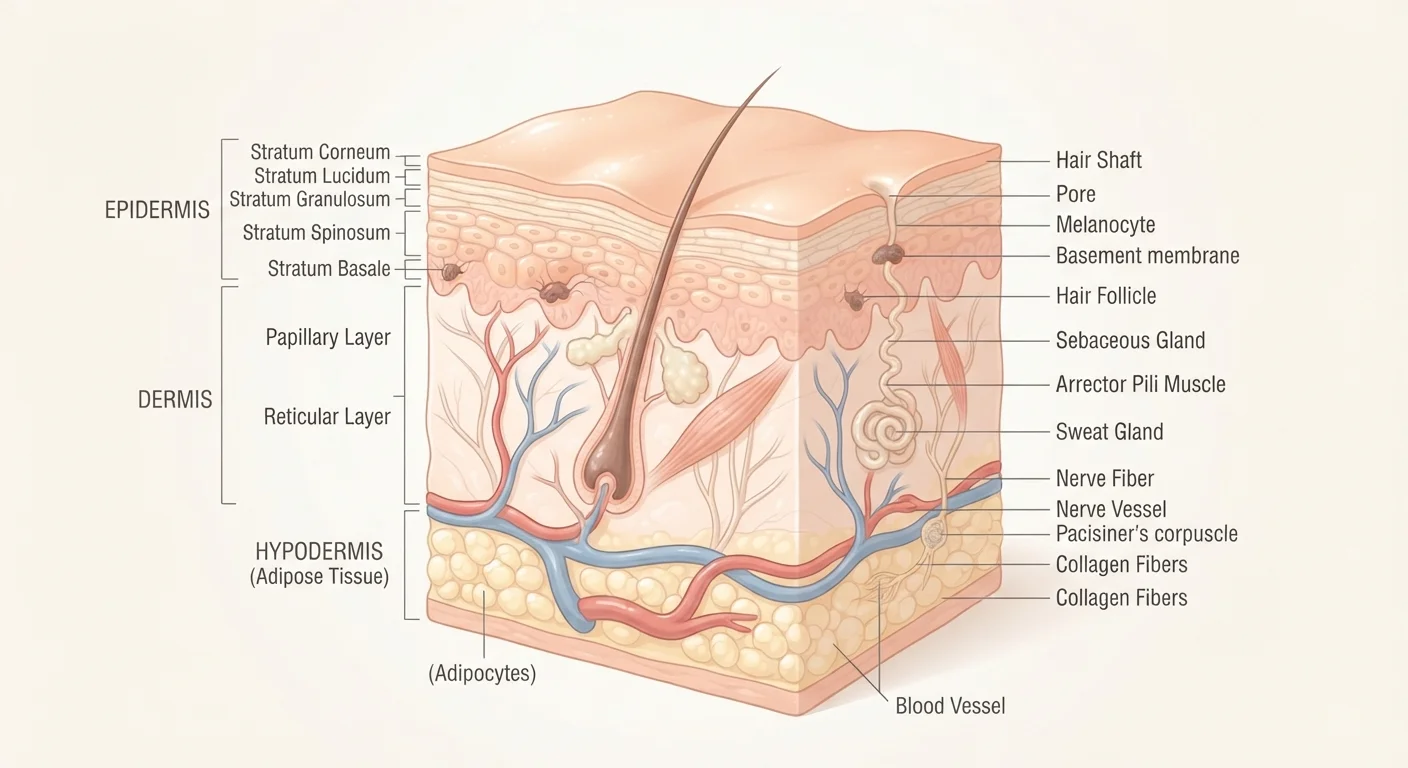
Your skin doesn't operate on a flat 24-hour clock. Research in chronobiology — the study of biological time cycles — shows that the skin's cell turnover rate accelerates during sleep, peaking roughly between midnight and 4 a.m. Transepidermal water loss (TEWL), a measure of how much moisture escapes through the skin's surface, also tends to rise at night. Together, these patterns mean your skin is simultaneously more actively repairing itself and more prone to drying out while you sleep.
Daytime skincare is largely defensive: SPF to block UV damage, antioxidants to neutralize free radicals, lightweight formulas that sit comfortably under makeup. The evening routine flips that logic. Without the sun to contend with, you can introduce ingredients that are either degraded by UV light, cause photosensitivity, or simply need uninterrupted hours to do their work. Understanding this distinction is the starting point — and it's also why copying your morning routine verbatim into the evening is a missed opportunity.
If you want to understand the structural layer that makes all routines possible, our article on what your skin barrier actually does explains the foundation everything else builds on.
What You'll Need Before You Start
A functional evening routine doesn't require a shelf full of products. The essentials are modest, and extras should only be added once the basics are working consistently.
What you will need
Gentle Facial Cleanser
Removes makeup, sunscreen, pollutants, and excess sebum accumulated during the day — the non-negotiable first step.
Exfoliating Toner or Acid Treatment (AHA/BHA)
Encourages cell turnover and smooths texture; best used a few nights per week rather than nightly for most skin types.
Targeted Serum
Delivers concentrated active ingredients — such as niacinamide or peptides — to address specific concerns like uneven tone or fine lines.
Retinoid (OTC Retinol or Prescription Retinoid)
Supports cell renewal and collagen production; used exclusively at night due to UV sensitivity.
Night Moisturizer or Barrier Cream
Seals in prior layers and helps reduce transepidermal water loss while you sleep.
Facial Oil or Occlusive (e.g., petrolatum-based balm)
Applied as the final layer to lock in moisture on very dry or compromised skin.
For guidance on how the logic of product layering works across any routine, see our breakdown of why skincare order matters.
Your Evening Routine, Step by Step
Follow these steps in sequence each evening. The order is not arbitrary — it reflects how product textures and pH levels interact with your skin.
Double-Cleanse if You've Worn Sunscreen or Makeup
Start with an oil-based or micellar cleanser to dissolve sunscreen and makeup — products that water-based cleansers struggle to fully remove. Follow immediately with your regular water-based cleanser to clear residue and prep the skin for what comes next. If you've worn nothing on your face that day, a single gentle cleanse is sufficient.
Pat Skin Damp-Dry and Apply Any Toner or Essence
Gently pat your face with a clean towel, leaving skin slightly damp rather than fully dry. Apply a hydrating toner or essence by pressing it gently into the skin with your palms — this helps prep the skin's surface to absorb subsequent layers more effectively. If you use an exfoliating toner (AHA or BHA), apply it to dry skin instead and limit use to two or three nights per week.
Apply Any Targeted Treatment Serum
Serums come next because they're typically the thinnest, most concentrated layer. Apply a small amount — usually three to five drops — and press it evenly across the face and neck. Common evening serums include peptide formulas, niacinamide for tone evenness, or hydrating serums containing hyaluronic acid. Allow 60–90 seconds for the serum to absorb before moving on.
Use Your Retinoid (On Designated Nights)
If retinoids are part of your routine, this is their moment — applied after serum and before moisturizer. Use the amount directed on the product (typically a pea-sized amount for the full face) and avoid the immediate eye area and corners of the nose unless your product is formulated for those zones. Begin with one or two nights per week and increase frequency gradually as your skin adjusts over several weeks.
Seal with a Night Moisturizer
Apply your night moisturizer while skin is still slightly tacky from previous layers — this aids absorption and helps lock in hydration. Evening moisturizers tend to be richer than daytime formulas, often containing ingredients like ceramides, squalane, or shea butter that support barrier repair. Work outward from the center of your face, and include the neck.
Finish with an Occlusive Layer (If Needed)
If your skin runs very dry, feels tight after moisturizing, or you're dealing with a compromised or irritated barrier, a light layer of a petrolatum-based balm or facial oil applied over your moisturizer acts as a physical seal that significantly reduces overnight water loss. This step is optional and best reserved for genuinely dry skin — those prone to breakouts may find heavy occlusives too congesting.
Consistency Beats Complexity
A three-step routine performed every night reliably will deliver better results than a ten-step routine done inconsistently. When building or adjusting an evening routine, add one new product at a time and give it at least four to six weeks before evaluating whether it's working. This also makes it far easier to identify what's helping — or causing issues.
If you're new to retinoids or exfoliating acids, our reference on retinol and retinoids in skincare and the ingredient breakdown covering hyaluronic acid, niacinamide, and vitamin C are useful companions before adding either to your rotation.
Common Pitfalls and How to Avoid Them
Even a well-chosen set of products can underperform if applied incorrectly. The most frequent issue is layering active ingredients that conflict — for example, using a low-pH AHA exfoliant immediately before a retinoid, which can increase irritation risk without improving results. Space those apart, either on alternating nights or with a gap of 20–30 minutes between applications.
Don't Mix Actives Without Understanding Interactions
Certain ingredient combinations — such as vitamin C with niacinamide, or retinoids with AHAs — can reduce efficacy or increase irritation risk depending on concentration and formulation. If you're unsure about compatibility, introduce one active at a time and research interactions before combining. When in doubt, consult a dermatologist rather than experimenting on sensitive skin.
Another common mistake is skipping the evening routine on nights when you're tired or haven't worn makeup. Even if your skin looks clean, environmental pollutants, sebum, and dead cells accumulate throughout the day and benefit from removal. A short, simplified version — cleanser plus moisturizer — is always better than nothing.
If your skin starts signaling that something isn't working — persistent breakouts, new sensitivity, or dryness after introducing products — our skincare routine audit offers a structured checklist for identifying the issue. For a side-by-side comparison of how the PM routine differs structurally from morning care, see building a morning skincare routine. And if you'd like to anchor your skincare ritual inside a broader pre-sleep practice, explore building a personal wind-down routine that actually sticks.
This article is for general informational and educational purposes only. It is not a substitute for advice from a qualified dermatologist or healthcare professional. Individual skin concerns — particularly those involving persistent irritation, conditions such as rosacea or eczema, or prescription treatments — should be discussed with a licensed provider.