
Why Minimalist Makeup Works
The appeal of a shorter makeup routine is practical, not just aesthetic. Fewer products mean less time spent each morning, a lower combined cost over time, and a reduced chance that ingredient interactions will irritate your skin. When you own fewer things, you also use each one consistently enough to actually see how it performs — which makes troubleshooting much easier.
There is also a skill argument. Applying five products with intention tends to produce more consistent results than rushing through fifteen. Each step gets proper attention, and when something looks off, there are fewer variables to consider. For anyone new to makeup, this lower-stakes environment is an ideal place to build actual technique.
Minimalist makeup does not mean invisible makeup or no makeup. It means making deliberate choices about which steps earn a place in your routine. The same logic applies to building a wardrobe — for a parallel take, see our piece on building a versatile wardrobe with fewer pieces.
The Core Five: What Every Minimal Kit Needs
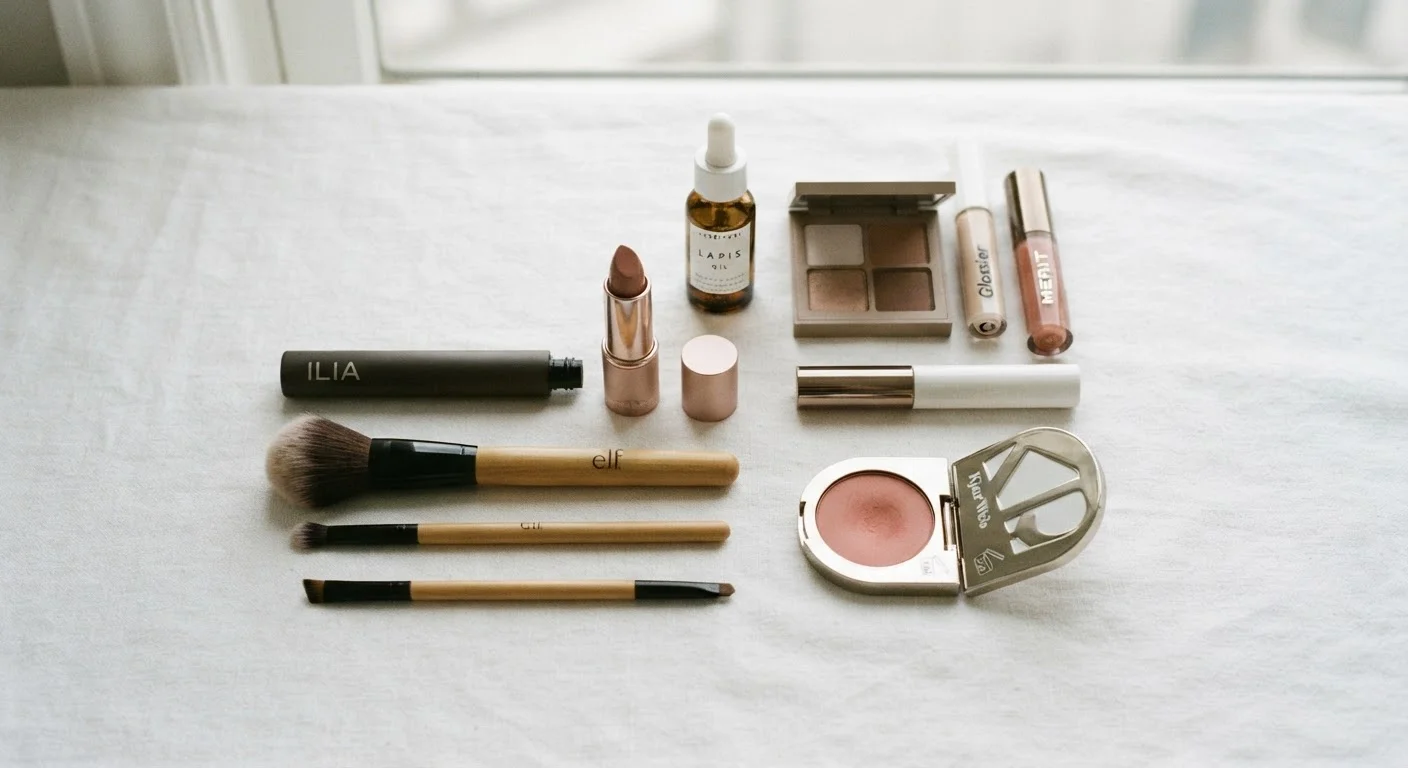
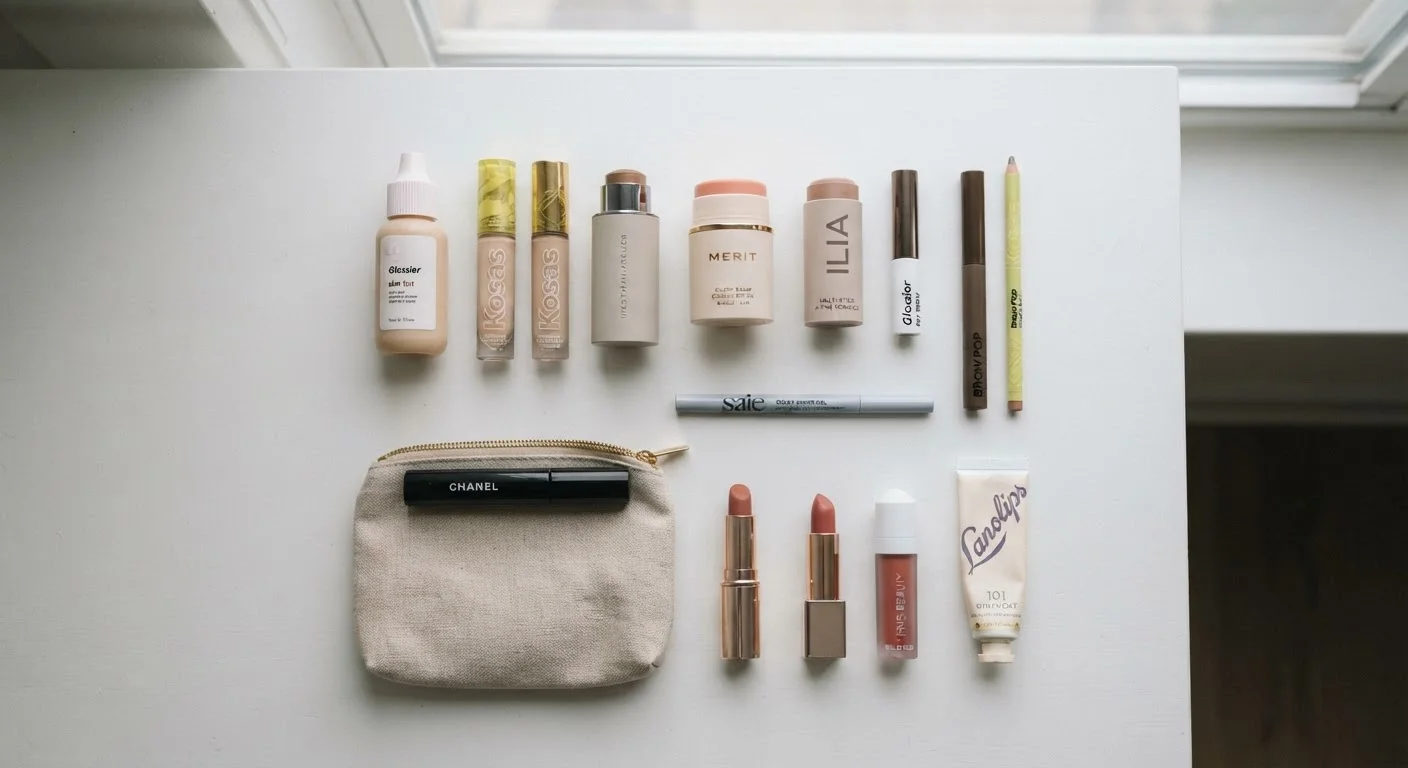
A genuinely useful minimal kit can be built around five product types. These are not the only valid choices, but they address the categories most people care about most days.
Tinted moisturizer
A lightweight product that combines skin hydration with a small amount of pigment to even out skin tone — less coverage than foundation, but faster and more skin-friendly for daily wear.
BB cream
Short for beauty balm or blemish balm. A multi-purpose product that typically combines moisturizer, light coverage, and sometimes SPF into one step.
Non-comedogenic
A label indicating that a formula is designed not to clog pores. Commonly used for products aimed at oily or acne-prone skin, though the term is not regulated by a standard body.
Period-after-opening (PAO)
The small open-jar symbol on cosmetic packaging showing how many months after opening a product remains safe and effective to use.
Coverage
How much a base product conceals or evens out the skin. Sheer coverage lets more of the natural skin show through; full coverage masks more of the skin's original tone and texture.
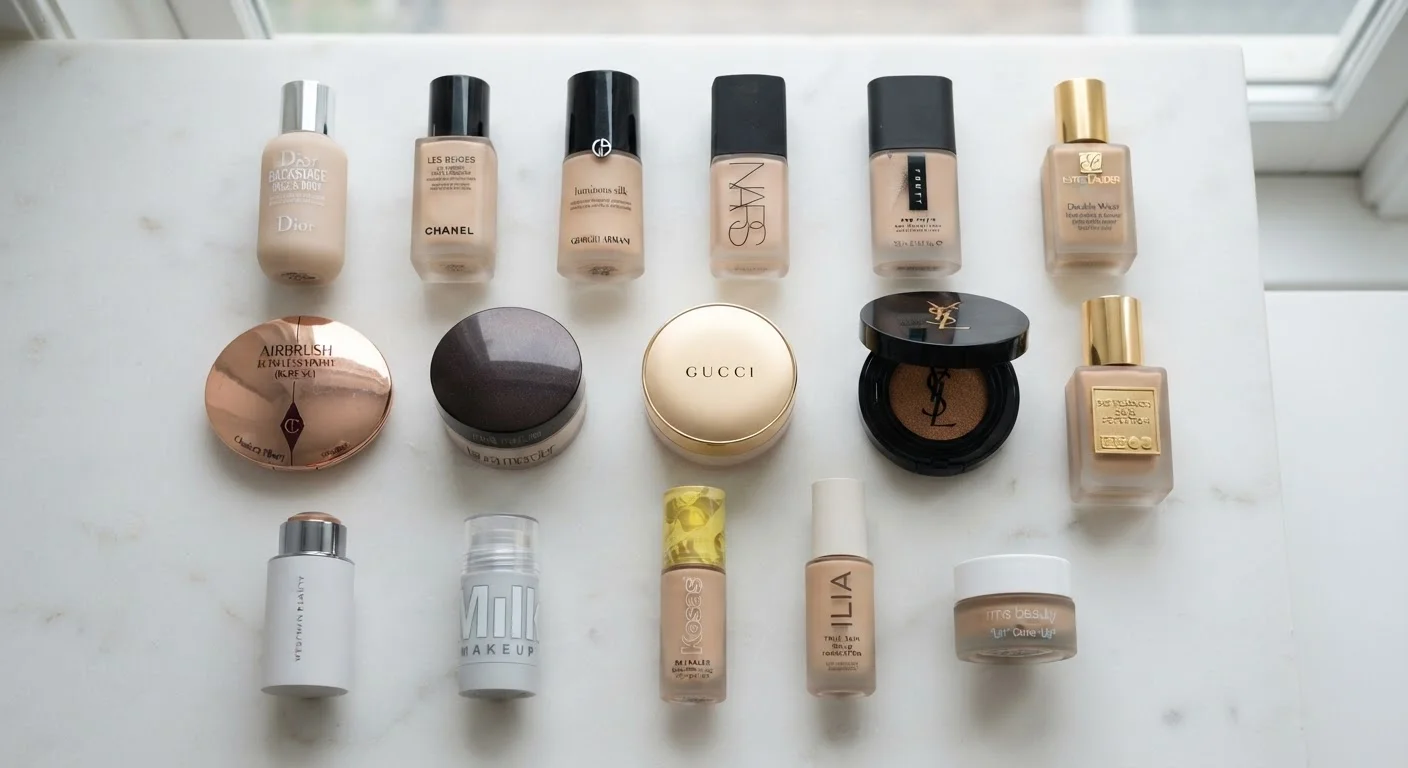
- A skin-evening base. A tinted moisturizer, BB cream, or light-coverage foundation addresses uneven tone without masking the skin. For a deeper breakdown of coverage levels and finishes, the Foundation Basics guide is a useful companion read.
- A concealer. Used only where needed — under eyes, on blemishes, around the nose — concealer gives targeted coverage more efficiently than applying a heavy base everywhere.
- A brow product. Filled-in brows visually anchor the face and read as intentional effort. A brow pencil or tinted gel works for most people.
- A multitasking color product. A cream blush or lip-and-cheek product adds warmth and dimension and eliminates the need for separate lip and cheek steps.
- Mascara. A single coat of mascara opens the eyes more than almost any other step at this product count.
Application Order and Why It Matters
Even with only five products, sequence affects the outcome. The general principle is: start with the most sheer or fluid products and build toward the driest or most pigmented ones.
Begin with your skin base, which goes on after any skincare has fully absorbed. Dry skin benefits from a hydrating moisturizer underneath; for guidance on how skincare layers interact, see the logic behind layering skincare. Concealer follows the base so it can blend into an already-evened surface rather than sitting on bare skin. Brows come next, since they do not interact chemically with the previous steps. The color product — cream blush tapped onto cheeks and pressed onto lips — goes on before powder-based products if you use any. Mascara is always last; it dries quickly and has nowhere to go after application.
Let Skincare Absorb Before Applying Makeup
If you apply foundation immediately after moisturizer, the makeup can slide around and pill. Give skincare products at least two to three minutes to absorb before starting your makeup. This single habit improves blendability and wear time more than most product upgrades.
Adapting the Routine for Your Skin Type
The five-step framework is the same regardless of skin type, but formula choices shift the result significantly.
- Oily skin: A water-based or oil-free base and a lightweight, non-comedogenic concealer reduce the chance of the look breaking down by midday. Setting powder over the T-zone — even a light dusting — is a worthwhile addition if shine is a persistent concern.
- Dry skin: Hydrating or serum-foundation hybrids sit more comfortably and do not cling to dry patches. Avoid heavily matte formulas, which can exaggerate texture.
- Combination skin: A skin-tone-evening base with a natural finish rather than strongly matte or strongly dewy tends to work across zones without requiring two different products.
- Sensitive skin: Fragrance-free and minimal-ingredient formulas reduce the likelihood of irritation. For more on this, see our guide on makeup for sensitive skin.
Common Mistakes That Undermine Simple Routines
A short routine can still go wrong. These are the issues that most reliably cause a minimalist approach to look unfinished rather than intentional.
More Products Do Not Mean Better Coverage
Layering multiple base products on top of each other often creates a heavier, less natural result and can cause faster breakdown throughout the day. If one product is not providing the coverage or finish you want, the answer is usually a different formula, not an additional product on top.
- Skipping skincare prep
- Makeup applied to dry, uneven, or congested skin shows the skin's texture rather than smoothing it. A basic moisturizer is the most cost-effective step you can add to improve makeup application. If your skin seems to react poorly to new products, it may be worth reading through this skincare routine audit to identify the cause.
- Using too much product
- With a light base, a small amount goes further than you expect. Applying too much at once leads to a cakey result that more blending will not fully fix. Start with less and add in thin layers.
- Neglecting tool hygiene
- Dirty brushes and sponges transfer bacteria and old product, which affects both skin health and how cleanly new product applies. Clean tools consistently deliver better results than expensive ones used carelessly.