
What the Skin Barrier Actually Does
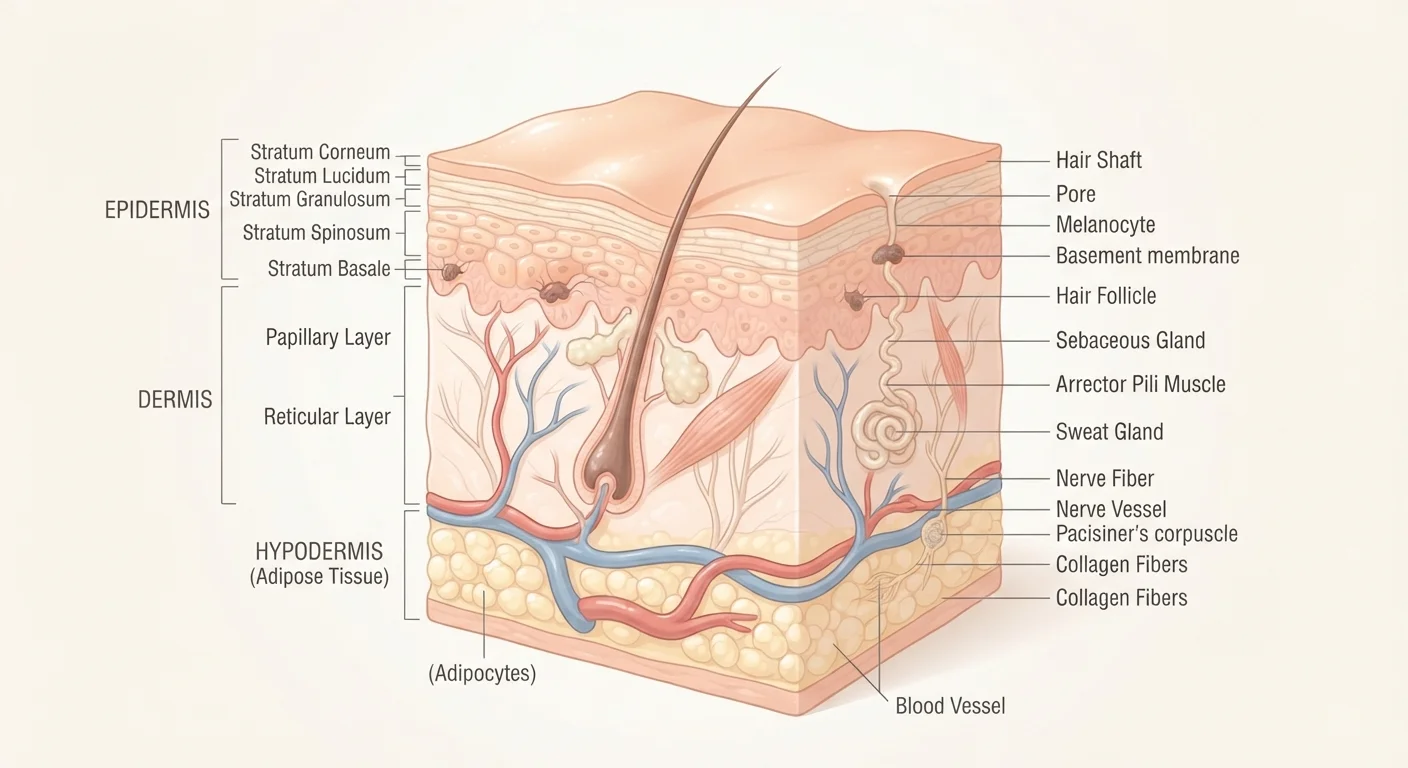
Most skincare conversations focus on what you put onto skin. The skin barrier governs what actually gets through — and what stays out. Its two primary jobs are regulation and defense: it controls transepidermal water loss (TEWL), meaning how much moisture evaporates from skin into the air, and it filters out pathogens, allergens, and pollutants that would otherwise trigger inflammation or infection.
When the barrier is intact, skin holds moisture effectively, responds predictably to products, and maintains a steady surface texture. When it's compromised, that balance breaks down. Water escapes more freely, irritants penetrate more easily, and the inflammatory response kicks in — which is why a damaged barrier often shows up as simultaneous dryness and sensitivity, or as breakouts that seem to come from nowhere.
The lipid matrix between skin cells is not static. It continuously renews itself through a process called desquamation, where older cells shed and newer ones migrate upward. Disrupting that cycle — through aggressive scrubbing, extreme temperatures, or certain skincare ingredients — can stall repair and leave the barrier in a weakened state.
The Barrier Is Not the Same as Skin Type
Skin type — oily, dry, combination, or sensitive — describes your skin's baseline behavior. The skin barrier is a structural system that exists across all skin types. Even oily skin can have a compromised barrier, and even dry skin can have an intact one. Conflating the two often leads people to over-treat oiliness with stripping products, unknowingly damaging the barrier in the process.
How Routines Undermine the Barrier Without Realizing It
The most common source of barrier damage isn't neglect — it's overcorrection. People experiencing breakouts or dullness often reach for stronger actives: higher-concentration acids, retinoids used nightly before the skin has acclimated, physical scrubs used too frequently. Each of these, used without adequate recovery time, strips the lipid layer faster than the skin can rebuild it.
Cleansers are another major factor. Foaming cleansers with sulfates effectively remove oil and debris, but they can also remove the lipids the barrier needs. Using them twice daily on already-dry or sensitive skin accelerates TEWL and leaves the acid mantle less stable. This is partly why product sequencing matters — applying acidic exfoliants directly after a high-pH cleanser compounds the disruption.
Environmental stressors compound routine-related damage. Low-humidity environments, excessive heat, air conditioning, and cold wind all accelerate water loss from the skin surface. Skin that's already barrier-compromised has far less resilience against these external factors.
Simplify Before You Add
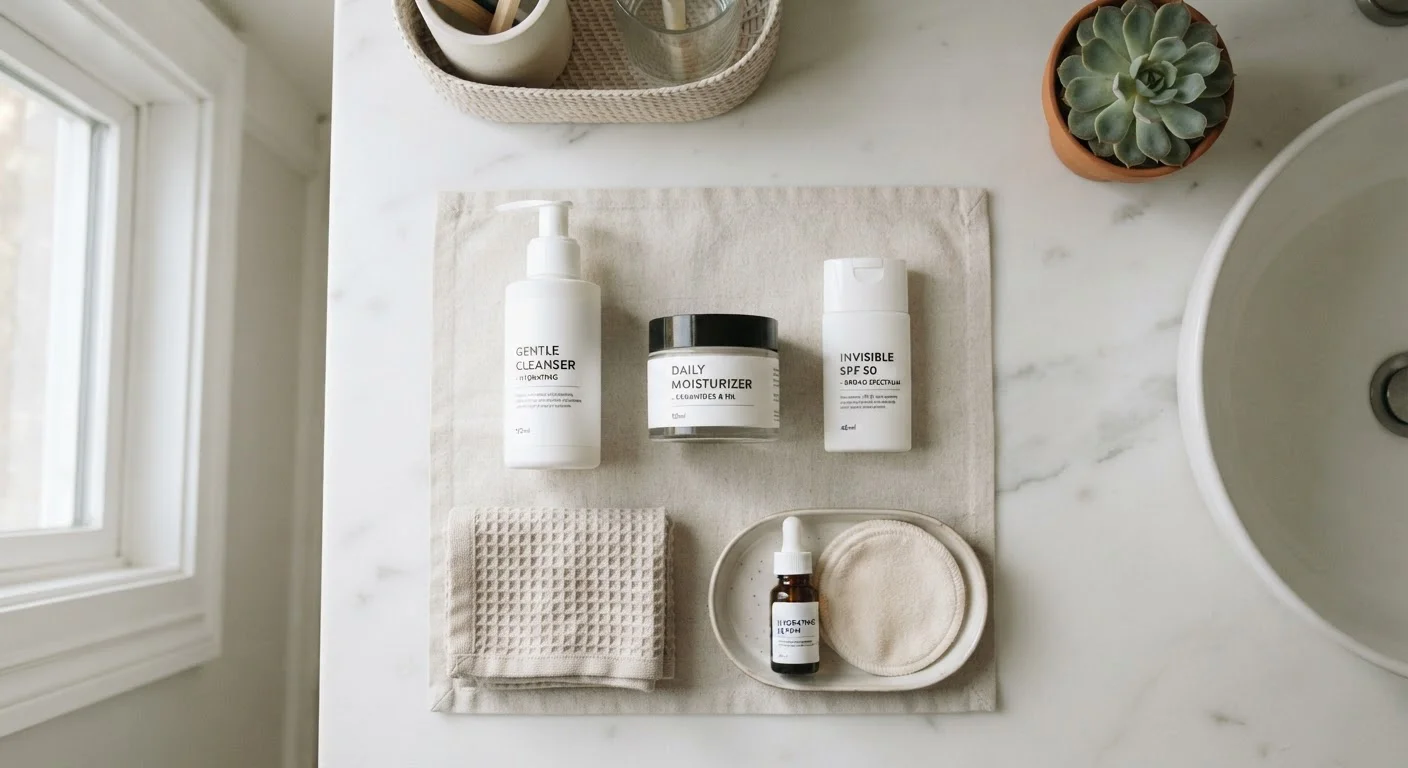
When skin starts reacting unpredictably, the instinct is often to add a new product to address the new symptom. In most cases, the opposite approach works better. Stripping the routine back to cleanser, moisturizer, and SPF for two to four weeks allows the barrier to stabilize before you reintroduce actives one at a time. This also makes it far easier to identify which ingredient was causing the issue.
Reading the Signs of a Compromised Barrier
Barrier damage has a recognizable profile, though it's frequently misread as a different skin problem entirely. The most telling signs include:
- Stinging or burning from products that previously felt neutral — a sign that normally non-penetrating ingredients are now reaching sensitized layers
- Tight, uncomfortable dryness that doesn't resolve after moisturizing
- Flaking alongside oiliness — the skin overproduces sebum to compensate for lost moisture while surface cells dehydrate
- Sudden reactivity to fragrance, alcohol, or active ingredients that caused no prior issue
- Slow-healing blemishes or an increase in breakout frequency without a change in diet or hormones
If several of these are present after introducing new products, it may signal a routine issue rather than a new skin type emerging. A routine audit can help identify which step is creating stress.
~75%
Of the stratum corneum is composed of corneocytes (dead skin cells)
The remaining volume is the lipid matrix — ceramides, cholesterol, and free fatty acids — that holds the structure together and determines barrier permeability.
4.5–5.5
Healthy skin surface pH range
Research published in dermatology literature consistently links disruptions to this acidic pH — from alkaline cleansers or tap water — with impaired barrier enzyme function and increased TEWL.
~28 days
Typical skin cell turnover cycle in adults
This cycle lengthens with age and can be disrupted by aggressive exfoliation, meaning the barrier's ability to self-repair slows when the renewal process is repeatedly interrupted.
Supporting the Barrier Through a Routine Built Around It
Barrier repair follows a straightforward principle: reduce disruption, restore lipids, and give the skin time. Practically, that means temporarily simplifying the routine — cutting actives, switching to a gentle low-pH cleanser, and prioritizing a moisturizer formulated with ceramides, cholesterol, and fatty acids in combination, which research suggests supports repair more effectively than any of these lipids used alone.
Building in this foundation before adding actives is the logic behind a ground-up morning routine. Starting with barrier-compatible basics and adding complexity only when the skin is stable reduces the guesswork of what's causing a reaction. The same reasoning applies to evenings — nighttime repair works best when the barrier isn't simultaneously being stressed by strong actives.
It's also worth noting that certain ingredient combinations can compromise the barrier even when each product is individually gentle — pairing low-pH acids with niacinamide, or using retinoids alongside physical exfoliants, are examples worth understanding before layering actives back into a recovering routine.
This article is for general informational purposes only and is not a substitute for advice from a qualified dermatologist or healthcare professional. If you are experiencing persistent skin concerns, consult a licensed professional.