
Why Sensitive Skin Reacts to Makeup
Sensitive skin isn't a single clinical diagnosis — it's a broad term describing skin that reacts more readily to environmental triggers, products, or friction. Reactions can include redness, stinging, itching, or breakouts, and they don't always appear immediately after applying a product. Sometimes irritation builds over days of repeated exposure.
The makeup category presents a particular challenge because products are designed to stay on the face for hours, giving ingredients extended contact time with skin. Factors like formula pH, preservative types, and even product texture all influence how skin responds. Understanding what tends to trigger reactions — rather than assuming all makeup is off-limits — is a more useful starting point.
Sensitive Skin Is Not One-Size-Fits-All
What irritates one person's skin may cause no reaction at all in someone else's. Sensitivity patterns can also change over time in response to hormonal shifts, climate, stress, or changes in your skincare routine. Keeping a simple log of new products and any accompanying reactions can help you identify your personal triggers more efficiently than relying on general guidance alone.
Ingredient Patterns Worth Knowing
No single ingredient causes problems for everyone, but certain categories appear consistently in reports of cosmetic sensitivity. Fragrance — listed as "fragrance," "parfum," or even natural sources like essential oils — is widely cited by dermatologists as a leading skin sensitizer. Products labeled "fragrance-free" are distinct from "unscented," which can still contain masking agents.
Preservatives such as certain parabens, formaldehyde-releasing compounds, and methylisothiazolinone (MI) have been associated with contact dermatitis in some people, though reactions vary significantly by individual. Alcohol denat. (denatured alcohol) at high concentrations can compromise the skin's moisture barrier over time, while synthetic dyes occasionally cause sensitivity, particularly around the eyes.
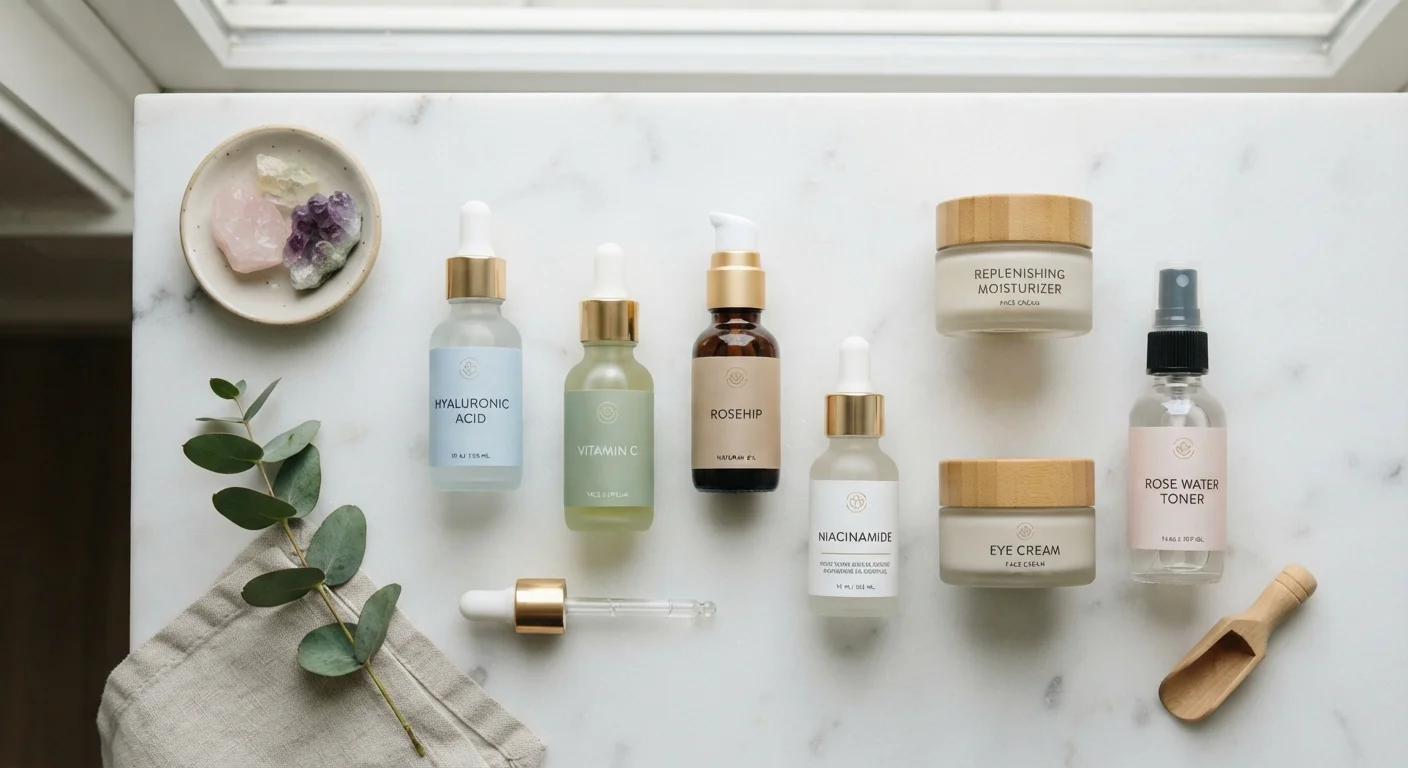
On the other side, formulas built around skin-barrier-supporting ingredients — like ceramides, niacinamide, or hyaluronic acid — tend to sit more comfortably on reactive skin, though individual responses still vary. Our guide on skincare ingredients that don't play well together covers how some actives interact in ways that may increase sensitivity even before makeup enters the picture.
Look Beyond 'Hypoallergenic' Labeling
Terms like 'hypoallergenic,' 'dermatologist-tested,' and 'for sensitive skin' are not regulated by the FDA in the United States, so they carry no standardized meaning. A product bearing these labels may still contain fragrance, preservatives, or other ingredients associated with skin reactions. Reading the full ingredient list remains a more reliable approach than trusting label claims alone.
Best Practices for Sensitive Skin Makeup
Applying a thoughtful set of habits alongside considered product choices gives sensitive skin the best chance of staying calm throughout the day.
Prioritize short, readable ingredient lists when selecting makeup products.
Fewer ingredients means fewer potential triggers. Products with long, complex ingredient decks increase the statistical likelihood that at least one component will cause a reaction in reactive skin.
Choose fragrance-free formulas over unscented or naturally scented alternatives.
Fragrance is one of the most common cosmetic sensitizers. Natural fragrance sources — including lavender, citrus, and rose — contain compounds that can trigger reactions just as synthetic fragrance can.
Introduce only one new product at a time, spaced at least a week apart.
Adding multiple products simultaneously makes it nearly impossible to identify which one caused a reaction. A staggered approach preserves the ability to isolate triggers.
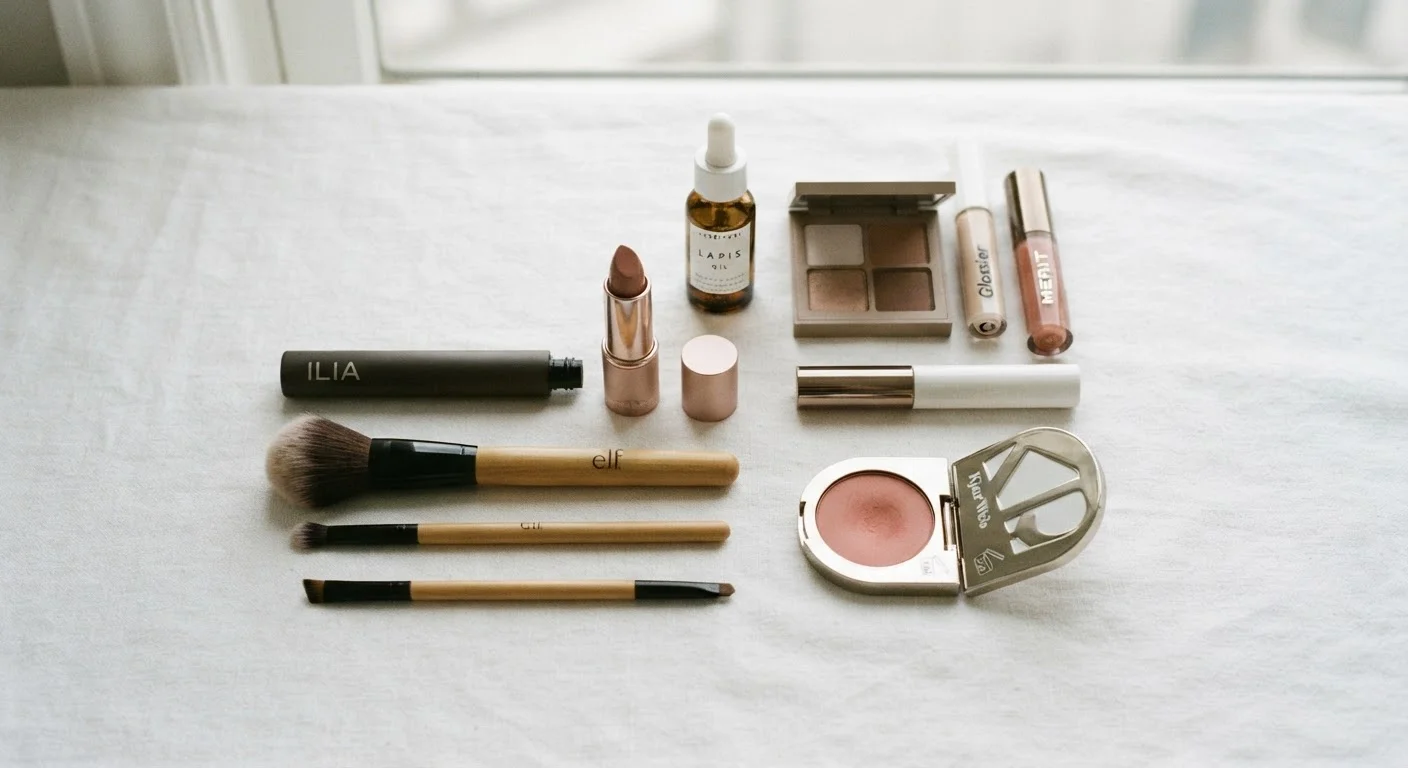
Apply makeup with clean, soft tools using pressing or stippling motions rather than rubbing.
Friction during application can irritate an already reactive skin barrier, compounding any ingredient-based sensitivity. Gentler technique reduces this mechanical stress.
Remove makeup thoroughly each evening using a gentle, low-friction method.
Leaving makeup on overnight extends ingredient contact time and can contribute to congestion and barrier disruption. The removal process itself should not add mechanical irritation.
Application, Removal, and Everyday Habits
How you apply and remove makeup affects your skin as much as what's in the formula. Heavy rubbing during application — especially around the eyes or on areas prone to redness — can physically irritate the barrier even when the product itself is gentle. Pressing or stippling motions with clean fingertips or a soft brush distributes product with less friction.
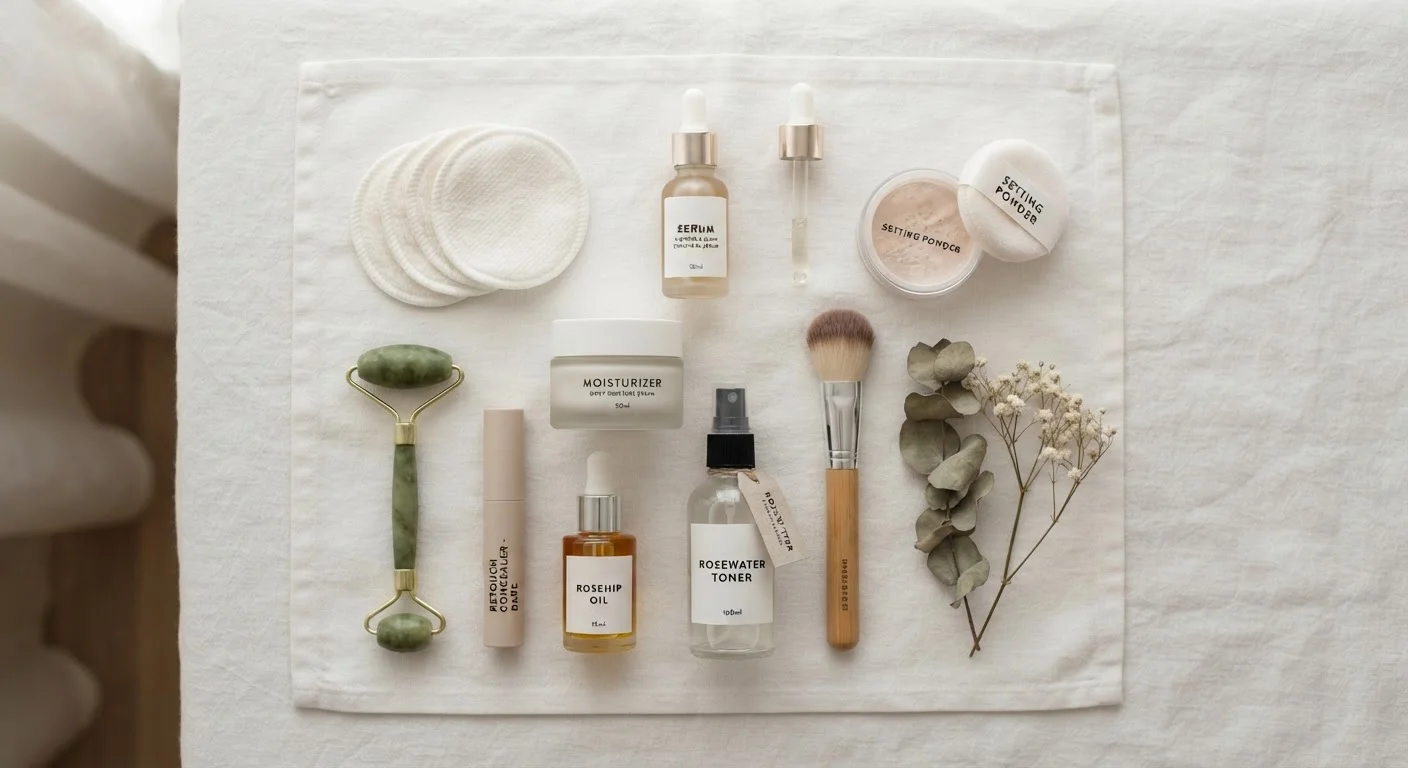
Removal deserves equal care. Leaving makeup on overnight increases the duration of ingredient contact and can clog pores. At the same time, over-scrubbing to remove it causes mechanical irritation. Micellar water applied with light, sweeping motions — or a gentle cleansing balm massaged then rinsed — tends to dissolve makeup without requiring significant friction.
Tool hygiene is a frequently overlooked variable. Brushes and sponges accumulate bacteria, oils, and old product that transfer onto skin at every use. Washing tools regularly reduces this load. See our article on makeup expiration and hygiene for a practical breakdown of what hygiene steps matter most.
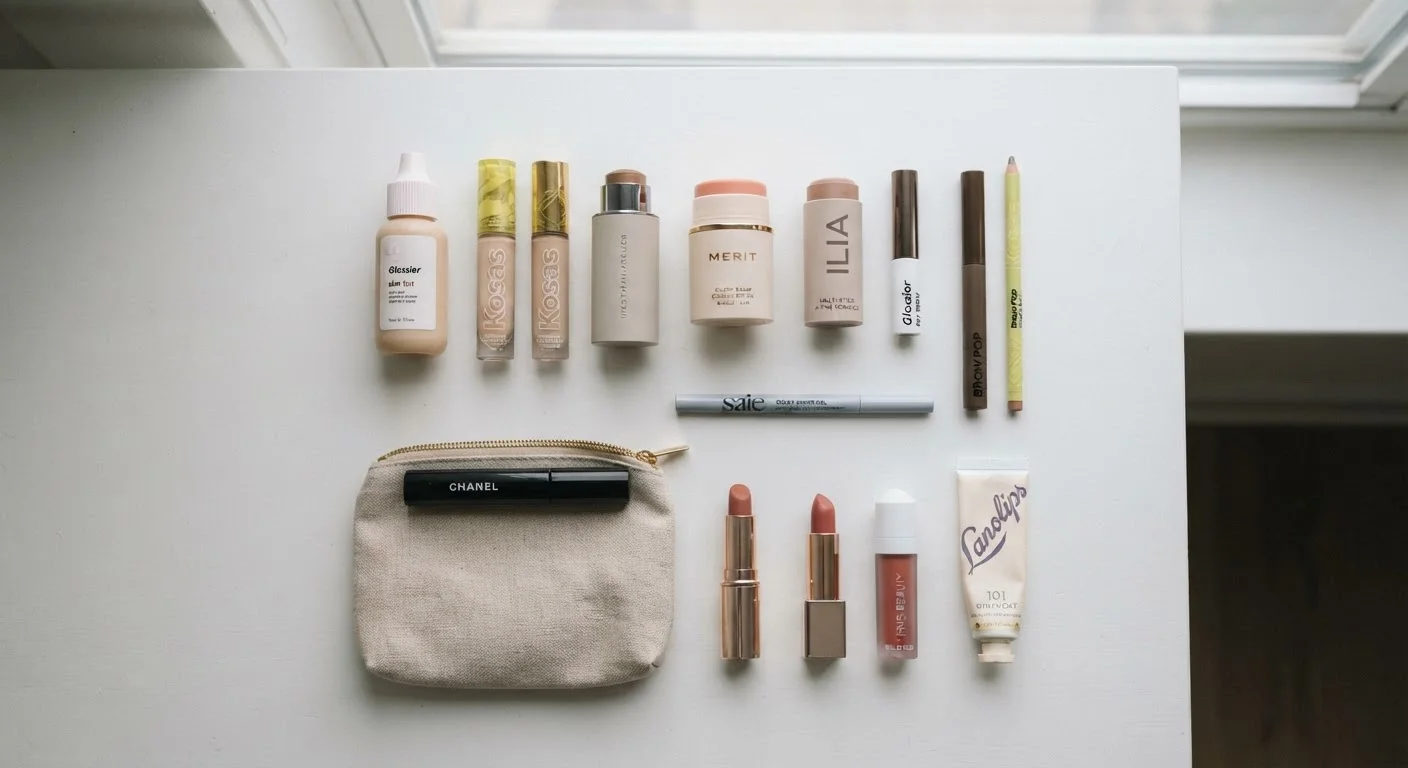
If you're working to reduce the overall complexity of your routine, a minimalist makeup approach can also limit the number of ingredients your skin encounters daily — a meaningful benefit when tracking potential triggers.
Choosing and Testing New Products
Before committing a new formula to full-face use, patch testing is a straightforward protective habit. Apply a small amount to a low-risk area — the inner wrist or behind the ear — and observe for 24 to 48 hours. This won't catch every possible reaction, but it can flag obvious irritants before they affect more visible or sensitive facial areas.
Reading ingredient labels before purchasing is more useful than relying on marketing terms like "hypoallergenic" or "for sensitive skin," which are not regulated claims in the United States and have no standardized definition. Shorter ingredient lists mean fewer variables, which can make it easier to identify what caused a reaction if one occurs.
When exploring foundations specifically, understanding how coverage level and finish interact with your skin type can also help you narrow down formulas worth testing. Our foundation basics guide covers what product labels actually mean so you can make more informed comparisons.
This article is for general informational purposes only and does not constitute medical or dermatological advice. If you experience persistent or severe skin reactions, consult a qualified dermatologist or healthcare provider.