
What SPF Actually Measures
The Sun Protection Factor (SPF) number on a sunscreen label measures how well the product filters UVB rays — the type of ultraviolet radiation most associated with sunburn. Contrary to a common misconception, SPF does not indicate how long you can stay in the sun safely; that timing depends on your individual skin type, the intensity of the sun, and how much product you apply.
What the number does tell you is the fraction of UVB radiation that reaches your skin. SPF 30 filters out roughly 97% of UVB rays; SPF 50 filters approximately 98%; SPF 100 filters about 99%. The differences between higher numbers are mathematically real but practically small. Dermatology organizations generally recommend SPF 30 as a minimum for daily use, with SPF 50 or higher suggested for prolonged outdoor exposure.
Critically, SPF says nothing about UVA protection. UVA rays penetrate deeper into the skin and are linked to premature aging and long-term skin damage. This is where two other label terms become essential. Just as decoding ingredient labels matters across many categories — from hair care products to nutrition facts panels — sunscreen labels reward a little label literacy.
| SPF 30 UVB filtration | ~97% (U.S. Food and Drug Administration (FDA) sunscreen guidance) |
| SPF 50 UVB filtration | ~98% (U.S. Food and Drug Administration (FDA) sunscreen guidance) |
| Broad Spectrum regulation | FDA-regulated (US) (FDA Sunscreen Final Rule) |
| PA rating origin | Japan (JCIA standard) (Japan Cosmetic Industry Association) |
| Water resistance options (FDA) | 40 or 80 minutes only (FDA Sunscreen Labeling Rule) |
| Minimum recommended SPF (daily use) | SPF 30 (American Academy of Dermatology general guidance) |
Broad Spectrum: UVA Coverage Explained
In the United States, the "Broad Spectrum" designation on a sunscreen label is regulated by the FDA. It means the product has passed a standardized test confirming it provides protection against both UVA and UVB rays. Without this label, a product may block UVB (and prevent sunburn) while leaving skin largely unprotected from UVA exposure.
The FDA requires that a broad-spectrum product's UVA protection be proportional to its SPF. In practical terms, a broad-spectrum SPF 30 provides more UVA coverage than a broad-spectrum SPF 15, even though both carry the same designation. This is why checking both the SPF number and the broad-spectrum claim together gives you a more complete picture than either term alone.
US vs. International Label Differences
Sunscreen regulation varies by country. In the US, sunscreens are regulated as over-the-counter drugs by the FDA, which governs approved active ingredients and permitted label claims. In the EU, Japan, and South Korea, different ingredient lists and rating systems apply. A product purchased abroad or imported may carry ratings or ingredients not reviewed under US standards — something worth keeping in mind when comparing labels across brands.
If a sunscreen label does not say "Broad Spectrum," it is only confirmed to filter UVB rays. For complete daily sun protection, the broad-spectrum designation is considered a baseline requirement by most dermatology guidelines.
PA Ratings: The UVA Scale from Asia
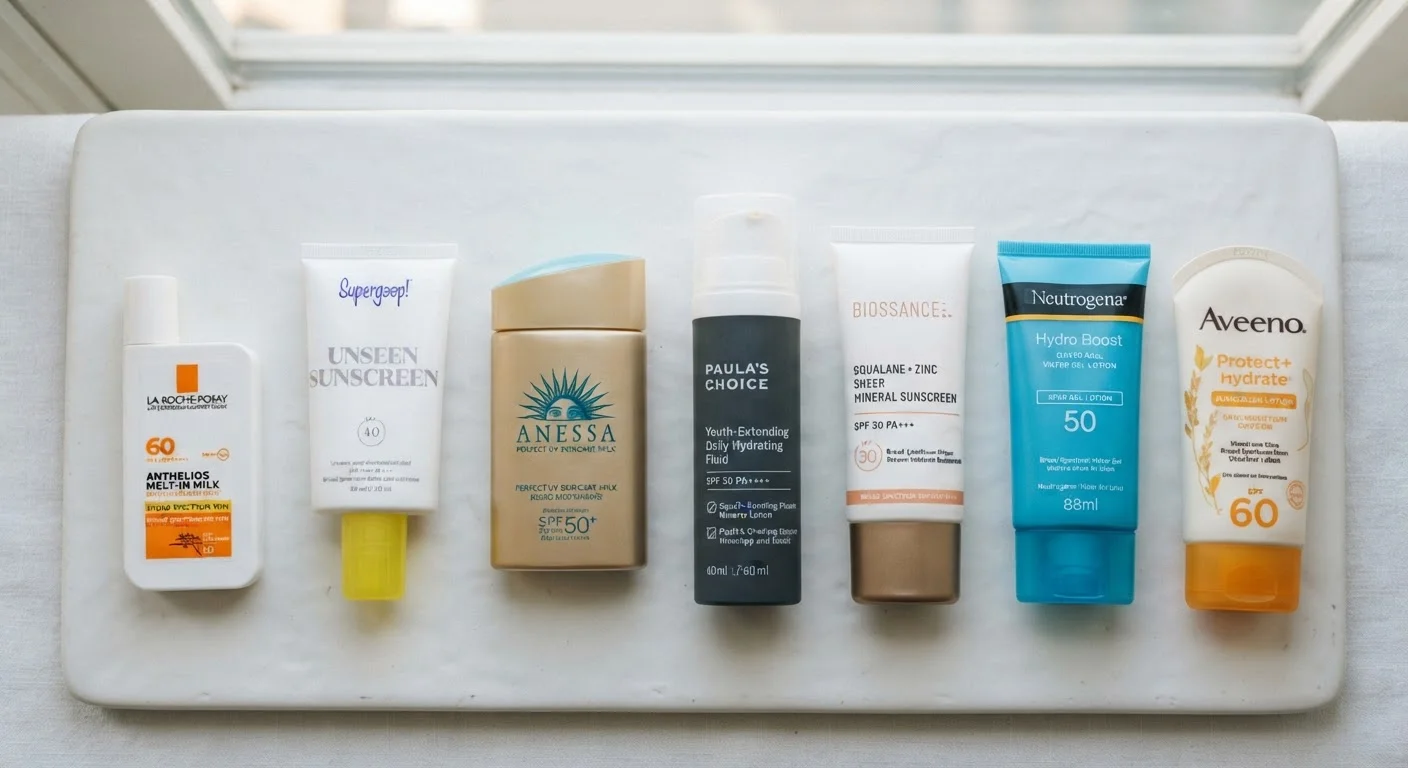
If you purchase sunscreen from Japanese, Korean, or other Asian beauty brands — or see imported products in US stores — you may encounter a PA rating printed alongside the SPF number. The PA (Protection Grade of UVA) system was developed in Japan and uses plus signs to communicate UVA protection strength:
- PA+ — Some UVA protection
- PA++ — Moderate UVA protection
- PA+++ — High UVA protection
- PA++++ — Extremely high UVA protection
The PA system is based on a measurement called the Persistent Pigment Darkening (PPD) factor, which specifically tests UVA response. It is more granular about UVA strength than the US broad-spectrum designation alone. Many consumers who prioritize anti-aging sun care look for PA+++ or PA++++ when selecting a sunscreen. The US and Asian rating systems are not interchangeable, but products can carry both a US broad-spectrum claim and a PA rating simultaneously.
SPF (Sun Protection Factor)
A standardized measure of how well a sunscreen filters UVB rays, the type most responsible for sunburn. An SPF 30 product filters approximately 97% of UVB radiation under controlled test conditions.
UVA Rays
Long-wave ultraviolet radiation that penetrates deeper into skin layers than UVB. UVA exposure is associated with premature skin aging and contributes to long-term skin damage, even without causing visible sunburn.
UVB Rays
Short-wave ultraviolet radiation that causes sunburn and is the primary measure targeted by SPF testing. UVB intensity varies with season, time of day, and altitude.
Broad Spectrum
An FDA-regulated label claim indicating that a sunscreen provides protection against both UVA and UVB rays, with UVA protection proportional to the stated SPF value.
PA Rating
A UVA protection grading system developed in Japan, expressed as PA+ through PA++++. More plus signs indicate greater UVA protection, based on the Persistent Pigment Darkening (PPD) measurement method.
Mineral Sunscreen
A sunscreen formulated with physical UV-blocking ingredients — typically zinc oxide, titanium dioxide, or both — that sit on the skin's surface and deflect or scatter UV rays.
Chemical Sunscreen
A sunscreen formulated with organic (carbon-based) UV-absorbing ingredients such as avobenzone or octinoxate. These ingredients absorb UV radiation and convert it to heat, which is then released from the skin.
Water Resistance
An FDA-regulated claim indicating that a sunscreen maintains its stated SPF after either 40 or 80 minutes of water exposure. No sunscreen is waterproof; reapplication is always required after extended water activity.
Understanding how to read labels is a transferable skill. The same analytical approach applies whether you are reviewing foundation coverage and finish terms or comparing UV protection claims on sunscreen packaging.
Putting It All Together: A Label Reading Checklist
When you pick up a sunscreen, the label is giving you a layered set of information. Here is a straightforward way to read it:
- Find the SPF number. For everyday use, look for SPF 30 or higher. For extended time outdoors, SPF 50 or higher is widely recommended.
- Confirm "Broad Spectrum." This is the FDA-regulated term that ensures UVA coverage proportional to the SPF value. It is a non-negotiable for full-spectrum protection.
- Check for a PA rating if UVA depth matters to you. PA+++ or PA++++ indicates strong UVA filtering — especially relevant for those concerned about photoaging.
- Note the formulation type. Labels will indicate whether active ingredients are chemical filters (such as avobenzone or octinoxate) or mineral filters (zinc oxide, titanium dioxide), which behave differently on skin and have different application considerations.
No rating system removes the need to reapply sunscreen every two hours during outdoor activities, or after swimming and sweating. Labels also specify whether a product is water-resistant and for how long (40 or 80 minutes are the only two water-resistance claims permitted under FDA rules).
This article is for general informational purposes only and does not constitute medical or dermatological advice. Consult a qualified healthcare professional for guidance on skin care appropriate to your individual needs.