
What Boondocking Actually Means
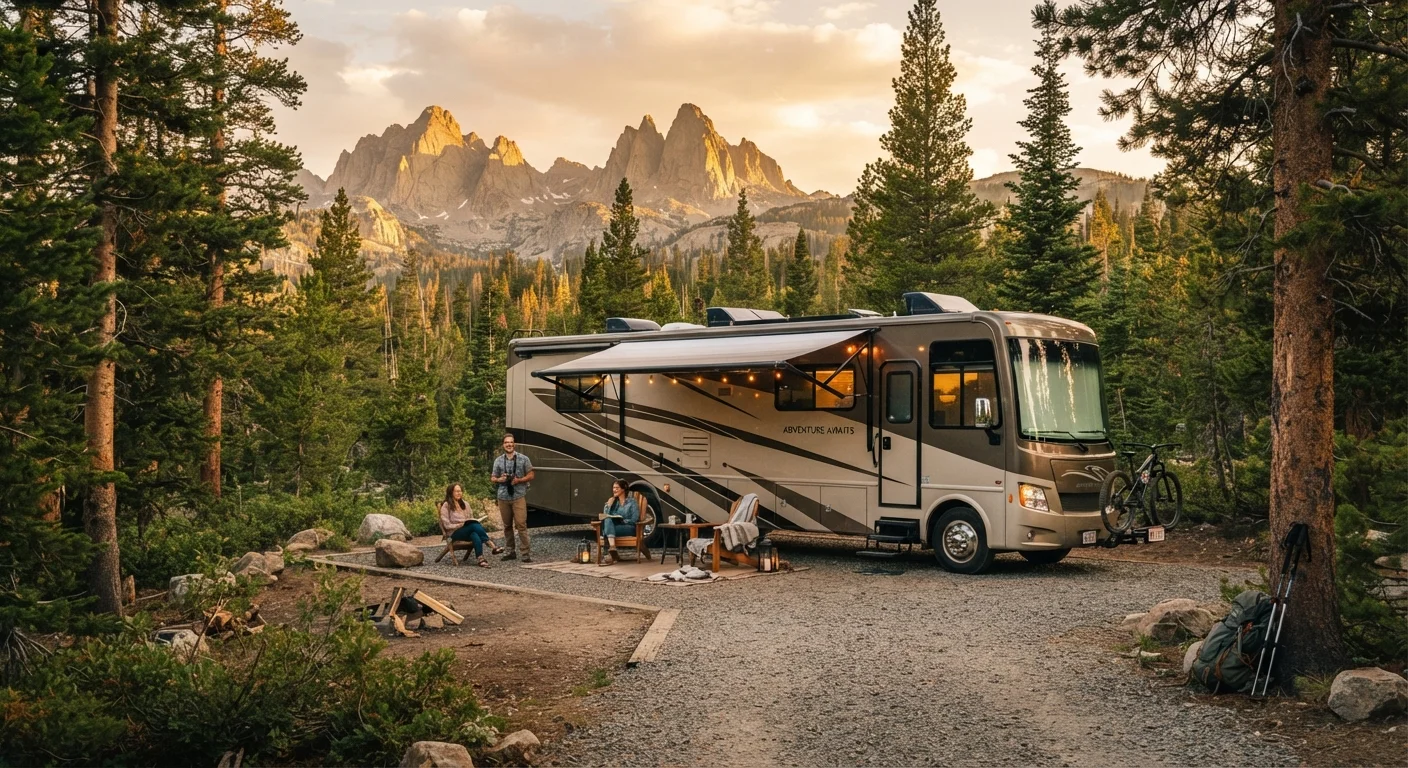
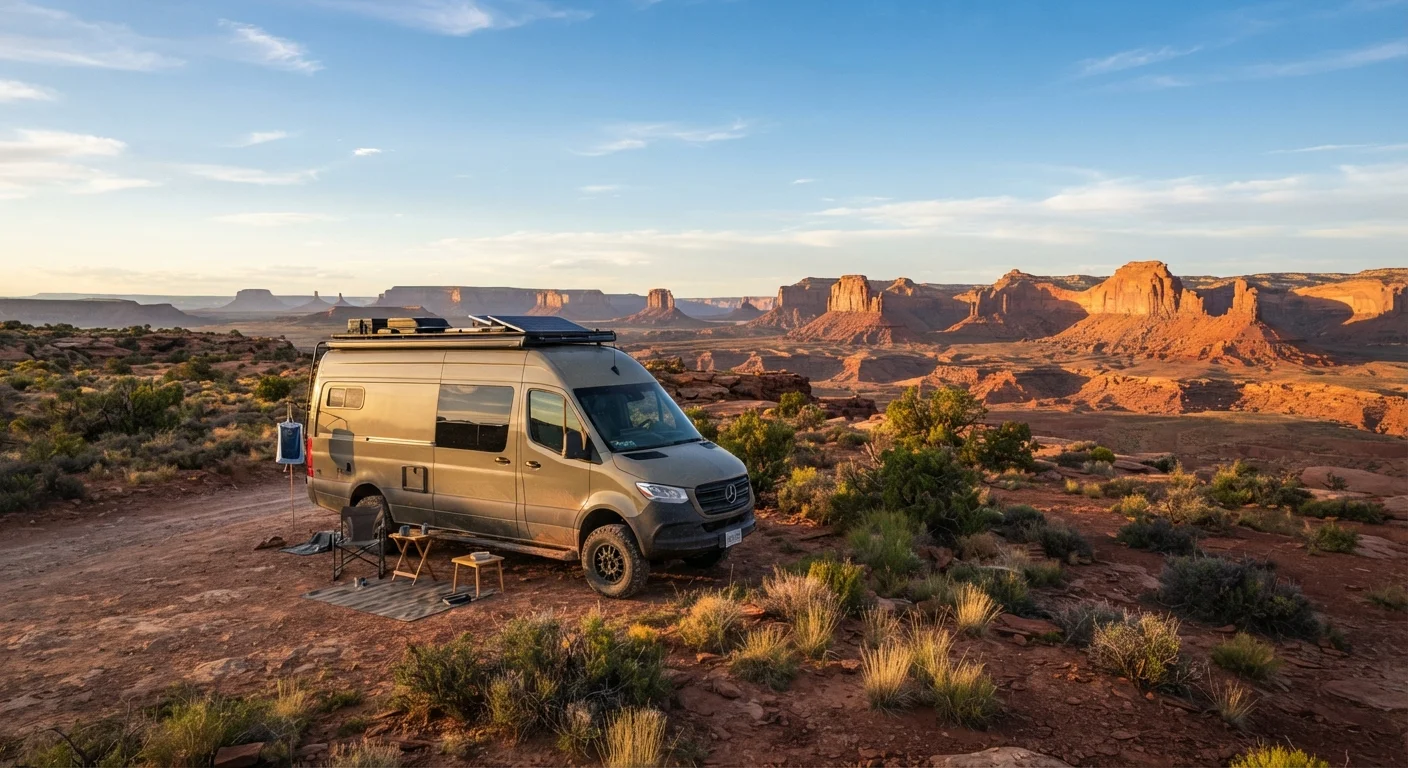
Boondocking - sometimes called dispersed camping or dry camping - refers to staying overnight in an RV or camper without connecting to any external utility: no electrical shore power, no water hookup, no sewer connection. You carry everything you need with you and leave having consumed only what your rig provides.
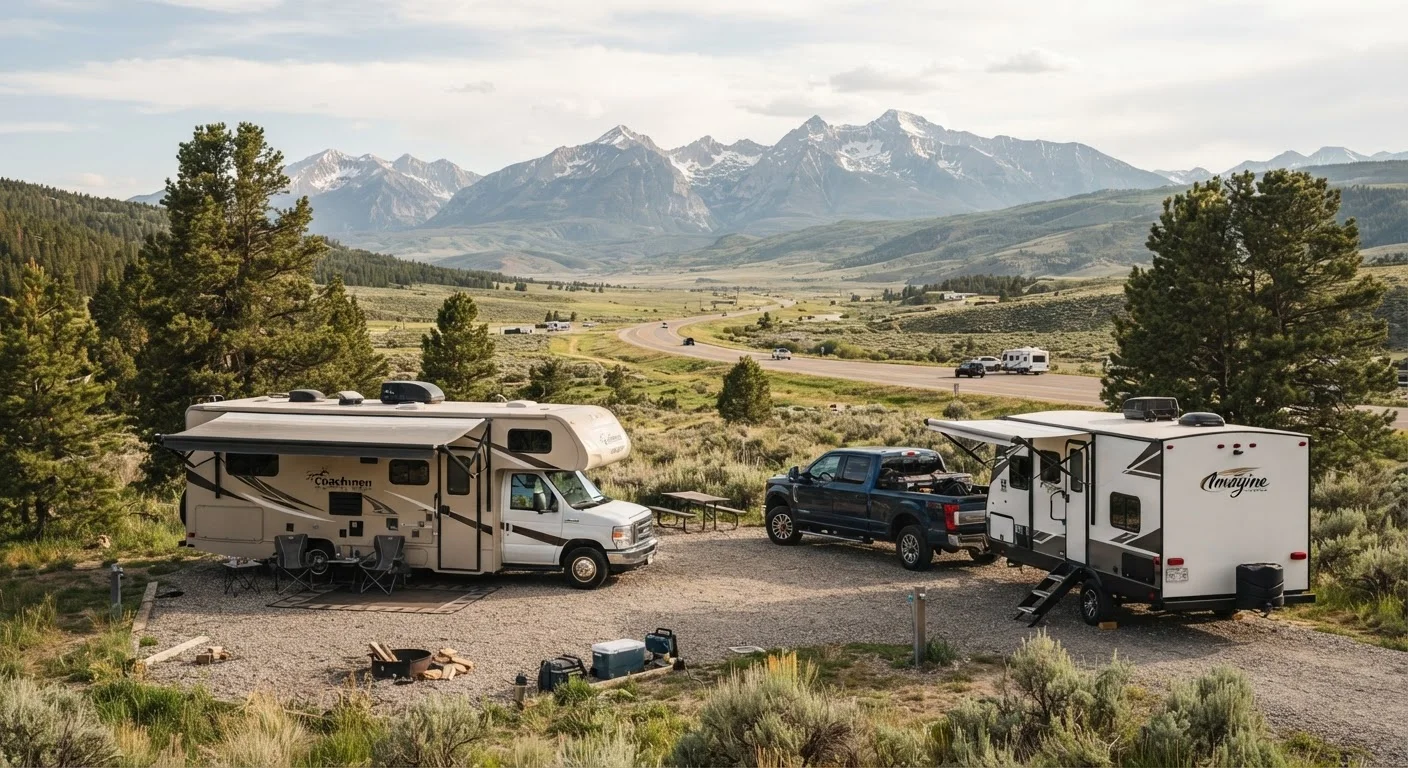
The term is most often associated with camping on public land managed by agencies like the Bureau of Land Management (BLM) or the U.S. Forest Service. It can also describe overnight parking in a parking lot (sometimes called urban boondocking), but for most newcomers the appeal is remote, scenery-rich solitude. If you're still evaluating whether RV travel suits you at all, the primer for first-time RV buyers is a useful starting point before diving into off-grid specifics.
Boondocking
Camping in an RV or camper without any external utility connections - no shore power, water, or sewer hookup. The rig operates entirely on its own stored resources.
Dispersed camping
Camping on public land outside of designated developed campgrounds, typically at no cost and with no facilities. The term used by land management agencies for what RVers often call boondocking.
Gray water
Wastewater from sinks and showers that collects in a holding tank. It must be retained until you reach a proper dump station - it cannot be discharged on the ground.
Black water
Wastewater from the toilet, held in a separate sealed tank. It requires proper disposal at a dump station and should never be released outdoors.
Shore power
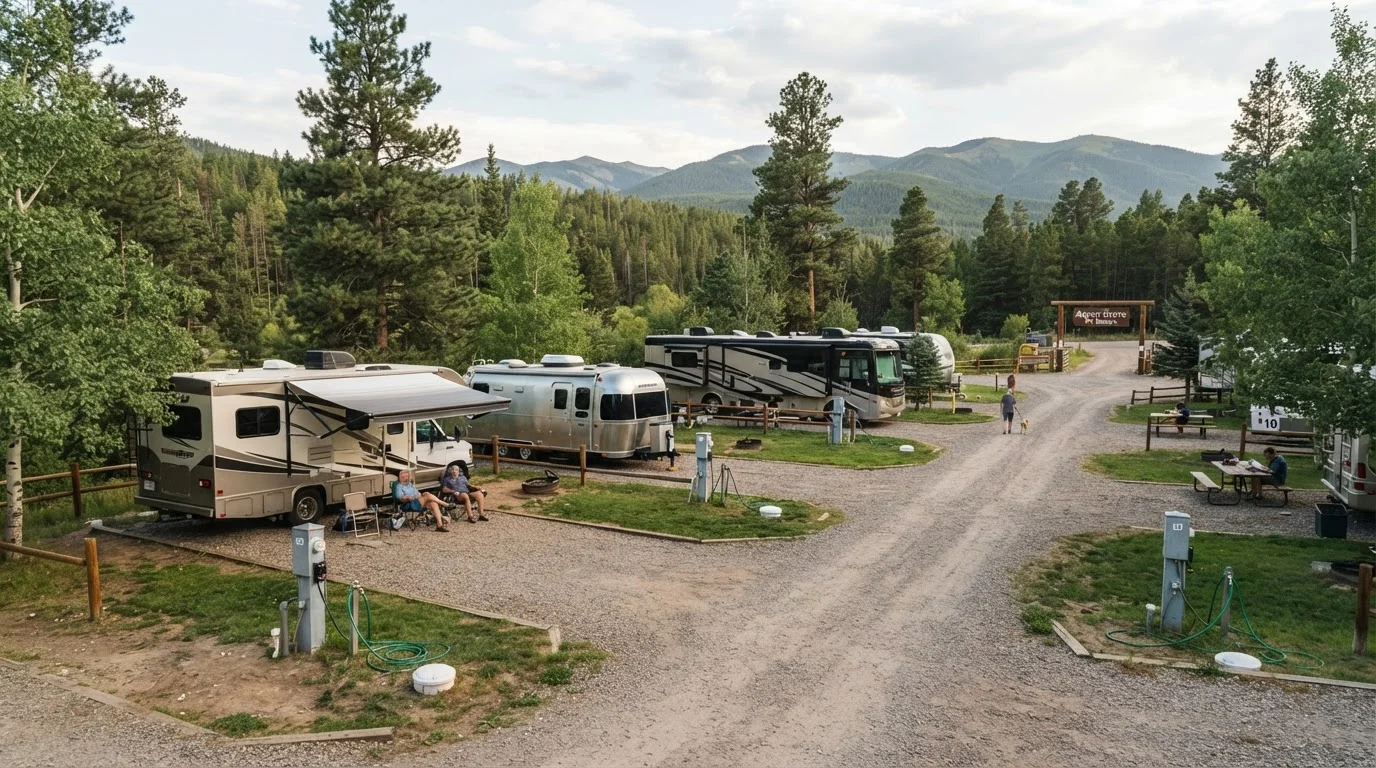
Electrical power drawn from a campground's external outlet connection, typically 30-amp or 50-amp service. When boondocking, shore power is unavailable.
BLM land
Land managed by the U.S. Bureau of Land Management. Much of it is open to free dispersed camping, subject to stay limits and local rules.
Inverter generator
A portable generator that produces clean, stable power suitable for sensitive electronics. Quieter than conventional generators and commonly used as backup power while boondocking.
Leave No Trace
A set of outdoor ethics principles designed to minimize human impact on natural environments - including packing out waste, staying on established paths, and leaving sites as found.
Where You Can Legally Camp Off-Grid
The United States has hundreds of millions of acres of publicly managed land where dispersed camping is permitted. The two most accessible systems are BLM land and National Forests. Both generally allow free camping away from developed sites, subject to a standard 14-consecutive-day stay limit per location.
Finding legal spots requires some research. The BLM's official website and the Motor Vehicle Use Maps (MVUMs) published by the Forest Service show which roads are open to motorized vehicles and where camping is allowed. Apps built around public land data can supplement official sources, but always verify rules with the relevant field office - regulations vary significantly by district and can change seasonally.
State trust lands, county land, and some Army Corps of Engineer sites also permit camping in certain conditions. What you should never assume: that any open-looking land is fair game. Private land, tribal land, and many state park systems have strict rules against dispersed camping.
Use the BLM's Official Resources First
Before relying on third-party apps, consult the BLM's official website and the specific field office for your destination. Rules around fire restrictions, permit requirements, and vehicle access change regularly. Calling the field office directly often yields the most current and accurate information about dispersed camping in that area.
Power, Water, and Waste: Managing Your Resources
Off-grid camping lives or dies on three resources: electricity, fresh water, and waste capacity. Understanding all three before your first trip prevents frustrating early exits.
Power
Without shore power, your batteries are your only electrical source (aside from a generator). Solar panels recharge batteries during daylight and are the most common boondocking upgrade. A modest system in the 200-400 watt range, paired with a capable battery bank, handles lighting, fans, phone and laptop charging, and a 12-volt refrigerator. Propane handles cooking and water heating for most rigs, which significantly reduces electrical demand.
Fresh Water
Your fresh water tank is finite. Experienced boondockers use low-flow aerators, take short navy showers, and wash dishes in small basins to stretch a tank for several days. Knowing your tank's capacity and your daily household usage is essential planning math.
Gray and Black Tanks
Everything that drains - sinks, showers, toilets - fills your holding tanks. Gray water (sinks and shower) typically accumulates faster than black (toilet). Unlike campgrounds with full hookups, you must hold all waste until you reach a dump station. This is covered in contrast with hookup camping in our guide to campground hookup connections.
Essential Gear and Habits for First-Timers
Gear matters, but habits matter more. The most common reason boondocking trips end early is running out of water or power - problems solved more by behavioral discipline than expensive upgrades.
- Portable battery bank or solar kit: Even a small solar panel and AGM or lithium battery can meaningfully extend a stay.
- Water-conserving fixtures: Low-flow faucet aerators and a hand-pump dish sprayer dramatically reduce consumption.
- Generator (optional): A quiet inverter generator provides reliable backup power on cloudy days, though generator etiquette on public land varies.
- Paper maps and downloaded offline maps: Cell service is often absent at dispersed sites; navigation and land boundary data should be pre-loaded.
- First-aid kit and emergency supplies: Distance from services means self-reliance for minor medical needs.
Your choice of rig also shapes what's realistic. The motorhome vs. towable comparison explores how each setup affects day-to-day practicality, including off-grid flexibility.
Common Mistakes to Avoid
First-time boondockers frequently encounter the same set of problems. Most are preventable with preparation.
Don't Assume Remoteness Means No Rules
Many first-timers assume that being miles from the nearest ranger station means oversight is absent. Land management agencies do patrol dispersed areas, and violations - illegal dumping, campfire bans, overstaying limits - carry real fines. More importantly, irresponsible use leads to area closures that affect all future campers.
Overestimating tank and battery capacity. Manufacturer-listed capacities assume ideal conditions. Budget for roughly 70-80% of rated capacity as your practical ceiling.
Skipping the pre-trip site research. Arriving at a site only to find it closed for fire season, reserved for permit holders, or inaccessible to your rig's wheelbase wastes significant travel time. Download offline maps, check the relevant land management agency's website, and note alternate sites.
Violating Leave No Trace principles. Dispersed camping is a privilege, not a right. Driving off established tracks damages vegetation and erodes soil. Burning or burying waste is prohibited. Pack out everything you brought in.
For a broader look at how off-grid travel fits into the full RV lifestyle - including its real constraints - see our honest assessment of RV living trade-offs. Going in clear-eyed about both the rewards and the demands makes for a far more satisfying first boondocking experience.