
The Three Types of Campground Hookups
When you reserve an RV site, the listing will typically describe it as full hookup, partial hookup, or no hookup (dry camping). Each tier represents a different combination of three utility services: electricity, water, and sewer. Understanding what each one does - and what your specific rig needs - is foundational knowledge for any RV traveler.
This article is part of a broader introduction to RV travel. If you're just getting started, the RV primer for first-timers covers how hookup access factors into the larger picture of RV ownership.
30 amp
Standard service for most travel trailers
The majority of smaller RVs and travel trailers sold in the U.S. are wired for 30-amp electrical service, according to RV industry specifications.
50 amp
Required by large Class A motorhomes
Larger motorhomes with multiple air conditioning units and residential appliances typically require 50-amp service to operate all systems simultaneously.
3
Utility types that define a full hookup site
Electric, water, and sewer - all three must be present at the site for it to qualify as a full hookup in standard campground industry terminology.
Electric Hookups: Amps Matter More Than You Think
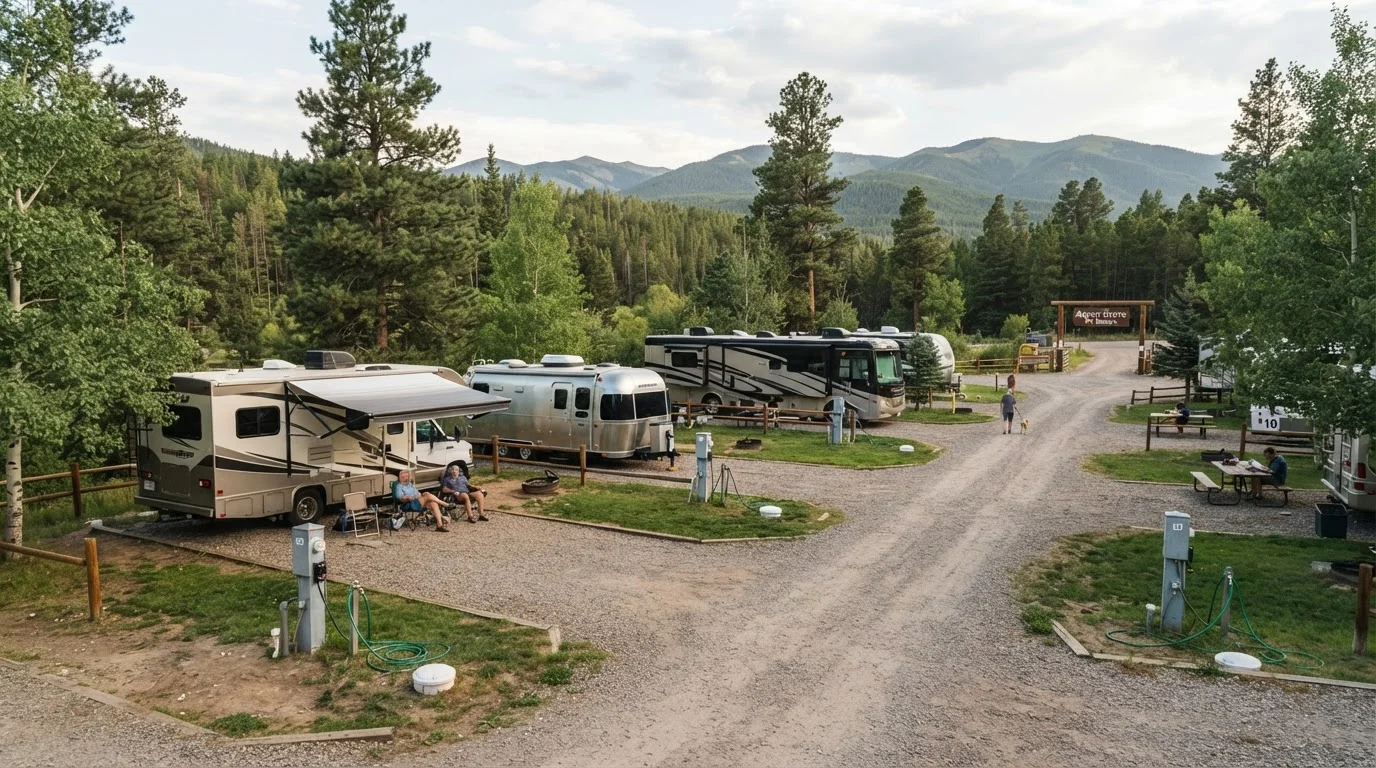
Electric service is the most critical hookup for most campers. Campground pedestals - the post-mounted utility boxes at each site - typically offer 20-amp, 30-amp, or 50-amp outlets, though 20-amp outlets are primarily intended for tent campers running a single device.
Most travel trailers and smaller Class C motorhomes are wired for 30-amp service. Larger Class A motorhomes and fifth wheels with multiple slide-outs, dual air conditioners, or residential appliances typically require 50-amp service. Mismatching your RV to the wrong pedestal doesn't always cause immediate damage, but running a 50-amp rig on 30-amp power means you won't be able to run all systems simultaneously.
Adapters - sometimes called "dogbone" adapters - allow you to plug a 30-amp cord into a 50-amp outlet or vice versa, but they don't increase power capacity. Always use a quality surge protector between your RV and the pedestal; power quality at campgrounds can be inconsistent.
Always Use a Surge Protector at the Pedestal
Campground electrical pedestals can deliver inconsistent voltage, especially at busy campgrounds during peak season. A quality surge protector - either a portable plug-in unit or a hardwired model installed in your RV - guards against voltage spikes and low-voltage conditions that can damage your appliances and electrical system. Treat it as essential gear, not an optional accessory.
Water Hookups: Pressure Regulators and Hose Hygiene
A freshwater hookup connects your RV directly to the campground's water supply via a spigot at your site. This means your onboard freshwater tank stays full without manual filling, and you can use water more freely for showers, cooking, and dishes.
Two accessories make water hookups safer and more effective. A pressure regulator protects your RV's plumbing by reducing incoming pressure - campground water lines can occasionally deliver pressure high enough to stress RV fittings. A drinking-water-safe hose (white or blue, clearly labeled) keeps your freshwater line free of the off-gassing that occurs with standard garden hoses. Adding an inline filter is an optional but practical step many RVers take to improve taste and remove sediment.
Sites listed as "electric only" don't include a water connection, meaning you'll rely entirely on your onboard freshwater tank. At sites labeled "water and electric," the sewer connection is absent, so you'll still need to drive to the campground's dump station periodically.
Sewer Hookups: Convenience With a Few Ground Rules
A sewer connection at your site means you can drain your gray water (sinks and shower) and black water (toilet) tanks continuously without scheduling a dump station visit. For stays of a week or more, this convenience is significant.
The basic equipment needed includes a flexible sewer hose, a hose support that angles the hose downward toward the inlet, and a secure fitting that seals to the campground's sewer cap. Always keep your black tank valve closed until you're ready to dump - leaving it open allows liquids to drain while solids accumulate, creating blockages. The gray tank valve can be left open more freely once the black tank is empty, using the gray water to help flush the sewer hose clean.
For RVers who want to understand the alternative - managing without any hookups - our article on boondocking and off-grid camping explains the habits and gear required.
Matching Your RV to the Right Site
Not every campsite is right for every RV. A large Class A motorhome with two roof-mounted air conditioners running on a 30-amp site will quickly trip breakers. A compact travel trailer at a full-hookup site is perfectly fine - you simply won't use the sewer connection as often.
The differences between Class A, B, and C motorhomes directly affect what kind of hookups each rig typically needs. When booking, confirm the pedestal's amperage, whether water is at the site or shared, and whether sewer is included. Many reservation platforms let you filter by hookup type, but verifying directly with the campground eliminates ambiguity.
If your travels take you between a mix of hookup and hookup-free sites, understanding your RV's holding tank capacities and battery bank is just as important as knowing its amperage. The motorhome vs. towable comparison covers how different rig types handle extended periods without hookup access.
Hookup Availability Varies Widely by Campground Type
Private campgrounds and RV parks are most likely to offer full hookup sites. State and national park campgrounds vary significantly - some offer electric-only sites, many offer no hookups at all, and a small number provide full hookups. Always verify directly with the specific campground or through its official reservation system, as online aggregators don't always reflect current site configurations accurately.