
Why Motorhome Classifications Exist
Walk through any RV dealership and the sheer variety of motorhomes can feel overwhelming. The Class A, B, and C system exists to give buyers - and manufacturers - a consistent shorthand for describing how a motorhome is built and what it's designed to do. Understanding these distinctions helps you quickly filter options that fit your travel style before you ever step inside one.
Unlike towable campers, which require a separate tow vehicle, all three motorhome classes are self-contained: the engine, cab, and living space travel together as one unit. For a broader comparison between motorized and non-motorized options, see our motorhome vs. towable camper breakdown.
11.2M
U.S. households that own an RV
According to the Recreation Vehicle Industry Association (RVIA), RV ownership reached a record high in recent years, with motorhomes representing a significant share of the market.
26-45 ft
Typical Class A motorhome length range
Most Class A motorhomes fall within this range, with diesel pusher models often occupying the longer end and entry-level gas units the shorter end.
~20 ft
Average Class B camper van length
Class B van conversions are generally the shortest motorhome type, making them compatible with most standard campsite length limits.
Class A: Maximum Space, Maximum Commitment
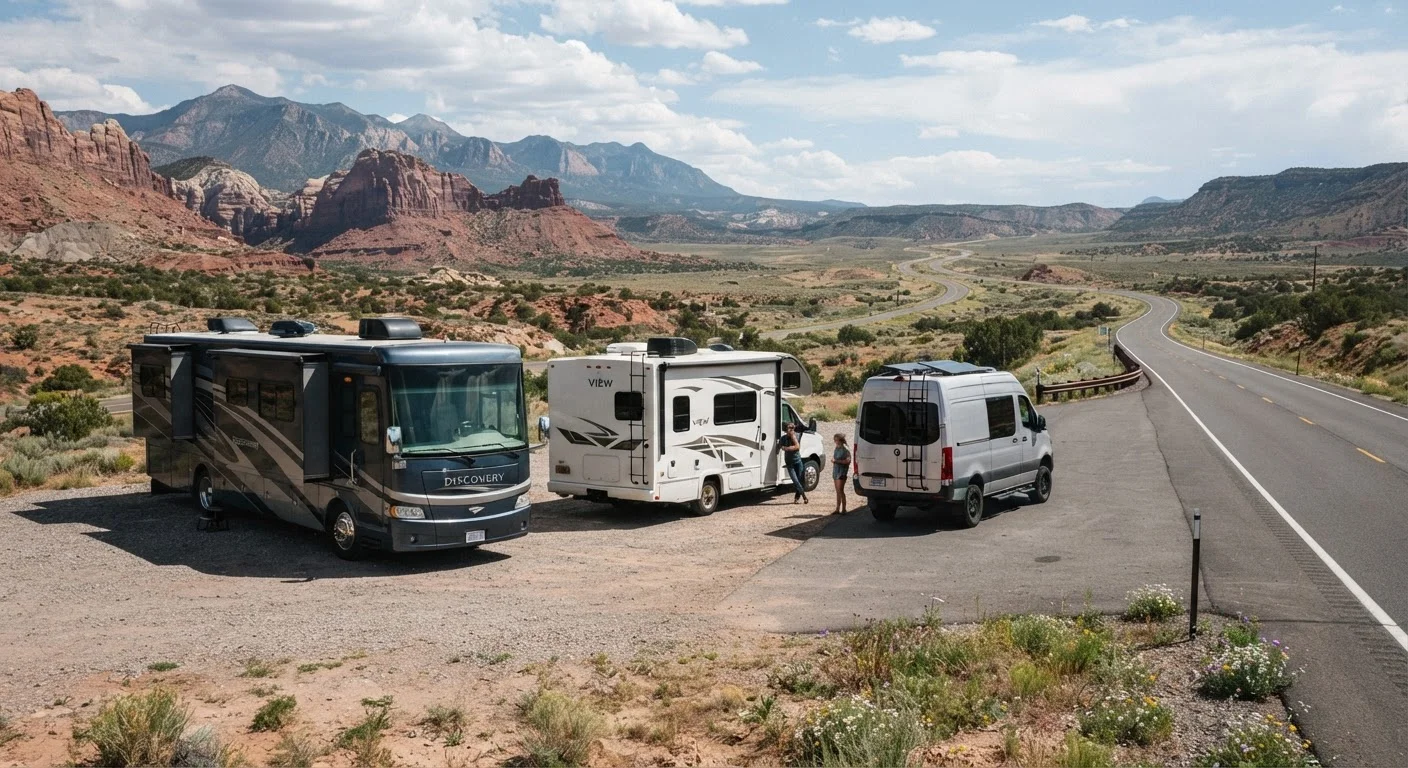
Class A motorhomes are the large, bus-style rigs you see rolling down interstates. They're constructed on a purpose-built commercial chassis - either a heavy-duty gasoline chassis or a diesel pusher platform - and typically range from 26 to 45 feet in length. That footprint translates directly into living space: full kitchens, residential-style bathrooms, slide-out sections that expand the floor plan when parked, and sleeping for six or more.
The tradeoff is operational complexity. Class A vehicles require practice to maneuver, may be restricted from certain campgrounds due to length, and tend to consume more fuel. Insurance, storage, and maintenance costs are correspondingly higher. They represent the closest approximation to a mobile home rather than a camping vehicle.
Test Drive Before You Commit
Renting a motorhome in the class you're considering is one of the most practical steps prospective buyers can take. A week-long rental reveals real-world drivability, campsite setup routines, and whether the floor plan suits your actual habits - not just your assumptions about them.
Class B: The Van Conversion That Goes Anywhere
Class B motorhomes - commonly called camper vans - are built by customizing a full-size commercial van chassis such as a Mercedes-Benz Sprinter, Ford Transit, or Ram ProMaster. The result is a vehicle typically under 24 feet long that drives exactly like an oversized van, fits in most parking lots, and can navigate urban streets without difficulty.
The appeal is flexibility. Class B owners can use their vehicle as daily transportation, park at trailheads inaccessible to larger rigs, and avoid campground length restrictions. The constraint is space: sleeping, cooking, and bathroom facilities are compact by necessity, and storage requires deliberate planning. These rigs suit solo adventurers, couples, or anyone who values access over amenity.
Class C: The Middle Ground Worth Knowing
Class C motorhomes occupy the space between Class A luxury and Class B efficiency. They're built on a cutaway truck chassis - the same platform used for commercial box trucks - and are instantly recognizable by the cab-over section that extends over the driver's cab, usually housing an additional sleeping area or storage space.
Most Class C units run between 20 and 35 feet and offer a genuine family-capable floor plan: a dinette that converts for sleeping, a full kitchen, a rear or mid-ship bedroom, and a full bath. They're easier to drive than Class A rigs while offering substantially more living space than any van conversion. Many can also tow a smaller vehicle - a car, motorcycle, or boat - behind them, which extends their versatility once parked at a destination.
For shoppers deciding between motorhome types and tow-behind options, the travel trailer vs. fifth wheel comparison offers useful context on the towable side of the equation.
“The class system is really just a starting point. Once buyers understand the chassis differences, they stop shopping by label and start shopping by how they actually want to spend their time on the road.”
— Recreation Vehicle Industry Association, Industry trade association for RV manufacturers and suppliers
Practical Factors That Actually Drive the Decision
Beyond size, several real-world factors distinguish how each class performs in daily use:
- Fuel economy: Class B vans achieve the best efficiency, often 18-25 MPG. Class C models typically range 10-16 MPG. Class A gas units often fall below 10 MPG; diesel pushers can be slightly more efficient but carry higher upfront costs.
- Campsite access: National parks and state campgrounds often cap site lengths at 30-35 feet, which effectively rules out many Class A rigs. Class B and most Class C units have broader access.
- Driver licensing: In most U.S. states, a standard driver's license covers all three classes. However, some states require a non-commercial Class B license for the largest Class A rigs - verify your state's requirements before purchasing.
- Depreciation and resale: All motorhomes depreciate, but market dynamics differ by class and condition. The new vs. used RV comparison explores how that plays out for buyers at different budget levels.
Don't Overlook Hidden Ownership Costs
Purchase price is only part of the financial picture. Storage fees, insurance premiums, fuel, maintenance, campground costs, and registration fees all vary significantly by class and by state. Factor in total cost of ownership - not just sticker price - when comparing options. For a broader look at common buyer misconceptions, see RV myths that mislead new buyers.
This article is for general informational purposes only. Vehicle specifications, licensing requirements, and campground access policies vary and should be verified with relevant authorities and providers before purchase.