
A Vehicle Category Worth a Second Look
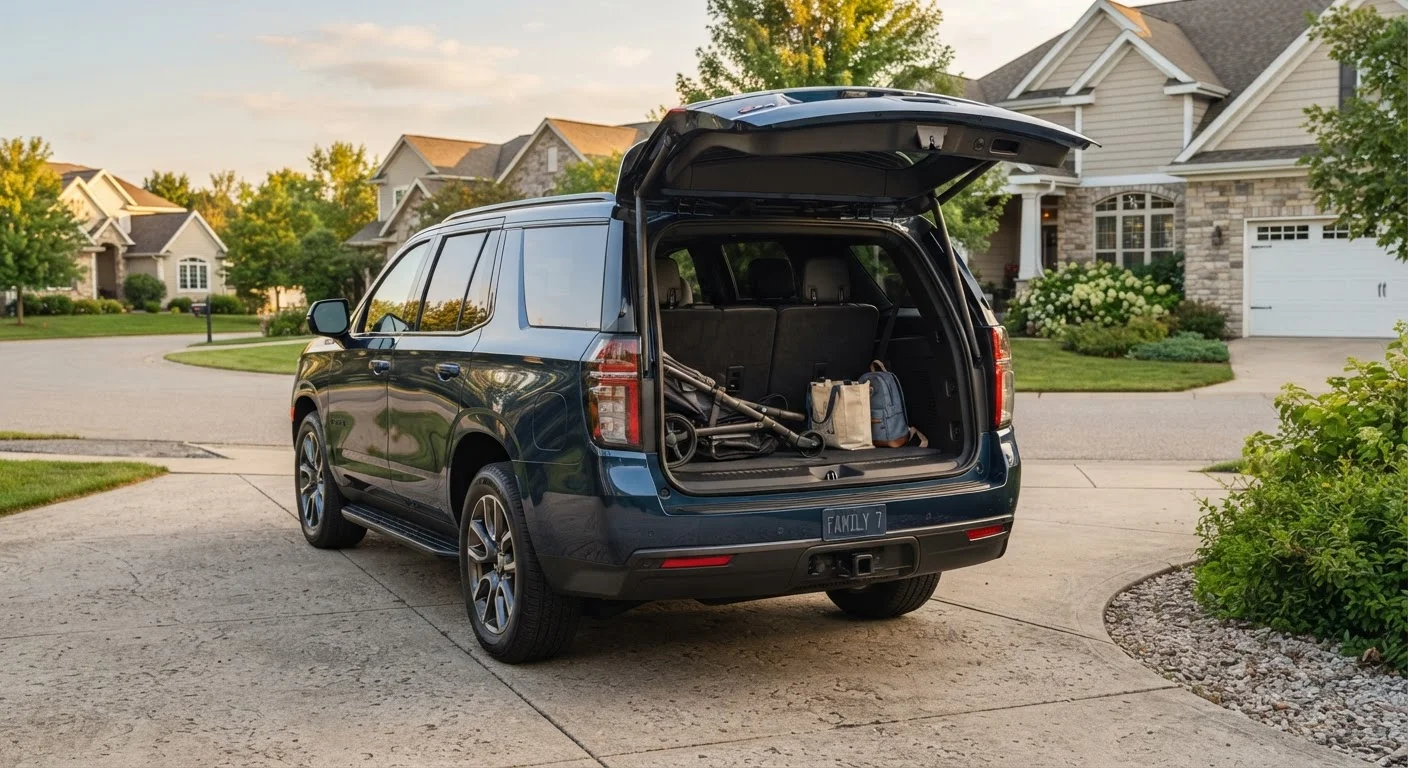
Few vehicle categories carry as much cultural baggage as the minivan. Dismissed for decades as the vehicle of suburban surrender, minivans are frequently passed over by buyers who form an opinion before examining the evidence. Yet the category has endured against every prediction of its demise — and not by accident. Every defining feature, from sliding rear doors and a low step-in height to a flat-floor cabin and an upright seating position, exists because those features genuinely serve the people inside.
Understanding where minivans fit alongside sedans, crossovers, and full-size trucks helps clarify the trade-offs involved. Our guide to American vehicle types maps out the full spectrum and what each segment is actually designed to do.
What Minivans Do Exceptionally Well
Sliding doors eliminate parking-lot door dings
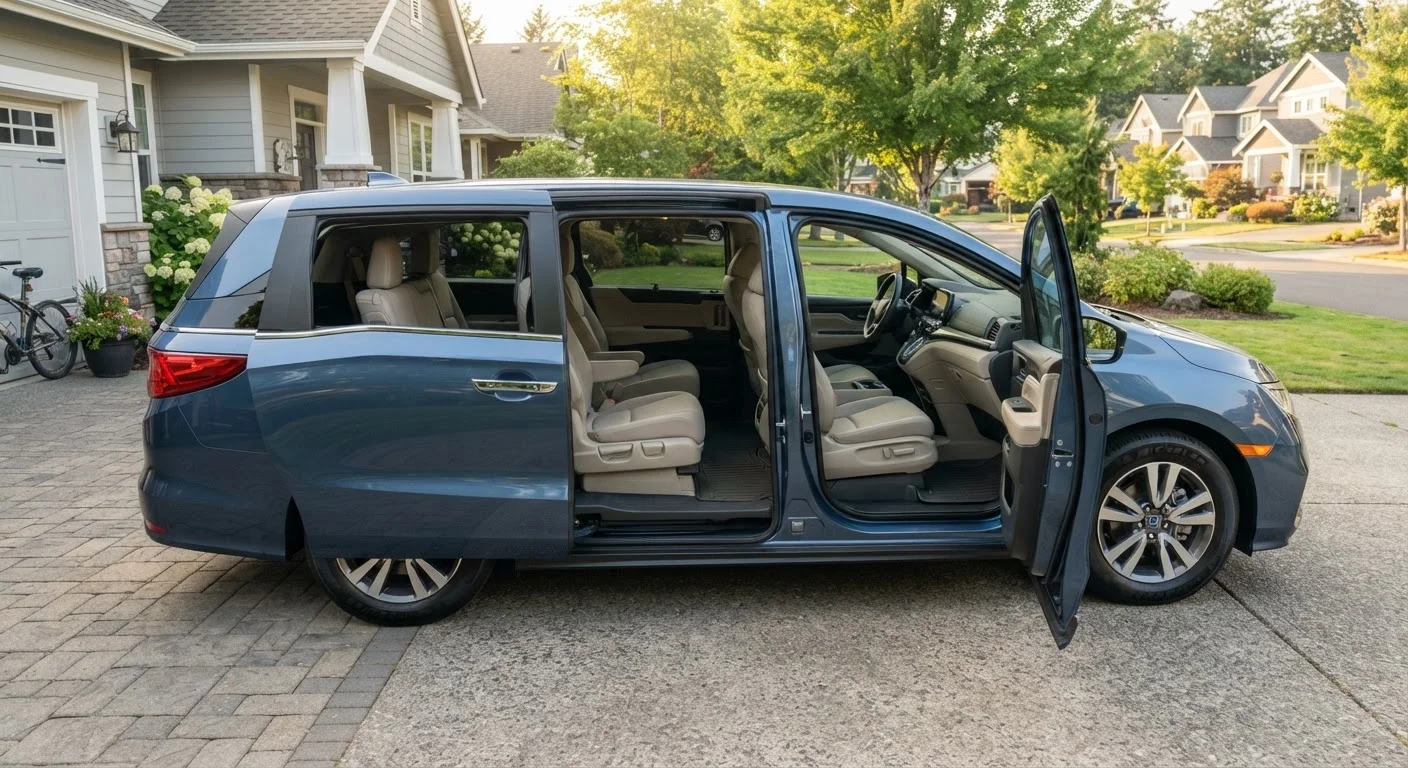
Rear sliding doors open parallel to the vehicle body rather than swinging outward, protecting adjacent vehicles and making passenger loading — especially for young children in car seats — considerably easier.
Exceptional cargo volume with all seats folded
Full-size minivans typically clear 140 cubic feet of cargo space with all rows stowed, a benchmark most three-row SUVs in the same price range do not reach.
Flat floor improves cabin access across all rows
A fully flat cabin floor allows passengers to move between seats freely and provides usable floor space for storage — an advantage over SUVs where raised wheel wells intrude into the footwell area.
Strong crash-test safety ratings historically
Multiple minivan models have earned top safety marks from major U.S. crash-testing organizations across successive model years, making safety a consistent competitive strength for the segment.
Lower starting price than most three-row SUVs
Minivans frequently carry a lower MSRP than comparable three-row SUVs, which can reduce monthly financing costs and lower the total purchase price for buyers needing this level of passenger capacity.
Sliding rear doors are among the most underappreciated features in everyday family vehicle ownership. Unlike conventional hinged doors, they open parallel to the vehicle body — eliminating the door dings that plague busy parking lots. They also make loading children into rear-facing car seats significantly easier than a hinged door allows. The cabin typically features a fully flat floor across all three rows, simplifying movement between seats and maximizing usable floor space.
Cargo capacity is another area where minivans routinely outperform their closest rivals when measured objectively. With all seats folded, full-size minivans typically clear 140 cubic feet of cargo volume — a figure most three-row SUVs fall short of. Safety has also been a consistent strength for the category, with multiple models earning strong ratings from major U.S. crash-testing organizations over successive model years.
140+ cu ft
Cargo space with all seats folded
Full-size minivans typically offer more than 140 cubic feet of cargo volume with all rows stowed, outpacing most three-row SUVs in the same price range.
2,000–3,500 lbs
Typical minivan towing capacity
Most minivans fall within this tow-rating range — enough for a small trailer or utility haul but short of what truck-based SUVs and full-size pickups can manage.
Where Minivans Fall Short
Low ground clearance limits off-road suitability
Minivans ride closer to the road than most crossovers and SUVs, making them poorly suited to unpaved roads, light trail use, or regions that see significant snowfall without appropriate winter tires.
Modest towing capacity versus trucks and body-on-frame SUVs
Most minivans are rated to tow between 2,000 and 3,500 pounds — sufficient for a small utility trailer but well below the capacity of truck-based SUVs and full-size pickups.
Historically weaker resale values than comparable SUVs
Minivans have tended to depreciate faster than comparable SUVs, reflecting lower demand in the used vehicle market — a factor that affects total cost of ownership over the life of the vehicle.
Limited all-wheel drive availability across the segment
All-wheel drive remains far less common across minivan nameplates than in the SUV category, a real drawback for buyers in snow-prone regions or those who prioritize added traction in adverse conditions.
Cultural stigma can override a sound functional case
Some buyers rule out minivans without a fair evaluation, allowing perception to override practical criteria — a pattern that can lead to choosing a less capable or more expensive alternative.
Ground clearance is a genuine limitation. Minivans ride lower than most crossovers and SUVs, making them poorly suited to gravel roads, unpaved surfaces, or regions with heavy seasonal snowfall without appropriate tires. All-wheel drive configurations have historically been sparse across the segment, though some current models have begun to address this.
Towing capacity is modest by most standards. Most minivans are rated to pull between 2,000 and 3,500 pounds — adequate for a small utility trailer but insufficient for boats, horse trailers, or larger campers. Buyers with meaningful towing requirements should consider truck-based alternatives. Resale value has also historically lagged behind equivalent SUVs in the used market, a factor that affects the total cost of ownership calculation.
Weighing the Minivan Against Its Alternatives
The most common comparison shoppers run is minivan against three-row SUV. That comparison deserves careful examination: our article on three-row SUVs details how the additional row in many SUVs delivers less legroom and cargo flexibility than it appears to in showroom conditions. Minivans also differ meaningfully from full-size cargo and passenger vans — a distinct segment explored in our piece on cargo and passenger vans.
Hybrid Powertrains Are Now in the Segment
At least one major minivan model has adopted a hybrid powertrain as standard equipment, delivering significantly higher fuel efficiency than conventional gasoline alternatives in the category. This has narrowed one of the minivan's traditional disadvantages relative to hybrid crossovers. Buyers interested in fuel economy should verify current powertrain configurations directly with dealerships or manufacturer resources, as availability varies by model year and trim level.
For buyers whose core priority is moving people and gear efficiently — road trips, school runs, youth sports logistics — the minivan delivers a functional package that other segments struggle to match at a comparable price. For buyers who need off-road capability, higher towing limits, or a vehicle suited to varied terrain, other types will serve better. Our guide on matching vehicle type to your driving patterns provides a practical framework for sorting through those priorities.