
What the Third Row Actually Adds
The central appeal of a three-row SUV is straightforward: more seats. Most three-row configurations seat seven or eight passengers, making these vehicles one of the few options in the SUV segment capable of replacing a full van for family use. That matters for households with multiple children, carpool duties, or frequent trips with extended family.
Beyond raw capacity, a third row can change how a vehicle feels socially. Road trips where everyone rides together — rather than splitting across two vehicles — are a genuine quality-of-life gain. Some three-row SUVs also offer a second-row captain's chair layout, which improves access to the rear seats and gives middle-row passengers more personal space.
It's worth understanding where three-row SUVs fit in the broader vehicle landscape. For a fuller picture of how different body styles are categorized and what each is designed to do, see this overview of American vehicle types.
Seats up to eight passengers in one vehicle
Three-row SUVs eliminate the need to split groups across two vehicles, which is a meaningful benefit for large families and carpool-heavy schedules.
Retains the SUV form factor and driving feel
Unlike a minivan, a three-row SUV provides a higher seating position, available all-wheel drive, and towing capability that many buyers value.
Flexible seating configurations
Most three-row SUVs allow the second and third rows to fold flat, converting passenger space into extended cargo room when the seats aren't needed.
Available with modern safety and driver-assist features
Three-row SUVs across multiple price points now offer advanced driver-assistance systems, making them competitive with two-row vehicles on safety technology.
The Real Costs of That Extra Row
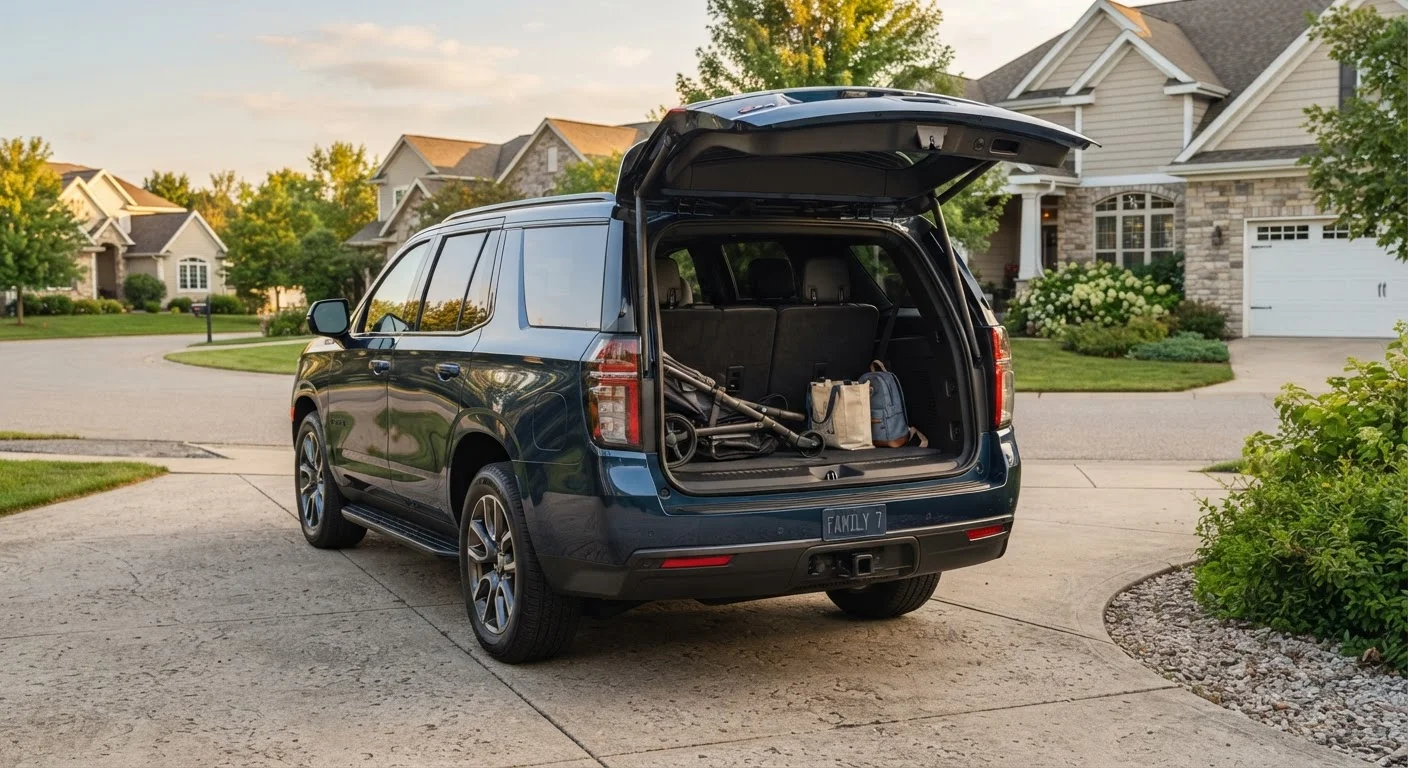
The trade-offs begin the moment a third row is folded into a vehicle's architecture. Cargo space behind the third row is typically minimal — often under 20 cubic feet in crossover-based three-row models — which means grocery runs, sports equipment, and luggage require the third row to be folded flat. That negates the seating benefit unless you're always carrying both people and cargo separately.
Fuel economy is another consistent penalty. A three-row SUV is heavier and larger than its two-row equivalent, and real-world MPG figures generally reflect that. Buyers focused on long-term operating costs should factor this into their calculations — the total cost of ownership goes well beyond the sticker price.
Maneuverability is a practical daily concern that's easy to underestimate during a test drive. Three-row SUVs typically stretch 197 to 204 inches in length, which creates real challenges in tighter parking garages, urban streets, and narrow driveways.
Minimal cargo space with all rows up
When all three rows are in use, cargo capacity behind the third row is often under 20 cubic feet — barely enough for a weekend bag per passenger.
Lower fuel economy than two-row alternatives
Greater weight and size translate to a real-world MPG penalty, typically 2–4 MPG below a comparable two-row SUV, adding up over years of ownership.
Larger footprint complicates urban driving
At 197 to 204 inches or more in length, three-row SUVs can be difficult to park in standard spaces and navigate in cities with tight infrastructure.
Third-row comfort is often limited for adults
Most three-row SUVs have cramped third-row legroom designed for children; adults seated there on longer trips may find the space genuinely uncomfortable.
Higher purchase price than two-row equivalents
Adding a third row typically pushes the base price upward, and the trims that offer adequate third-row access — like captain's chairs — cost more still.
How Three-Row SUVs Compare to Alternatives
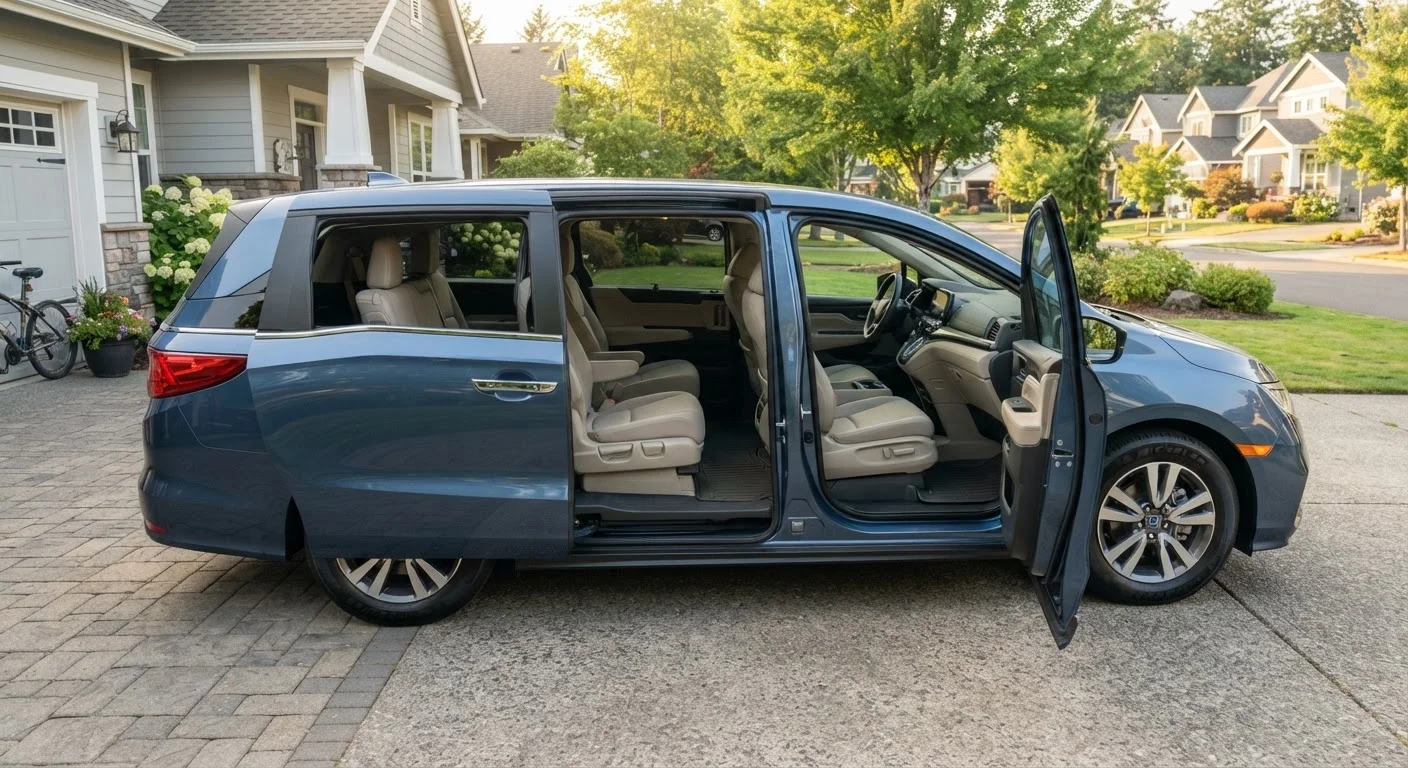
Many buyers consider a three-row SUV without seriously evaluating the alternatives. The minivan is the most direct competitor and often outperforms on interior volume, sliding door convenience, and per-seat cost — despite its reputation disadvantage. For families prioritizing practicality over image, minivans can be a compelling alternative worth an honest look.
Passenger vans are another option frequently overlooked by everyday buyers. Cargo and passenger vans offer significantly more interior space and can seat up to 12 people, though they come with their own tradeoffs in ride comfort and parking.
For buyers weighing a three-row SUV against a two-row crossover, it's also worth understanding the structural differences at play. What separates a crossover from a traditional SUV matters when evaluating ride quality and capability across different three-row options.
Platform Matters: Crossover vs. Body-on-Frame
Three-row SUVs come in two main builds: unibody crossovers (like many mid-size three-row models) and body-on-frame trucks (like full-size SUVs). Body-on-frame three-row SUVs typically offer higher tow ratings and more durable construction, but they ride stiffer and post lower fuel economy. Crossover-based three-row models tend to be more car-like to drive but sacrifice some capability. Understanding which architecture underlies a specific model is essential to evaluating whether it fits your actual needs.
Who Should — and Shouldn't — Consider a Three-Row
A three-row SUV makes the most sense for households that genuinely and regularly need seating for six or more. If you're running carpools several times a week, managing a large family, or frequently transporting groups, the capacity is used and justified. In those cases, the fuel and cargo compromises become acceptable operating costs rather than daily frustrations.
Buyers who only occasionally need extra seats — a few times a year for holidays or road trips — should think carefully before committing to a vehicle they'll live with daily. Renting a larger vehicle for specific occasions, or choosing a versatile two-row SUV, may serve everyday needs better without the constant trade-offs. For anyone still weighing options, the vehicle shopping guides offer useful frameworks for matching vehicle type to actual lifestyle needs.
<20 cu ft
Typical cargo space behind third row
Most crossover-based three-row SUVs offer fewer than 20 cubic feet of cargo space when all seats are occupied, limiting hauling capacity significantly.
2–4 MPG
Typical fuel economy penalty vs. two-row
Three-row SUVs generally post lower combined fuel economy figures than their two-row platform siblings due to added weight and aerodynamic bulk.